

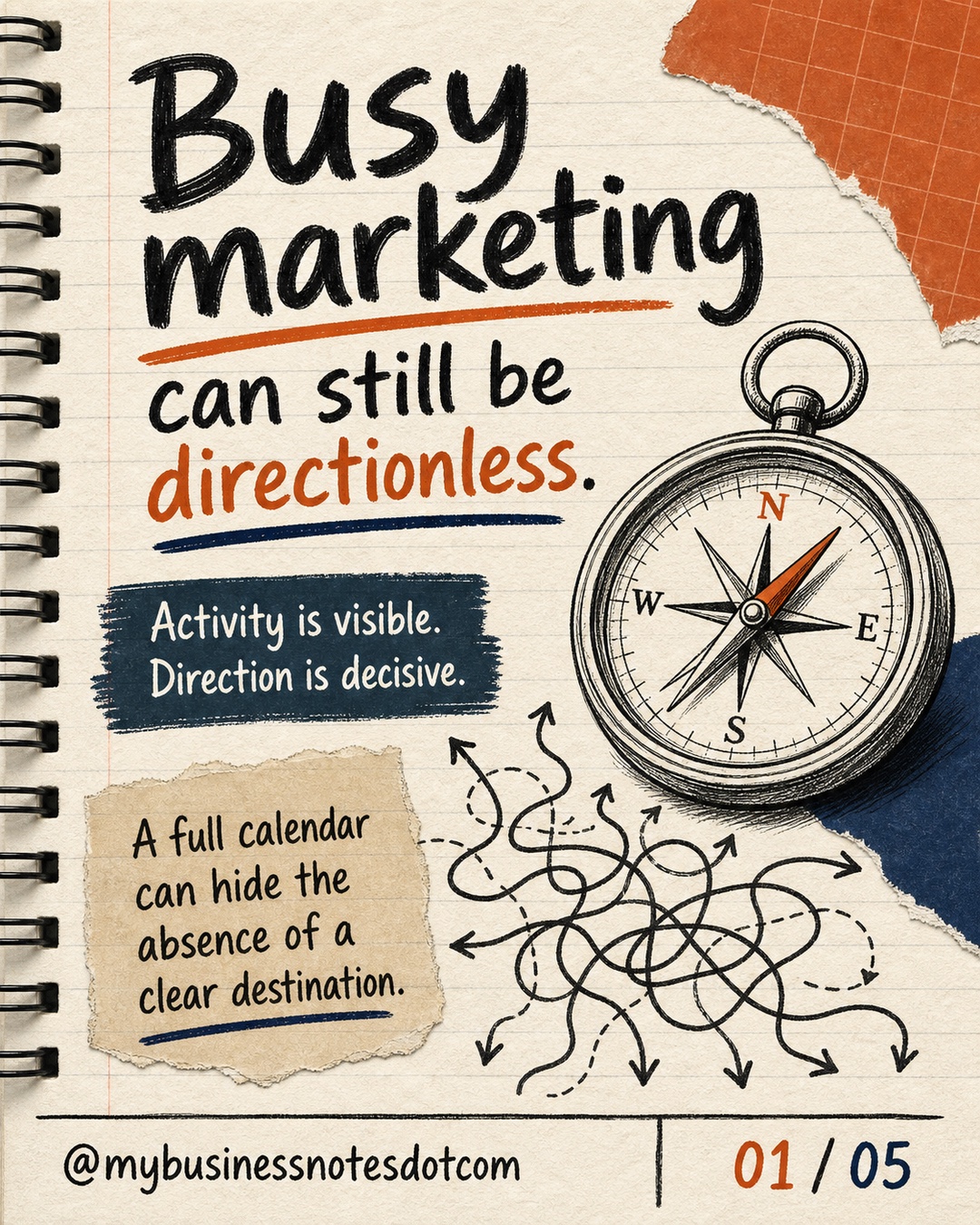
Marketing direction turns the central principle into an explicit decision: A full calendar can hide the absence of a clear destination. This article develops that decision into a practical management framework, helping teams move from activity to coordinated action and useful evidence.
Slide 1 of 5
What this framework helps you decide
A full calendar can hide the absence of a clear destination.
The value of a framework is not the appearance of certainty. It is the quality of the conversation it creates. Use the following sections to expose assumptions, focus attention, and convert an abstract intention into a decision that can be reviewed.
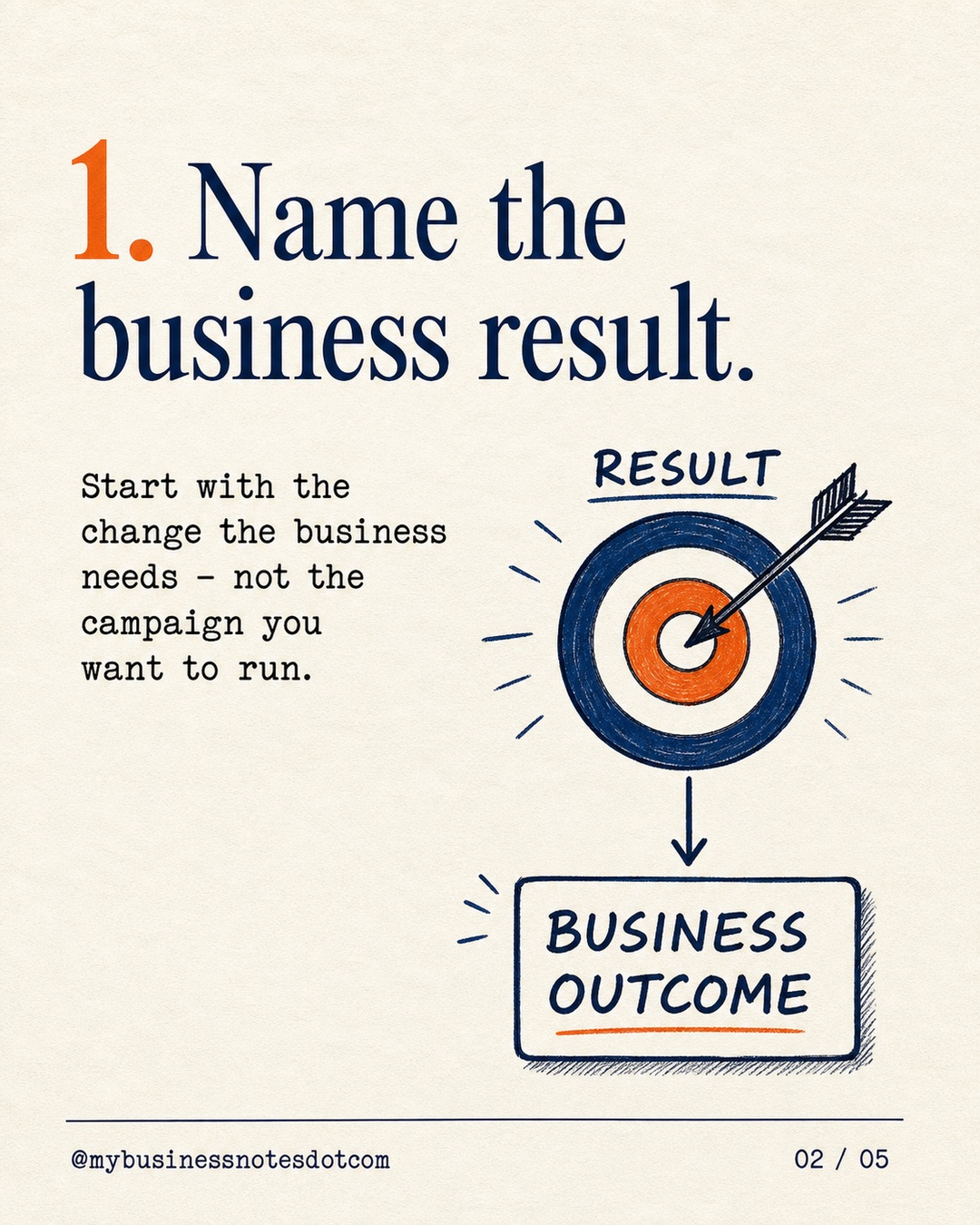
1. Name the business result.
Start with the change the business needs – not the campaign you want to run.
Translate the desired business result into an observable change before choosing tactics. Define whose behaviour or operational condition must move, why that movement matters now, and which outcome the team is trying to influence. A precise result gives every later marketing decision a common reference point.
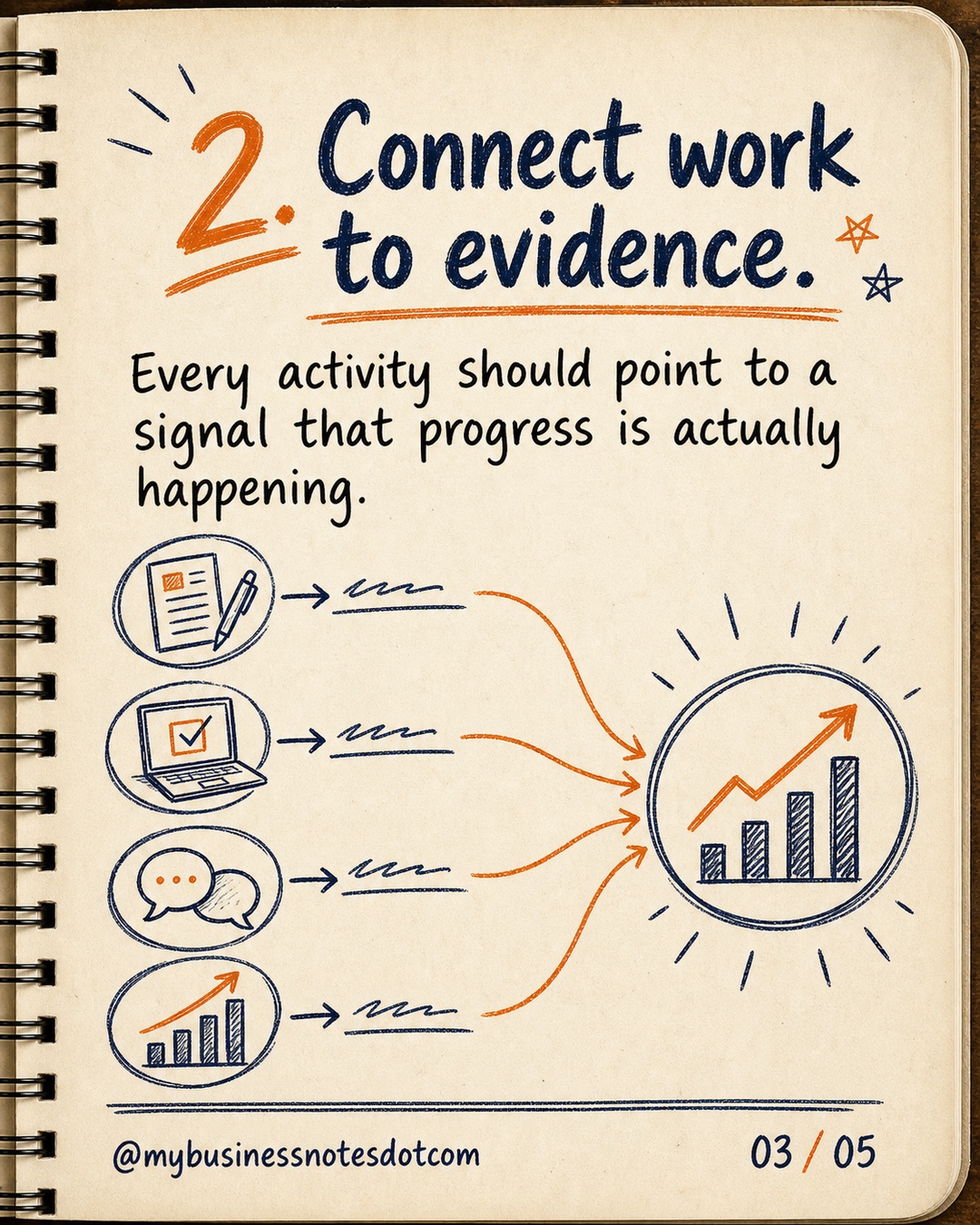
2. Connect work to evidence.
Every activity should point to a signal that progress is actually happening.
Use a small set of signals that reflect the assumed path from marketing work to business progress. Distinguish leading evidence, such as qualified conversations, from lagging outcomes, such as revenue, and agree in advance on what each signal would cause the team to continue, adjust, or stop.
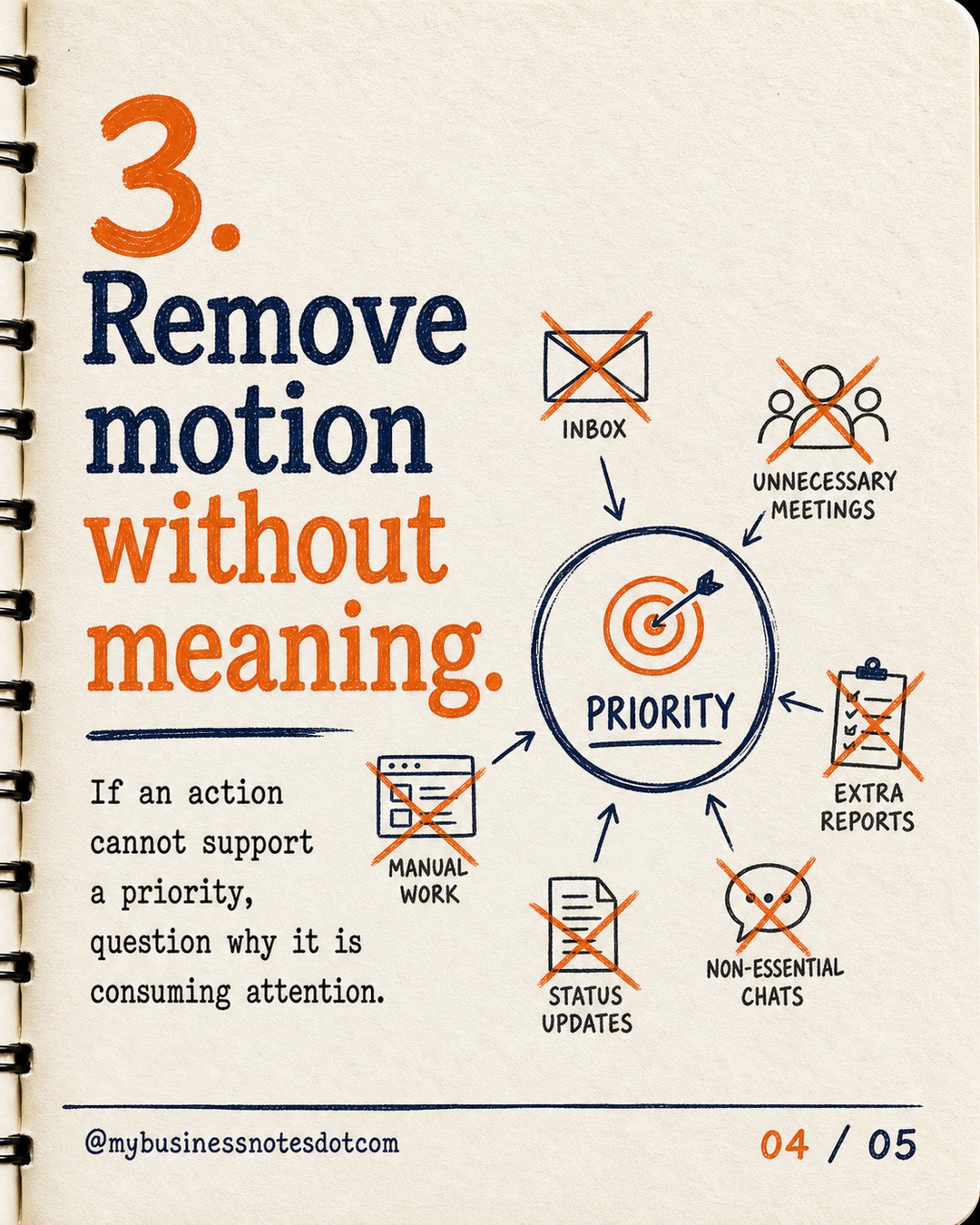
3. Remove motion without meaning.
If an action cannot support a priority, question why it is consuming attention.
Review recurring activities against the chosen priority. Work that has no credible connection to the result, audience, or learning goal should be paused, redesigned, or removed. This creates capacity for the few actions that deserve consistent attention instead of rewarding visible busyness.
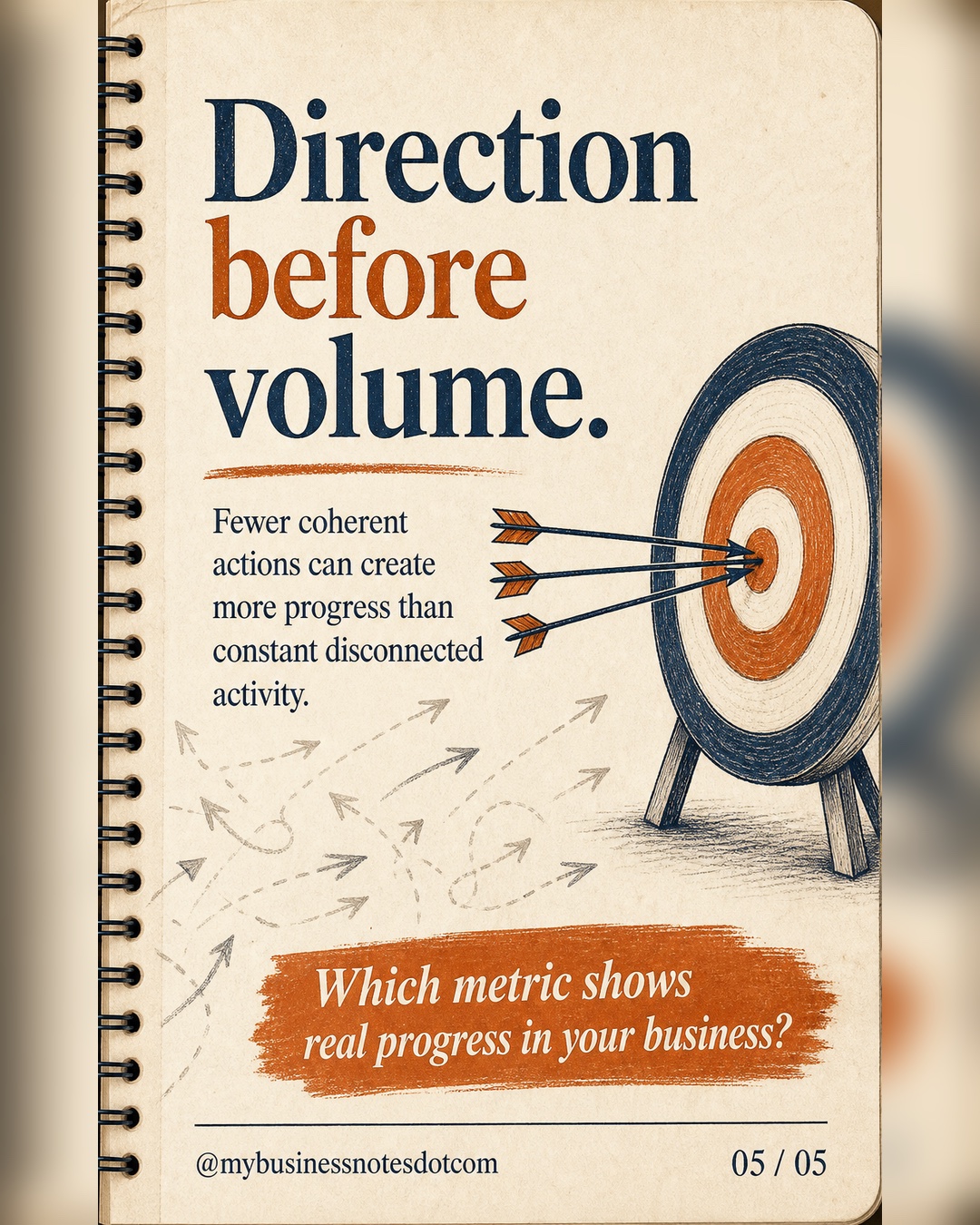
Direction before volume.
Fewer coherent actions can create more progress than constant disconnected activity.
Direction becomes credible when the team can explain why a smaller set of coordinated actions matters more than sheer volume. Protect those actions long enough to generate evidence, assign clear ownership, and revisit the choice when results or assumptions materially change.
A practical example
Imagine a team publishing daily, launching ads and attending events while revenue from its priority segment remains unchanged. The activity is real, but the causal story is missing. Marketing direction begins when the team names the business change, the audience behavior that could contribute to it and the evidence that would support or challenge the hypothesis.
The mistake to avoid
A dashboard full of impressions and clicks can reinforce directionlessness when nobody knows which decision a metric should change.
How to apply the framework
Begin with the business result and the customer or operational context. Work through the framework in sequence, but spend more time where uncertainty is highest. Record the decision, the reasoning behind it, and the signal that would cause the team to reconsider.
A useful review ends with subtraction as well as addition. Identify what will stop, what will receive protected attention, and who is accountable for the next visible step. Without those trade-offs, even a clear discussion can dissolve into more activity.
For related guidance, see Marketing as value creation and The four pillars of content strategy.
Frequently asked questions
What is marketing direction?
Marketing direction is a practical way to organize decisions around the result, audience, actions and evidence described in this article.
Why does marketing direction matter?
It matters because it connects activity to an explicit decision and makes progress easier to evaluate, explain and improve.
What is the most common mistake with marketing direction?
A dashboard full of impressions and clicks can reinforce directionlessness when nobody knows which decision a metric should change.
How do you start using marketing direction?
Write the current decision in one sentence, apply the framework to the highest uncertainty, assign one owner and define the next observable evidence.
Put the framework into practice
Which metric shows real progress in your business? Use the carousel as a shared review tool, then capture the resulting priority, owner, next action, and evidence in the team’s working system.
Download the complete carousel
Keep the framework as a PDF for your next review.
International references