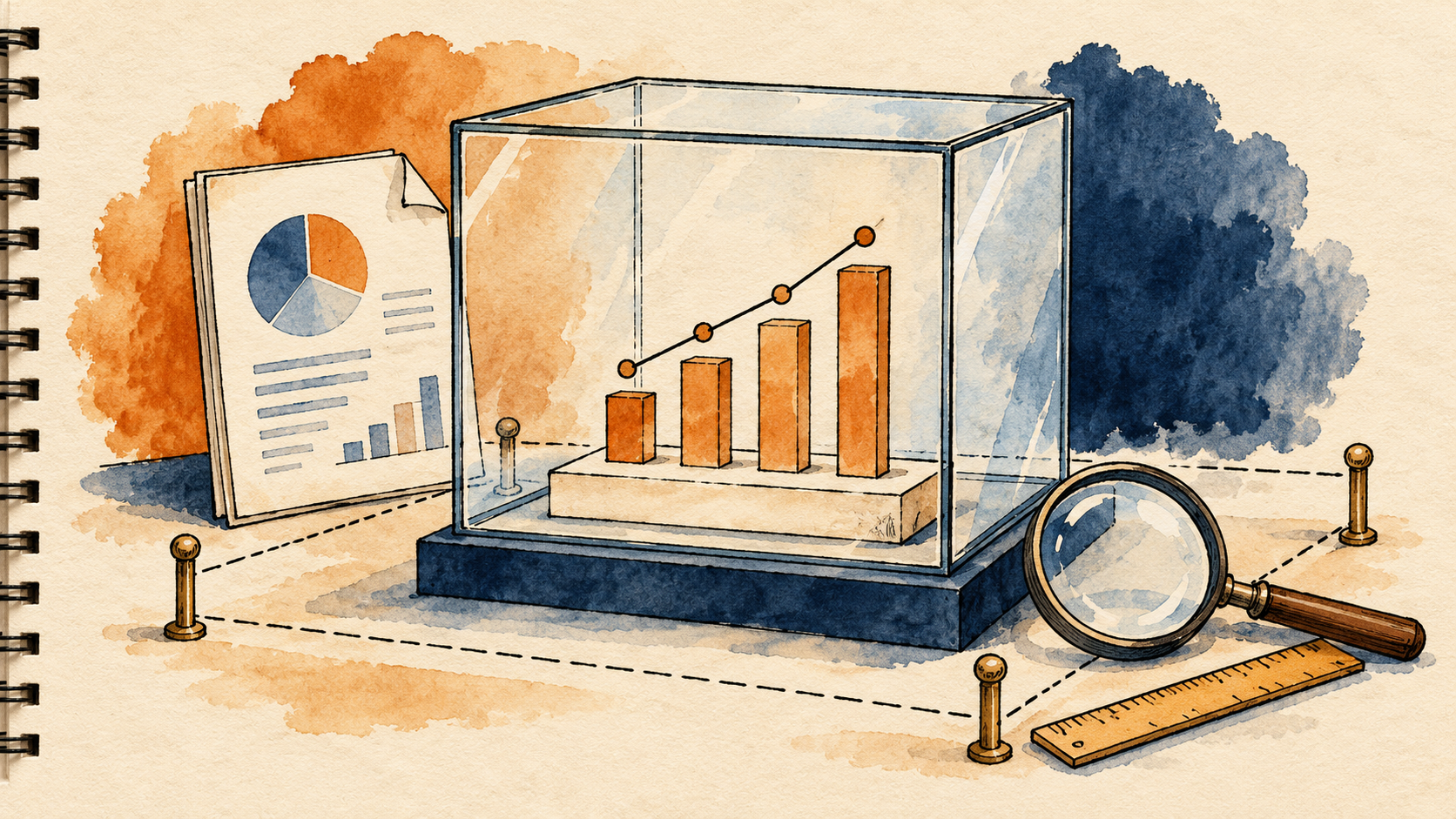
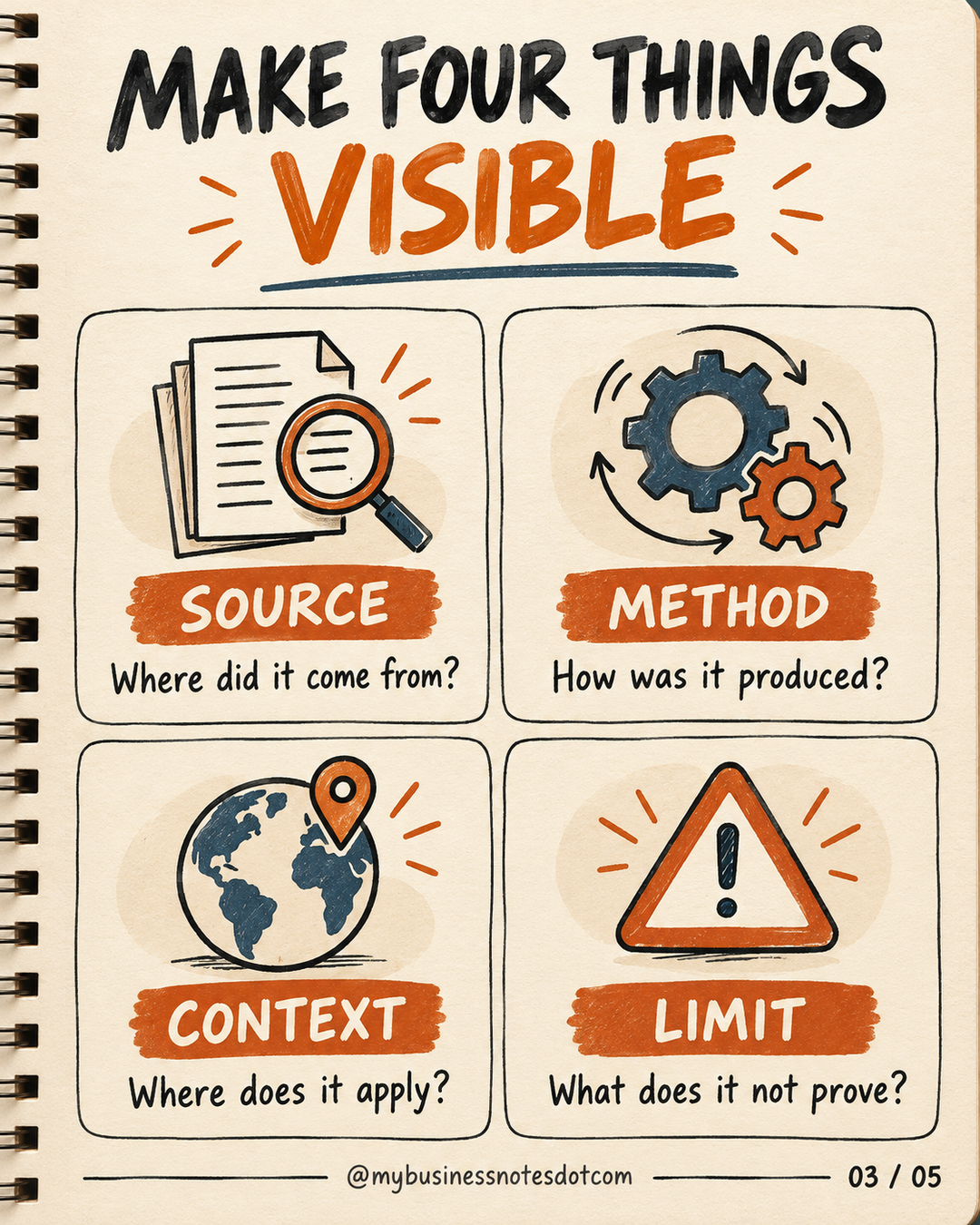
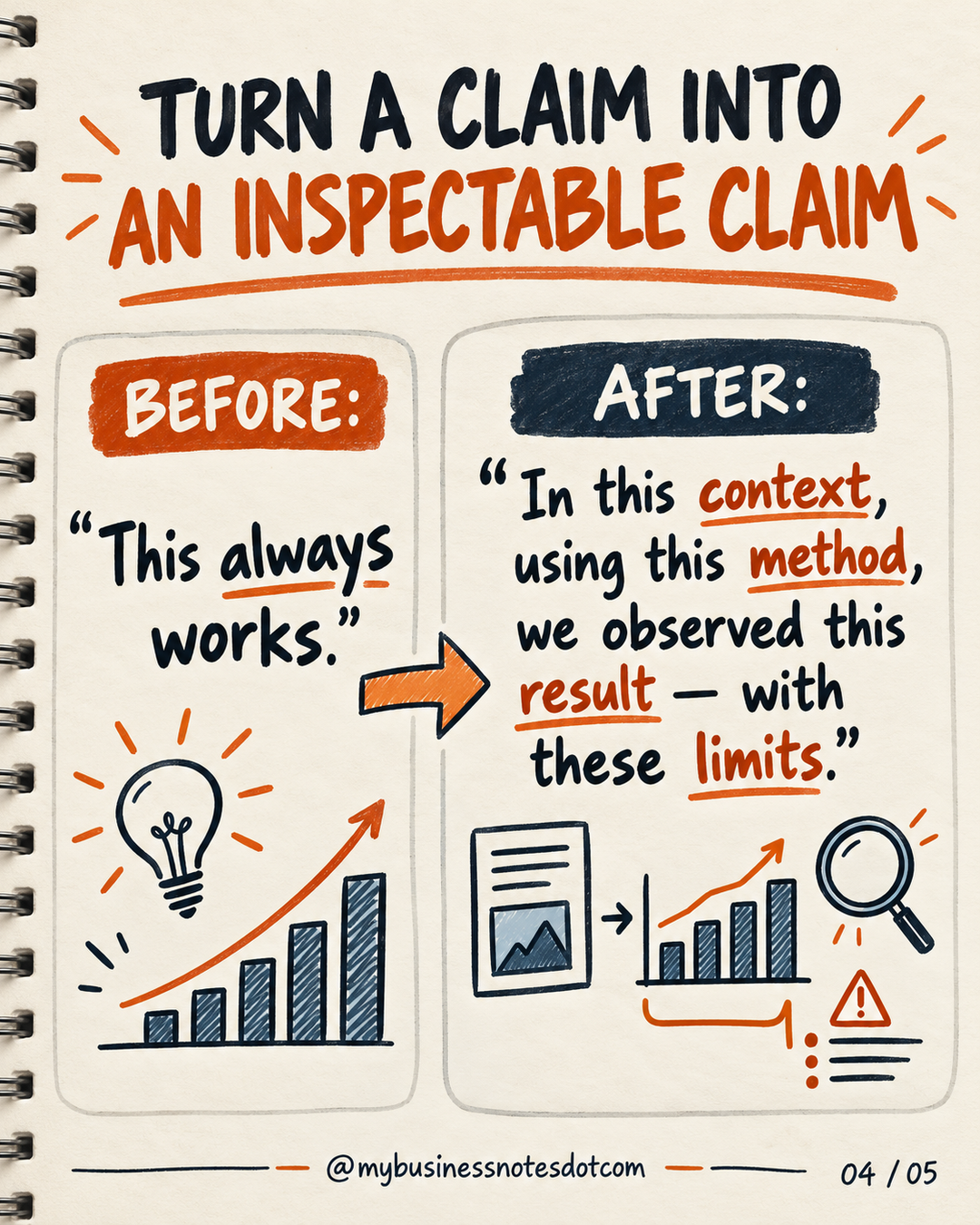
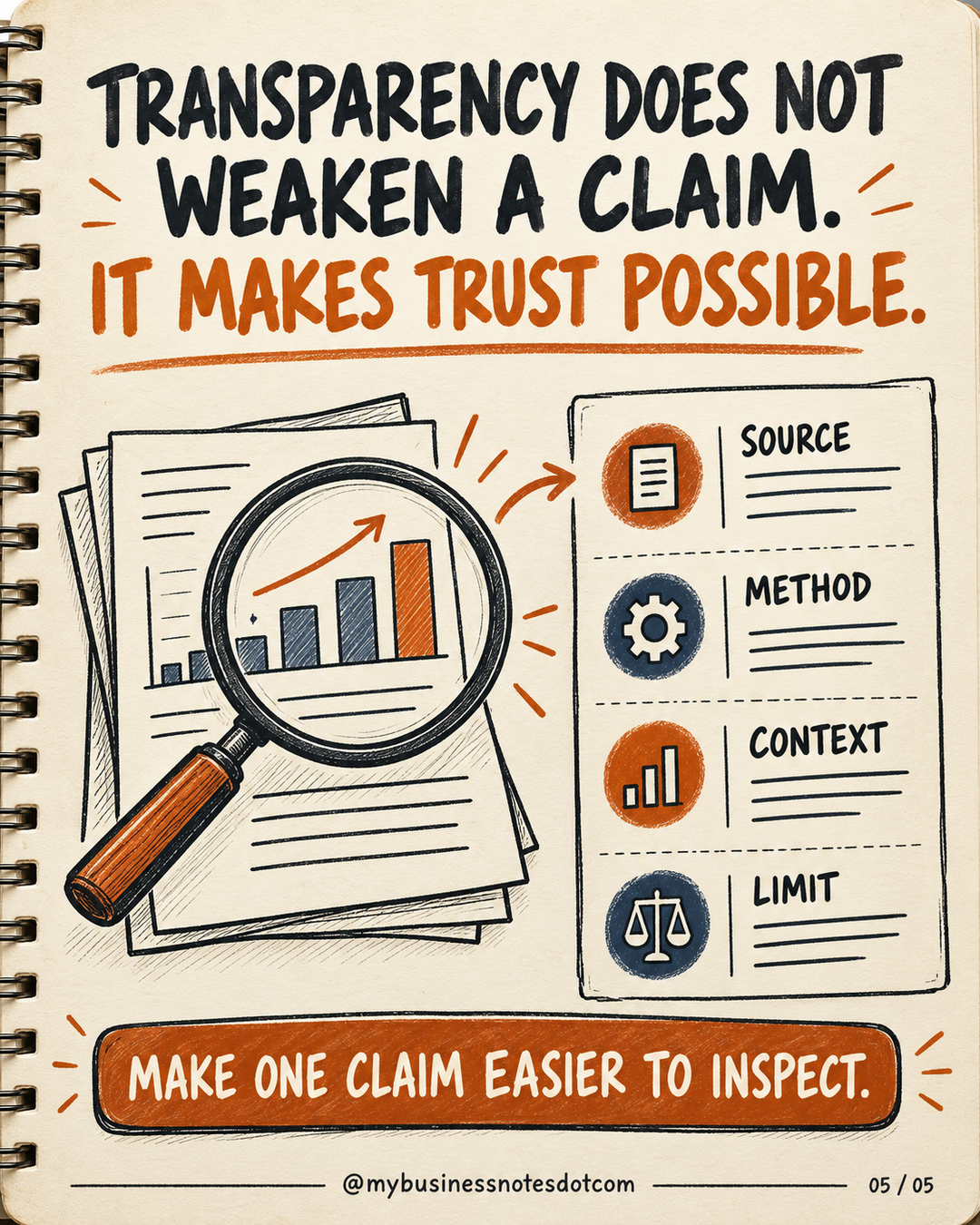
Inspectable claims let readers examine where a statement came from, how it was established, when it applies and what it does not prove. Use source, method, context and limit to review a marketing promise before publishing it.
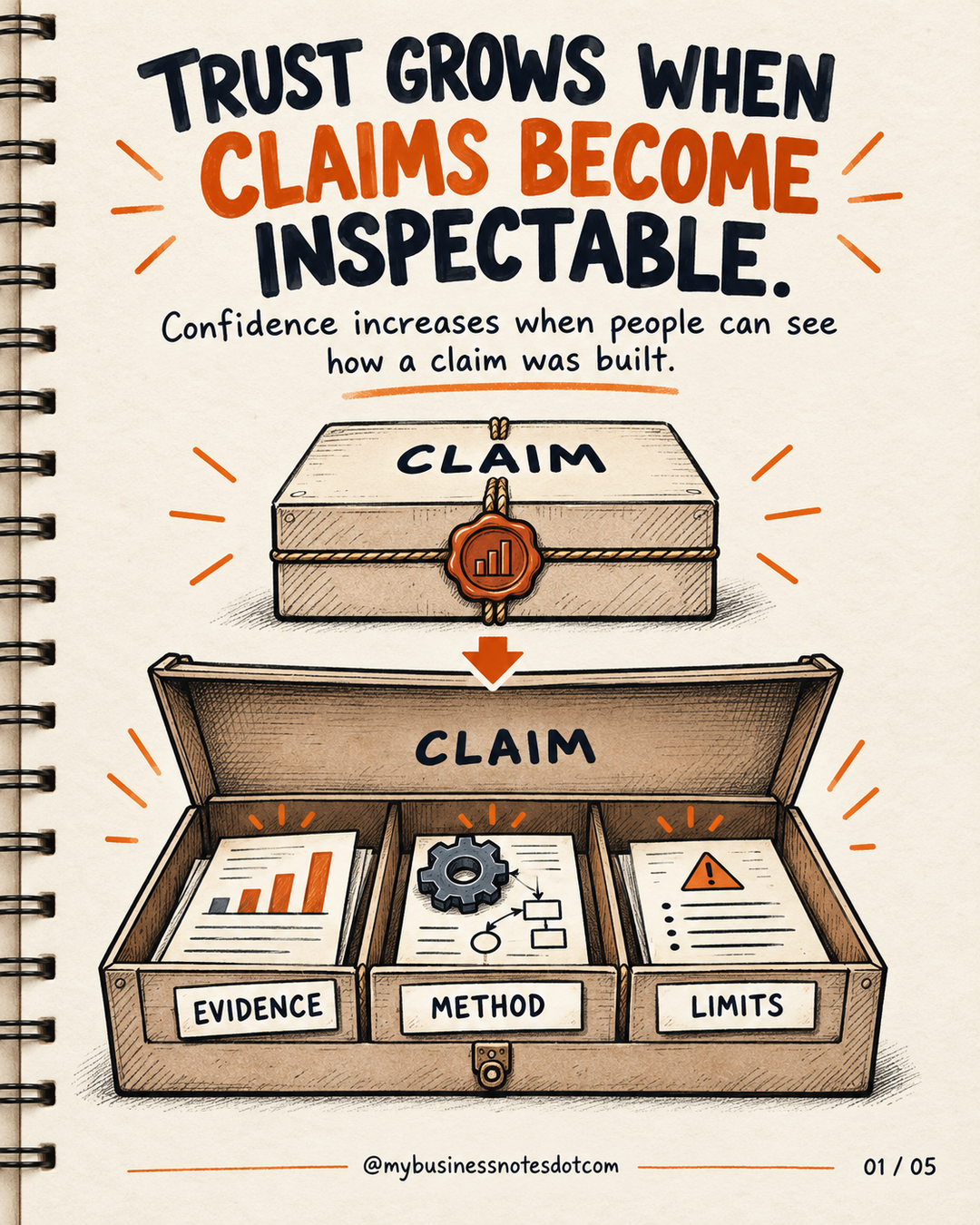
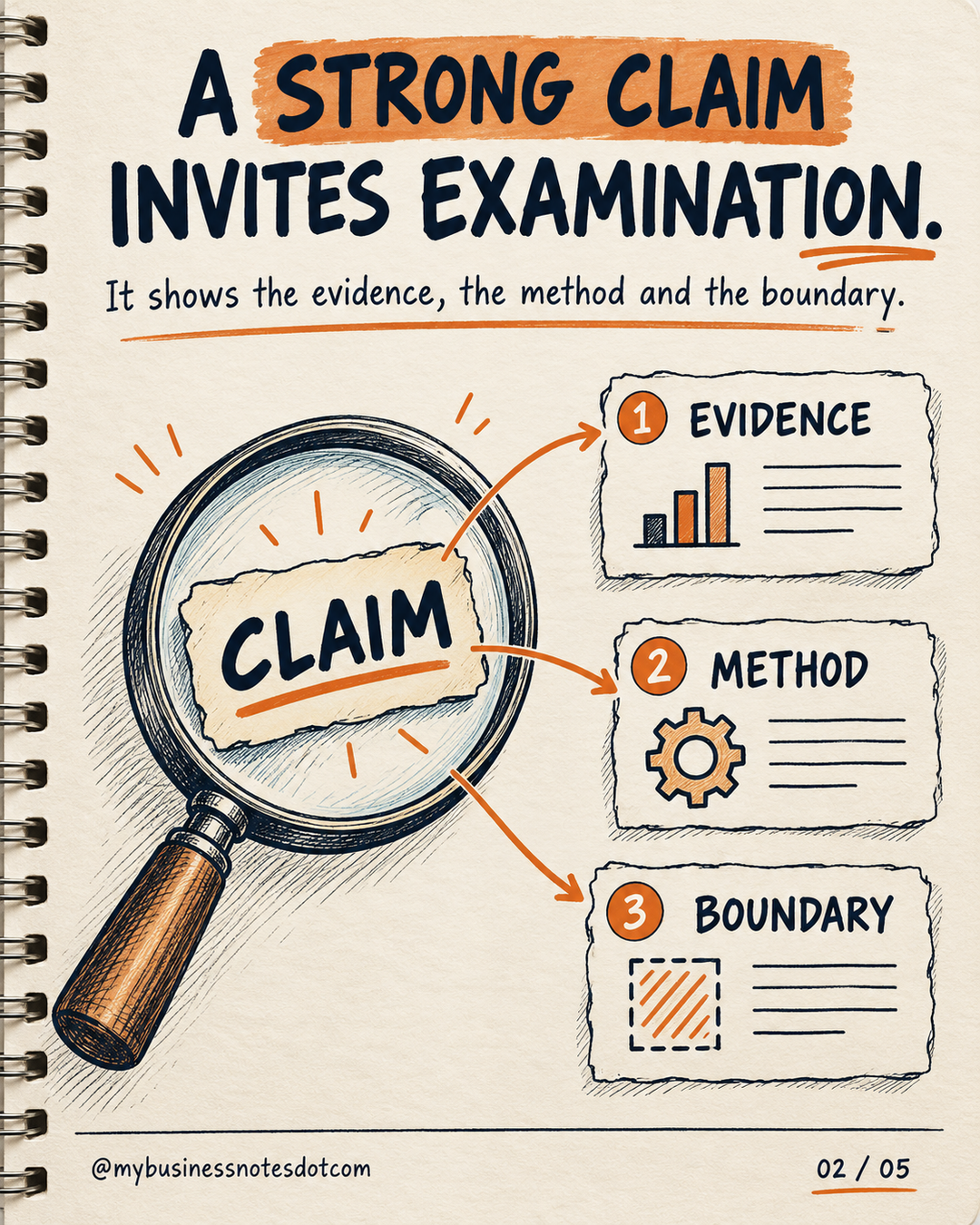
Slide 1 of 5
Why confident wording is not enough
A claim can sound precise while hiding an undefined comparison. Faster than what? Measured over which tasks? For whom? A result becomes harder to evaluate when those questions are left to the reader's imagination.
This article presents an editorial review method, not legal advice or a universal compliance checklist. The FTC's US guidance requires support for objective advertising claims before dissemination. Requirements elsewhere and in regulated sectors may differ; obtain qualified review when appropriate.
Source: make the origin traceable
Identify the original record, research publication or measurement system. Prefer a direct source to a chain of summaries. Check who created it, when it was produced and whether you have permission to publish the material.
A customer quote is a source for what that person said. It is not automatically a source for an objective claim about all customers. Likewise, your own dataset is not independent validation simply because it is displayed in a chart.
Method: explain how the evidence was produced
Describe the measure, comparison, inclusion rules and collection conditions. Readers should understand enough to distinguish an observation from an estimate or controlled test. Avoid scientific-sounding labels when the method does not justify them.
Strategyzer's experimentation guidance draws a useful distinction between stated interest and behavior. Interviews can illuminate expectations and objections. They do not establish that a customer will pay or that a product produces a particular outcome. Use each method for the question it can answer.
Context: state where the result applies
Preserve the customer situation, period, baseline and relevant constraints. A measurement from a prepared demonstration may not transfer to an unprepared environment. A result achieved by one team does not define the typical result for every buyer.
In a hypothetical case, a provider observes shorter reporting time after standardizing input files. An honest statement would describe the specific workflow and the accompanying preparation change. A blanket promise that the service makes every business faster would exceed the observation.
Limit: say what remains unknown
Explain uncertainty, exclusions and alternative explanations in plain language near the claim. An important limitation should not depend on a reader finding a distant footnote. Narrow the statement when the support is narrow.
Nielsen Norman Group's trust research highlights up-front disclosure and comprehensive, current information. This is a useful communication principle, not proof that a disclaimer will increase sales. The aim is to help the reader evaluate the offer accurately.
Run an inspectable claims review before publication
List the material claims on a page, including implications created by images, headlines and comparisons. For each one, attach the source, method, context and limit. Mark unsupported statements for removal, qualification or further investigation.
Ask a colleague unfamiliar with the project what they believe the page promises. That check can expose implications the writer missed. For consequential claims, involve the person responsible for the evidence and the appropriate specialist reviewer.
Keep an owner and review date with the claim register. Update wording when the product, source or conditions change. GOV.UK's distinction between observation, finding and action helps preserve this audit trail. A claim should remain inspectable after it has left the writer's desk, not only during approval.
Frequently asked questions
What are inspectable claims?
They are statements whose source, method, context and limits are accessible enough for a reader to evaluate. Inspectability does not by itself guarantee truth.
Does every claim need a public dataset?
No. Explain the basis and relevant limits without exposing confidential information. If evidence cannot be shared, do not imply a level of independent verification that readers cannot establish.
Can a disclaimer fix an unsupported promise?
Not reliably. First remove or narrow unsupported wording. Important limitations must not contradict the overall message or be hidden from the reader.
Download the complete carousel
Use the five-slide worksheet in your next working session.
Related reading: Turn learning into the next decision.
International references
- Strategyzer / Kurt Bostelaar — Customer interviews that produce insights
- Strategyzer / Alex Osterwalder — Don’t believe your customers
- Strategyzer / Nabila Amarsy — Ways to test your value proposition
- GOV.UK User research community — Using in-depth interviews
- Christensen Institute — Jobs to Be Done
- Nielsen Norman Group / Jakob Nielsen — Interviewing Users
- Nielsen Norman Group / Amy Schade — Avoid Leading Questions
- Strategyzer — Value Proposition Canvas
- Nielsen Norman Group / Kate Kaplan — Customer Journey Maps
- GOV.UK User research community — Analyse a research session
- Nielsen Norman Group / Aurora Harley — Trustworthy design
- FTC — Advertising substantiation policy
- FTC — Advertising FAQs for small business
- Nielsen Norman Group / Kate Moran — Technical jargon
- Strategyzer — Evidence strength