

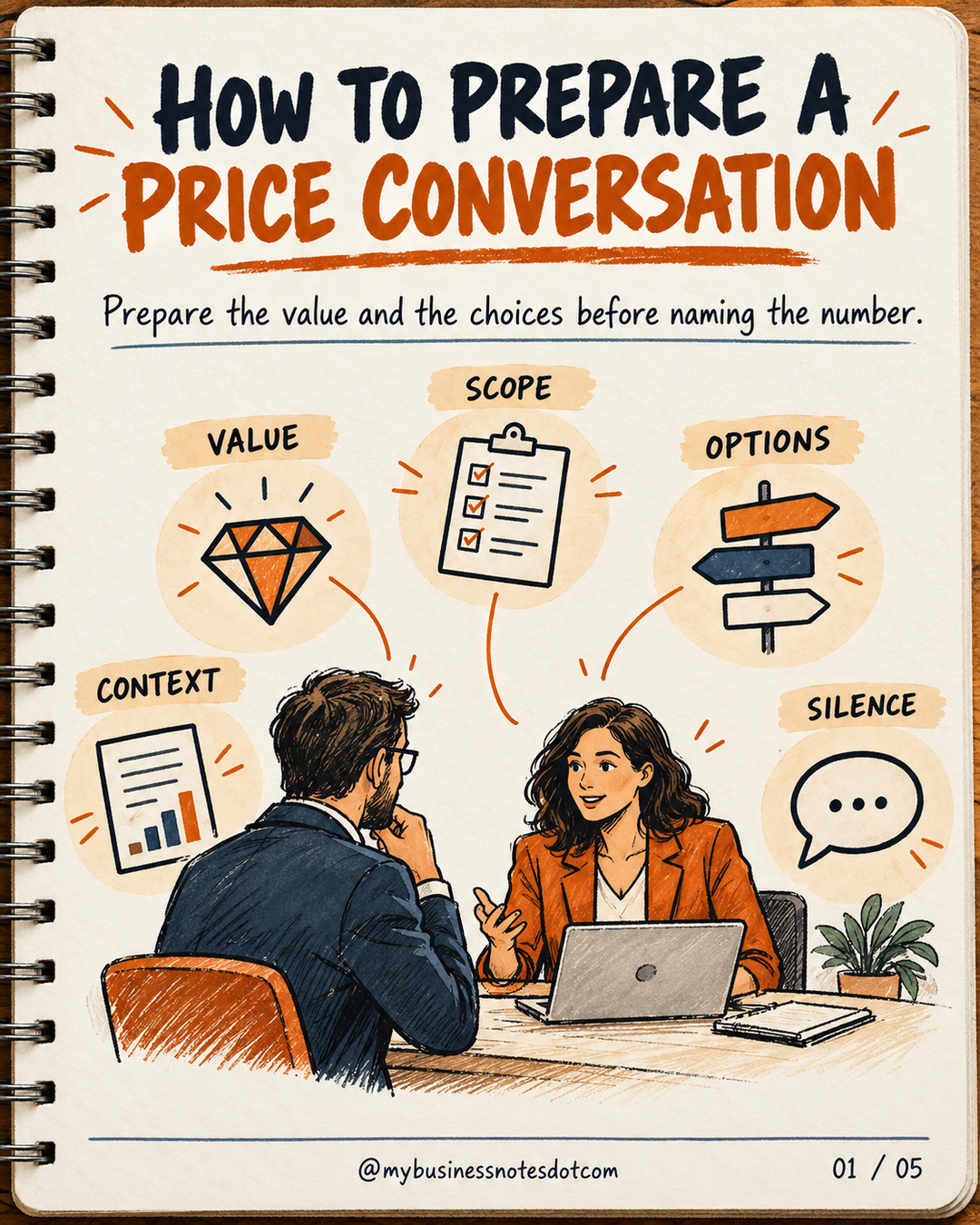
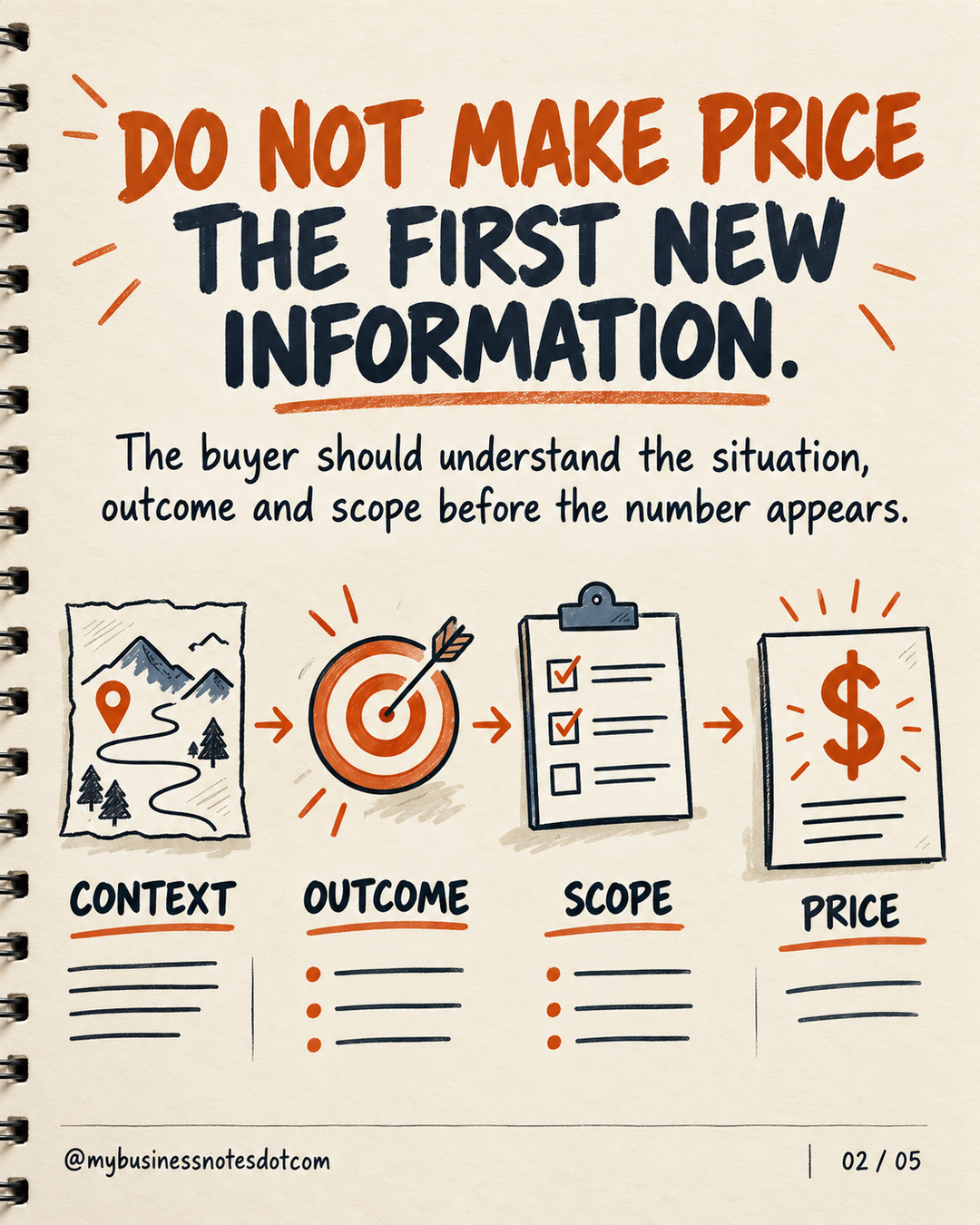
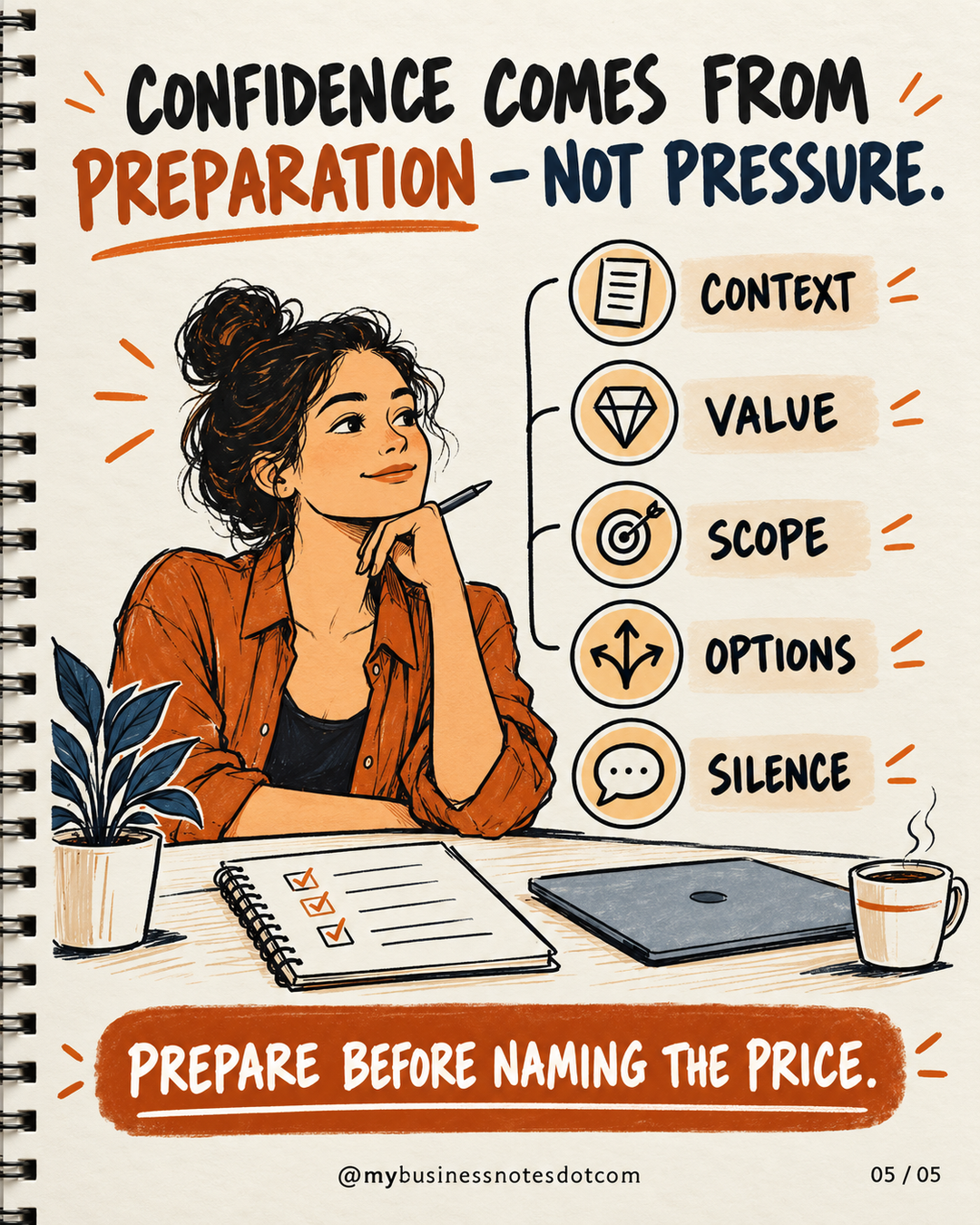
Prepare a price conversation by clarifying context, value, scope and workable options before stating the amount. Then pause to understand the response. Preparation supports an informed exchange; silence should not be used to pressure someone into agreement.
Slide 1 of 5
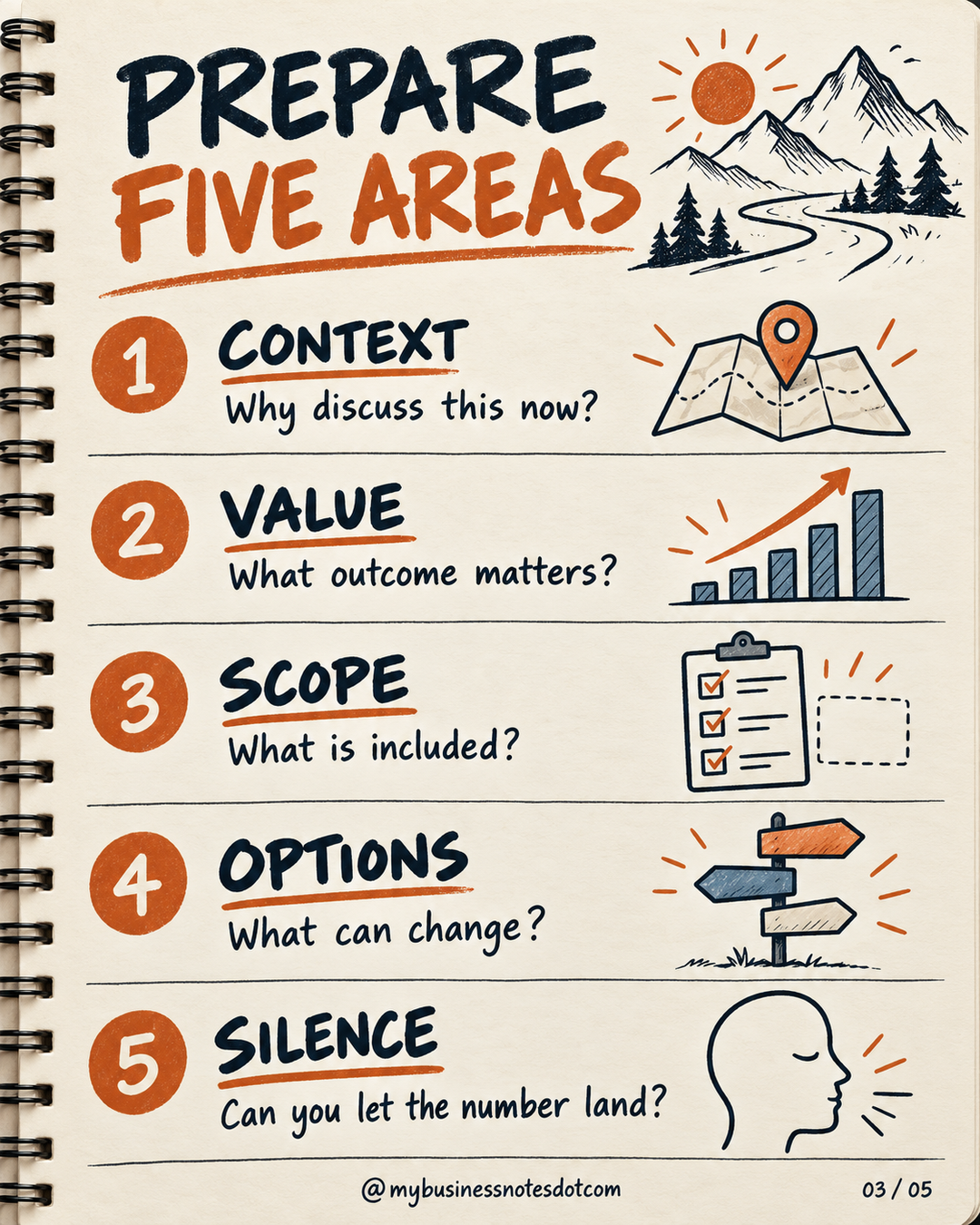
Context: know the decision the buyer is making
Before the meeting, write down the buyer's situation, the relevant alternative and who needs to evaluate the offer. Distinguish what you know from what you still need to ask. A contact who likes the service may not control the budget.
Jobs to Be Done is useful for framing progress in context. Ask about the last comparable decision rather than relying only on predictions. GOV.UK's interview guidance recommends real examples and neutral follow-ups, which can reveal constraints without assuming a sale.
Value: connect the work to a credible change
Prepare a concise explanation of the outcome and the conditions that matter. The Value Proposition Canvas can help expose gaps between the customer's job and your proposed service. It is a thinking tool, not evidence of fit.
Choose one relevant demonstration or case record rather than overwhelming the buyer. Keep an example distinct from a promise. The FTC's US advertising guidance illustrates the need for substantiation when an offer includes objective performance or savings claims.
Scope: make the price comparable
Summarize the deliverables, customer inputs, timing, exclusions and material terms. Make clear whether implementation, training and ongoing support are included. A price conversation becomes unproductive when each side is discussing a different service.
For a hypothetical onboarding project, a lower estimate may assume customer-prepared data while another includes cleanup. Explain that difference before debating which number is fair. Avoid describing necessary work as an optional extra if the promised outcome depends on it.
Options: decide what can change before the meeting
Prepare economically viable changes in scope, sequence or timing. Know who can approve a concession and when no agreement is preferable. Harvard Business School's strategy guidance highlights trade-offs; a useful option reflects a real operating choice.
Program on Negotiation's concession guidance recommends making the exchange explicit. For example, a longer delivery window might permit a lower cost if it actually changes staffing demands. Do not offer a price reduction based on a condition that creates no real benefit or cannot be honored.
Business Victoria advises examining the effect of discounts on profit. Check costs, capacity and cash timing before the call, rather than improvising a concession that the delivery team must absorb later.
Silence: leave space for the response
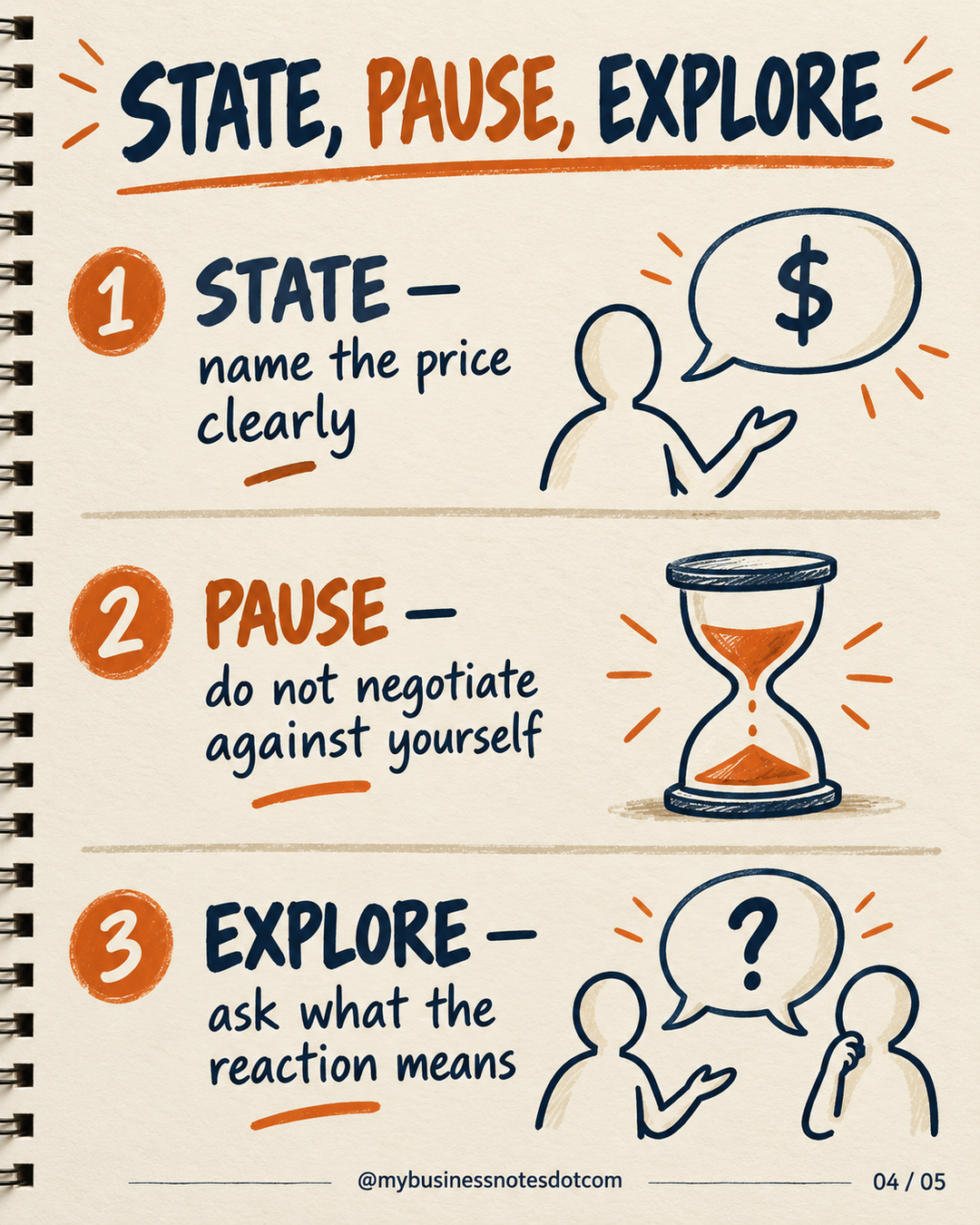
State the amount and terms plainly. Then allow the buyer to think, ask questions or consult others. Do not immediately fill the pause with extra promises or an unrequested reduction. Silence is space for consideration, not a test of who yields first.
When a concern emerges, ask what they mean before responding. Nielsen Norman Group's guidance on leading questions is relevant here: a question that embeds your preferred answer can collect agreement while hiding the real issue.
Close the price conversation with an accurate record
Summarize what was understood, what remains unresolved and the next step, if any. Record changes to scope and terms in writing. Do not treat a friendly reaction as approval or a request for a proposal as a purchase commitment.
Strategyzer's experimentation guidance distinguishes statements from behavior. Review outcomes over several comparable conversations, including deals you decline, to identify recurring uncertainty. Avoid rewriting the entire pricing model after one strong reaction.
Use the five preparation areas as a checklist, not a rigid script. The goal is a clear decision that both sides can explain and responsibly fulfill, whether that decision is yes, later or no.
Frequently asked questions
What should I prepare before a price conversation?
Clarify the buyer's context, expected value, scope, viable options and your approval boundaries. Bring appropriate evidence and accurate terms.
Should I immediately offer a discount after stating the price?
No. First allow time for a response and investigate any concern. A concession should address a real constraint and be checked for economic viability.
How should I handle silence after naming the price?
Allow thinking time without using the pause as pressure. Invite questions and clarify uncertainty rather than assuming silence means rejection.
Download the complete carousel
Use the five-slide worksheet in your next working session.
Related reading: Turn learning into the next decision.
International references
- Business Victoria — Develop discount strategies
- Deepak Malhotra / Harvard Program on Negotiation — Four strategies for making concessions
- Harvard Business School ISC — Creating a Successful Strategy
- Strategyzer — Value Proposition Canvas
- Nabila Amarsy / Strategyzer — Ways to test your value proposition
- Alex Osterwalder / Strategyzer — Don’t believe your customers
- GOV.UK User research community — Using in-depth interviews
- Amy Schade / Nielsen Norman Group — Avoid leading questions
- Christensen Institute — Jobs to Be Done
- FTC — Advertising FAQs for small business