

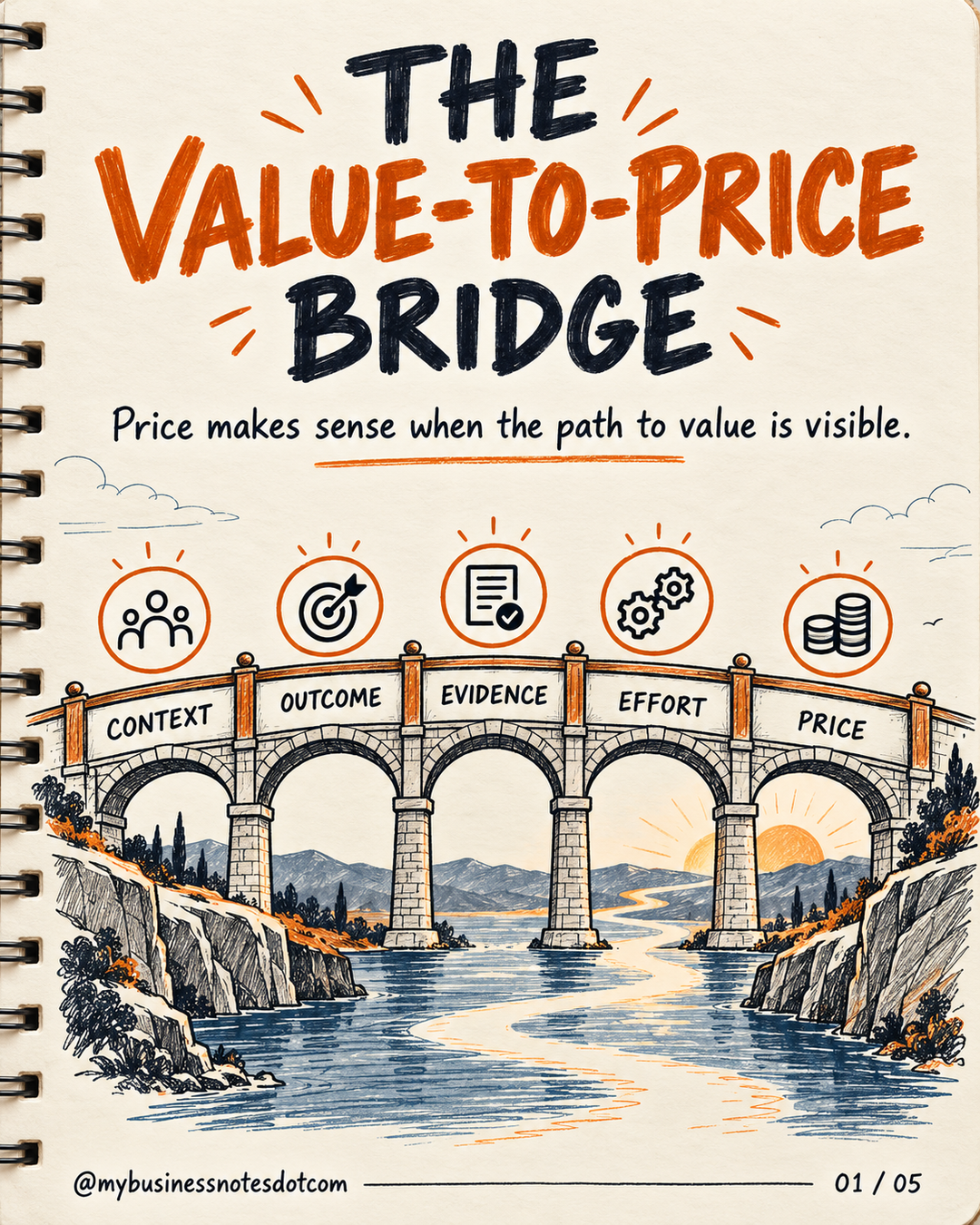
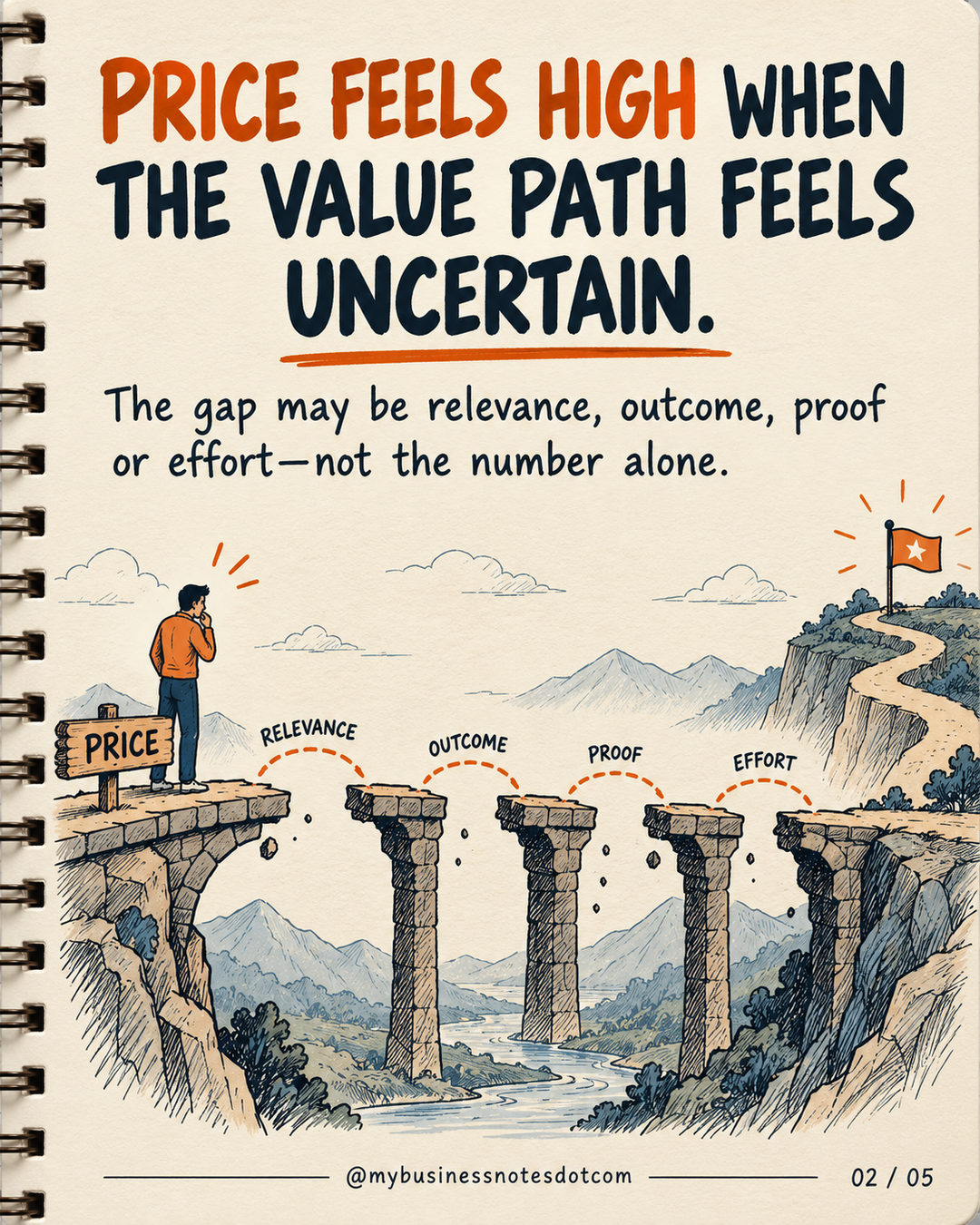
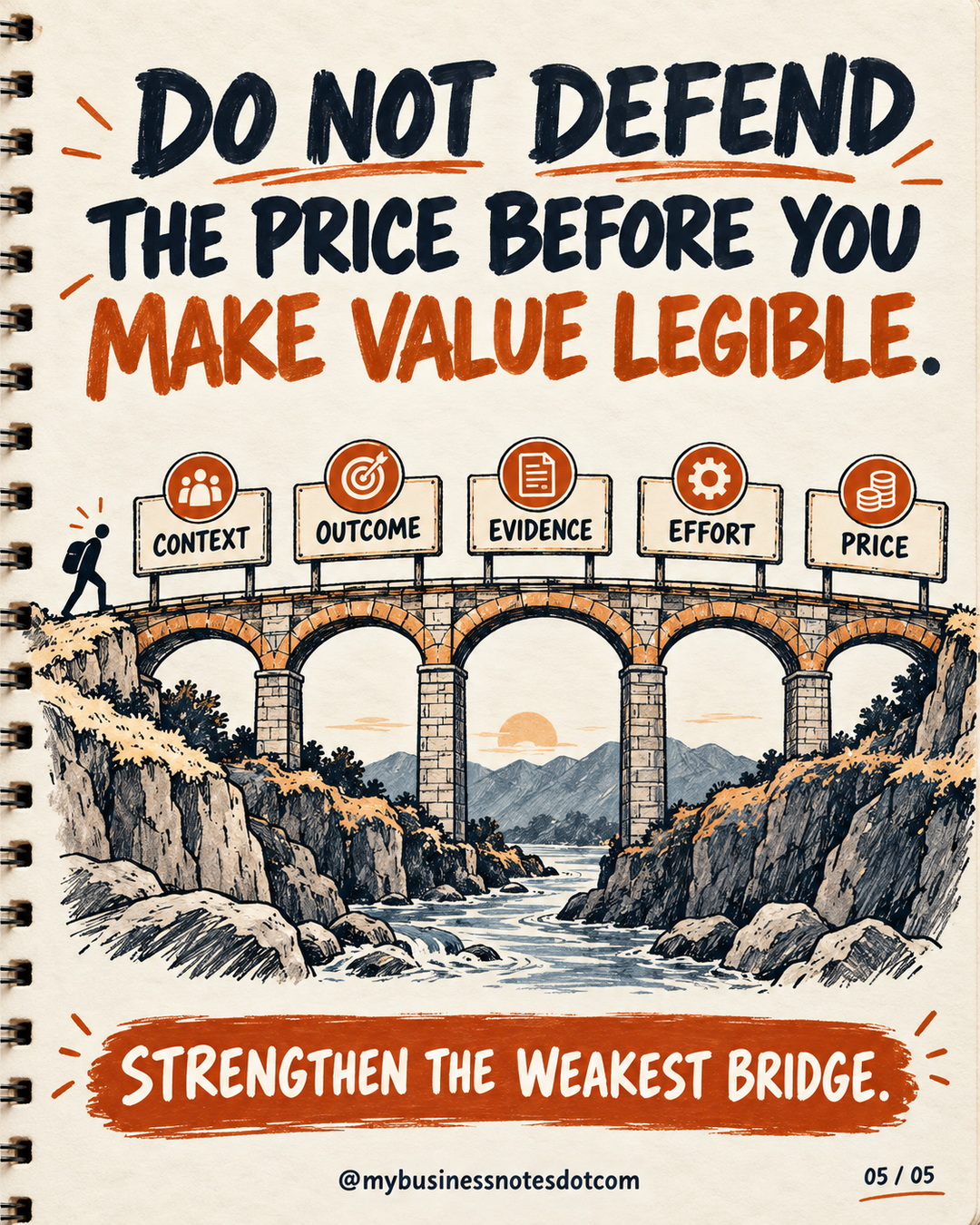
The value-to-price bridge connects a buyer's situation with the outcome, evidence, effort and payment involved in an offer. When the price feels hard to assess, inspect those connections before assuming a discount is the answer.
Slide 1 of 5
A price needs a meaningful comparison
A buyer cannot assess an isolated number responsibly. They need to know what problem the offer addresses, what changes, how credible the change is and what adoption will require. This does not mean delaying price disclosure until the end of a sales performance.
Provide price information early enough for practical evaluation, with the necessary scope and terms. The bridge below is an MBN explanation tool. It helps locate missing information; it does not predict which price a buyer will accept.
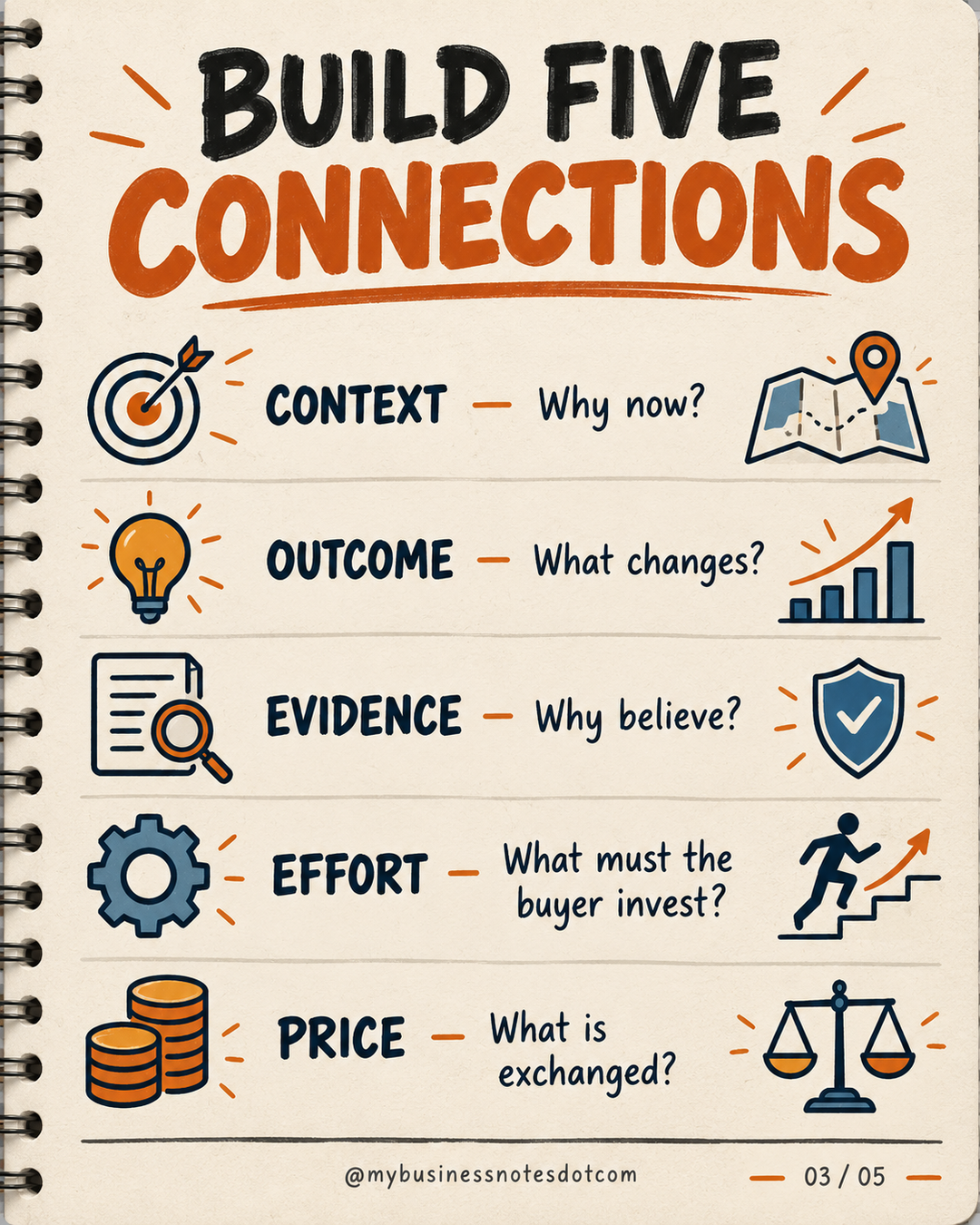
Context: why does this problem matter now?
Identify the task, trigger and alternative. Jobs to Be Done examines progress within a circumstance, which helps distinguish an urgent operational need from general interest. Do not invent urgency when the buyer has no reason to act.
Ask about a recent instance using open, neutral questions. GOV.UK and Nielsen Norman Group offer useful interviewing guidance. Preserve the buyer's account separately from your interpretation so your preferred solution does not become the premise of every answer.
Outcome: what would change, and for whom?
Describe a concrete improvement and the boundary of your responsibility. The Value Proposition Canvas connects customer jobs and pains to an offer, but drawing a connection does not validate it. Specify the conditions under which the proposed benefit might occur.
In a hypothetical reporting service, the immediate output might be a reconciled weekly report. A clearer management decision is a possible use of that output, not a guaranteed result. Keeping those levels separate makes the proposal more accurate.
Evidence: why should this particular claim be believed?
Choose support for the exact uncertainty. A demonstration can show how a report is produced; a delivery checklist can explain quality control. A past result needs its baseline, period and relevant conditions. None of these automatically proves every future outcome.
The FTC's US advertising guidance is a useful reminder that objective promises require support. Do not turn an illustrative calculation or a customer's opinion into a universal savings claim. Get specialist review when your sector or market requires it.
Effort: what must the buyer contribute?
Include setup, data access, staff time, training and ongoing work. If the buyer lacks those resources, repeating the benefit will not make the offer feasible. A narrower first phase may be appropriate, but explain what it will and will not achieve.
Harvard Business School's strategy guidance emphasizes trade-offs. Apply that discipline to scope: removing effort from the customer may transfer it to your team, increase cost or require a different delivery model. Do not promise effortless adoption without a basis.
Price: make the exchange clear and test the bridge
State the amount, payment schedule, included work and material conditions together. If the budget is constrained, explore a genuine change in scope or timing rather than disguising the same service behind a temporary concession. Check the economic effect before agreeing.
Business Victoria's guidance shows why discount planning must consider profit, not just sales volume. Strategyzer's experimentation guidance also distinguishes what people say from what they do. Use reactions to locate uncertainty, then observe appropriate, transparent next steps around an offer you can deliver.
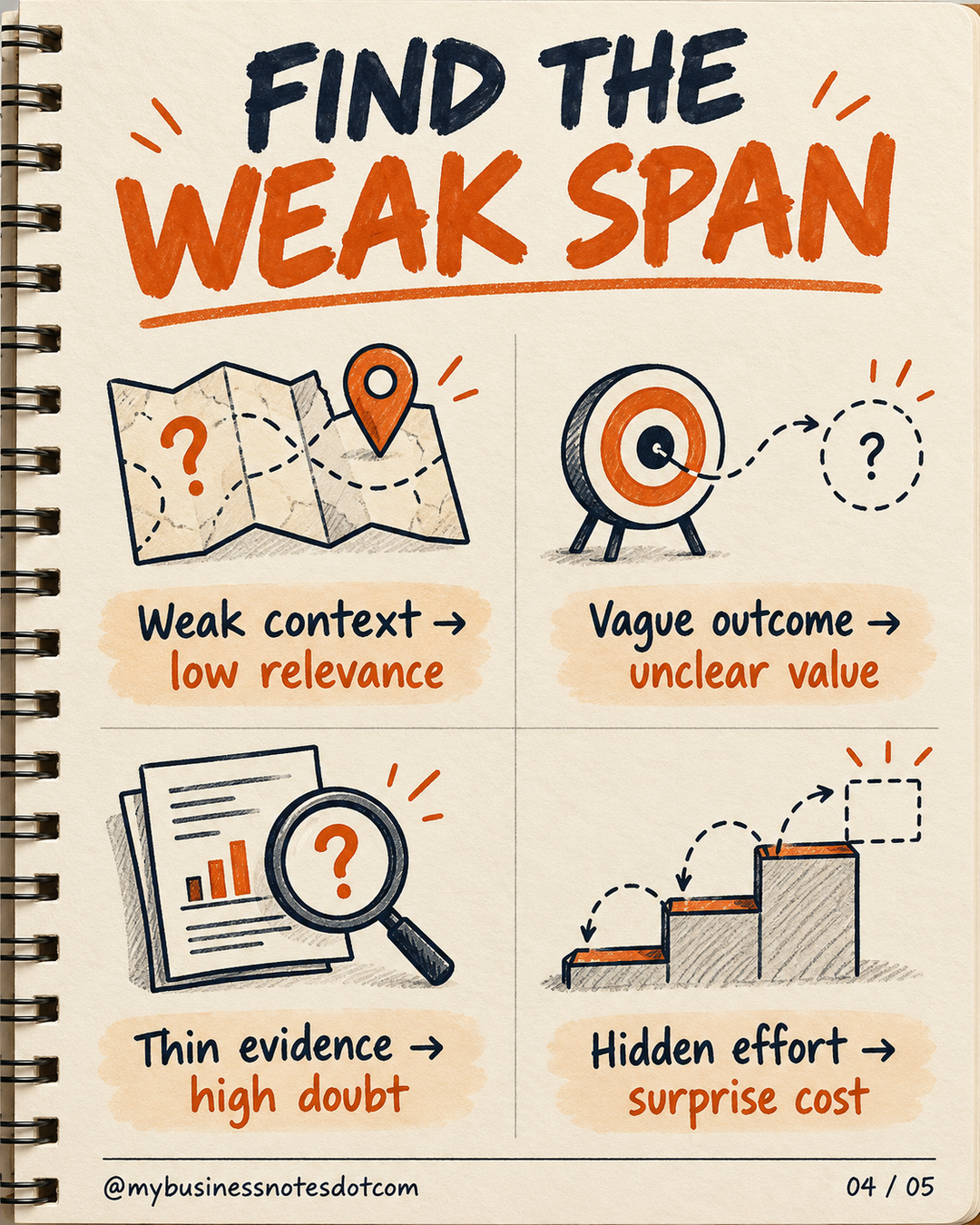
Review one proposal by asking the buyer to explain the path from their situation to the expected benefit. Record what remains unclear. Strengthen that weak connection before adding more claims, more slides or more pressure.
Frequently asked questions
What is the value-to-price bridge?
It is an explanation of customer context, expected outcome, evidence, required effort and price. It helps buyers evaluate the exchange and helps sellers identify missing information.
Should I hide the price until value is fully explained?
No. Give useful price and scope information early enough for informed evaluation. Explaining value should not become a reason to obscure the cost.
What if the buyer understands the value but cannot afford it?
Treat the constraint as real. Consider a viable smaller scope, different timing or no agreement. A clearer explanation cannot create a budget that does not exist.
Download the complete carousel
Use the five-slide worksheet in your next working session.
Related reading: Turn learning into the next decision.
International references
- Business Victoria — Develop discount strategies
- Deepak Malhotra / Harvard Program on Negotiation — Four strategies for making concessions
- Harvard Business School ISC — Creating a Successful Strategy
- Strategyzer — Value Proposition Canvas
- Nabila Amarsy / Strategyzer — Ways to test your value proposition
- Alex Osterwalder / Strategyzer — Don’t believe your customers
- GOV.UK User research community — Using in-depth interviews
- Amy Schade / Nielsen Norman Group — Avoid leading questions
- Christensen Institute — Jobs to Be Done
- FTC — Advertising FAQs for small business