

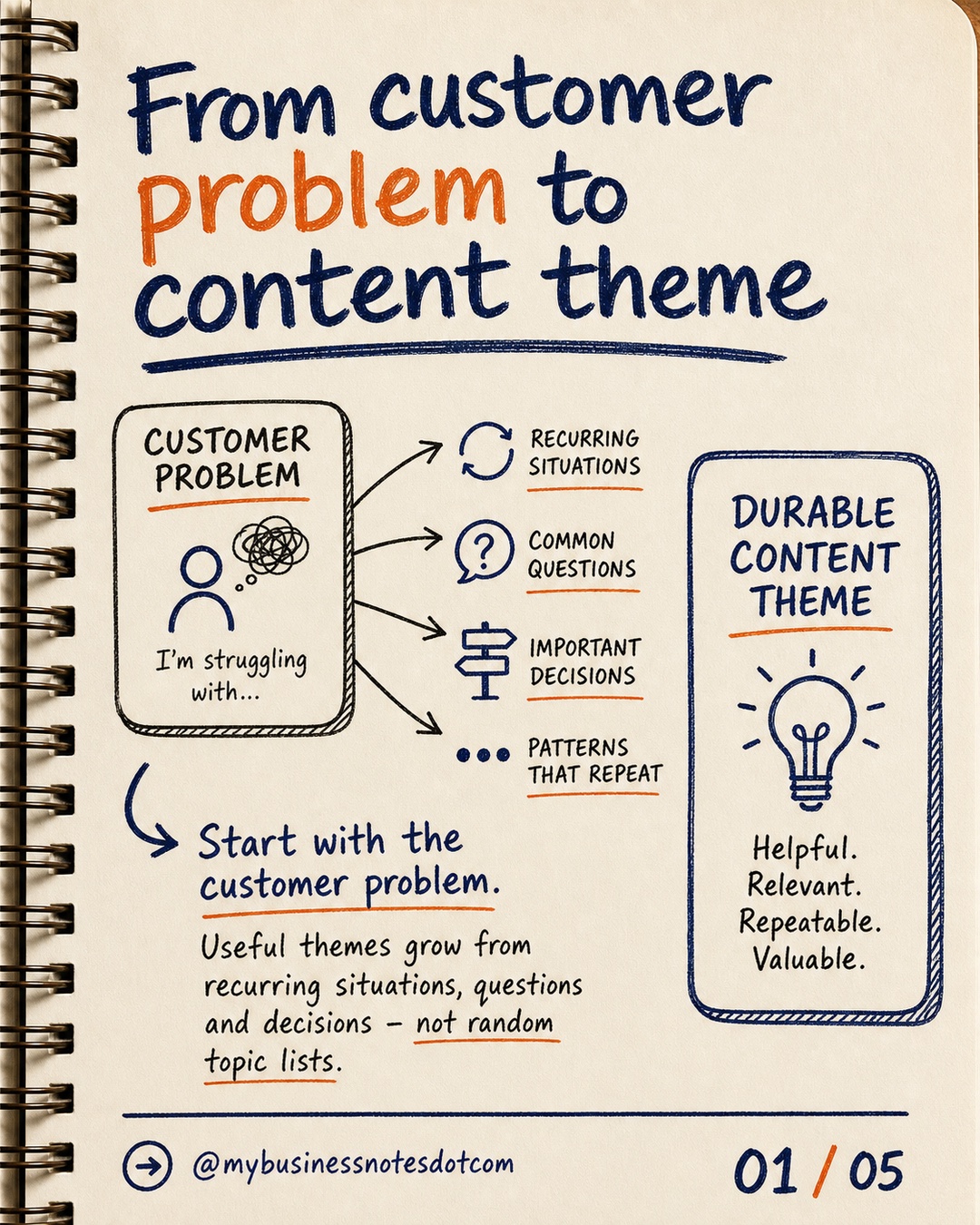
Content themes turns the central principle into an explicit decision: Useful themes grow from recurring situations, questions and decisions – not random topic lists. This article develops that decision into a practical management framework, helping teams move from activity to coordinated action and useful evidence.
Slide 1 of 5
What this framework helps you decide
Useful themes grow from recurring situations, questions and decisions – not random topic lists.
The value of a framework is not the appearance of certainty. It is the quality of the conversation it creates. Use the following sections to expose assumptions, focus attention, and convert an abstract intention into a decision that can be reviewed.
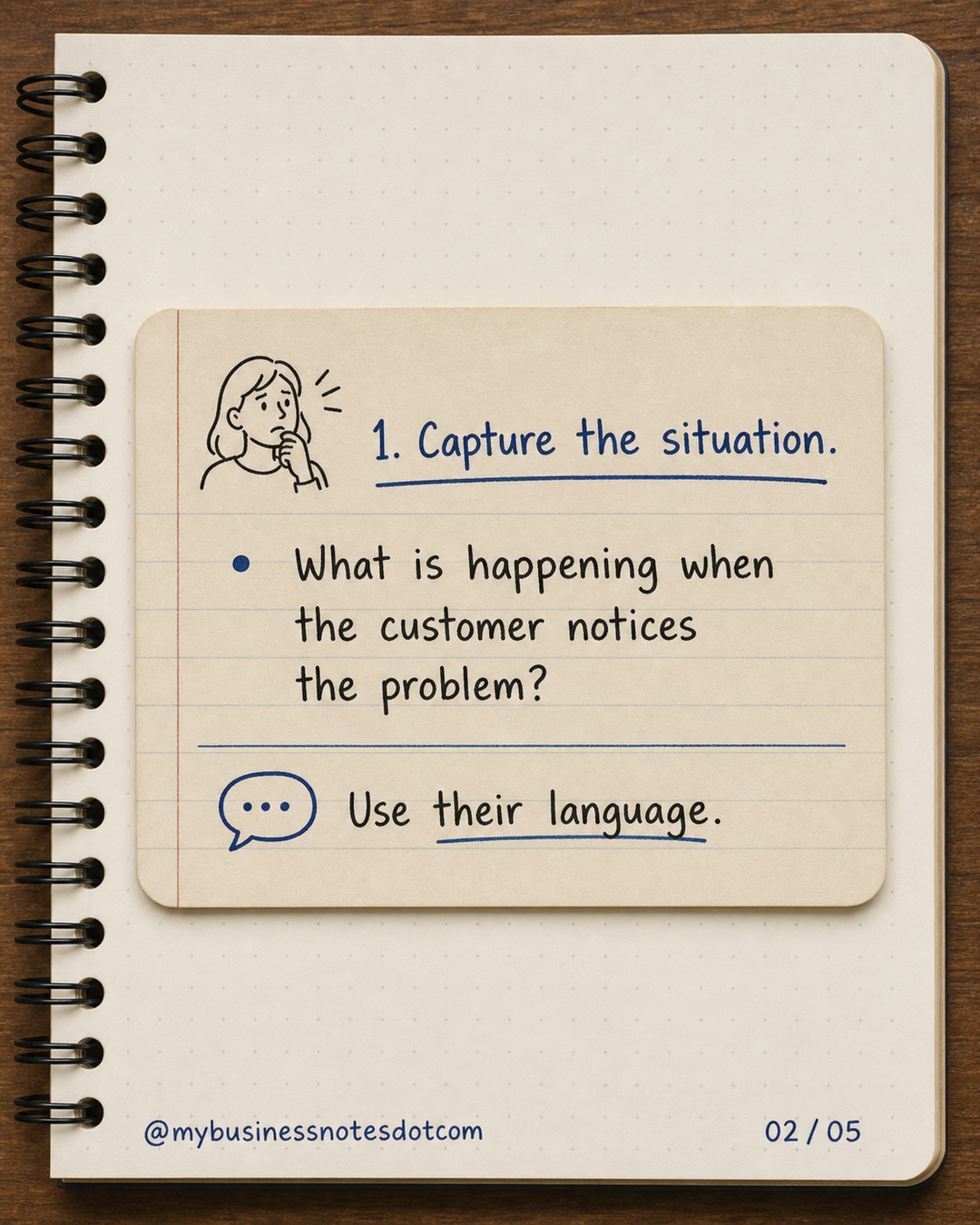
1. Capture the situation.
What is happening when the customer notices the problem? Use their language.
Capture the customer’s situation in their own language: the trigger, desired progress, obstacles, risks, and questions that appear along the way. Real situations produce richer themes than broad topic labels because they connect content to a recognisable moment.
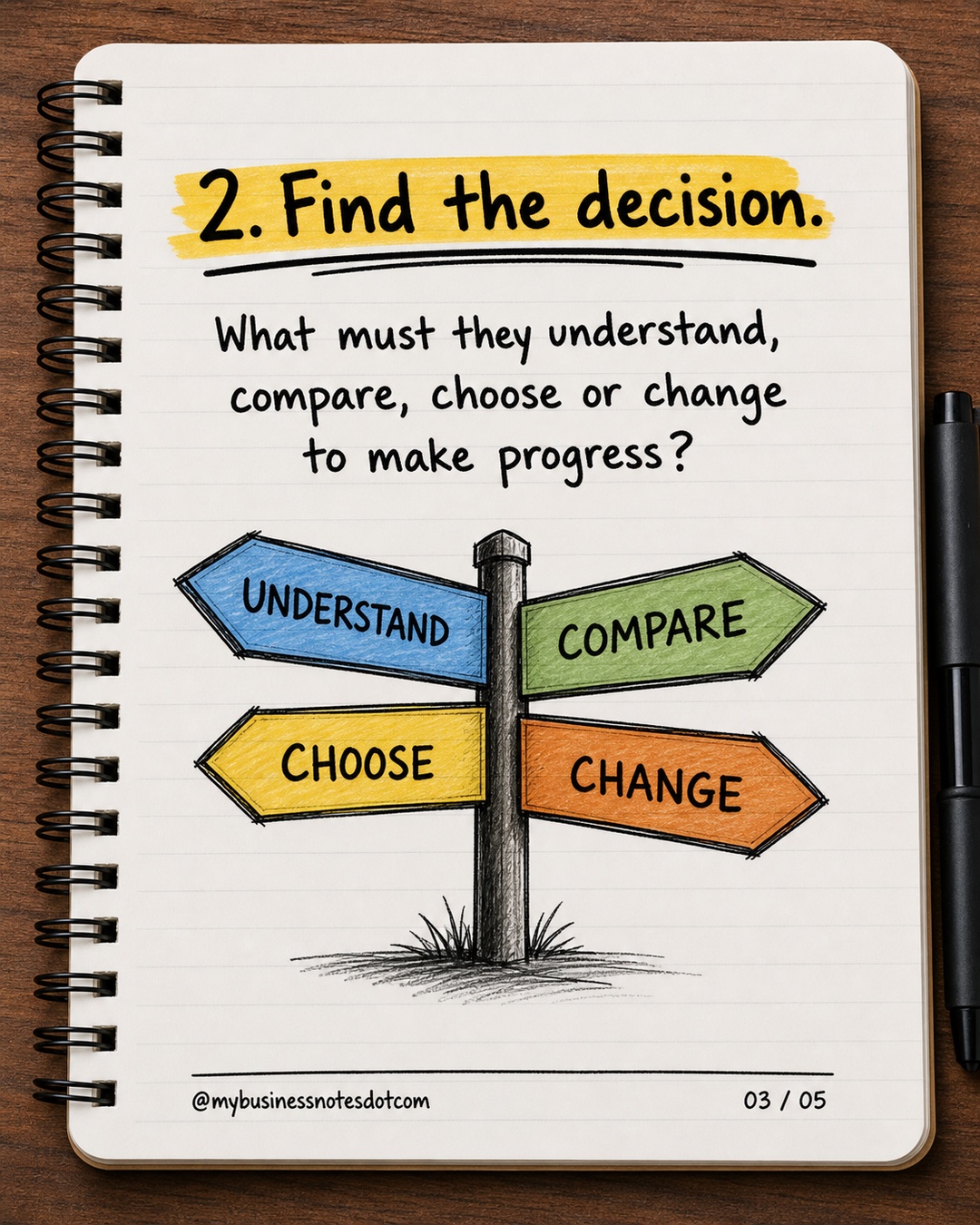
2. Find the decision.
What must they understand, compare, choose or change to make progress?
Find the decision or tension inside that situation. Ask what the audience must understand, compare, believe, or do next. A content theme becomes useful when it repeatedly helps people make a meaningful choice rather than simply covering a subject.
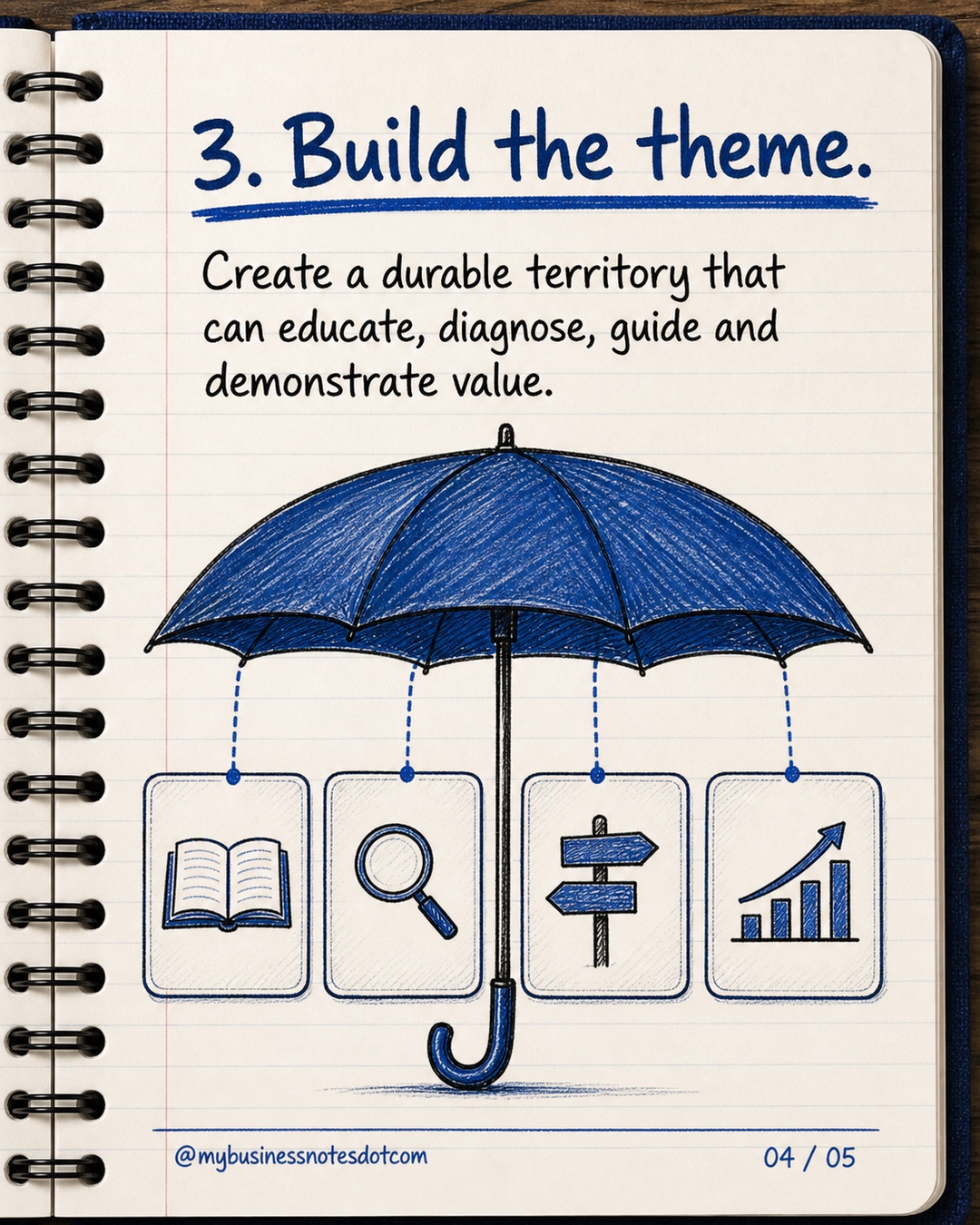
3. Build the theme.
Create a durable territory that can educate, diagnose, guide and demonstrate value.
Build the theme as a durable territory with a clear promise, supporting questions, proof, and practical applications. It should be broad enough to sustain exploration but specific enough to guide selection. Define what belongs to the theme and what does not.
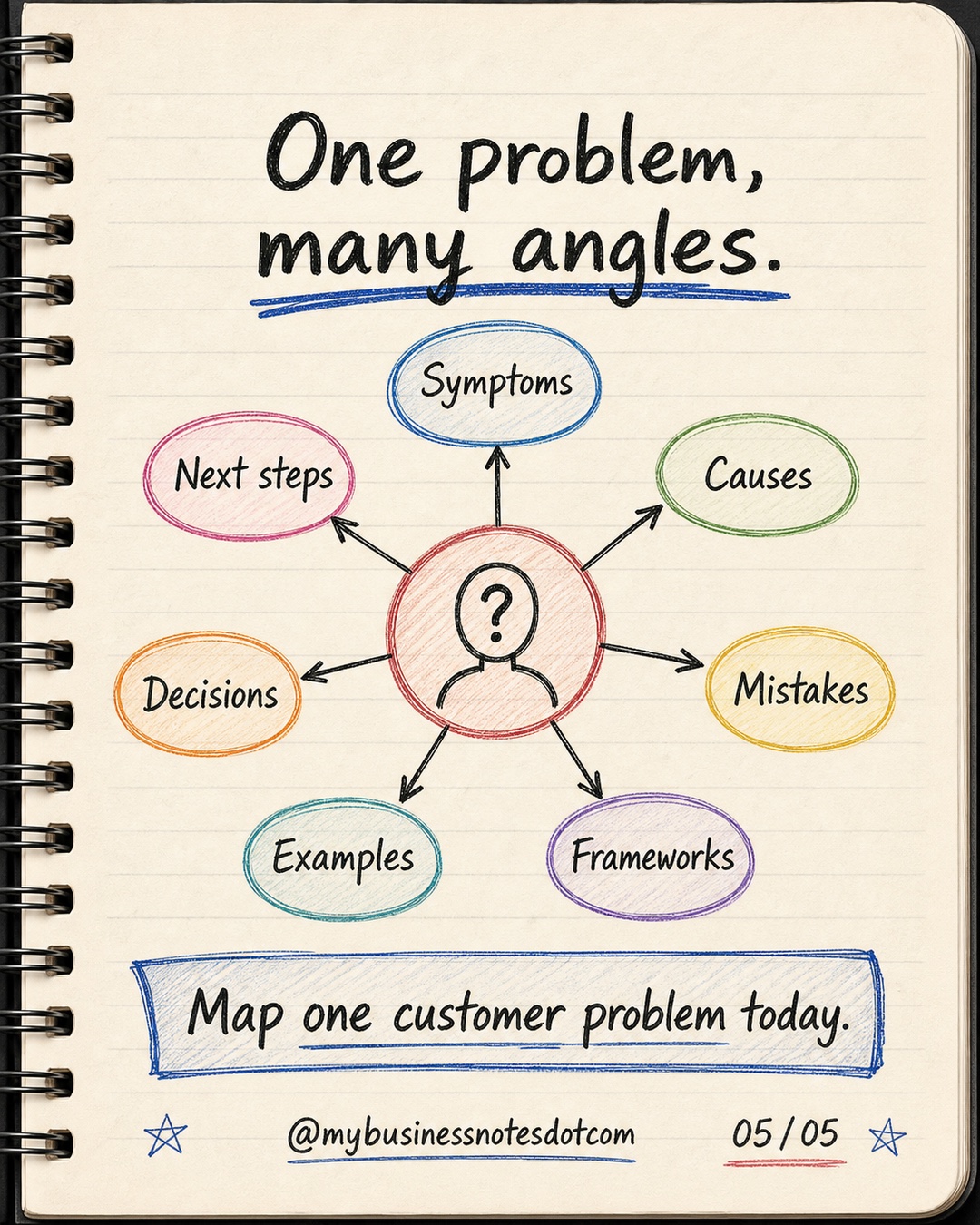
One problem, many angles.
Symptoms. Causes. Mistakes. Frameworks. Examples. Decisions. Next steps.
Develop multiple angles from the same customer problem: explanation, diagnosis, comparison, example, objection, tool, and next step. Adapt the form to the channel while preserving the underlying idea. This increases coherence and reuse without publishing repetitive content.
A practical example
If customers repeatedly say they cannot connect marketing activity to revenue, the durable theme is not “analytics tips.” It may be “marketing decision evidence,” covering symptoms, causes, attribution limits, reporting frameworks, meeting routines, examples and next steps.
The mistake to avoid
Starting with popular keywords alone can produce disconnected topics that attract attention without building a coherent understanding of the customer’s decision.
How to apply the framework
Begin with the business result and the customer or operational context. Work through the framework in sequence, but spend more time where uncertainty is highest. Record the decision, the reasoning behind it, and the signal that would cause the team to reconsider.
A useful review ends with subtraction as well as addition. Identify what will stop, what will receive protected attention, and who is accountable for the next visible step. Without those trade-offs, even a clear discussion can dissolve into more activity.
For related guidance, see The four pillars of content strategy and Marketing as value creation.
Frequently asked questions
What is content themes?
Content themes is a practical way to organize decisions around the result, audience, actions and evidence described in this article.
Why does content themes matter?
It matters because it connects activity to an explicit decision and makes progress easier to evaluate, explain and improve.
What is the most common mistake with content themes?
Starting with popular keywords alone can produce disconnected topics that attract attention without building a coherent understanding of the customer’s decision.
How do you start using content themes?
Write the current decision in one sentence, apply the framework to the highest uncertainty, assign one owner and define the next observable evidence.
Put the framework into practice
Map one customer problem today. Use the carousel as a shared review tool, then capture the resulting priority, owner, next action, and evidence in the team’s working system.
Download the complete carousel
Keep the framework as a PDF for your next review.
International references