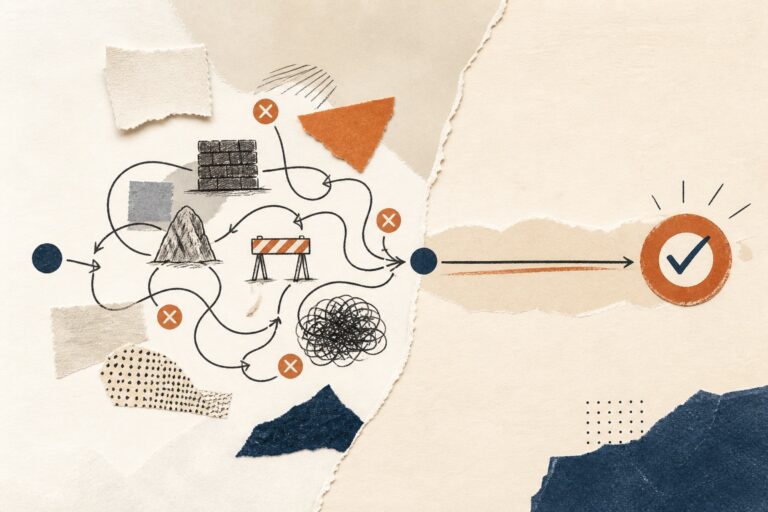

Value communication becomes stronger when it moves through five connected levels: feature, capability, operational effect, business outcome and customer progress. This guide expands the five-slide note into a practical method with criteria, examples and safeguards for managers, marketers and sales teams.


Slide 1 of 5
Why feature lists underperform
Features explain what an offer contains, but customers still have to translate those details into relevance. That translation becomes harder when several stakeholders care about different outcomes. A value stack preserves product truth while making the consequence clear.
The five levels of the stack
- Feature: what the product or service includes.
- Capability: what the customer can now do.
- Operational effect: what becomes easier, faster, safer or more reliable.
- Business outcome: which cost, revenue, risk or strategic result may change.
- Progress: why that change matters in the customer’s circumstances.
This logic complements the Value Proposition Canvas, which connects what an organisation offers with customer jobs, pains and gains.
Build the chain without making leaps
Each level needs a credible connection. “Automated reporting” may enable faster consolidation, which may reduce preparation time and improve decision availability. It does not automatically guarantee profit growth. State assumptions and use evidence appropriate to each link.
Example: a scheduling platform
Feature: automated reminders. Capability: teams can notify customers without manual follow-up. Operational effect: fewer repetitive contacts and missed appointments. Business outcome: better capacity use. Progress: the manager can grow service volume without adding the same amount of coordination work.
Adapt the top of the stack by stakeholder
An end user may value reduced effort; an operations manager may value reliability; finance may examine total cost and risk. Keep the underlying capability consistent while expressing progress in the language and criteria of each stakeholder.
Audit one important message
Underline every feature and ask “so what?” until you reach an outcome grounded in the customer’s context. Then work backwards: can each claim be supported? Remove vague superlatives, preserve necessary detail and lead with the level most relevant to the decision.
Frequently asked questions
What is value communication?
It is the clear connection between what an offer does and the progress or outcome a customer cares about.
Should marketing avoid features?
No. Features provide specificity, but they should be connected to capabilities and relevant outcomes.
What is the difference between benefit and outcome?
A benefit describes an advantage; an outcome describes the observable change the customer seeks.
Can the same message work for every stakeholder?
Usually not. Stakeholders often value different operational effects, risks and outcomes.
Put it into practice
Move one message up the value stack. Record the evidence, decision, owner and next review date that follow.
Download the complete carousel
Keep the five-slide framework as a PDF for your next working session.
International references
- Christensen Institute — Jobs to Be Done Theory
- McKinsey & Company — The B2B customer decision journey
- Salesforce Trailhead — Write a sales proposal
- McKinsey & Company — Embracing the B2B omnichannel opportunity
- Salesforce Help — Einstein Opportunity Scoring
- McKinsey & Company — B2B buyers reset the bar
- Strategyzer — Value Proposition Canvas
- Strategyzer — High-value customer jobs
- Strategyzer — What great value propositions look like
- Strategyzer — Focused value for prospects
- Strategyzer — Value Proposition Canvas mistakes
- Harvard Negotiation Project — Five enduring lessons for negotiators