

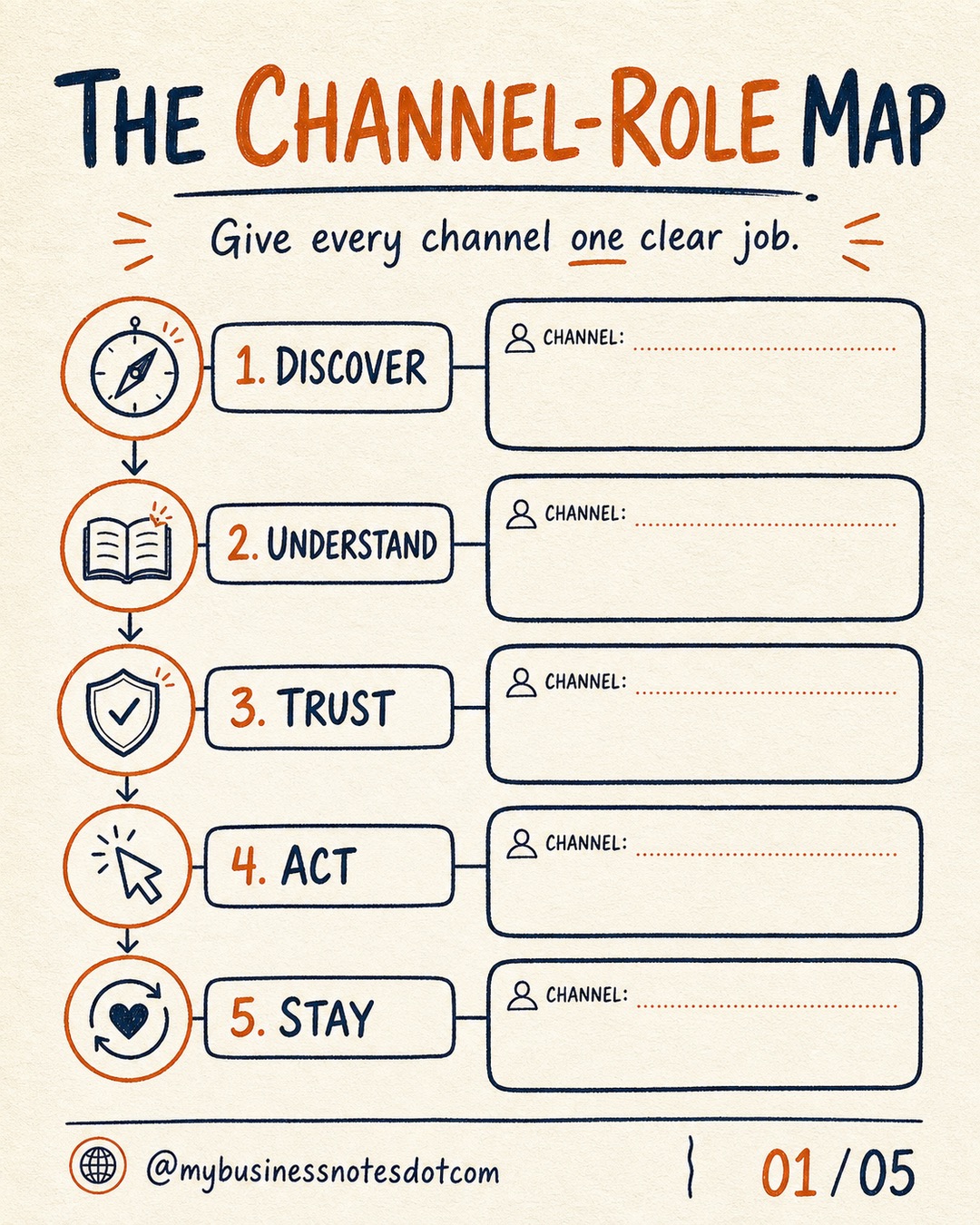
A channel role map assigns one primary job to every marketing and customer channel. It reduces duplication, exposes journey gaps and helps teams choose content, metrics and handoffs that match how customers actually progress. This guide expands the five-slide business note into a practical review with criteria, safeguards and next steps.
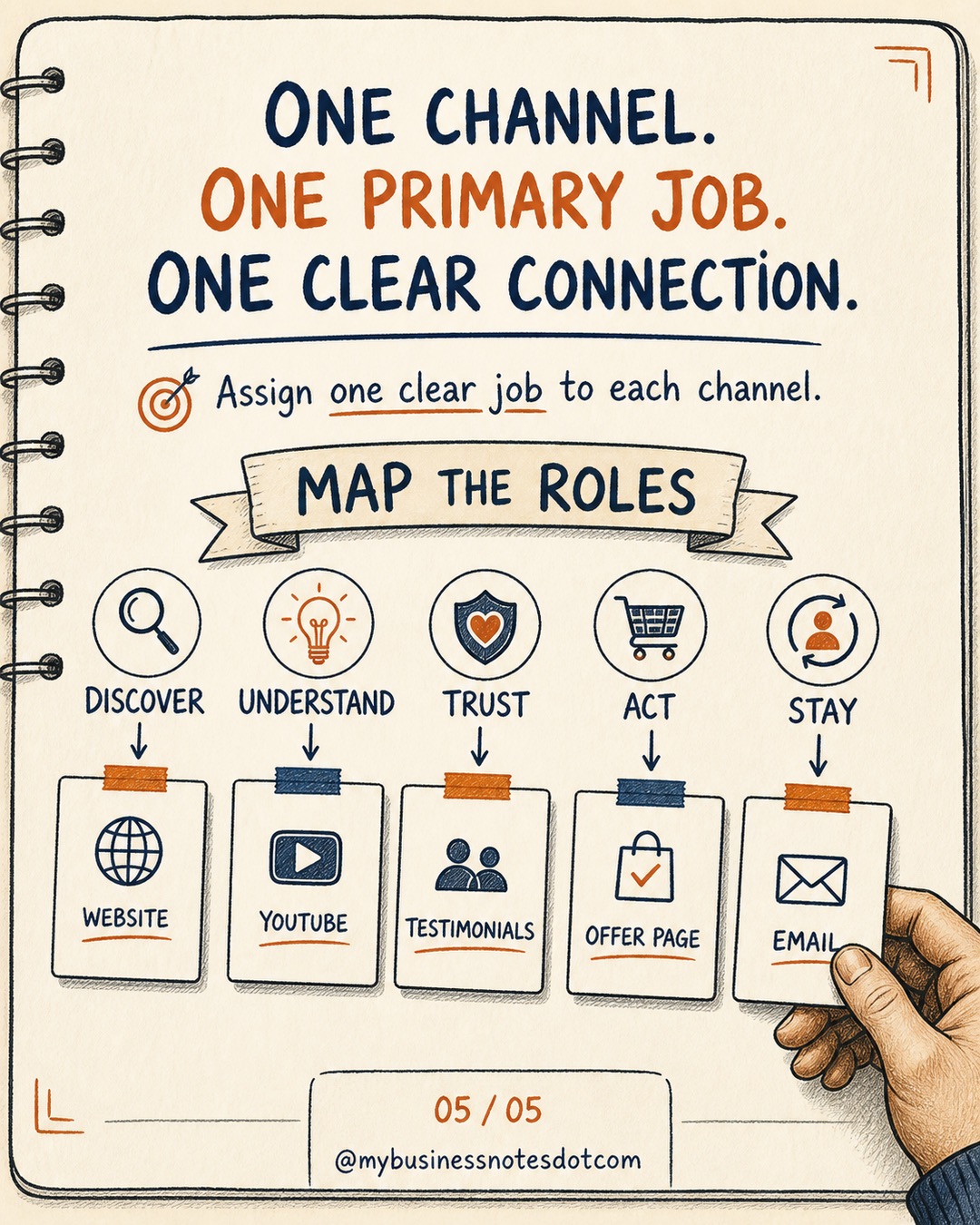
Slide 1 of 5
Why channel presence is not a strategy
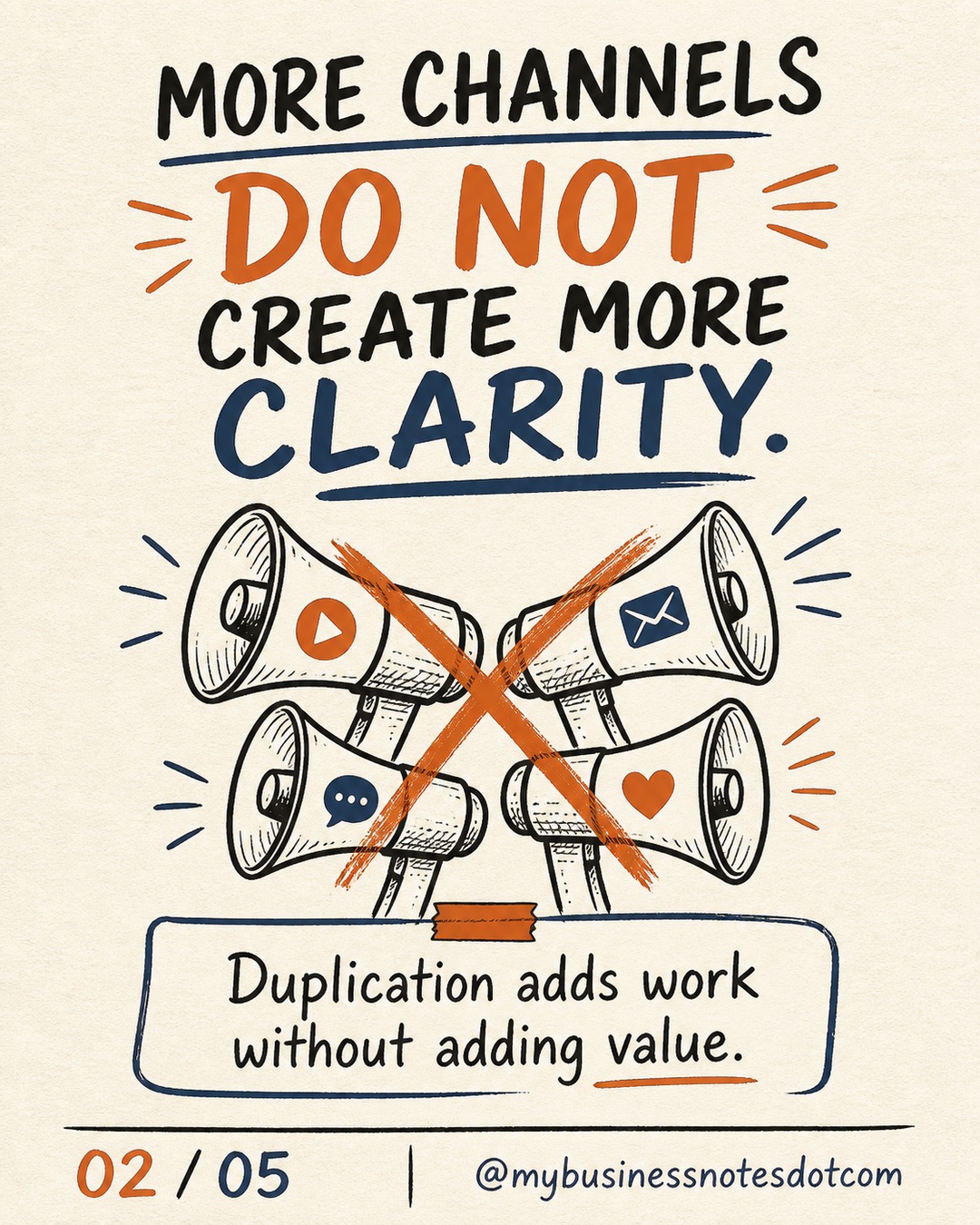
Being active in many places can increase workload without improving the customer journey. When every channel tries to discover, educate, prove value and convert at once, messages blur and performance becomes difficult to diagnose.
Map the five jobs
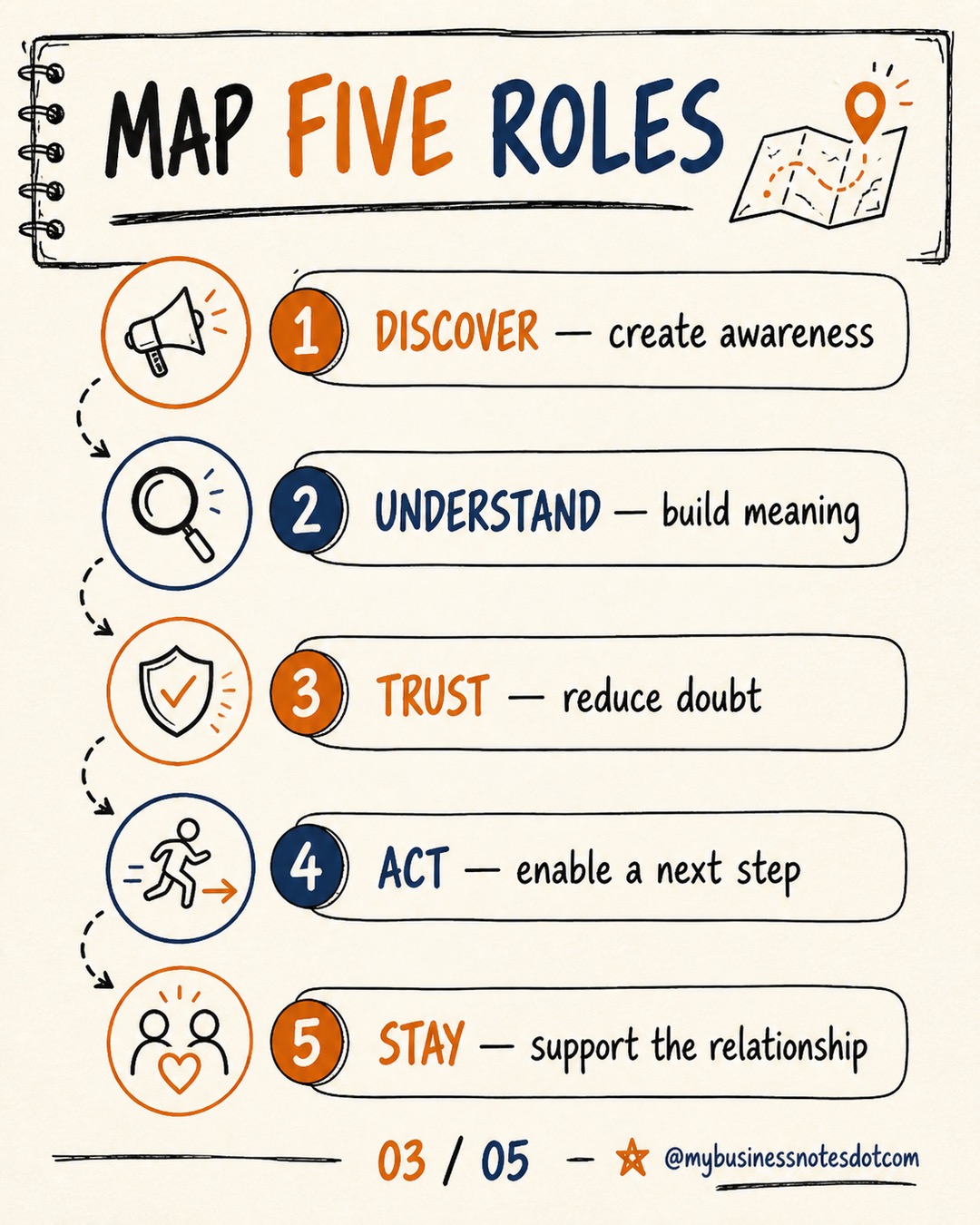
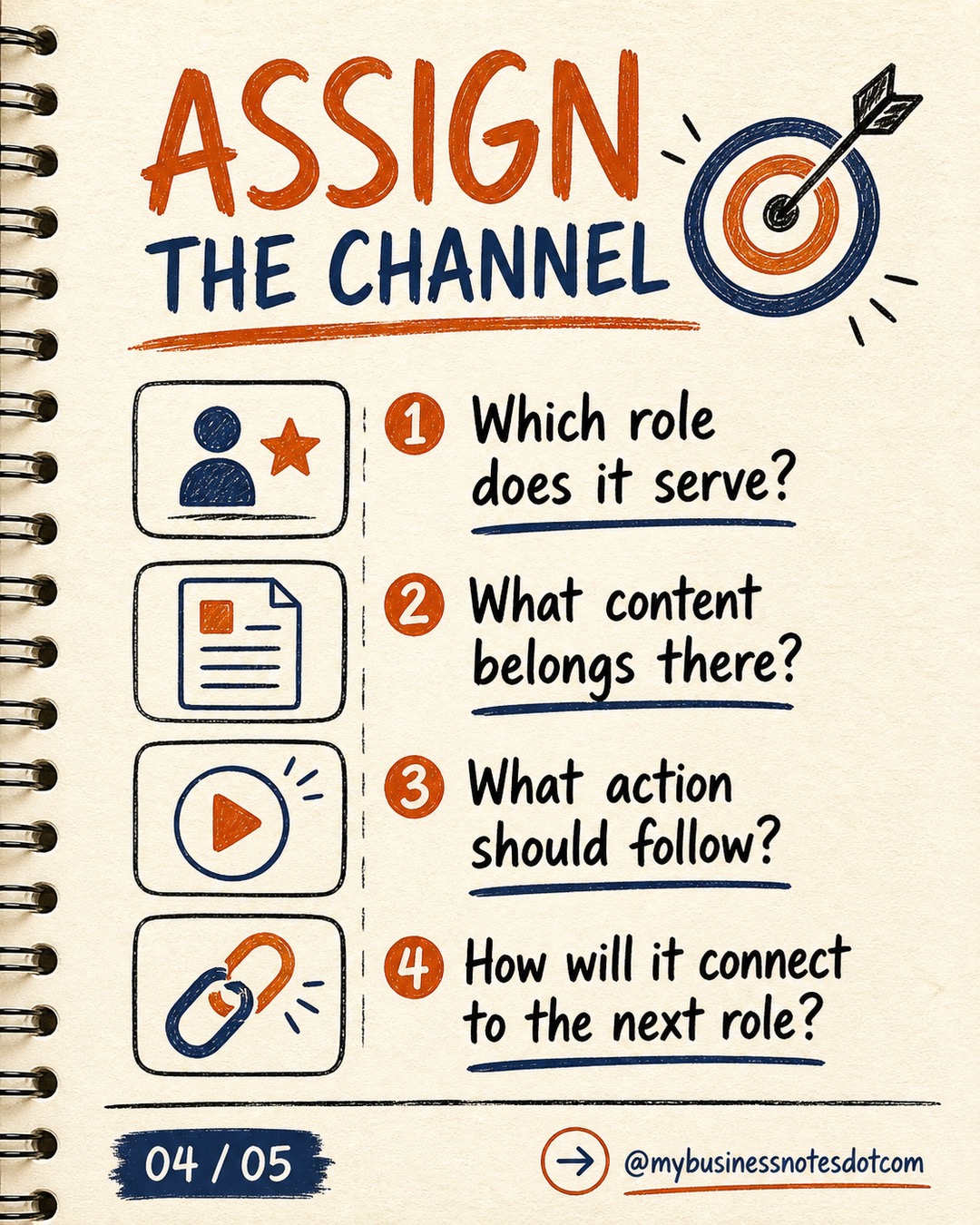
Use five practical roles: discover, understand, trust, act and stay. For each channel, name its primary role, the audience situation it serves and the next useful step. A channel may support other roles, but one dominant job guides design and measurement.
Design the handoffs
Customers rarely move in a straight line. Show how a person can move from a social post to a deeper article, from evidence to a conversation, or from onboarding to continued learning. Make links, calls to action and ownership explicit.
Choose role-specific evidence
Measure discovery with qualified reach, understanding with engaged reading or return visits, trust with proof consumption and direct questions, action with meaningful conversions, and staying with adoption, retention and advocacy. Avoid judging every channel by last-click revenue.
Review the system, not isolated channels
Quarterly, inspect overlap, missing roles and broken handoffs. Keep channels that contribute distinctive value, redesign those with unclear purpose and stop activities maintained only by habit. The map is a decision tool, not a permanent taxonomy.
Frequently asked questions
What is a channel role map?
A simple model that gives each channel a primary job in the customer journey.
Can one channel have several roles?
Yes, but naming one primary role makes priorities and measurement clearer.
Which channel should create demand?
Use the channel where the relevant audience can discover and engage with the problem credibly.
How often should the map be reviewed?
Review it when the journey, offer or channel performance materially changes.
Put it into practice
Use the framework on one current decision. Record the evidence, owner, next action and review date before expanding the scope.
Download the complete carousel
Keep the five-slide framework as a PDF for your next working session.
International references
- McKinsey & Company â The B2B omnichannel opportunity
- Think with Google â The messy middle of the purchase journey
- Nielsen Norman Group â Recognition rather than recall
- Google re:Work â Understand team effectiveness
- Atlassian â Roles and responsibilities
- Harvard Business Review â The discipline of business experimentation
- Christensen Institute â Jobs to Be Done Theory
- Strategyzer â The Value Proposition Canvas
- GOV.UK Service Manual â Understand users and their needs
- Salesforce â Customer success
- Lean Enterprise Institute â What is lean thinking?
- MIT Sloan Management Review â Why companies fail at digital transformation