
A customer language review compares your copy with how relevant customers describe their situation. Capture the words, preserve their context, investigate the meaning and retain the evidence before deciding what to rewrite.
Slide 1 of 5
Clear language begins before the writing session
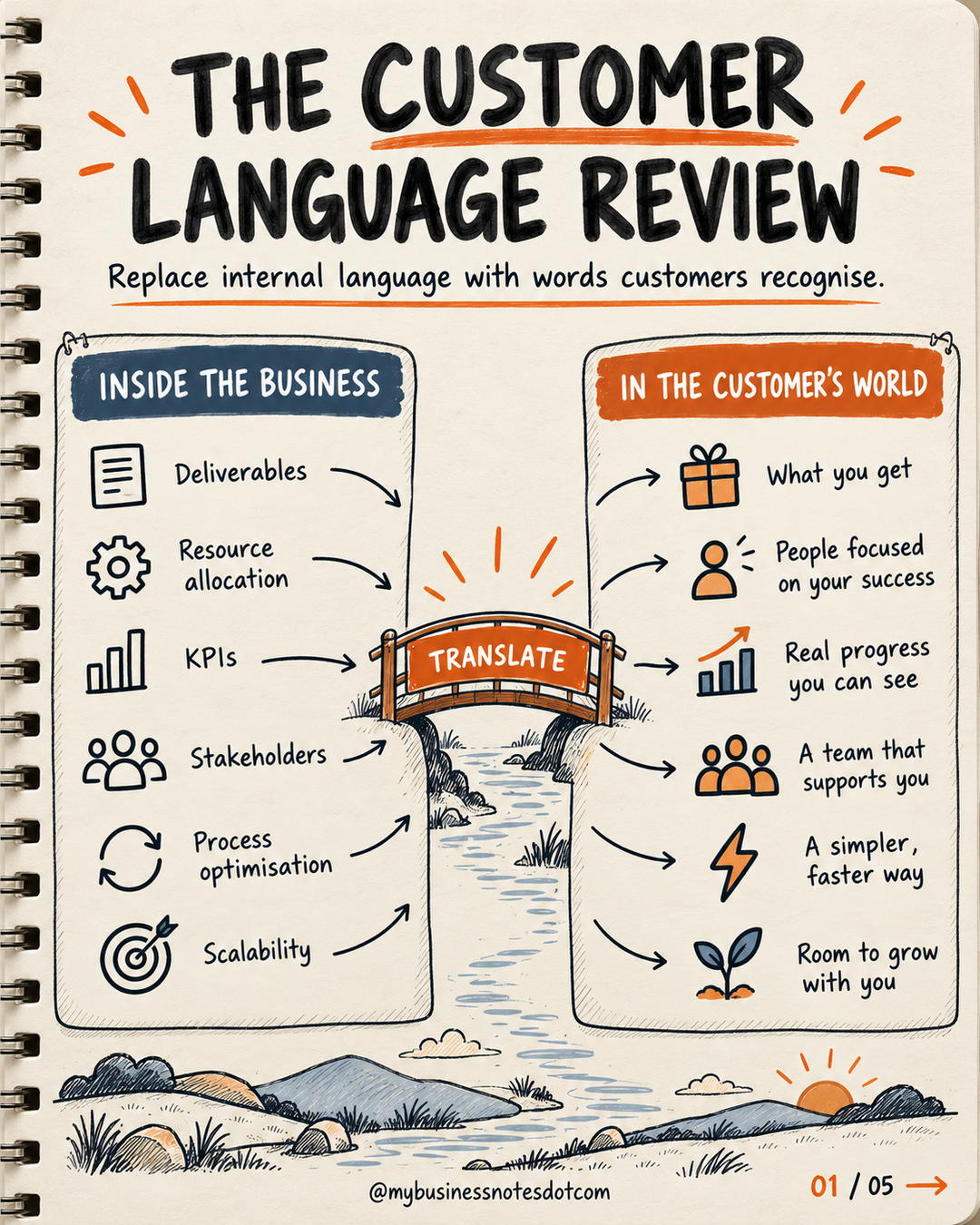
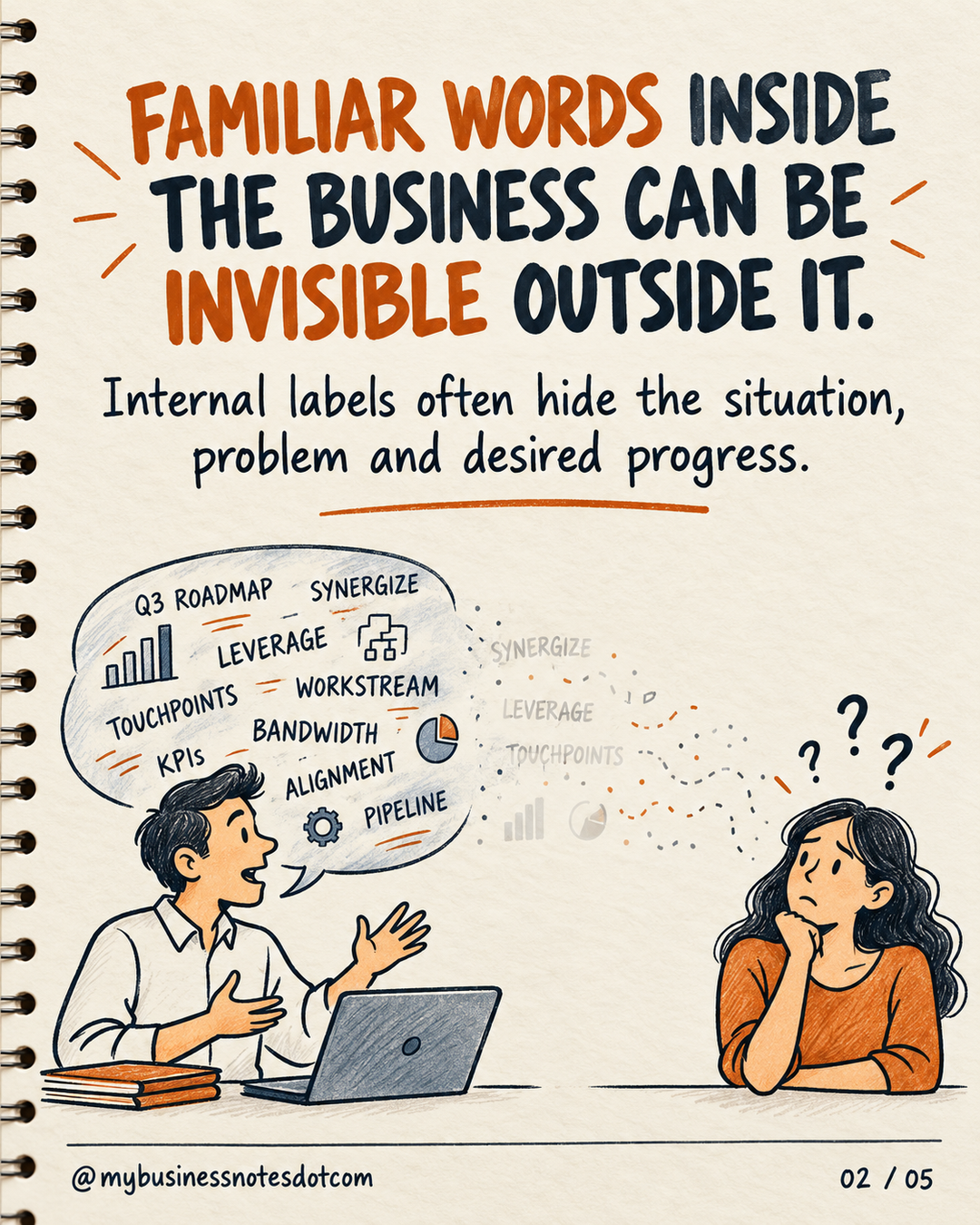
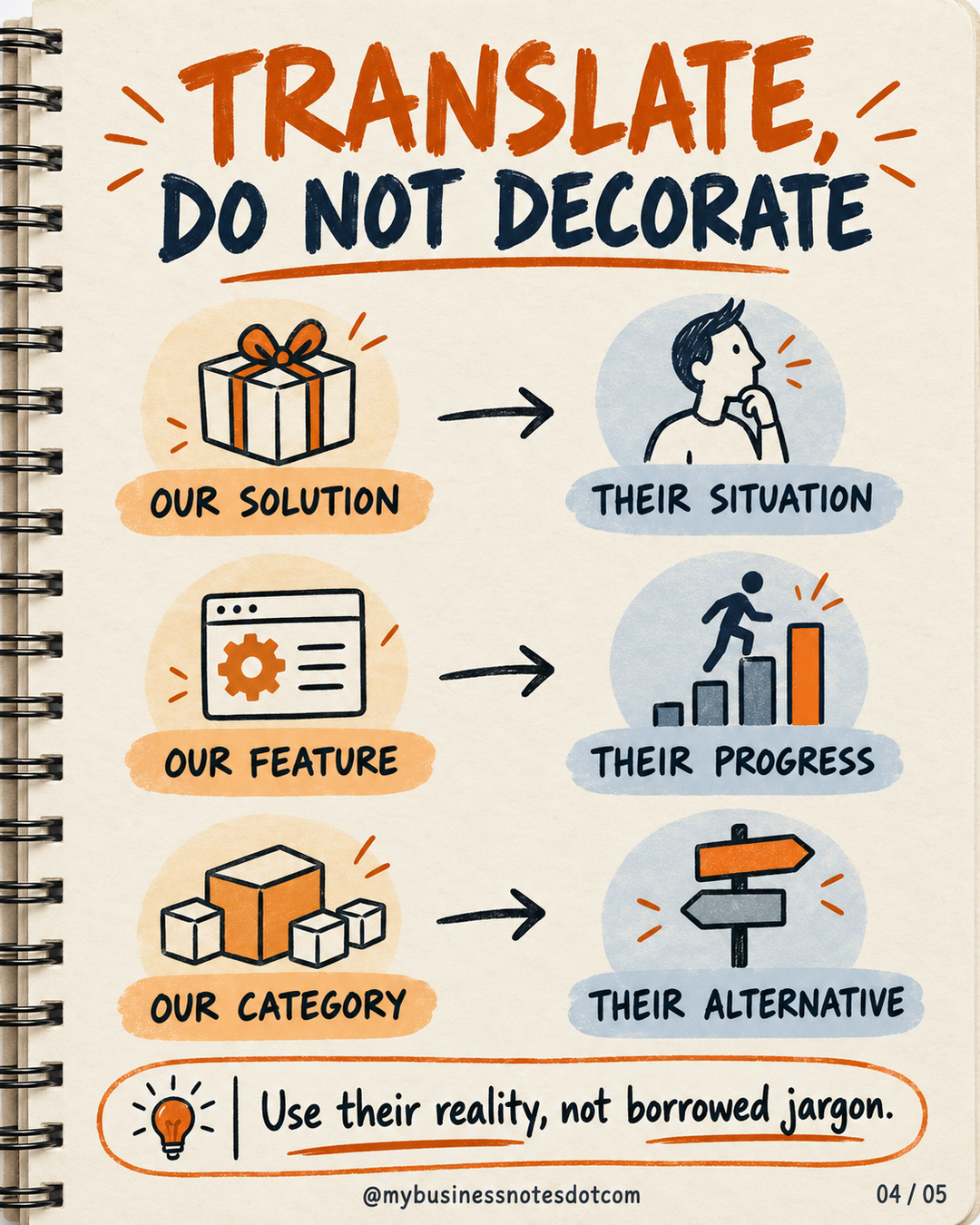
Internal shorthand is efficient for a team that shares the same knowledge. It becomes a problem when a buyer must decode it to understand an offer. Replacing every specialist word with a simpler synonym is not always the answer.
Nielsen Norman Group's technical-jargon guidance asks whether the audience knows a term and whether the term is necessary. Expert audiences may expect precise vocabulary. Mixed audiences may need a plain-language explanation alongside it. The relevant question is comprehension, not the writer's preference.
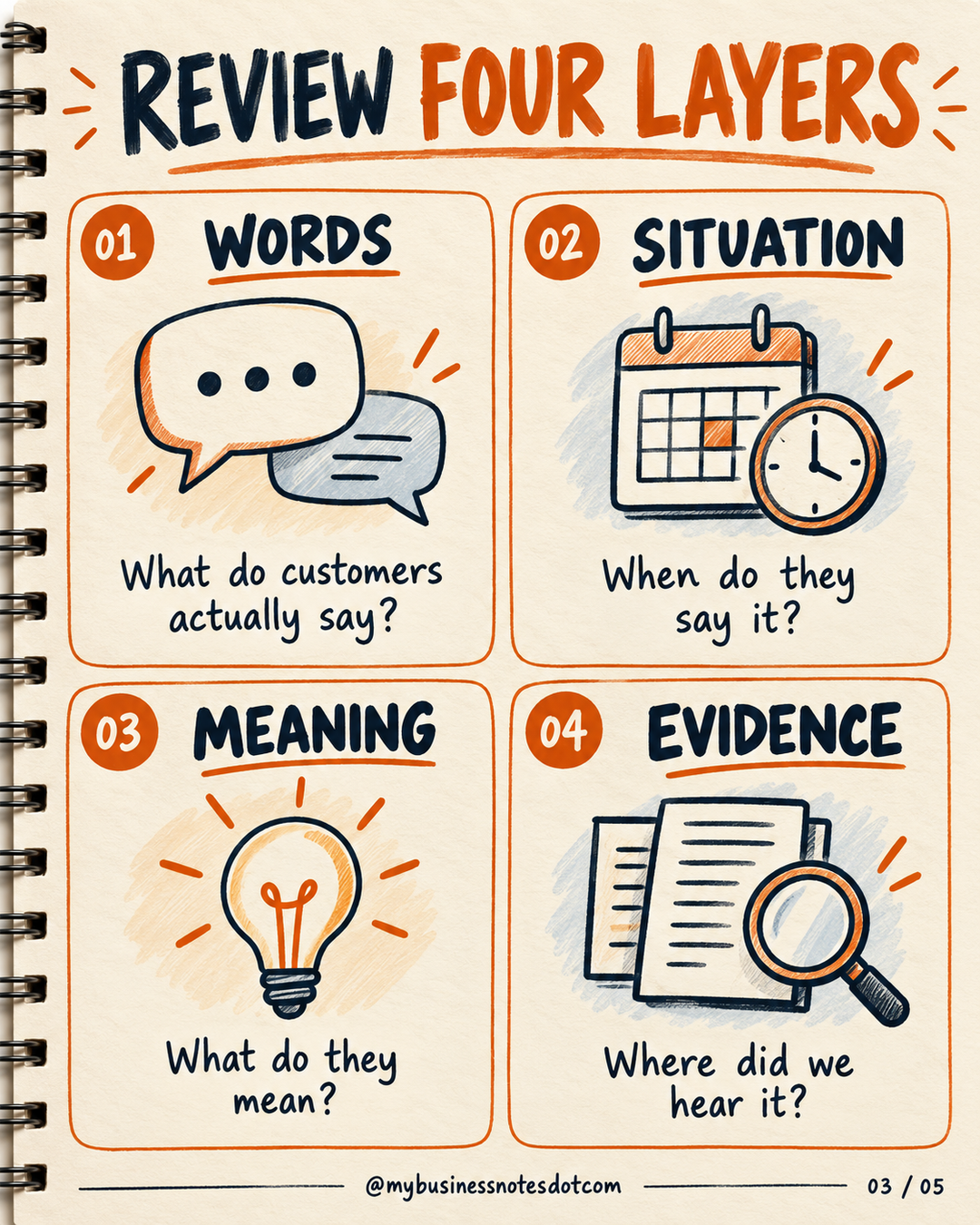
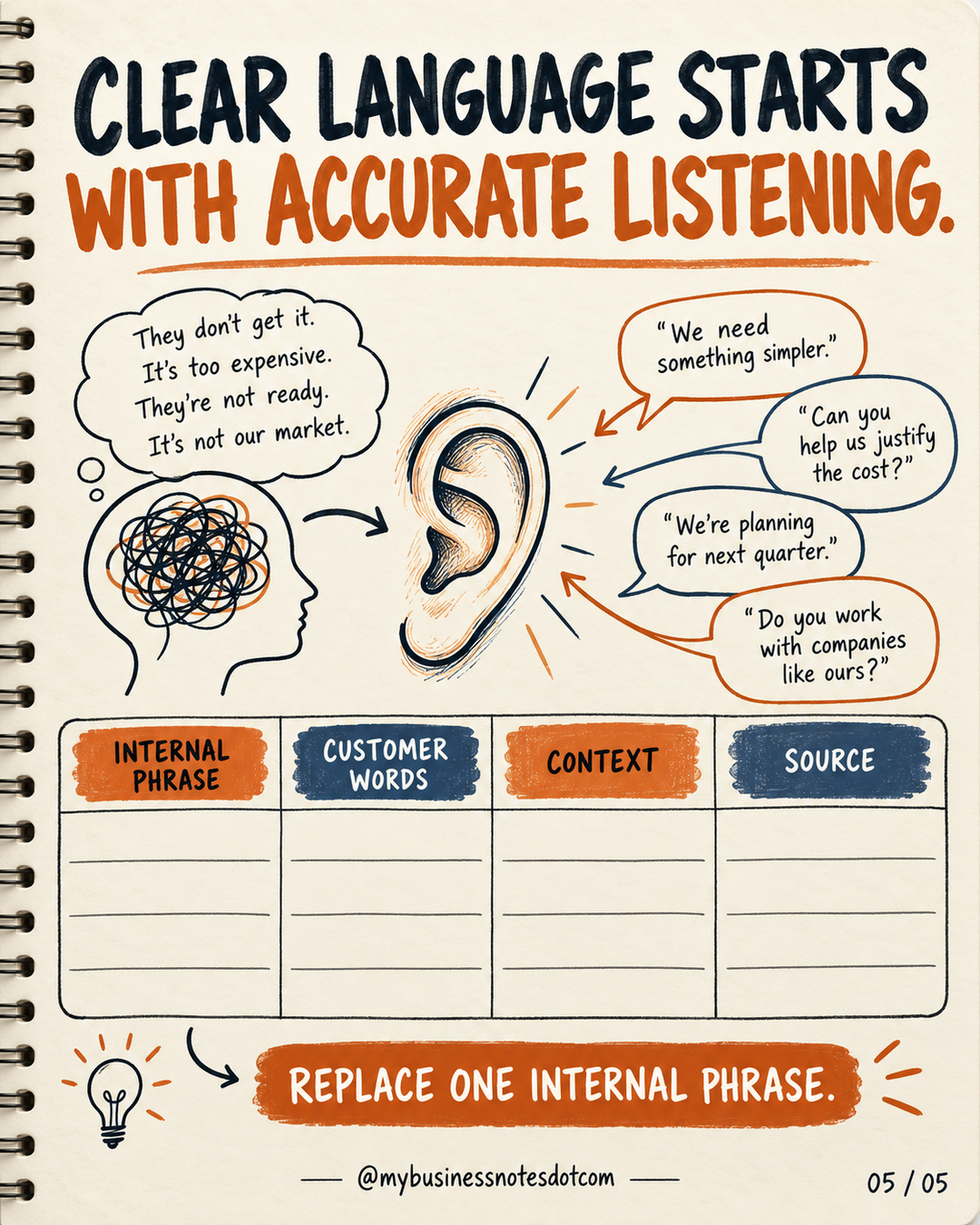
Words: capture what people actually said
Review permitted interview notes, support inquiries, sales questions and search terms. Record the original phrase separately from your paraphrase. Remove personal identifiers and do not publish private customer messages without appropriate permission.
Avoid creating a vocabulary bank made only of vivid quotes. Quiet, ordinary questions can reveal important uncertainty. Include disconfirming examples and phrases from people who did not buy, while noting how those sources were selected.
Situation: preserve the circumstances
Attach the task, trigger, role and stage to each phrase. Someone researching a category may use different language from the person implementing it. Combining both into one generic customer voice can produce copy that fits neither.
Jobs to Be Done provides a useful lens for understanding sought progress in context. The Value Proposition Canvas can organize related jobs and pains, but it does not validate your interpretation. Return to the original evidence when a compelling story starts to outrun the observations.
Meaning: investigate rather than translate automatically
Ask what happened the last time the issue appeared. Explore consequences and alternatives without introducing your preferred explanation. Leading questions can make people adopt the team's terminology and then appear to confirm it.
In a hypothetical interview, a buyer says they need more visibility. That might mean a reliable cash forecast, a status report or a clearer approval process. Turning the phrase directly into a headline would preserve the words while missing the meaning. Use neutral follow-up questions to distinguish these situations.
Evidence: keep quotes separate from conclusions
Maintain four fields: original wording, circumstance, interpretation and supporting observation. GOV.UK's research-analysis guidance separates what was seen or heard from findings and subsequent actions. This prevents a team's inference from being circulated later as a customer statement.
Interview memories are imperfect, as Nielsen Norman Group's interviewing guidance explains. Compare accounts with relevant behavior where appropriate. Strategyzer likewise distinguishes what people say from what they do; frequent enthusiasm for a phrase does not establish demand for an offer.
Turn a customer language review into a focused test
Choose one important section, such as the offer introduction or onboarding explanation. Replace an unclear phrase with a concrete description of the task or outcome. Keep technical precision where it matters, and explain unavoidable terms in context.
Test the revised copy with relevant people. Ask them to explain what it means, what is included and what they would expect next. Avoid asking whether they like it as your only measure. Check for new misunderstandings as well as improved comprehension.
Record the decision, evidence, audience and review date in a small language guide. Treat search phrases as clues about vocabulary, not proof of intent by themselves. The objective is language that helps the right person understand the offer accurately, not keyword repetition or imitation of every customer expression.
Frequently asked questions
What is a customer language review?
It is a structured comparison of business copy with customers' words, situations, meanings and supporting evidence. It guides accurate revisions rather than copying quotes blindly.
Should I remove all jargon?
No. Keep terminology that the relevant audience expects and understands. Explain necessary unfamiliar terms or use an accurate plain-language alternative.
How do I know the revised copy is clearer?
Ask relevant readers to explain the offer and its boundaries in their own words. Look for accurate comprehension and appropriate next steps, not just positive feedback.
Download the complete carousel
Use the five-slide worksheet in your next working session.
Related reading: Turn learning into the next decision.
International references
- Strategyzer / Kurt Bostelaar — Customer interviews that produce insights
- Strategyzer / Alex Osterwalder — Don’t believe your customers
- Strategyzer / Nabila Amarsy — Ways to test your value proposition
- GOV.UK User research community — Using in-depth interviews
- Christensen Institute — Jobs to Be Done
- Nielsen Norman Group / Jakob Nielsen — Interviewing Users
- Nielsen Norman Group / Amy Schade — Avoid Leading Questions
- Strategyzer — Value Proposition Canvas
- Nielsen Norman Group / Kate Kaplan — Customer Journey Maps
- GOV.UK User research community — Analyse a research session
- Nielsen Norman Group / Aurora Harley — Trustworthy design
- FTC — Advertising substantiation policy
- FTC — Advertising FAQs for small business
- Nielsen Norman Group / Kate Moran — Technical jargon
- Strategyzer — Evidence strength