

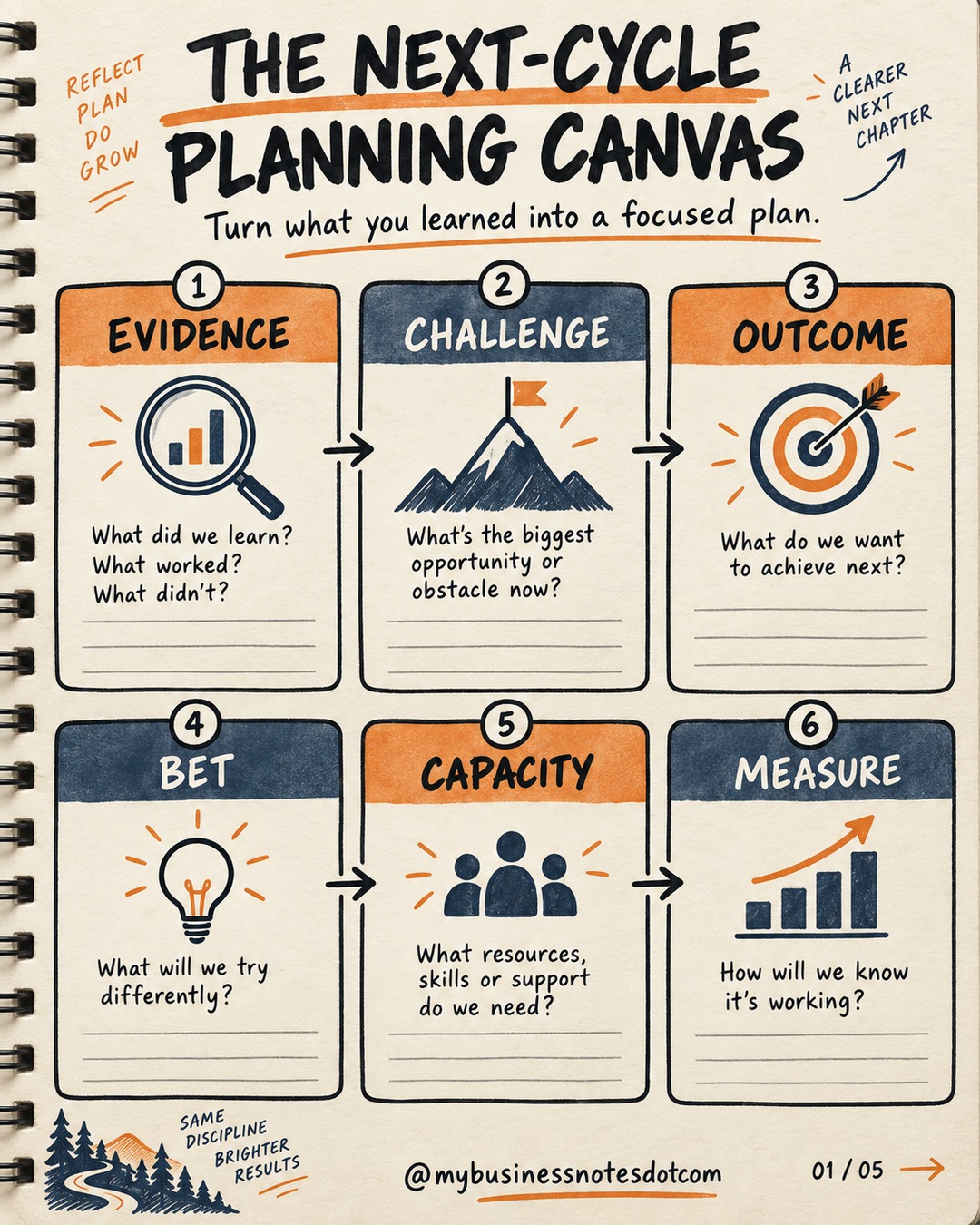
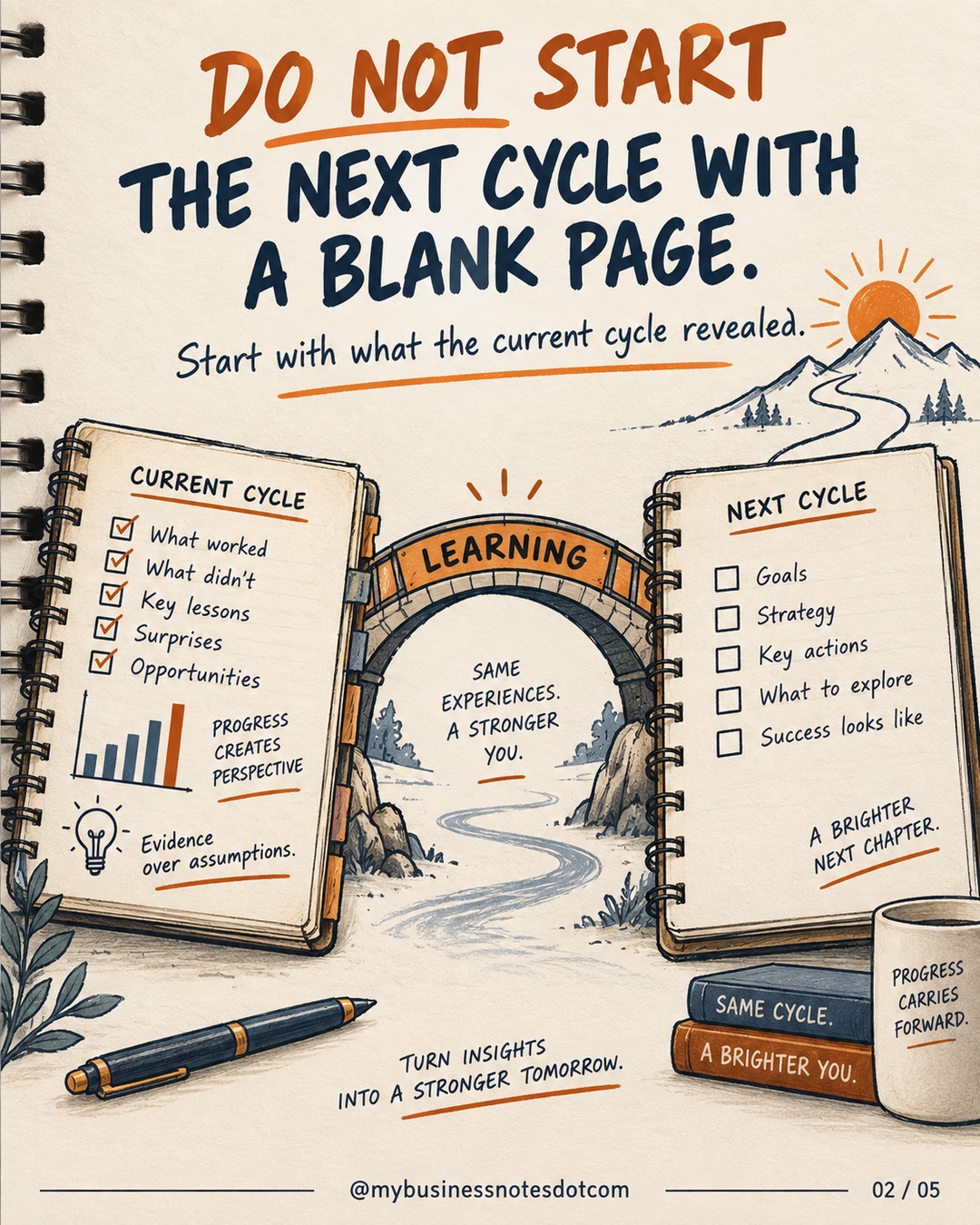
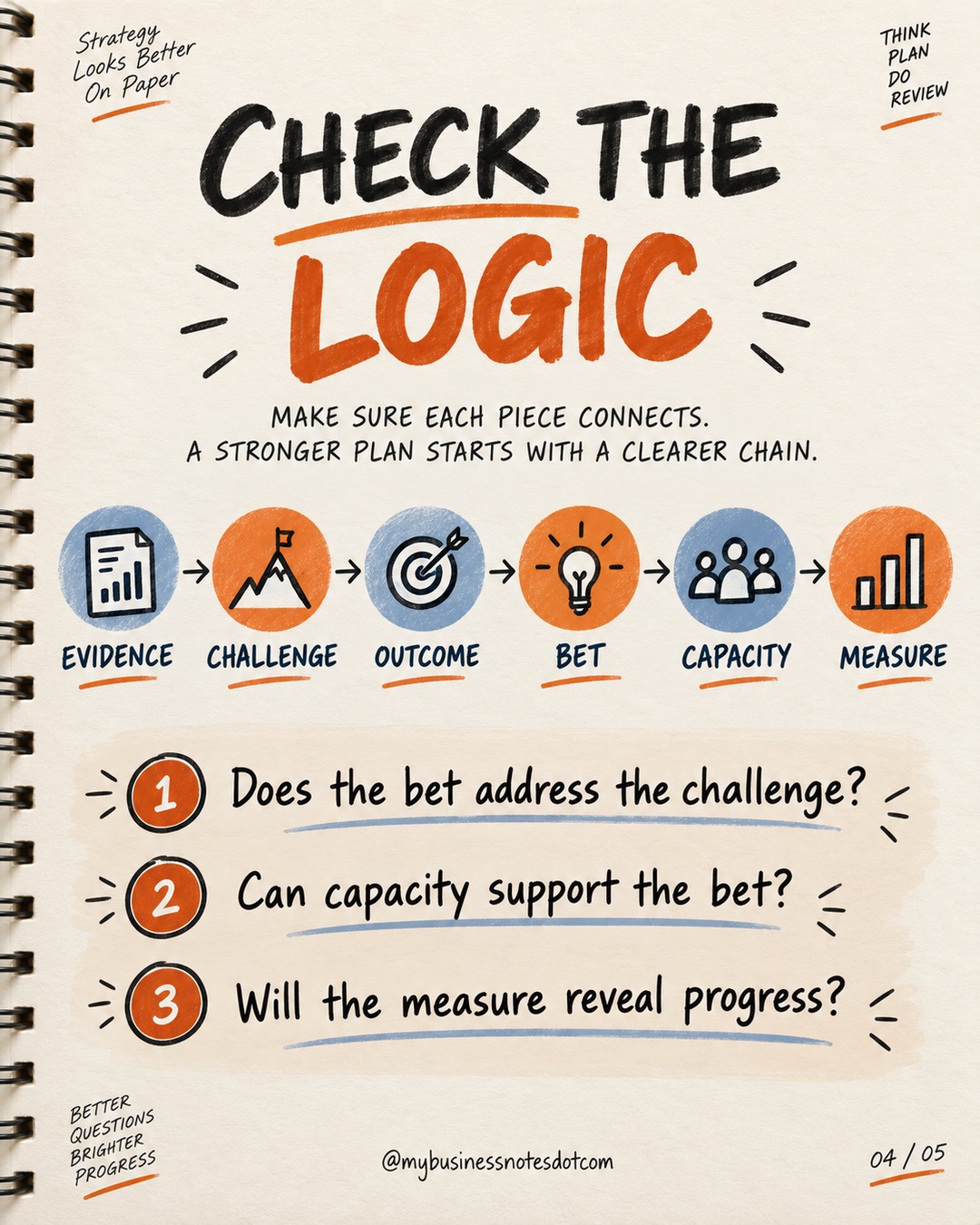
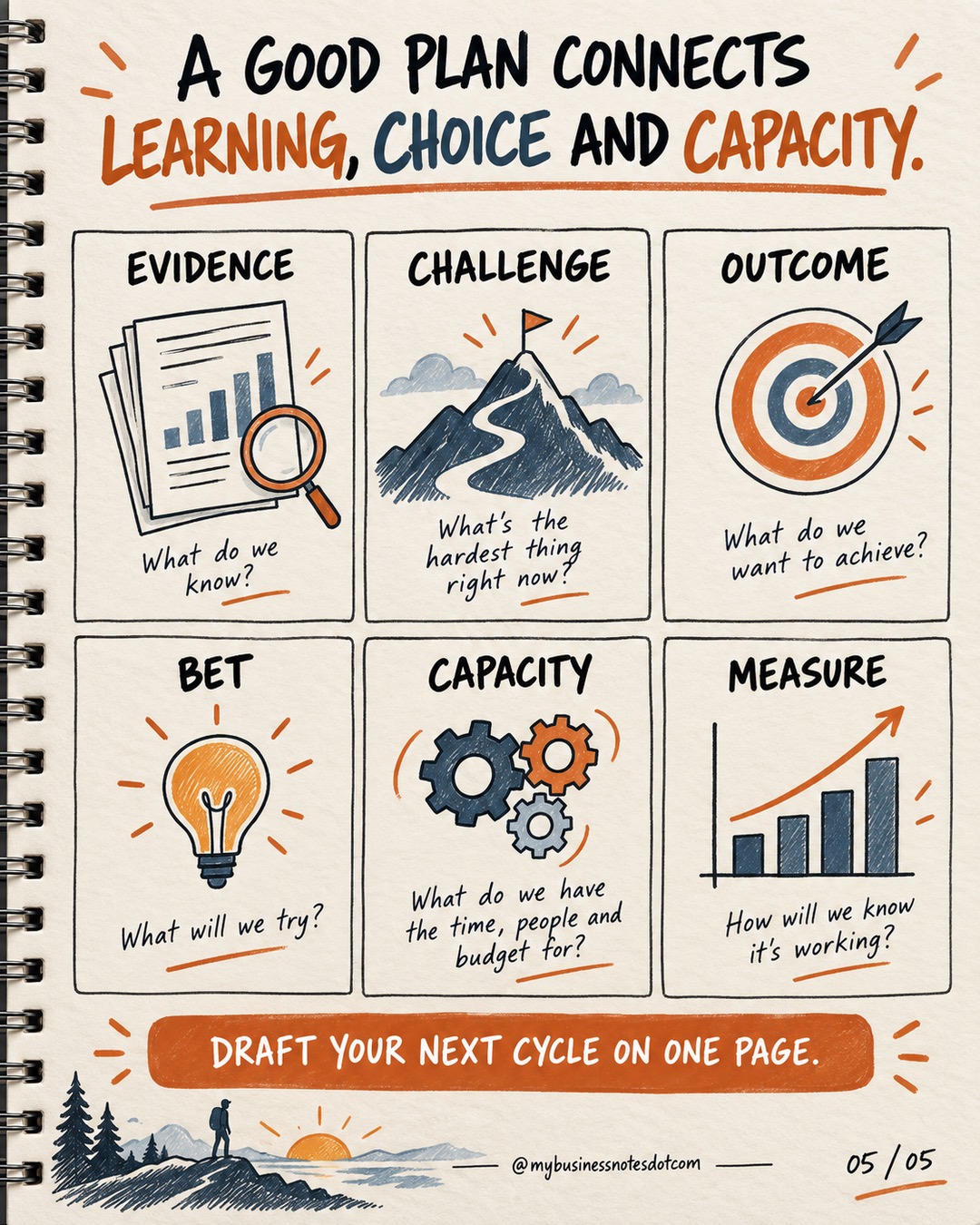
The next planning cycle should begin with what the current cycle revealed. A one-page planning canvas connects evidence, challenge, outcome, bet, capacity and measure so the team can test its logic before execution. This guide expands the five-slide business note into a practical review with evidence, safeguards and next steps.
Slide 1 of 5
Start with evidence
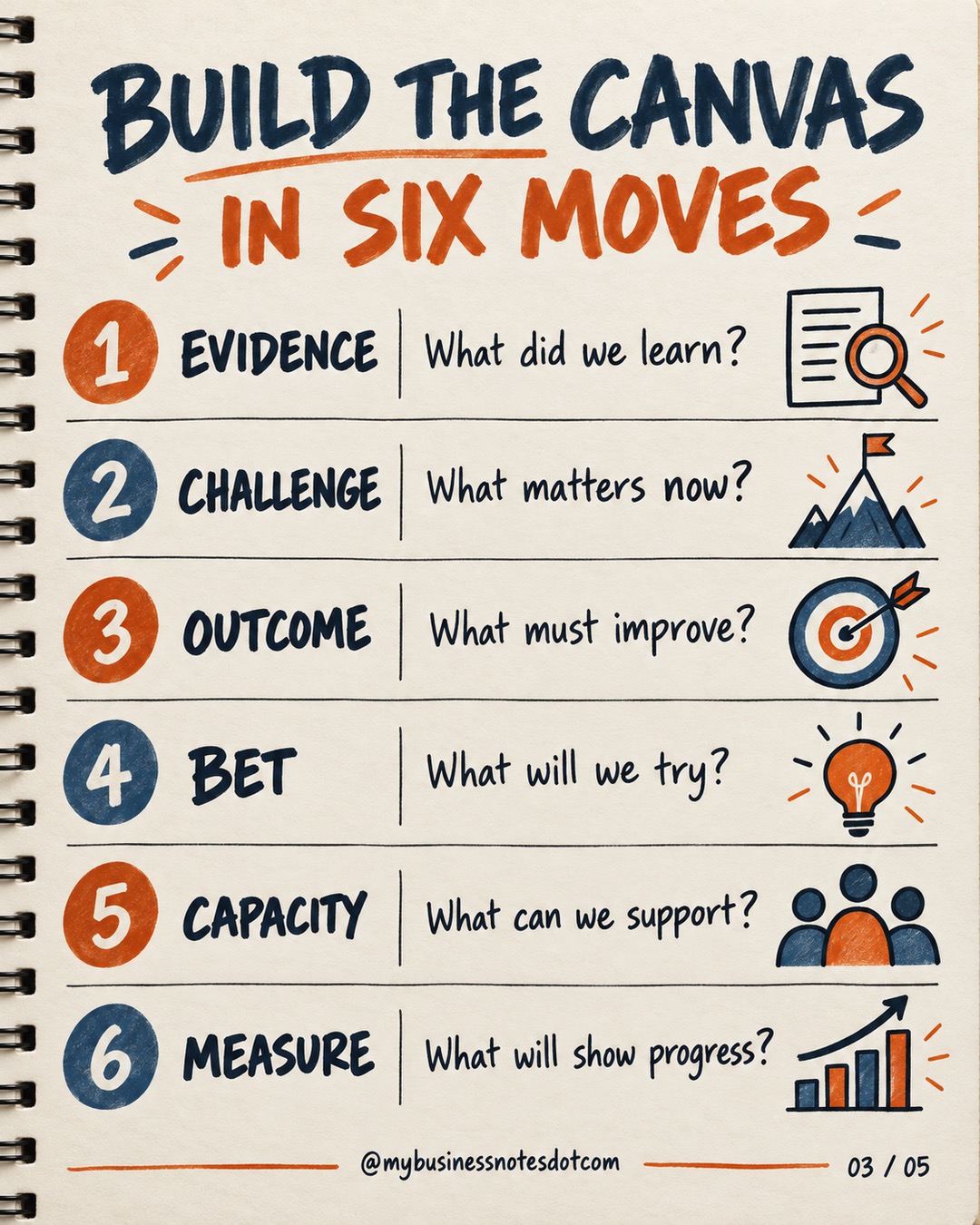
Summarise material results, customer signals, constraints and lessons. Include contradictory evidence. The purpose is not to retell the whole period but to identify what should shape the next choice.
Name the challenge and outcome
Frame the constraint or opportunity that matters now, then define the outcome the business wants to change. Avoid turning a preferred project into the problem statement.
State the bet
Describe the action and the causal assumption behind it: if the team does this, why should the outcome move? This makes the plan testable and creates space for alternatives.
Check capacity
Compare the bet with people, skills, time, cash, systems and management attention. Remove or sequence commitments when capacity cannot support them.
Select a revealing measure
Choose leading evidence and outcome evidence with a review date. A measure should help the team adapt, not merely prove that activity occurred.
Frequently asked questions
What is a planning canvas?
A concise view connecting evidence, challenge, outcome, strategic bet, capacity and measurement.
Does it replace a detailed plan?
No. It tests the strategic logic before detailed work is developed.
How many bets should one cycle contain?
Only as many as capacity can support without obscuring ownership and learning.
What makes a useful measure?
It reveals progress or invalidates an assumption in time to adapt.
Put it into practice
Apply the framework to one current decision. Record the evidence, owner, next action and review date.
Download the complete carousel
Keep the five-slide framework as a PDF for your next working session.
International references
- McKinsey & Company â Boosting returns on marketing investment
- McKinsey & Company â How are companies valued?
- McKinsey & Company â Focus on the metrics that matter
- McKinsey & Company â The net revenue retention advantage
- Harvard Business Review â A better approach to after-action reviews
- Harvard Business Review â Design a better decision-making process
- Harvard Business Review â A process for human-algorithm decision making
- Atlassian â Decision-making retro
- Atlassian â Rolling four quarterly planning
- Atlassian â Roles and responsibilities
- Google re:Work â Understand team effectiveness
- Harvard Business Review â The discipline of business experimentation