

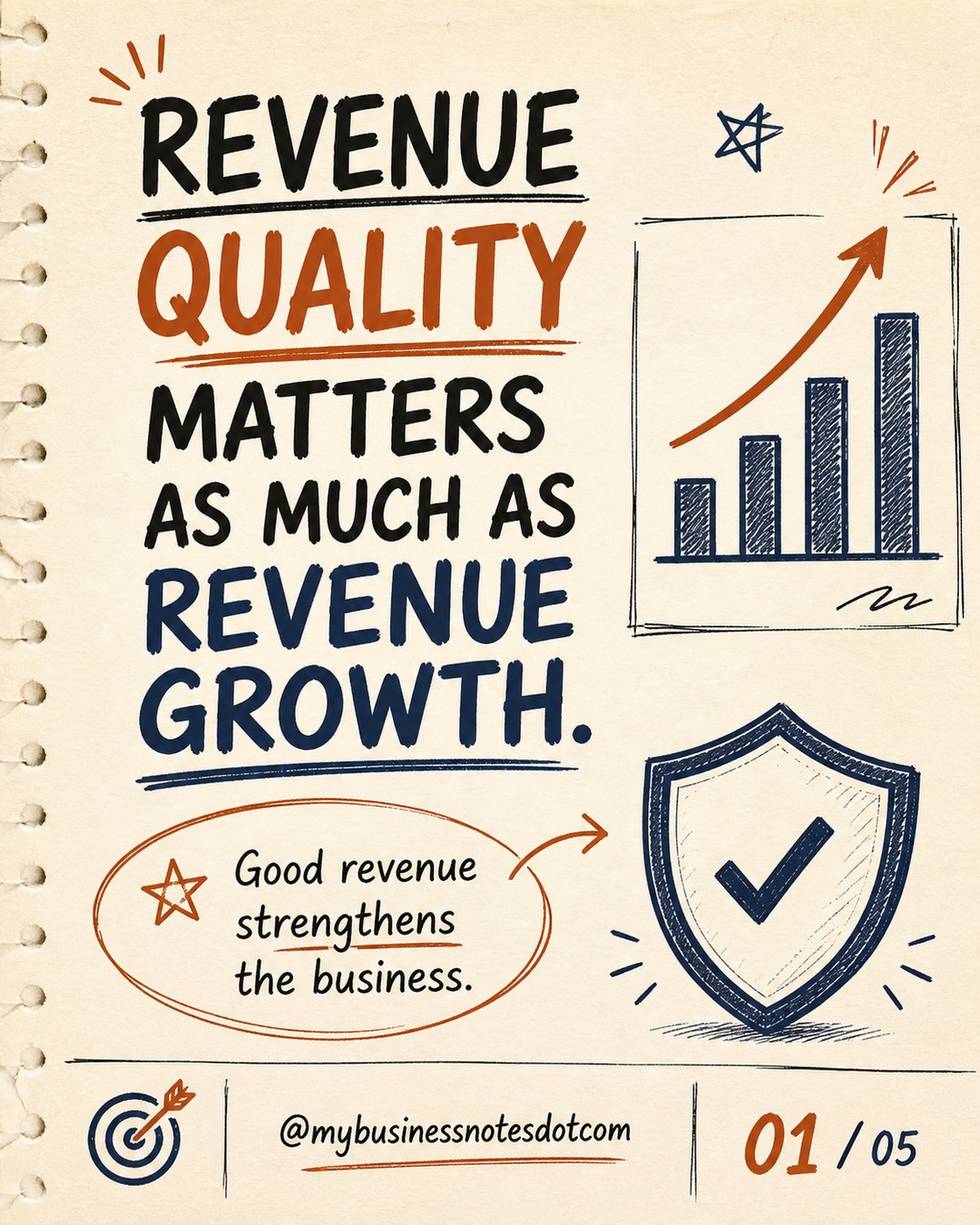
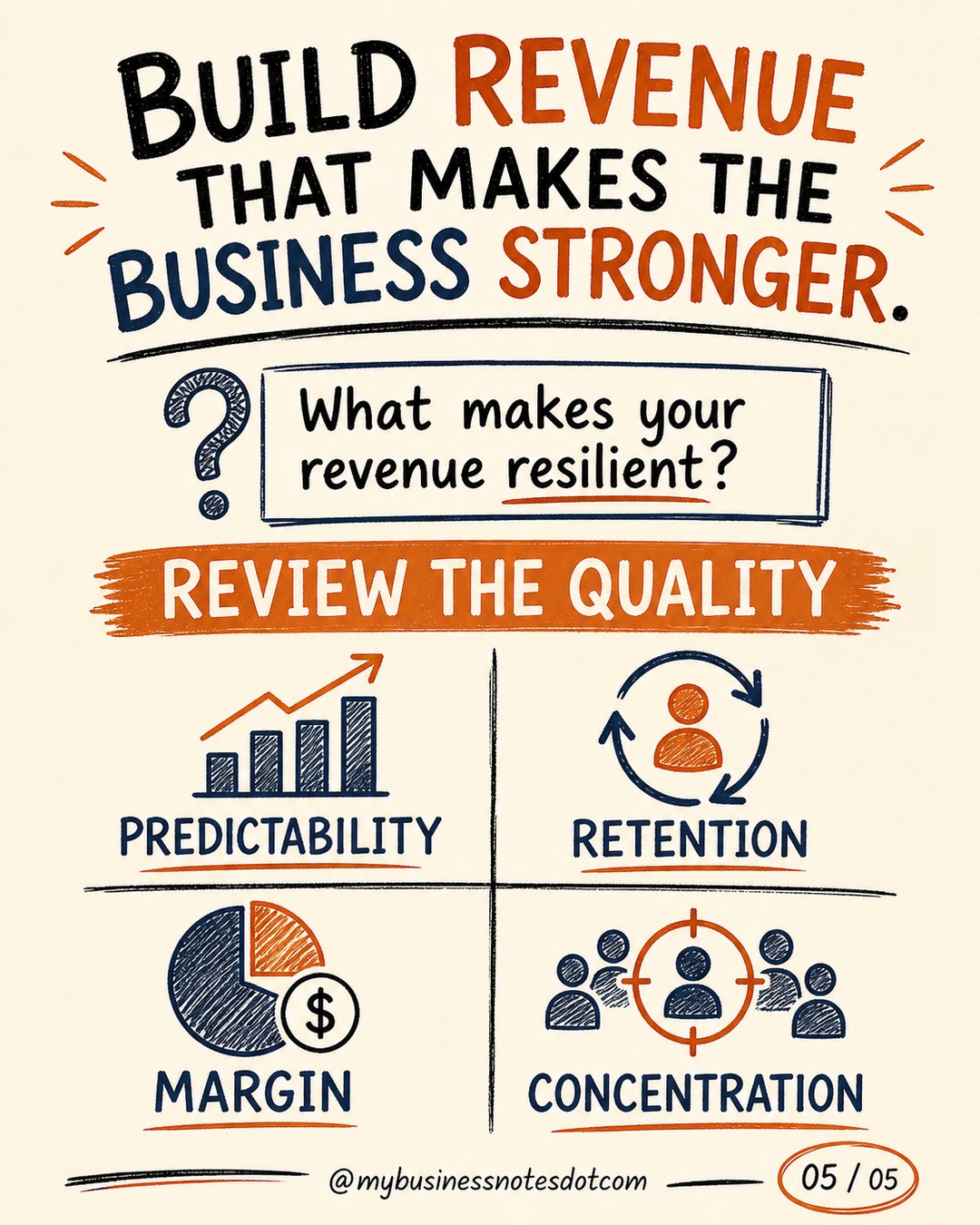
Revenue quality describes how predictable, durable, profitable and diversified revenue is. Two companies can grow at the same rate while carrying very different renewal, margin and concentration risks. This guide expands the five-slide business note into a practical review with evidence, safeguards and next steps.
Slide 1 of 5
Separate speed from strength
Growth rate shows how quickly revenue changed, not whether that change can continue. Review the source, terms, timing and obligations behind the number before calling expansion healthy.
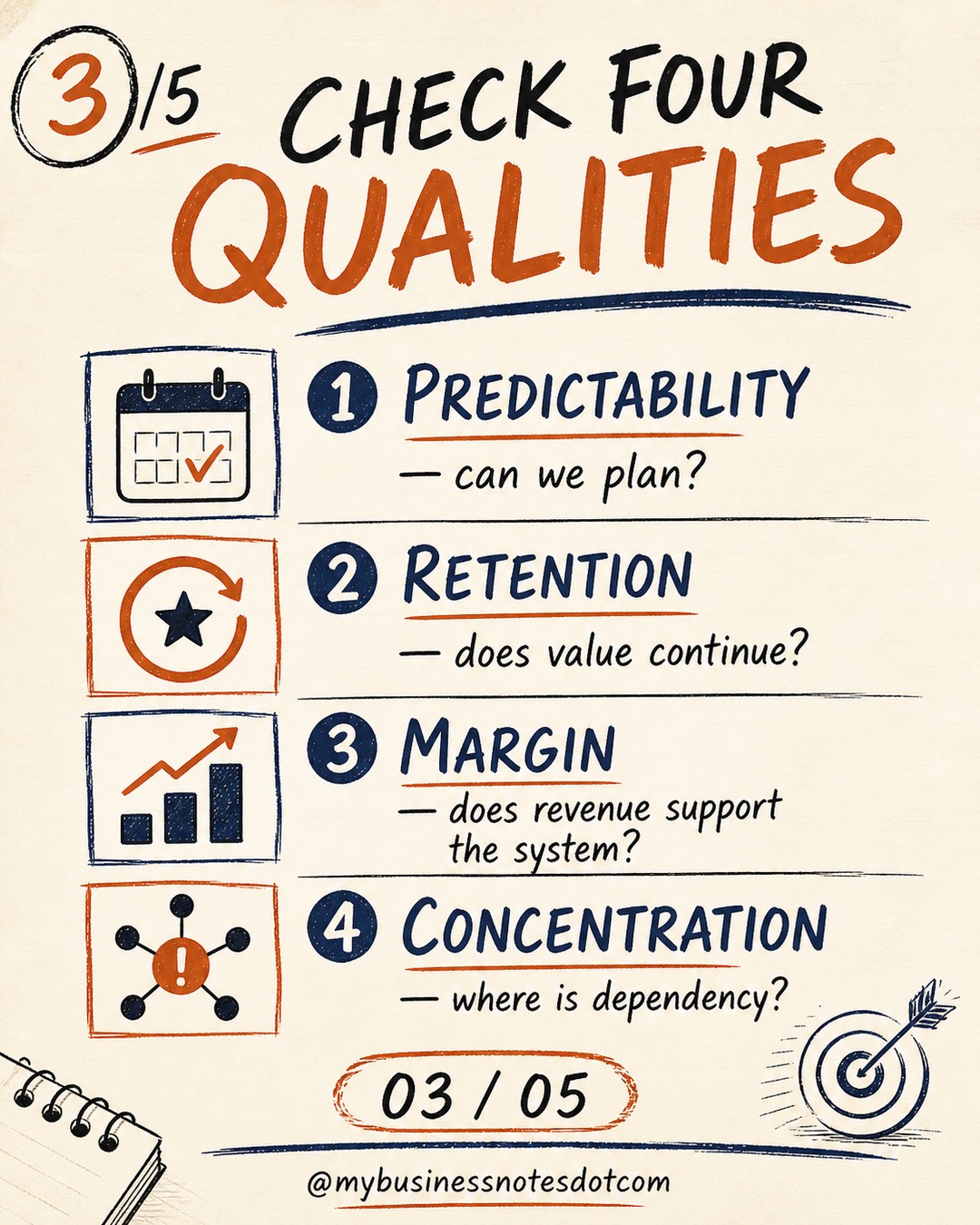
Test predictability
Distinguish recurring, contracted and repeat behaviour from one-time wins. Examine forecast accuracy, seasonality and dependence on discretionary purchases. Predictability is a range supported by evidence, not a promise.
Test retention and margin
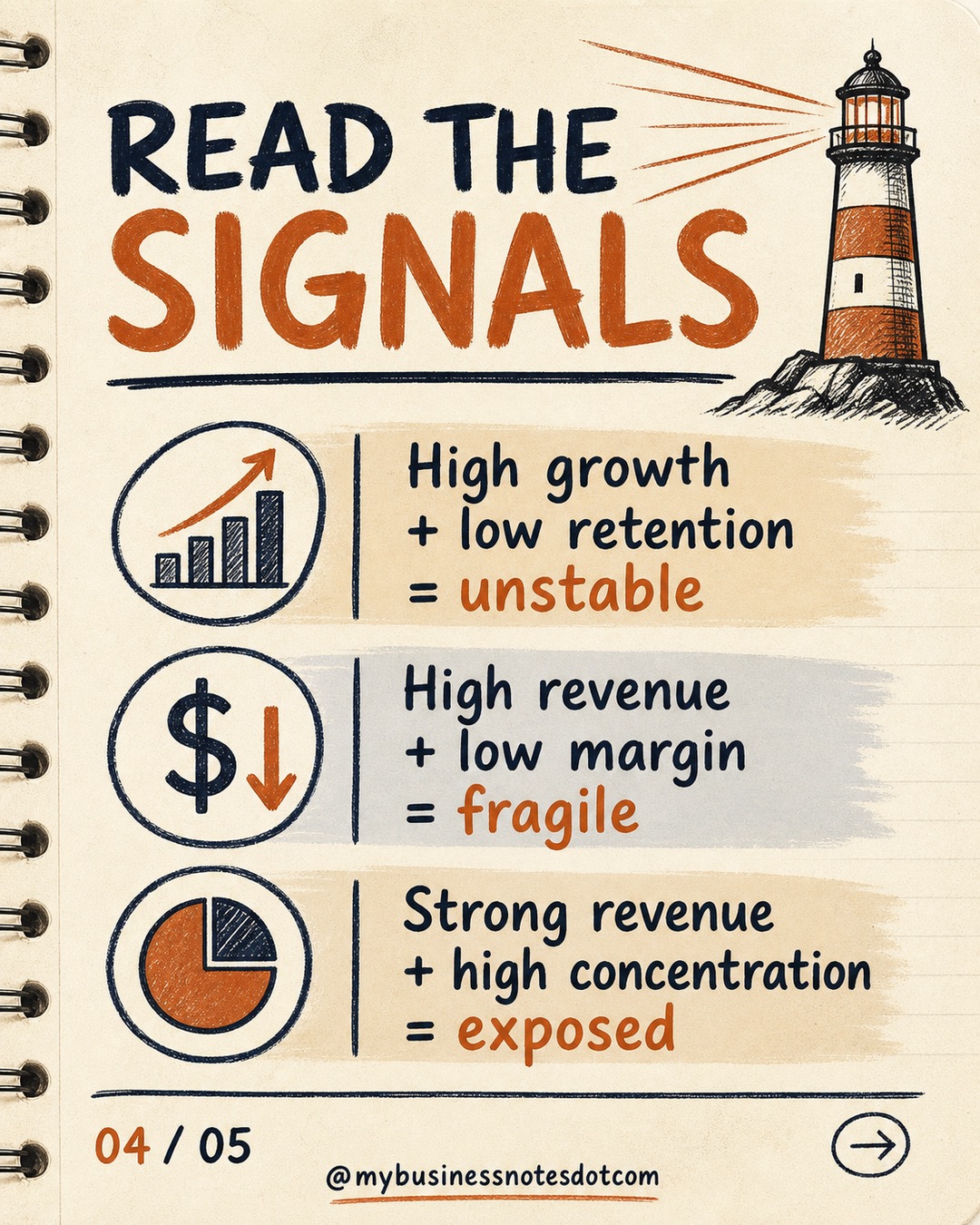
Track whether comparable customers remain, expand and require sustainable delivery effort. Revenue that depends on deep discounting, intensive support or repeated reacquisition may grow while economic value weakens.
Test concentration
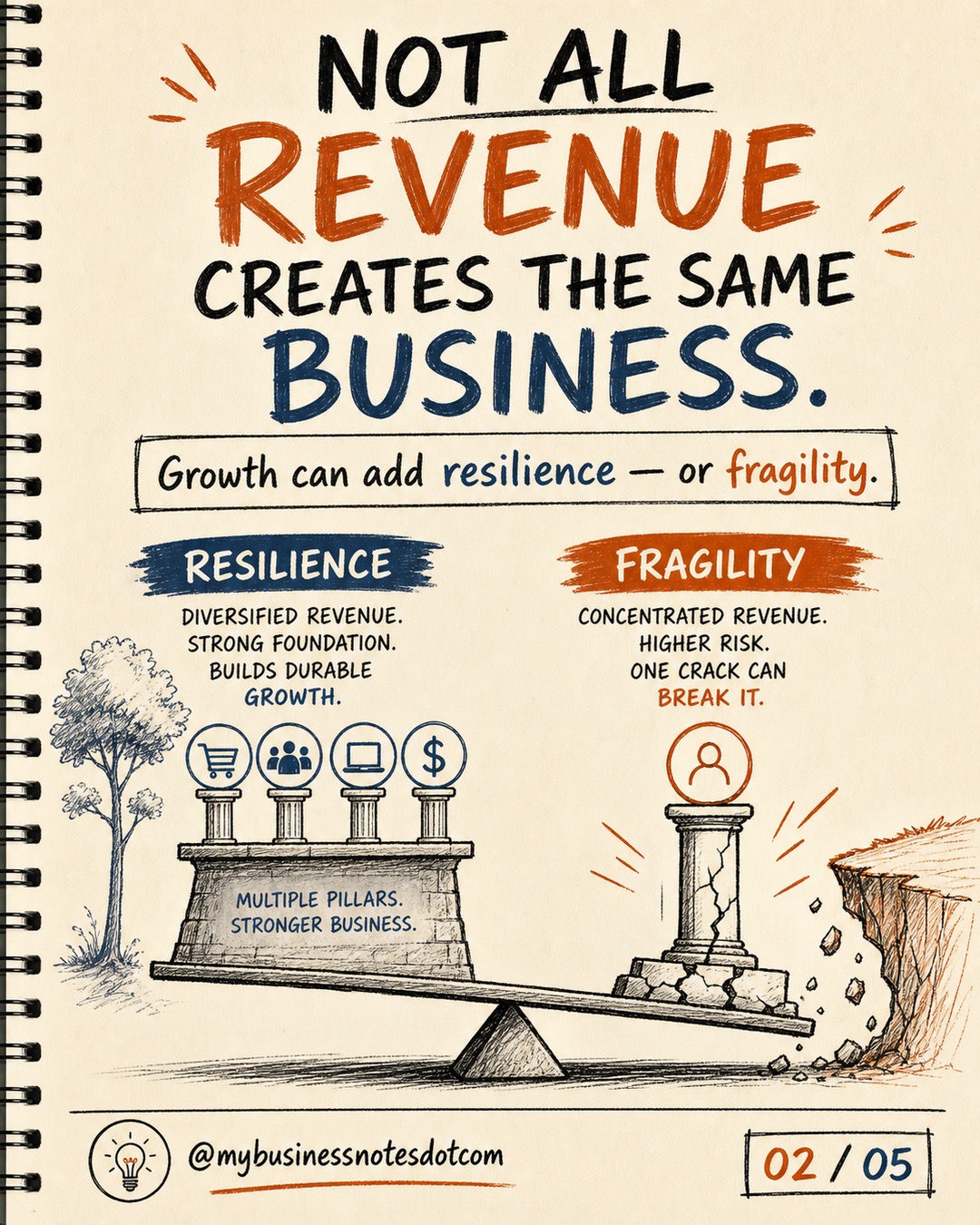
Map dependence by customer, offer, channel and segment. Concentration can be rational, especially early, but it should be visible with scenarios for what happens when a major source changes.
Choose a quality-aware target
Pair the growth target with guardrails for retention, gross margin, cash conversion and concentration. Define trade-offs in advance so the team does not discover too late that it bought growth at the expense of resilience.
Frequently asked questions
What is revenue quality?
The predictability, durability, profitability and diversification of revenue.
Is recurring revenue always high quality?
No. Weak retention, low margin or customer concentration can still make recurring revenue fragile.
How is revenue quality measured?
Use a set of cohort, margin, forecast, cash and concentration indicators suited to the model.
Can concentration be acceptable?
Yes, when it is understood, intentional and supported by a credible risk response.
Put it into practice
Apply the framework to one current decision. Record the evidence, owner, next action and review date.
Download the complete carousel
Keep the five-slide framework as a PDF for your next working session.
International references
- McKinsey & Company â Boosting returns on marketing investment
- McKinsey & Company â How are companies valued?
- McKinsey & Company â Focus on the metrics that matter
- McKinsey & Company â The net revenue retention advantage
- Harvard Business Review â A better approach to after-action reviews
- Harvard Business Review â Design a better decision-making process
- Harvard Business Review â A process for human-algorithm decision making
- Atlassian â Decision-making retro
- Atlassian â Rolling four quarterly planning
- Atlassian â Roles and responsibilities
- Google re:Work â Understand team effectiveness
- Harvard Business Review â The discipline of business experimentation