

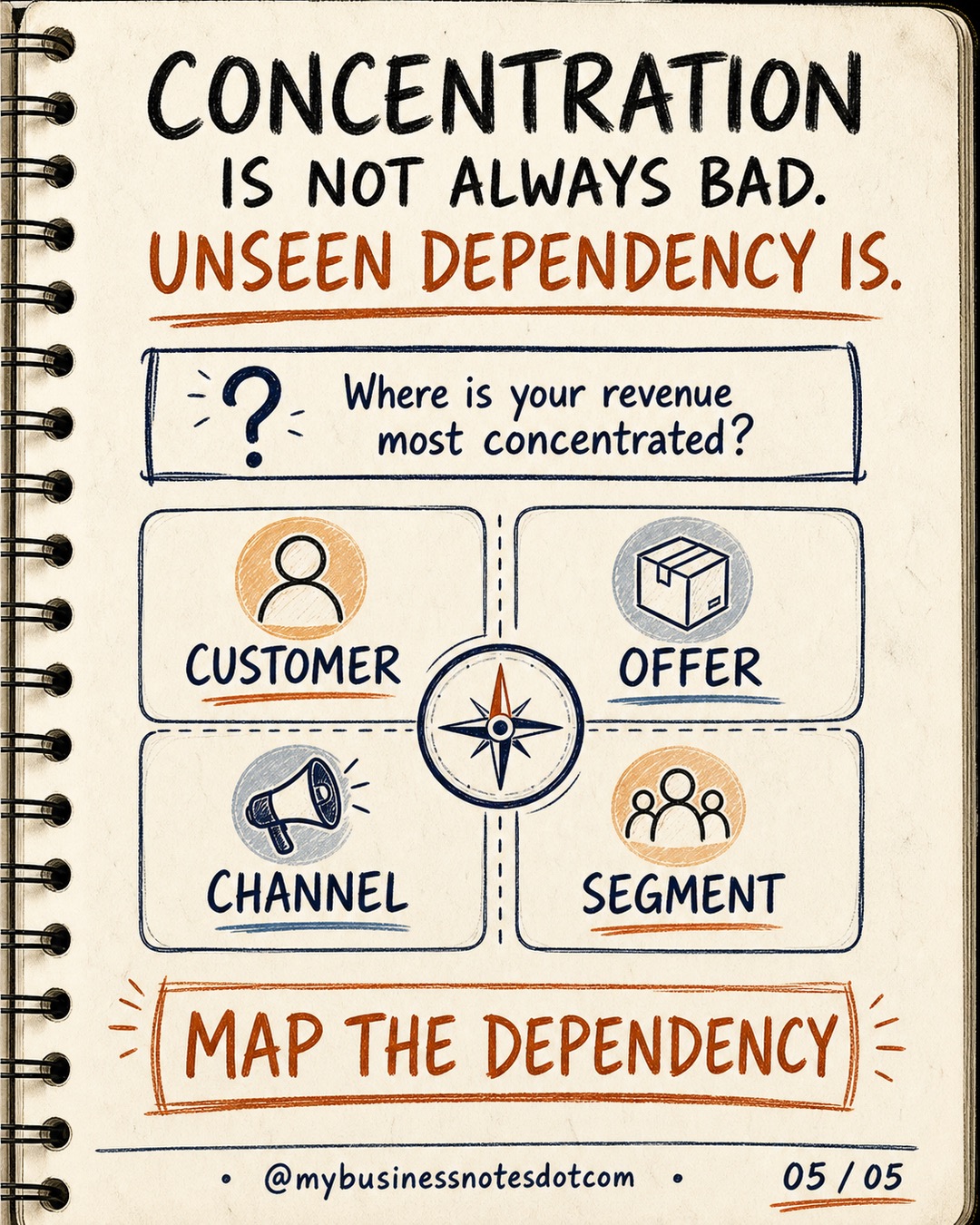
Revenue concentration is dependence on a narrow set of customers, offers, channels or segments. It is not automatically bad, but unseen dependency can turn one change into a large business risk. This guide expands the five-slide business note into a practical review with evidence, safeguards and next steps.
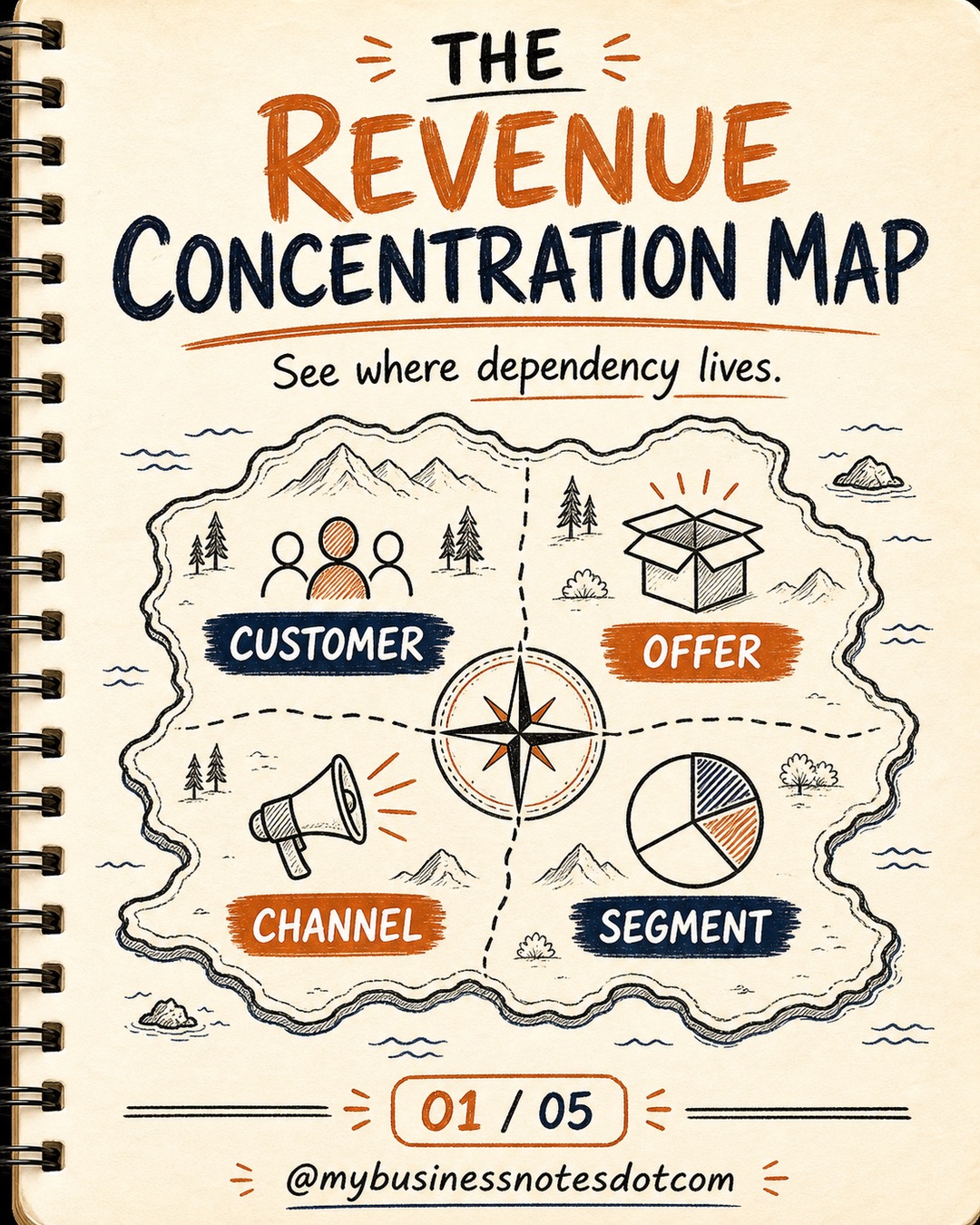
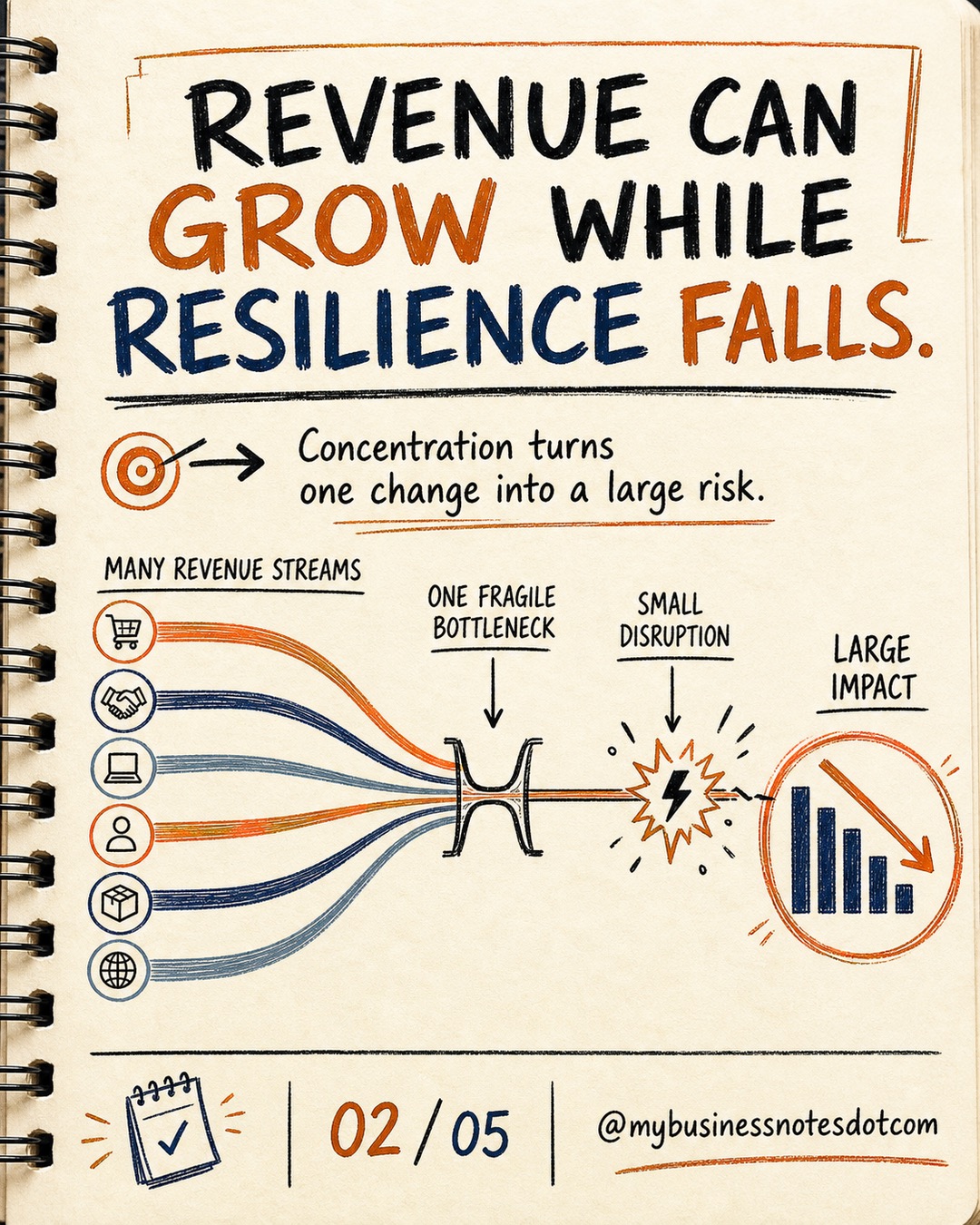
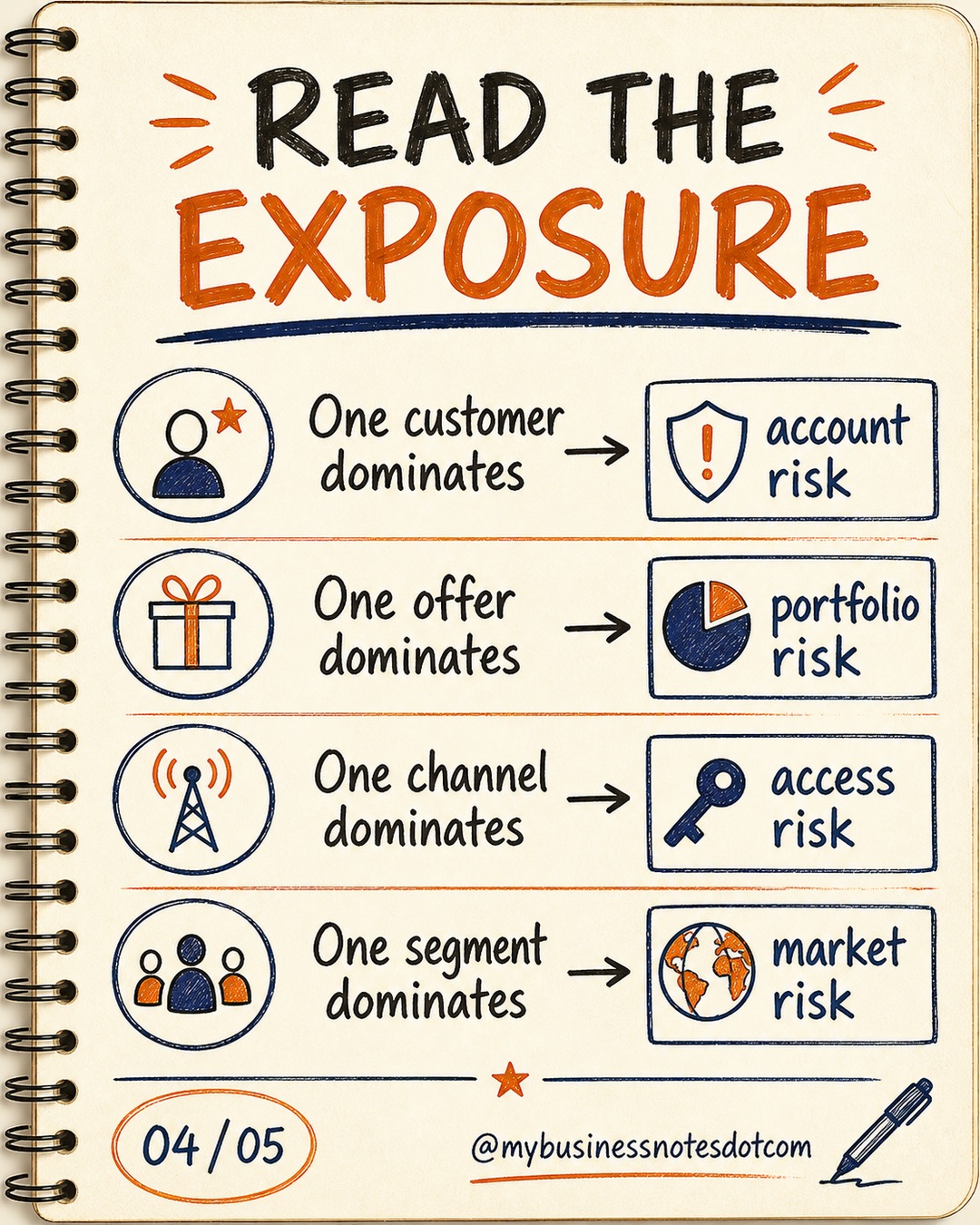
Slide 1 of 5
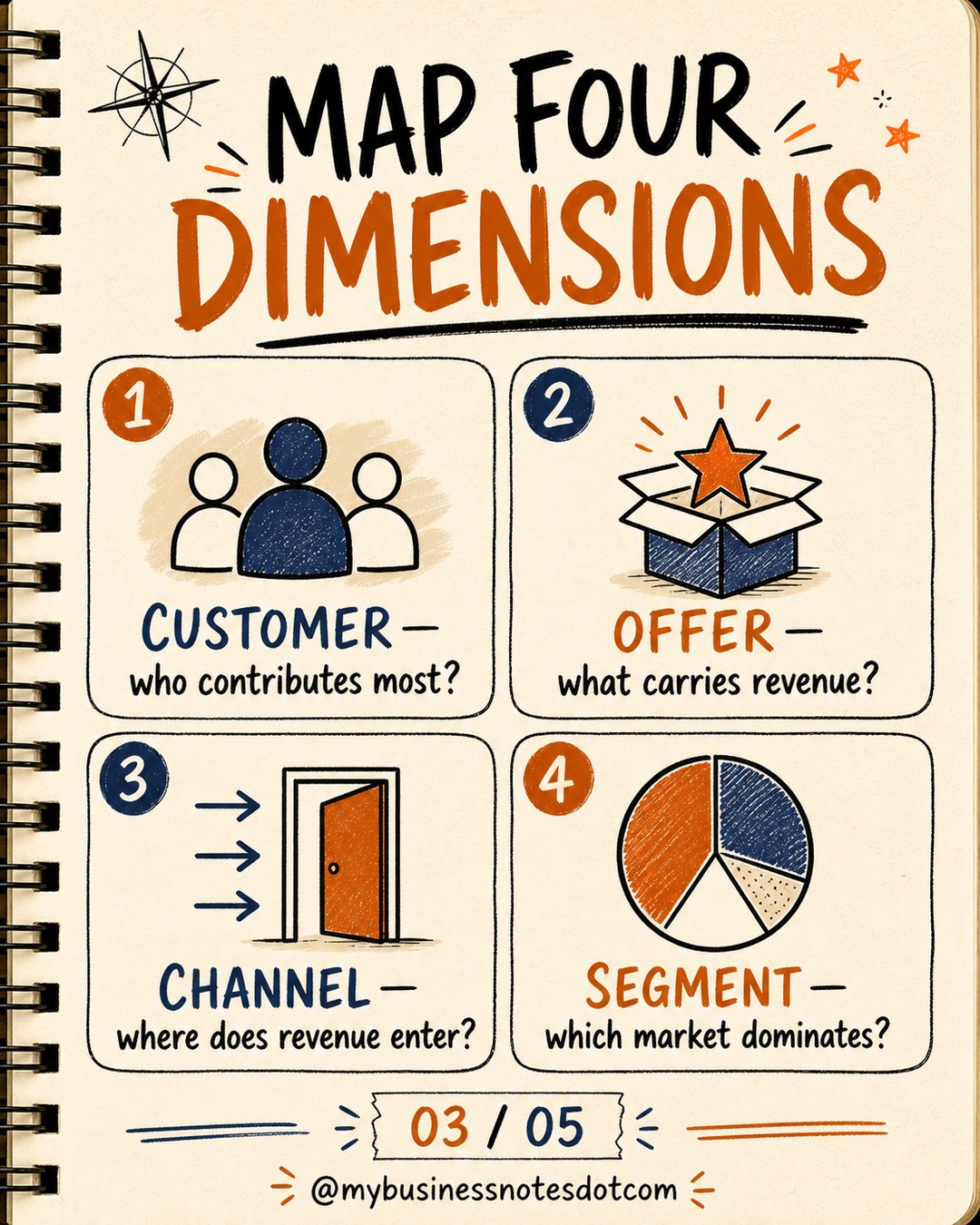
Map four dimensions
Calculate revenue and contribution by customer, offer, acquisition channel and segment. Use consistent periods and definitions. A diversified customer list can still hide dependence on one offer or route to market.
Look beyond percentages
Record contract timing, switching risk, margin, delivery dependence and correlation between sources. Several customers in the same vulnerable segment may behave like one concentrated exposure.
Run simple scenarios
Ask what happens if the largest source shrinks, renews late or demands different terms. Estimate impact on cash, capacity and margin. Scenarios reveal response time; they do not predict the future.
Choose a response that fits
Options include protecting a valuable relationship, broadening the offer, developing another channel or building cash and capacity buffers. Diversification has costs and should not be pursued without strategic fit.
Review dependency over time
Track whether concentration is increasing intentionally or drifting unnoticed. Assign an owner to leading indicators and define when exposure requires a decision rather than another observation.
Frequently asked questions
What is revenue concentration?
Dependence on a limited number of customers, offers, channels or segments.
Is high concentration always dangerous?
No, but it increases exposure and requires visibility, safeguards and a response plan.
Which concentration measure should be used?
Use shares and scenario impact across multiple dimensions, not one percentage alone.
How can concentration be reduced?
Develop suitable customers, offers or channels while protecting economics and delivery quality.
Put it into practice
Apply the framework to one current decision. Record the evidence, owner, next action and review date.
Download the complete carousel
Keep the five-slide framework as a PDF for your next working session.
International references
- McKinsey & Company â Boosting returns on marketing investment
- McKinsey & Company â How are companies valued?
- McKinsey & Company â Focus on the metrics that matter
- McKinsey & Company â The net revenue retention advantage
- Harvard Business Review â A better approach to after-action reviews
- Harvard Business Review â Design a better decision-making process
- Harvard Business Review â A process for human-algorithm decision making
- Atlassian â Decision-making retro
- Atlassian â Rolling four quarterly planning
- Atlassian â Roles and responsibilities
- Google re:Work â Understand team effectiveness
- Harvard Business Review â The discipline of business experimentation