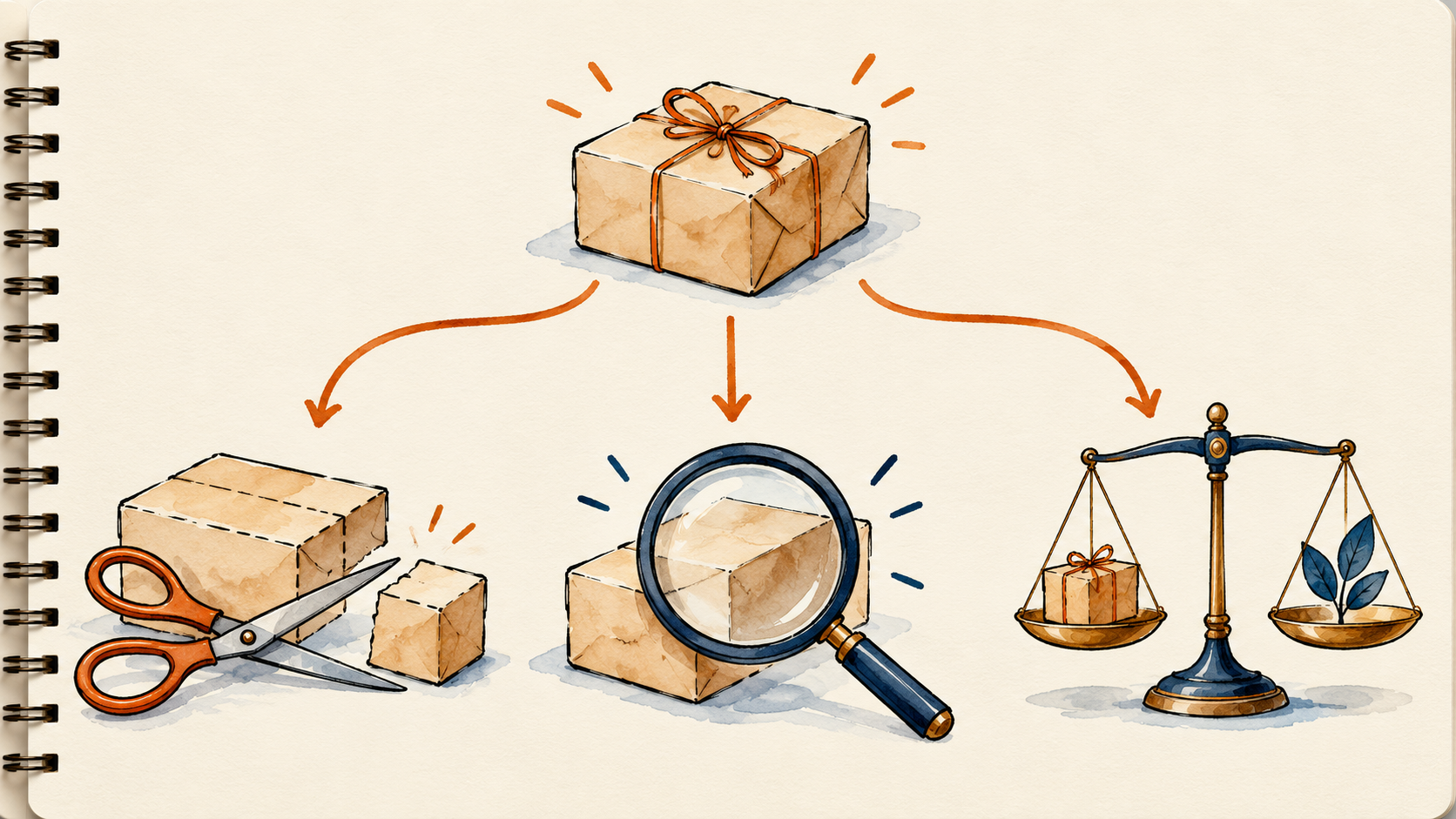
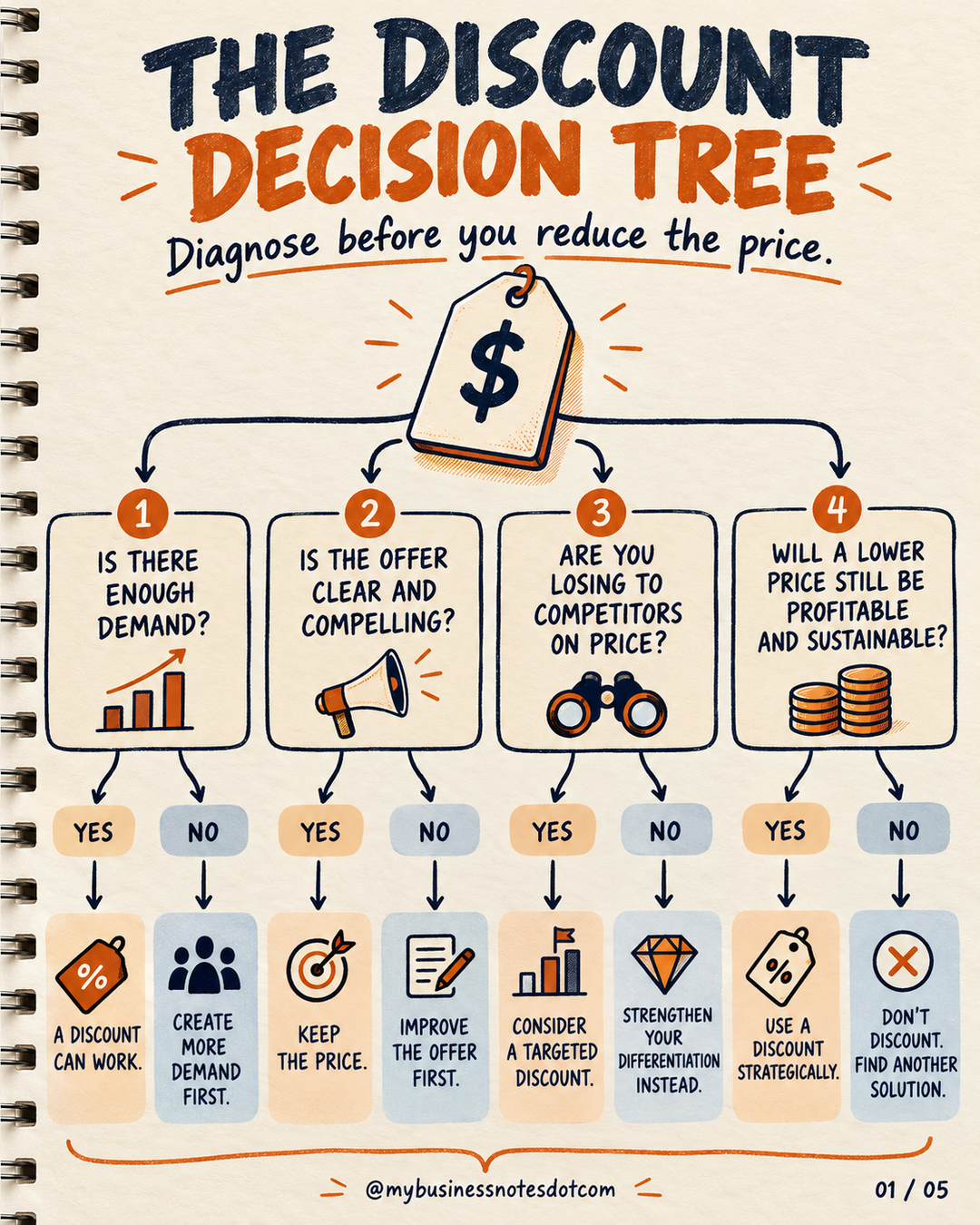
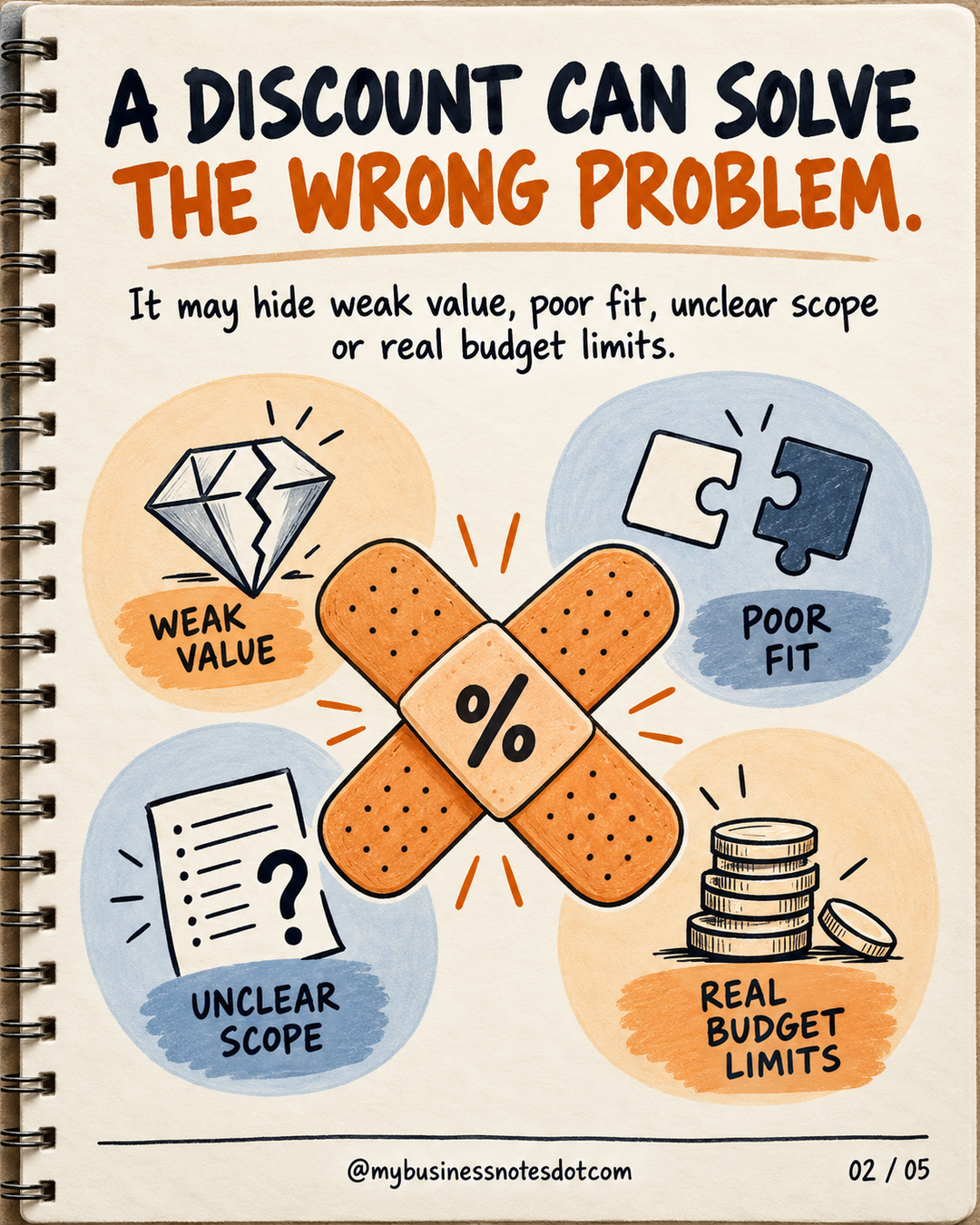
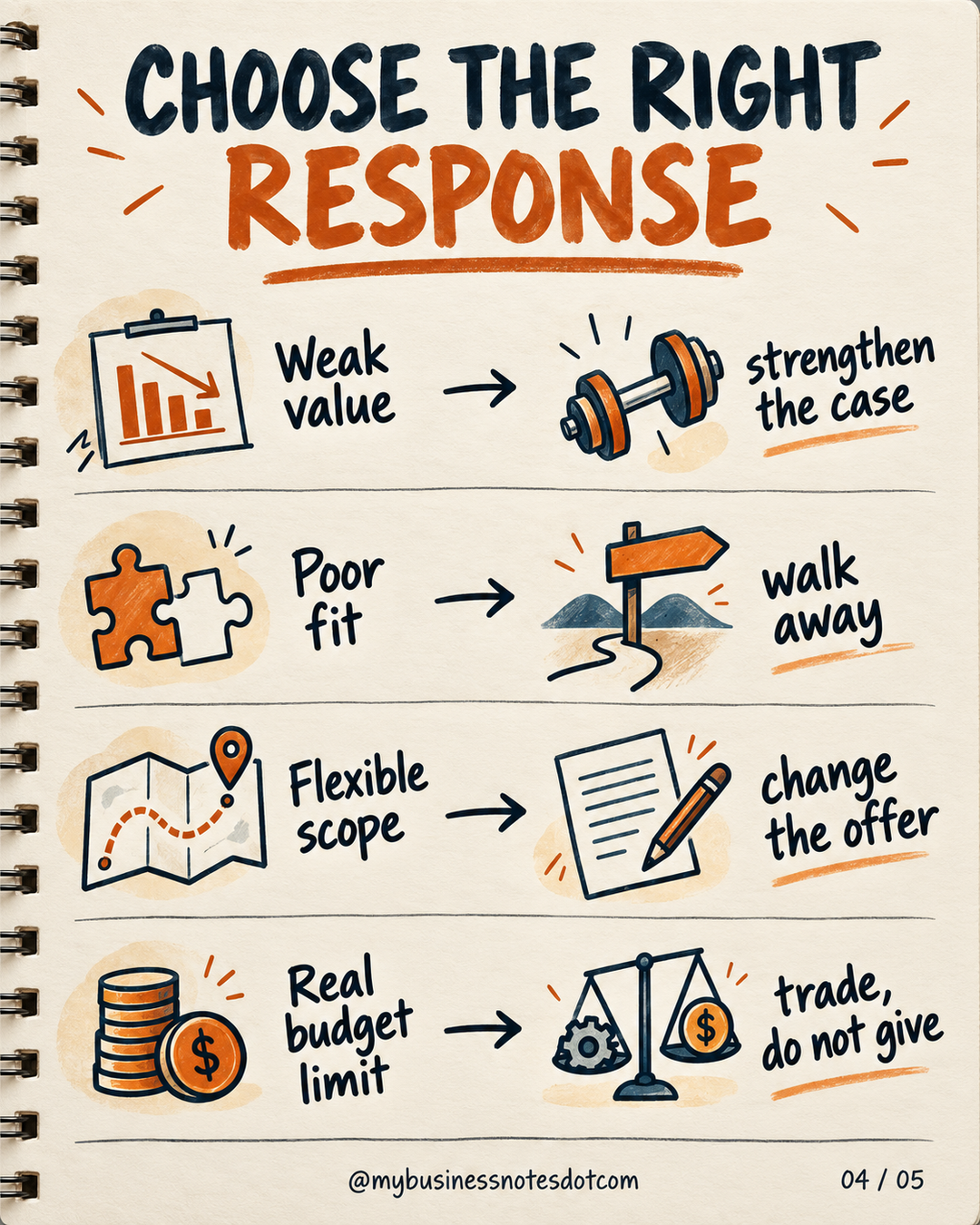
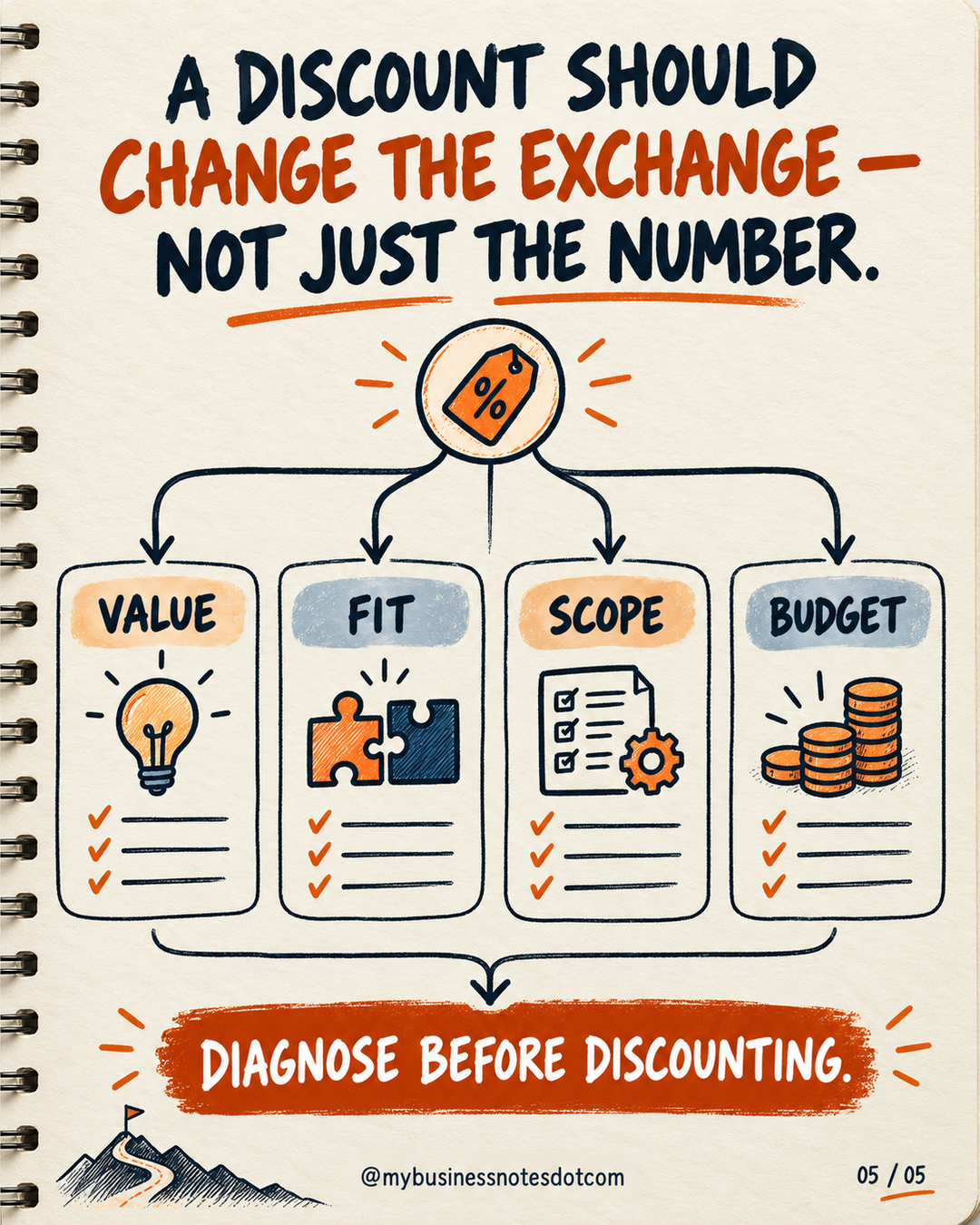
A discount decision tree asks whether a price concern comes from weak value, poor fit, flexible scope or a genuine budget limit. Diagnose the cause, check the economics and change the exchange deliberately instead of cutting the number by reflex.
Slide 1 of 5
First ask what the request for a discount means
A buyer may be negotiating by habit, comparing a narrower alternative or trying to solve a real affordability problem. The same request can therefore call for different responses. Ask what is driving it without treating the buyer as an opponent to defeat.
Use neutral follow-up questions rather than steering them toward a convenient explanation. GOV.UK's interview guidance and Nielsen Norman Group's warning about leading questions provide a useful foundation for this diagnostic conversation.
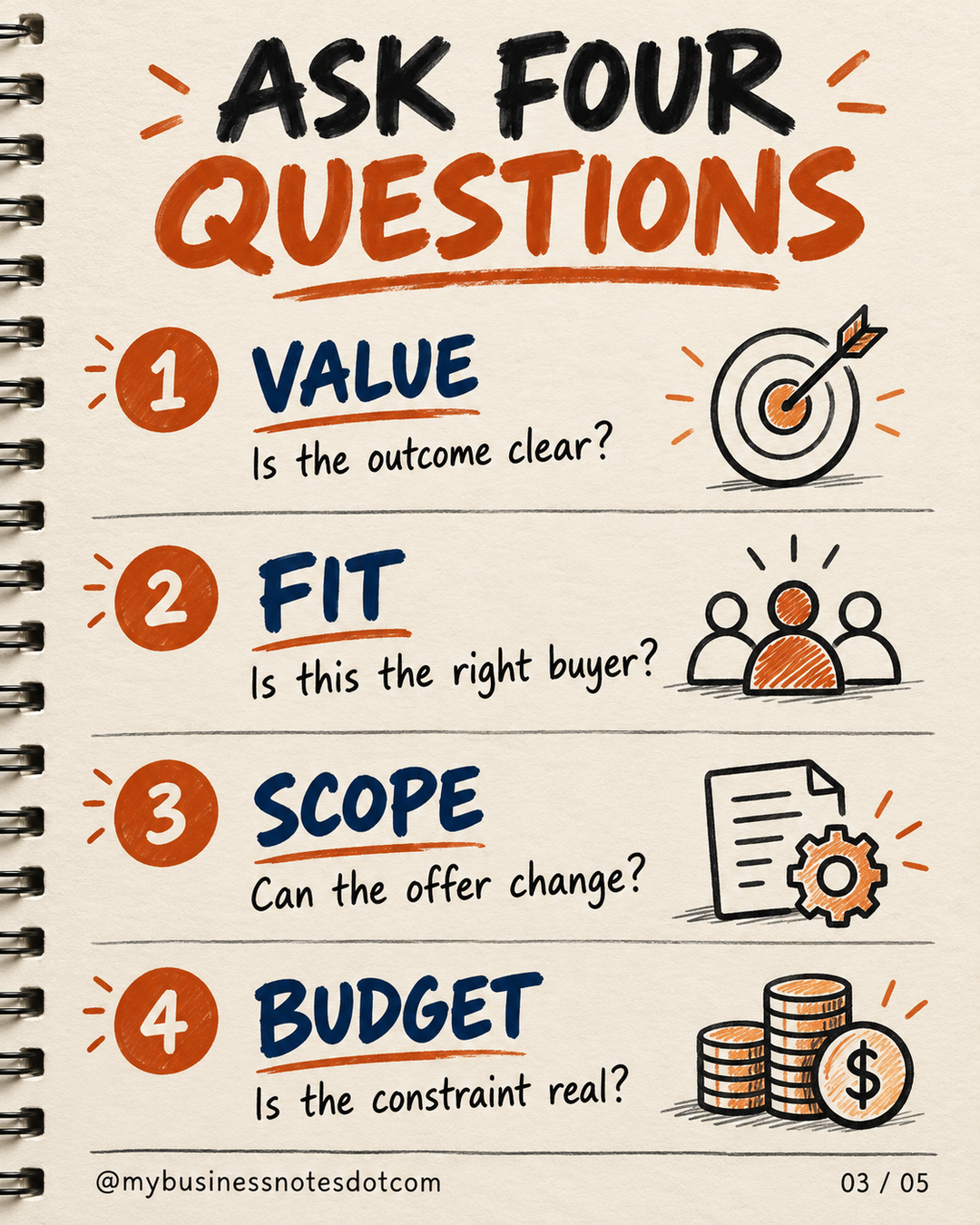
Value: is the expected change unclear or unconvincing?
If the buyer cannot see how the offer helps, reducing the price may leave the central problem intact. Clarify the situation, expected outcome and evidence. Jobs to Be Done and the Value Proposition Canvas can organize that investigation, but neither validates your claims automatically.
Do not strengthen the case by inventing a return-on-investment figure. The FTC's US guidance requires support for objective claims. An illustrative calculation should be labeled and its assumptions exposed, not presented as an assured customer result.
Fit: should this engagement happen at all?
Check the requirements on both sides: expertise, access, capacity and willingness to participate. A price concession cannot fix a delivery model that is unsuitable for the buyer. A respectful no may protect both parties from a poor engagement.
Harvard Business School's strategy guidance emphasizes choosing what not to do. Apply that idea by naming the work your offer cannot responsibly cover. Avoid accepting an exception that quietly changes the service for every customer.
Scope: can the offer genuinely change?
Explore fewer deliverables, a smaller initial phase, a different timetable or a reduced support commitment. State the resulting limits clearly. A smaller price for a smaller job is different from promising the original job with insufficient resources.
Program on Negotiation guidance discusses contingent concessions: linking a concession to a specific change by the other side. Use this transparently, not as a demand for compensation for every small courtesy. Document any agreed trade so delivery does not revert to the original scope.
Budget: is the remaining constraint real and workable?
If value and fit are clear but the budget is fixed, calculate what alternatives remain viable. A payment schedule changes cash timing, not necessarily total affordability or risk. Do not imply otherwise. Sometimes there is no responsible agreement available now.
Business Victoria advises checking profit margins and the volume needed to offset a discount. For a simplified hypothetical example, a service priced at 100 with variable costs of 60 contributes 40 before fixed costs. At a price of 90, with costs unchanged, contribution is 30. Matching the original total contribution requires one-third more units.
That arithmetic assumes constant costs and capacity. It does not establish net profit, customer demand or your ability to deliver the additional work. Use actual figures and appropriate accounting support for consequential decisions.
Turn the discount decision tree into a policy
Record the reason, revised scope, economics, approval authority and review date. Do not use a permanent list price solely to manufacture an impressive reduction. Keep savings claims and terms accurate for the applicable market.
After a limited test, review contribution, delivery burden and customer fit, not just the close rate. Strategyzer's testing guidance distinguishes spoken intent from behavior. A buyer's request is useful evidence about a concern; only subsequent action can show what happens with the revised offer.
Frequently asked questions
When should a business offer a discount?
When it serves a defined purpose, remains economically viable and has clear terms. First check whether the actual issue is value, fit, scope or a budget constraint.
Is reducing scope the same as discounting?
No. A smaller scope changes what is delivered. A discount reduces the price of the defined offer. Make that distinction explicit in the agreement.
Will more sales compensate for a discount?
Not automatically. The required volume depends on contribution per sale, costs and capacity. Additional revenue is not the same as additional profit.
Download the complete carousel
Use the five-slide worksheet in your next working session.
Related reading: Turn learning into the next decision.
International references
- Business Victoria — Develop discount strategies
- Deepak Malhotra / Harvard Program on Negotiation — Four strategies for making concessions
- Harvard Business School ISC — Creating a Successful Strategy
- Strategyzer — Value Proposition Canvas
- Nabila Amarsy / Strategyzer — Ways to test your value proposition
- Alex Osterwalder / Strategyzer — Don’t believe your customers
- GOV.UK User research community — Using in-depth interviews
- Amy Schade / Nielsen Norman Group — Avoid leading questions
- Christensen Institute — Jobs to Be Done
- FTC — Advertising FAQs for small business