

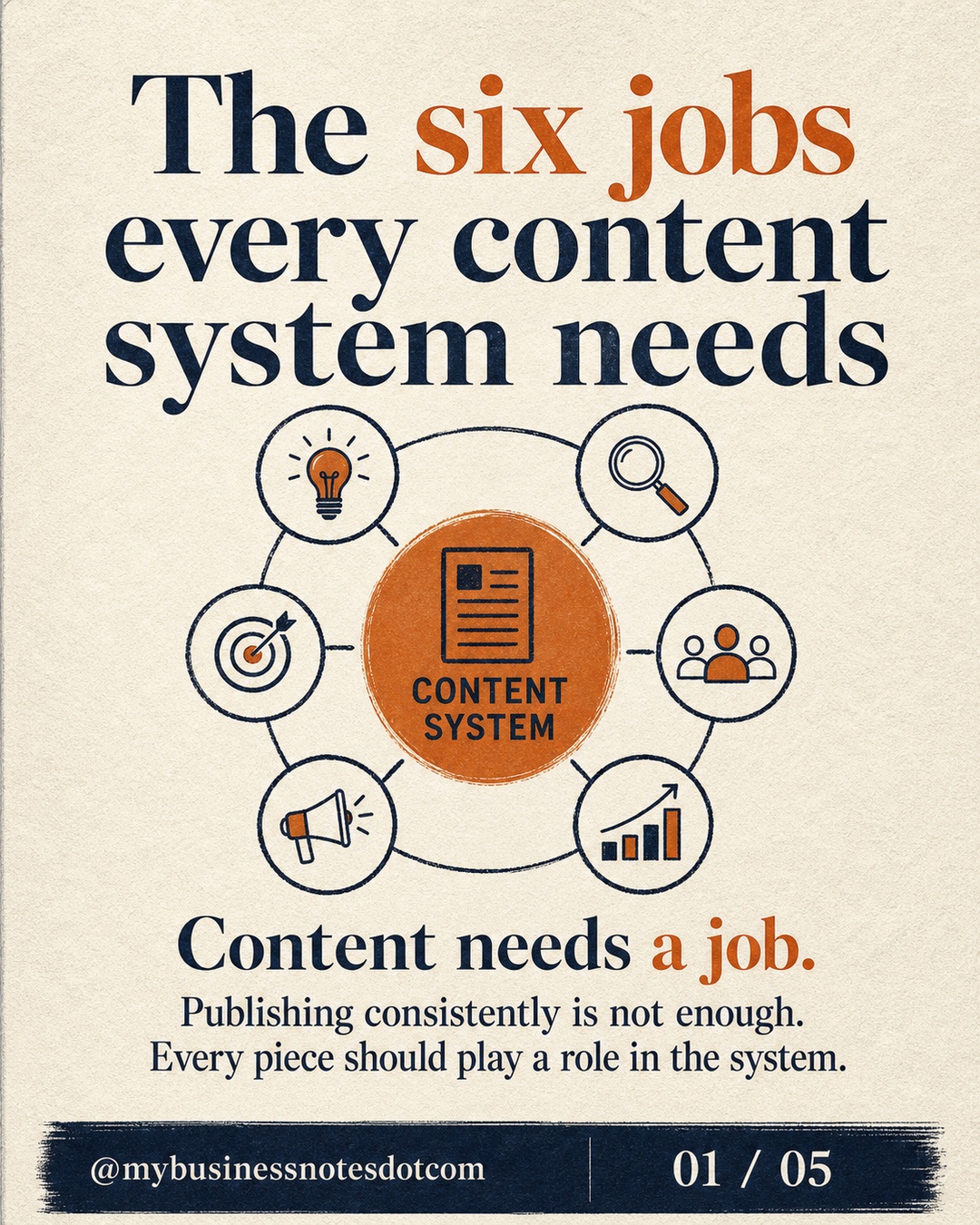
Content system turns the central principle into an explicit decision: Publishing consistently is not enough. Every piece should play a role in the system. This article develops that decision into a practical management framework, helping teams move from activity to coordinated action and useful evidence.
Slide 1 of 5
What this framework helps you decide
Publishing consistently is not enough. Every piece should play a role in the system.
The value of a framework is not the appearance of certainty. It is the quality of the conversation it creates. Use the following sections to expose assumptions, focus attention, and convert an abstract intention into a decision that can be reviewed.
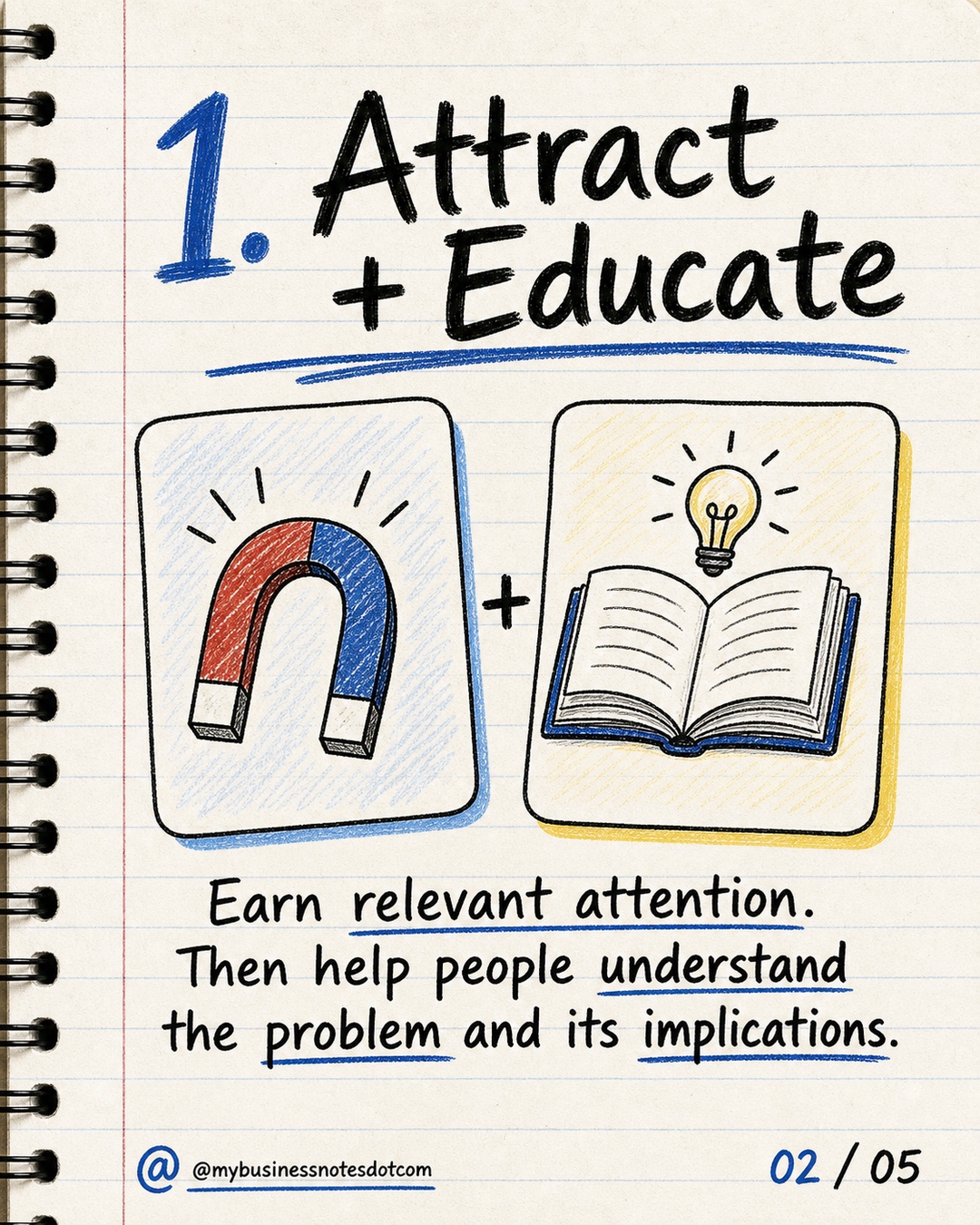
1. Attract + Educate
Earn relevant attention. Then help people understand the problem and its implications.
Attraction earns the attention of people in a relevant situation, while education helps them understand the problem, its consequences, and possible approaches. Treat these as distinct jobs: reach without useful learning creates noise, and education without distribution remains invisible.
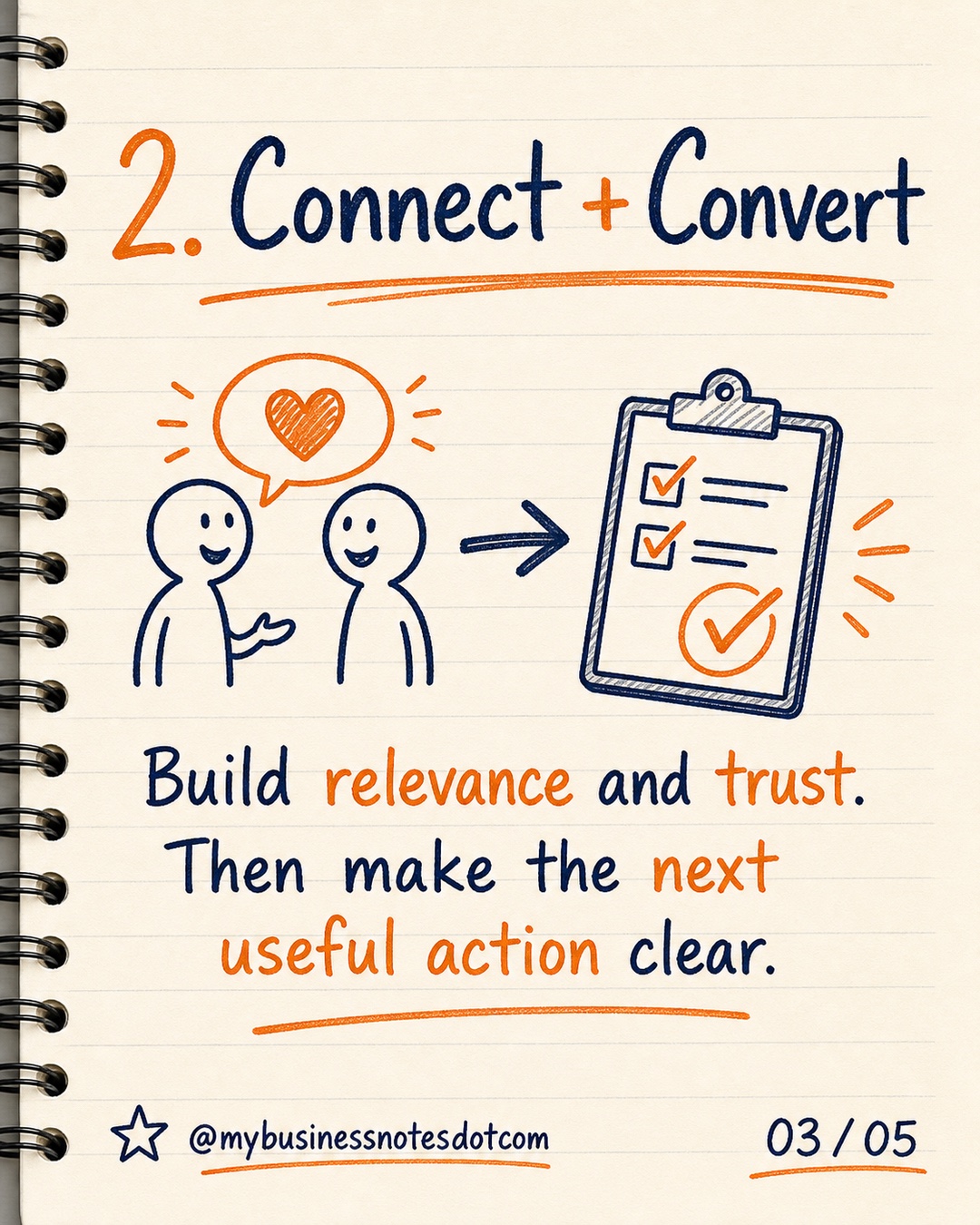
2. Connect + Convert
Build relevance and trust. Then make the next useful action clear.
Connection turns anonymous attention into a relationship the business can continue, and conversion gives that relationship a clear next step. Design the transition deliberately with relevant calls to action, appropriate forms, and an offer that matches the visitor’s level of readiness.
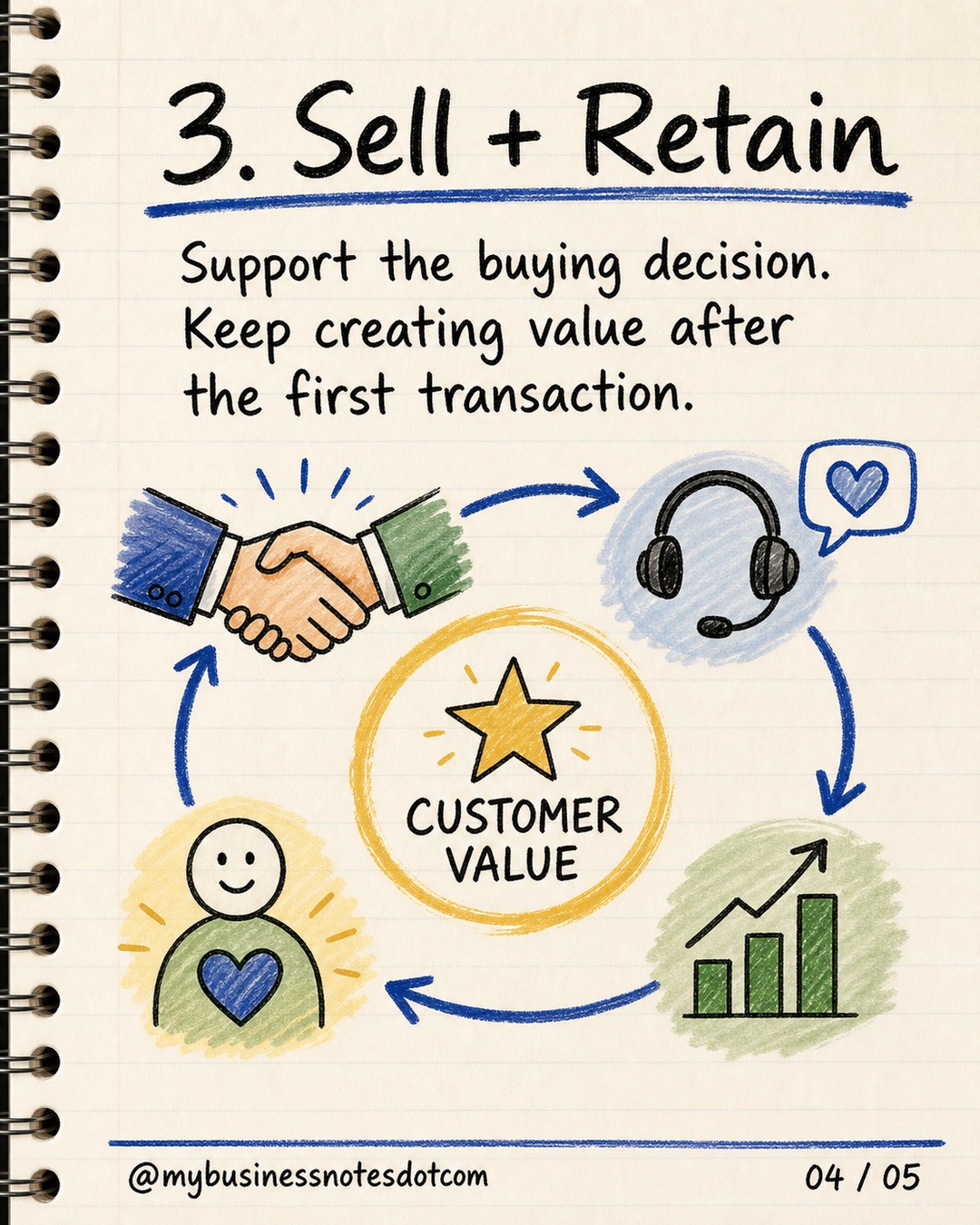
3. Sell + Retain
Support the buying decision. Keep creating value after the first transaction.
Selling helps a qualified buyer make a confident decision; retention helps the customer achieve the promised value after purchase. Content should support both moments with proof, onboarding guidance, practical education, and answers to the questions that appear during use.
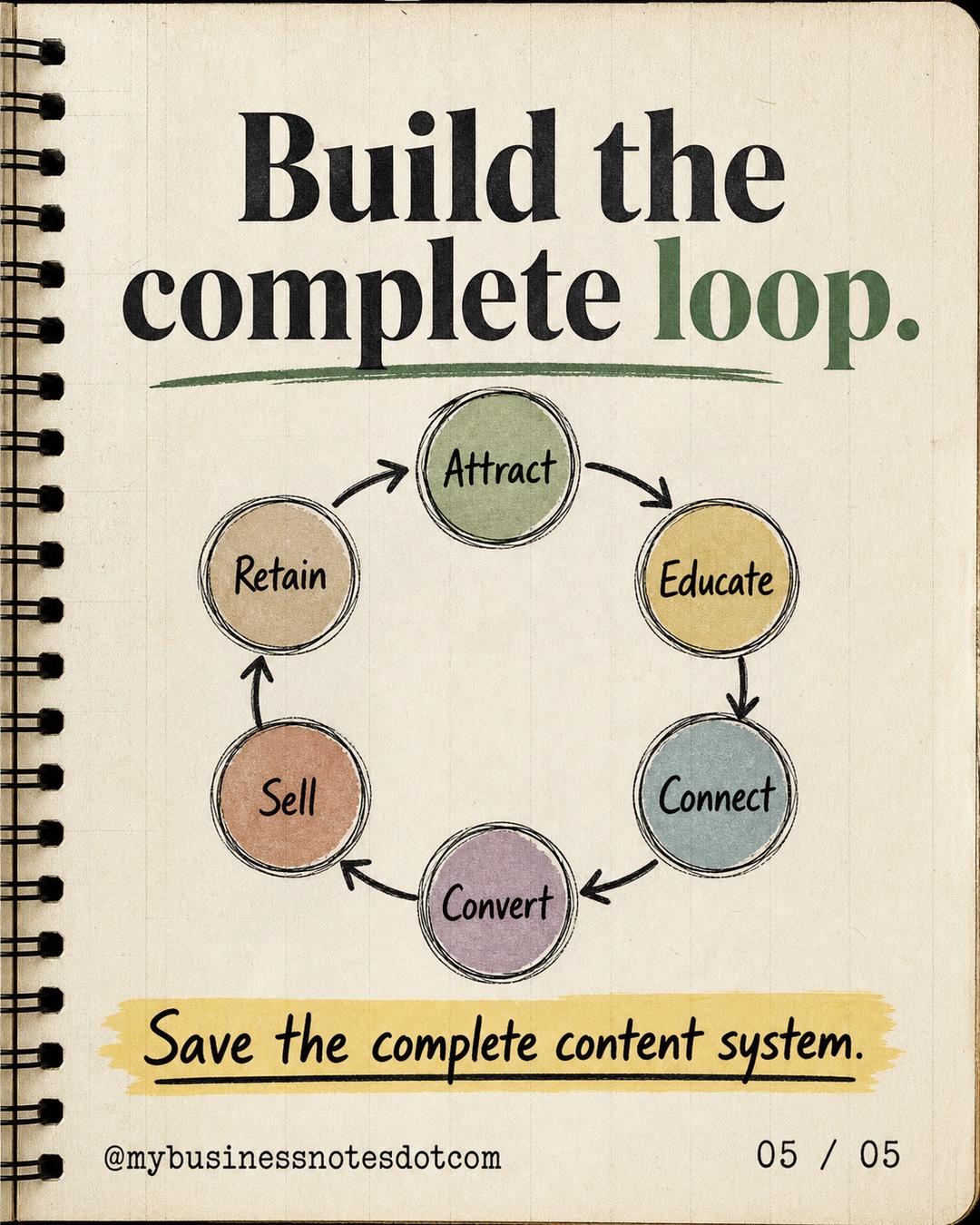
Build the complete loop.
Attract. Educate. Connect. Convert. Sell. Retain.
A complete content system links all six jobs and returns customer evidence to the beginning of the loop. Review where people stall, which questions repeat, and which assets support meaningful progress. Then improve the weakest connection instead of merely adding more content.
A practical example
A useful content system may use a diagnostic article to attract and educate, an email sequence to connect, a comparison page to convert, a sales guide to support the decision and onboarding content to retain. One asset can perform more than one job, but the portfolio should cover the whole customer relationship.
The mistake to avoid
The common mistake is optimizing the publishing cadence while leaving conversion, sales enablement and retention without content support.
How to apply the framework
Begin with the business result and the customer or operational context. Work through the framework in sequence, but spend more time where uncertainty is highest. Record the decision, the reasoning behind it, and the signal that would cause the team to reconsider.
A useful review ends with subtraction as well as addition. Identify what will stop, what will receive protected attention, and who is accountable for the next visible step. Without those trade-offs, even a clear discussion can dissolve into more activity.
For related guidance, see The four pillars of content strategy and Marketing as value creation.
Frequently asked questions
What is content system?
Content system is a practical way to organize decisions around the result, audience, actions and evidence described in this article.
Why does content system matter?
It matters because it connects activity to an explicit decision and makes progress easier to evaluate, explain and improve.
What is the most common mistake with content system?
The common mistake is optimizing the publishing cadence while leaving conversion, sales enablement and retention without content support.
How do you start using content system?
Write the current decision in one sentence, apply the framework to the highest uncertainty, assign one owner and define the next observable evidence.
Put the framework into practice
Save the complete content system. Use the carousel as a shared review tool, then capture the resulting priority, owner, next action, and evidence in the team’s working system.
Download the complete carousel
Keep the framework as a PDF for your next review.
International references