

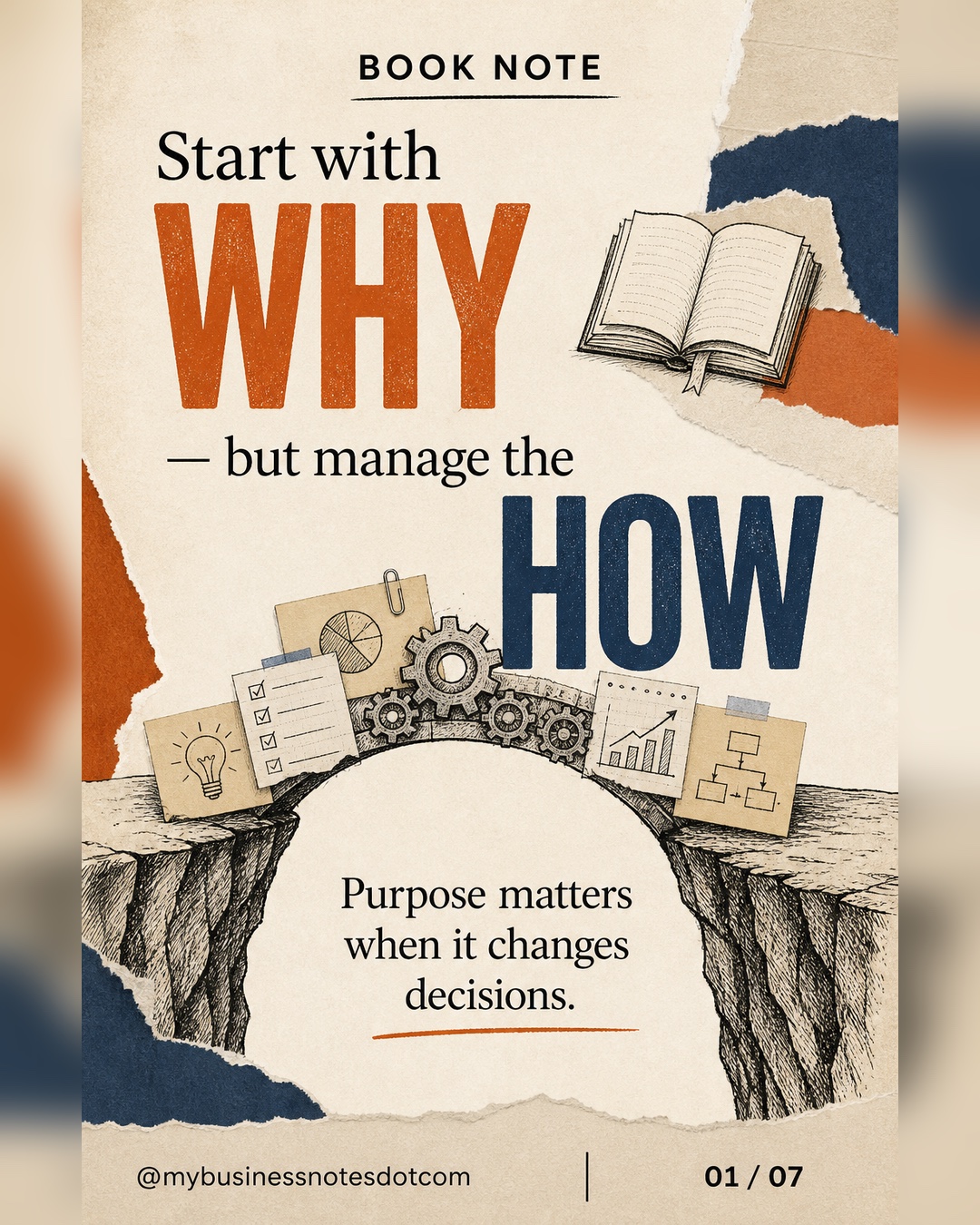
To start with why is to clarify the belief or purpose behind an organization; to manage the how is to translate that purpose into priorities, processes, responsibilities, and observable behavior. Purpose can create direction and meaning, but it becomes operational only when it changes what the business chooses, how the team acts, and which evidence leaders review.
Slide 1 of 7
What does “start with why” mean?
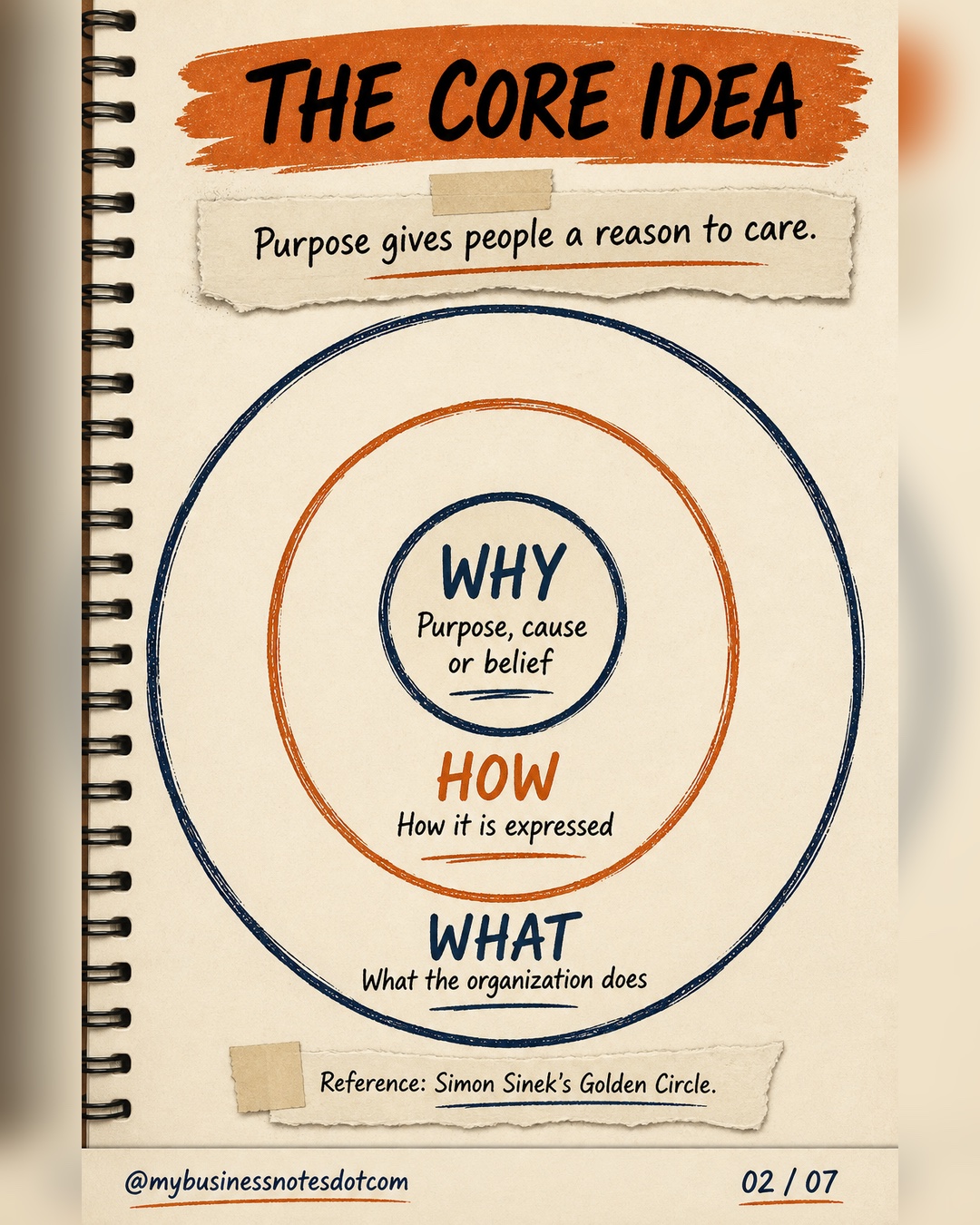
Simon Sinek’s Golden Circle distinguishes three layers of organizational communication: why an organization exists, how it expresses that belief, and what it makes or does. The practical value of beginning with why is that it gives customers and employees a reason to care beyond a list of products or features.
This article is not a complete summary of Start With Why. It uses the central concept as a starting point, then adds a management interpretation: a compelling purpose does not run the business by itself. Leaders still need an operating system that turns intention into repeatable decisions.
The gap between purpose and management
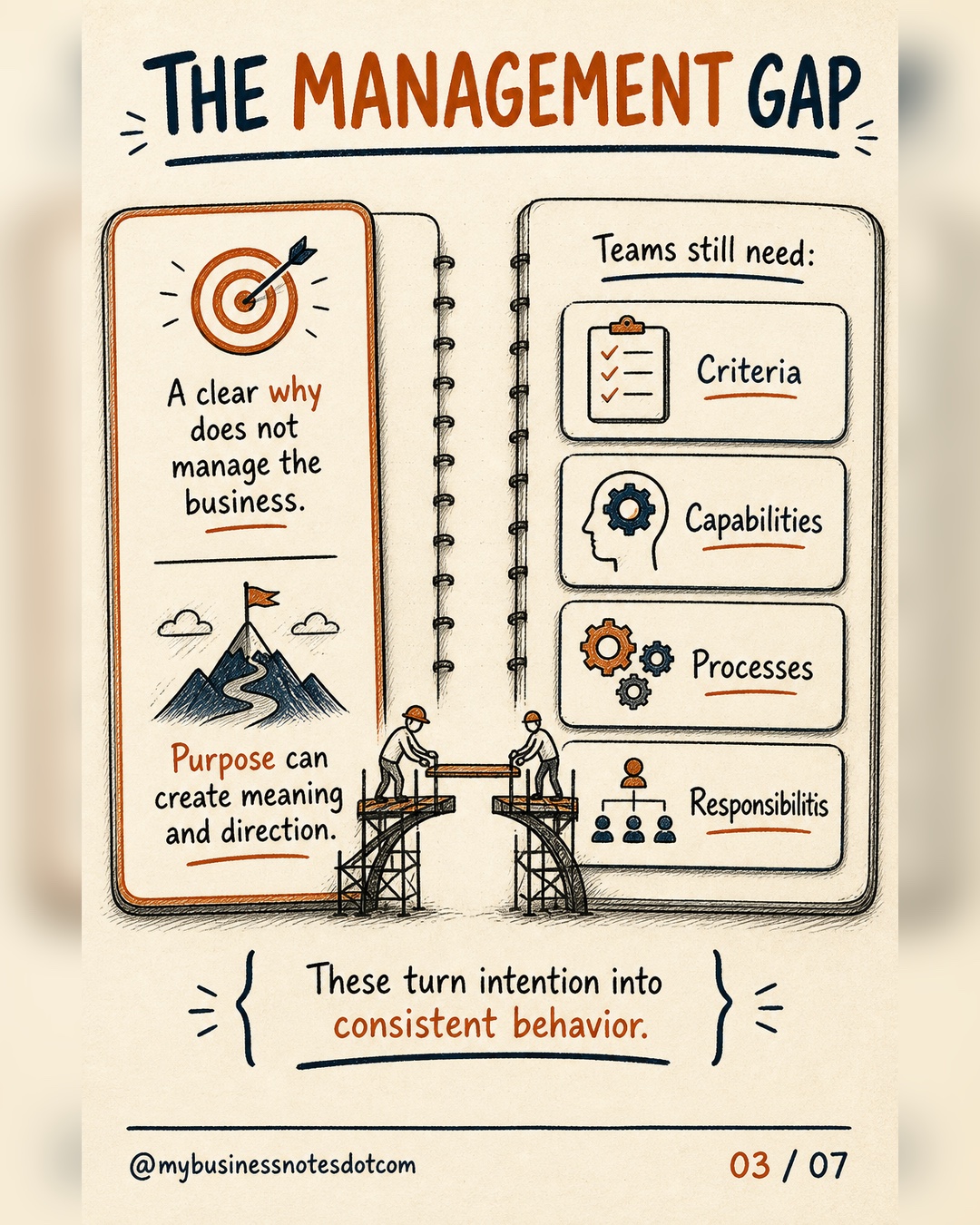
Purpose statements often fail not because the words are weak, but because the management system remains unchanged. The company announces a commitment, while budgets, incentives, targets, meeting agendas, and approval criteria continue to reward something else. People learn from those signals faster than they learn from a poster.
A useful purpose must therefore answer an operational question: what will we do differently because we believe this? The answer should be visible in choices, capabilities, routines, responsibilities, and evidence.
1. Purpose should change what you choose
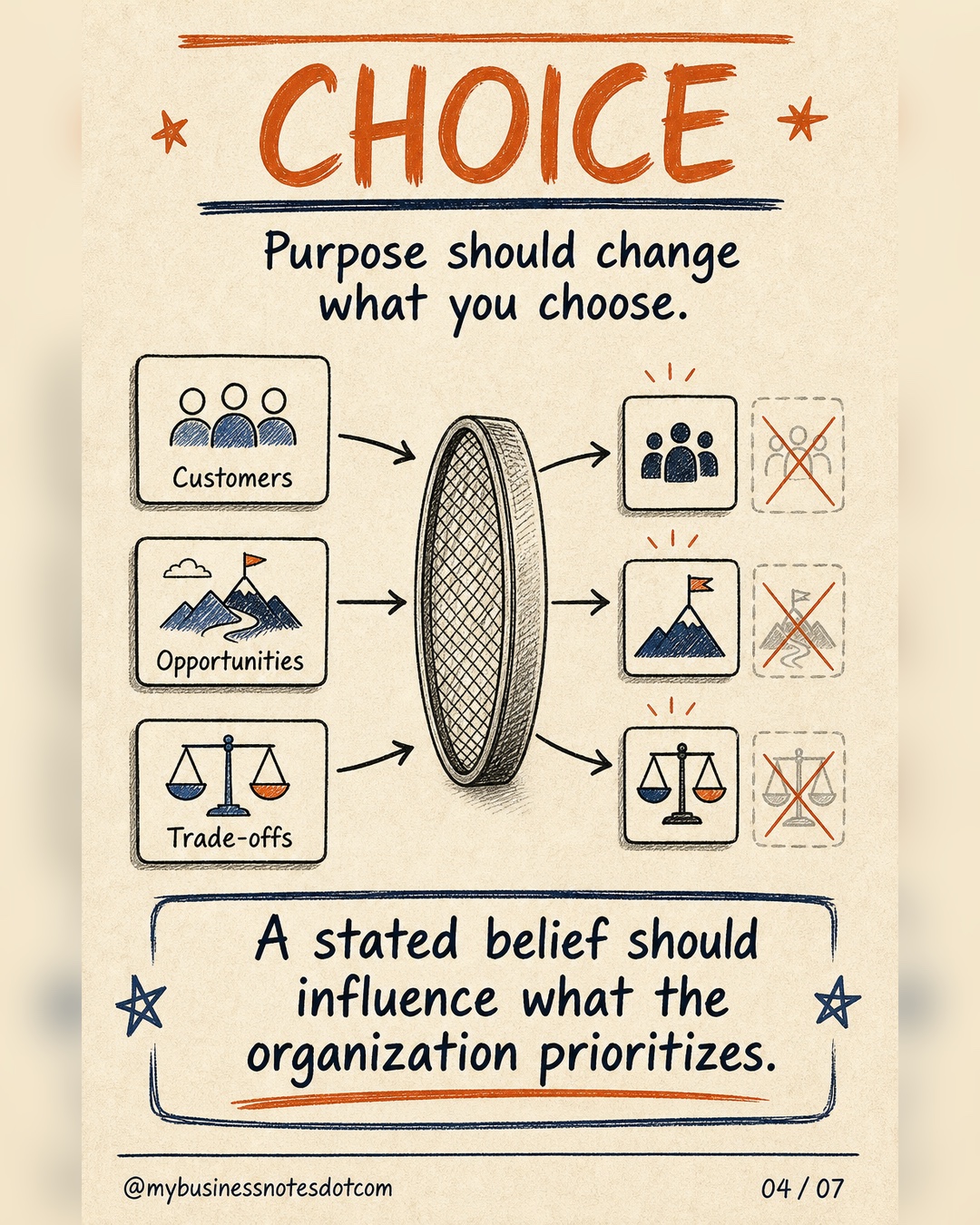
Strategy requires choice. If purpose matters, it should influence which customers the organization is best prepared to serve, which problems deserve investment, which opportunities fit, and which attractive options should be rejected.
Turn the purpose into decision criteria. For every significant opportunity, ask whether it strengthens the value the organization exists to create, requires capabilities the business wants to build, and respects the trade-offs the company has chosen. Purpose becomes credible when it can help leaders say both yes and no.
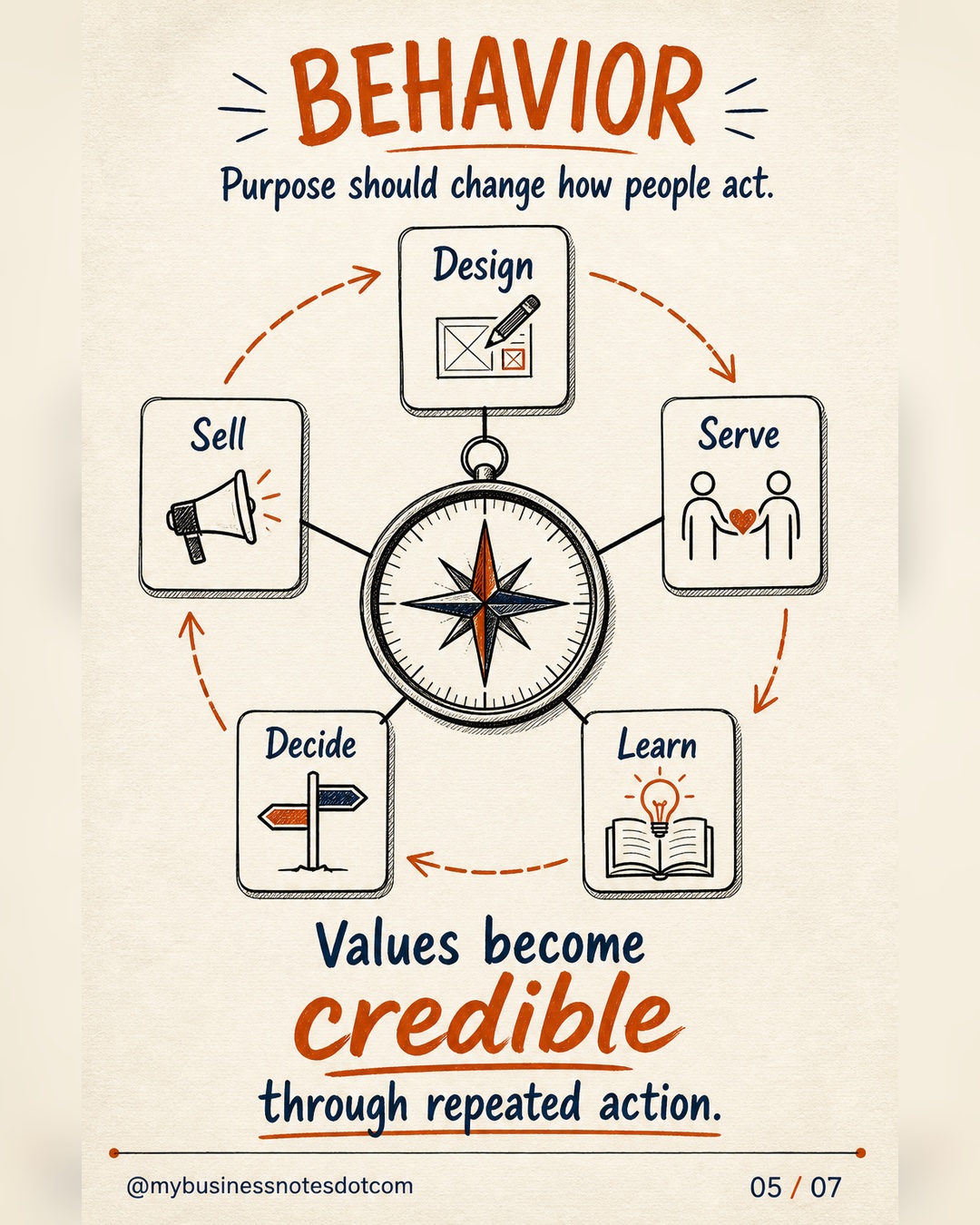
2. Purpose should change how people act
Values and purpose become real through observable behavior. Translate abstract language into a small set of expectations for how the team designs, sells, serves, decides, and learns.
“Put customers first,” for example, is too broad to guide a difficult moment. A more operational expression might require teams to disclose limitations before a sale, contact affected customers before announcing a service change, or prioritize recurring customer friction during planning. The behavior creates a standard that colleagues can practice, coach, and improve.
3. Purpose needs management infrastructure
Consistent behavior rarely comes from motivation alone. It depends on the surrounding system: clear decision rights, relevant capabilities, workable processes, useful information, and consequences that reinforce the intended direction.
- Criteria: rules for evaluating opportunities and trade-offs.
- Capabilities: skills and resources needed to deliver the promised value.
- Processes: repeatable ways to coordinate work.
- Responsibilities: clarity about who decides, executes, and reviews.
- Feedback: evidence that shows whether behavior and outcomes align.
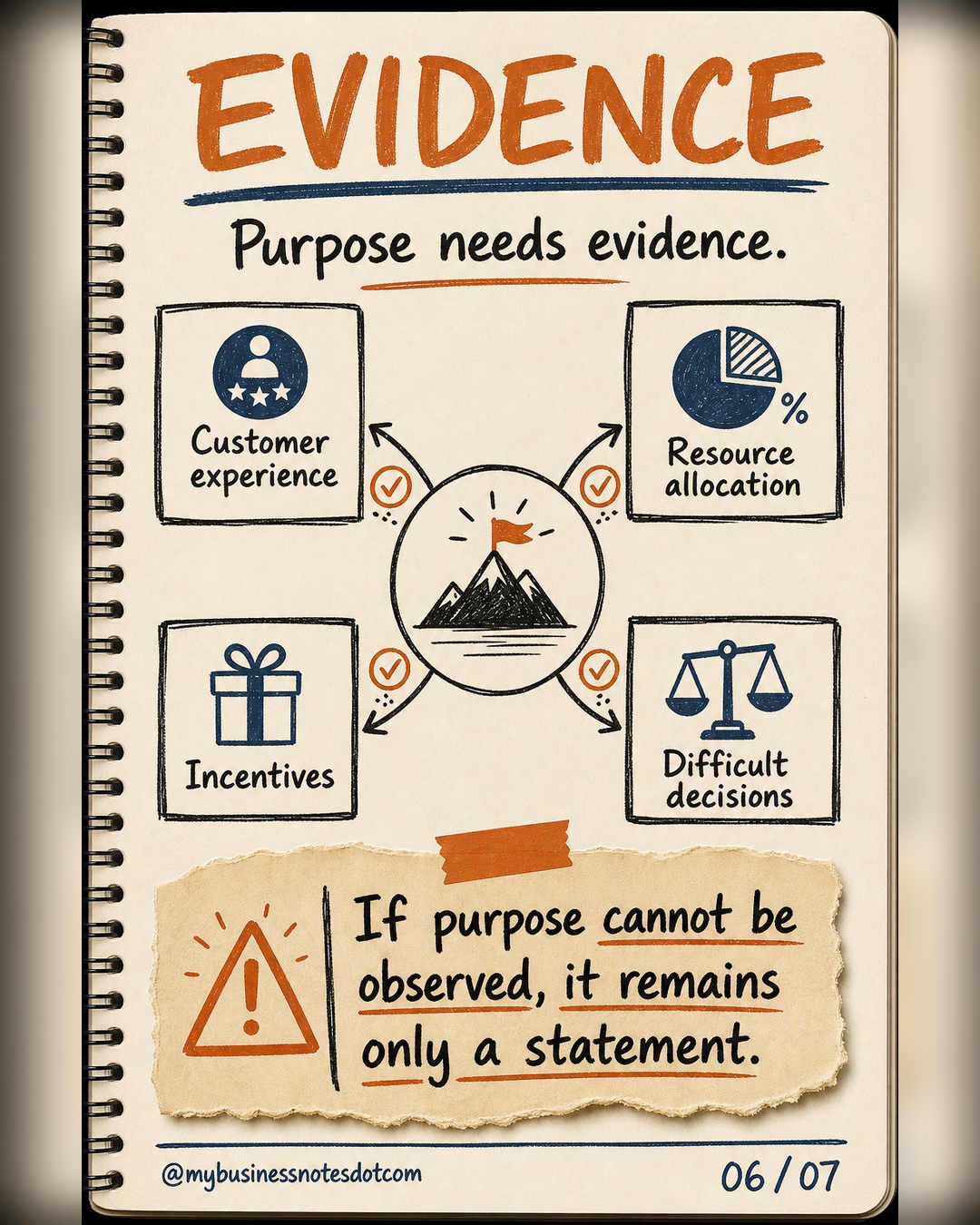
4. Purpose needs evidence
Leaders should be able to point to evidence of purpose in four places: customer experience, resource allocation, incentives, and difficult decisions. These are stronger tests than internal awareness surveys alone because they show what the organization actually protects when pressure increases.
Ask where the purpose changed a product, a sales practice, a budget, a hiring decision, or a response to failure. If no concrete example appears, the purpose may still be inspirational—but it is not yet an operating principle.
A practical purpose-to-operations map
| Layer | Management question | Output |
|---|---|---|
| Purpose | Why do we exist beyond the transaction? | A clear reason to care |
| Choices | What will we prioritize or refuse? | Decision criteria |
| Behavior | What should people do differently? | Observable expectations |
| System | What enables repeated behavior? | Capabilities, processes, and accountability |
| Evidence | Where can alignment be observed? | Signals, examples, and measures |
Frequently asked questions
Is purpose the same as a mission statement?
Not necessarily. Purpose explains why the organization exists; a mission often describes what it is currently trying to accomplish. Terminology matters less than whether the idea provides usable direction.
Can purpose replace strategy?
No. Purpose informs direction, while strategy defines choices and an approach for creating value under real constraints.
How do you make purpose operational?
Translate it into decision criteria, specific behaviors, supporting processes, clear responsibilities, incentives, and evidence reviewed in management routines.
How should leaders measure purpose?
Use a combination of behavioral and outcome evidence. Review customer experience, allocation decisions, incentives, and difficult trade-offs rather than relying on one universal metric.
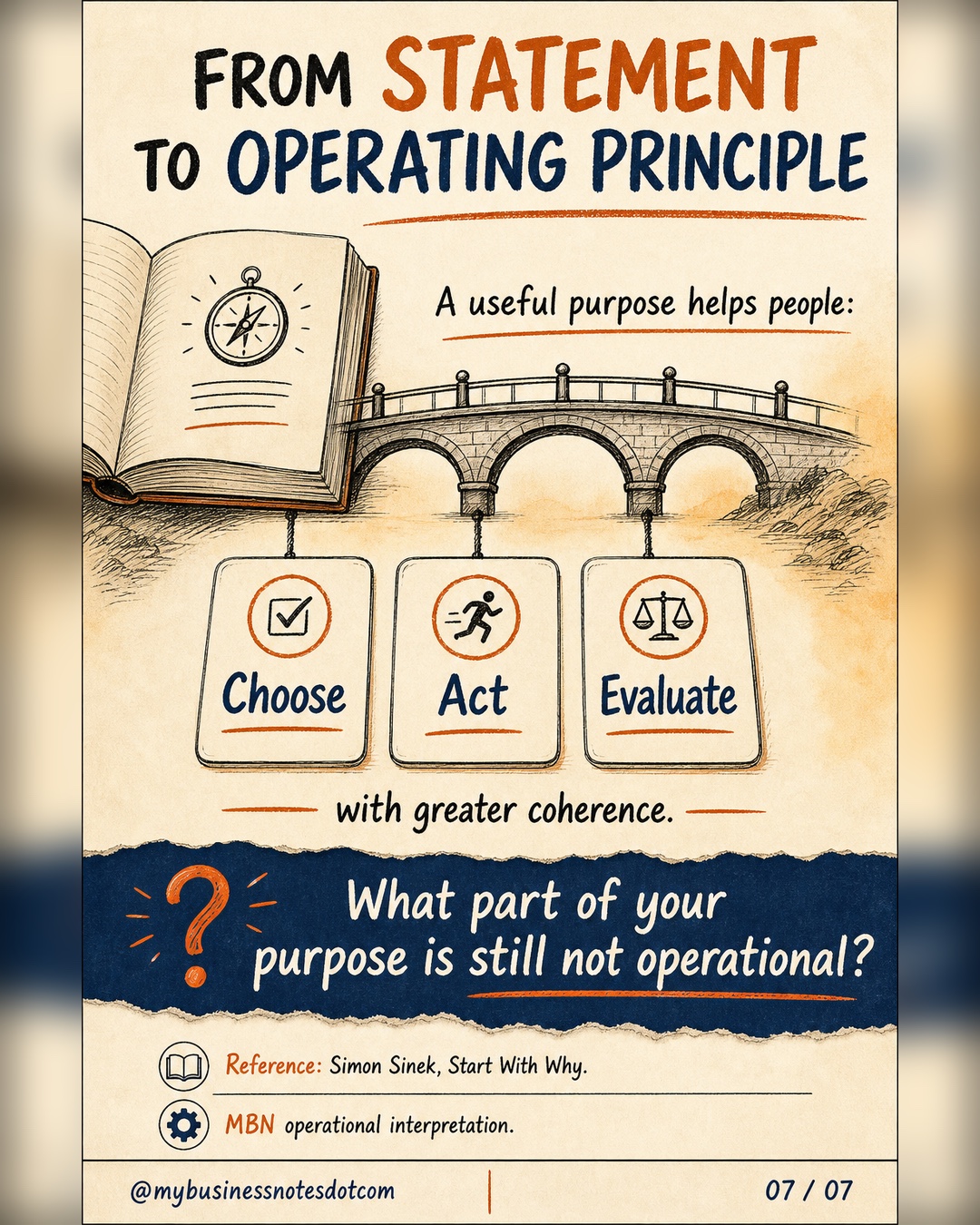
From statement to operating principle
Start with why to create meaning and direction. Then manage the how: make the purpose visible in choices, behavior, systems, and evidence. The real test is not whether people can recite the statement. It is whether they can use it when the right decision is difficult.
Download the complete carousel
Keep the seven-slide framework for your next strategy or management discussion.
International references