

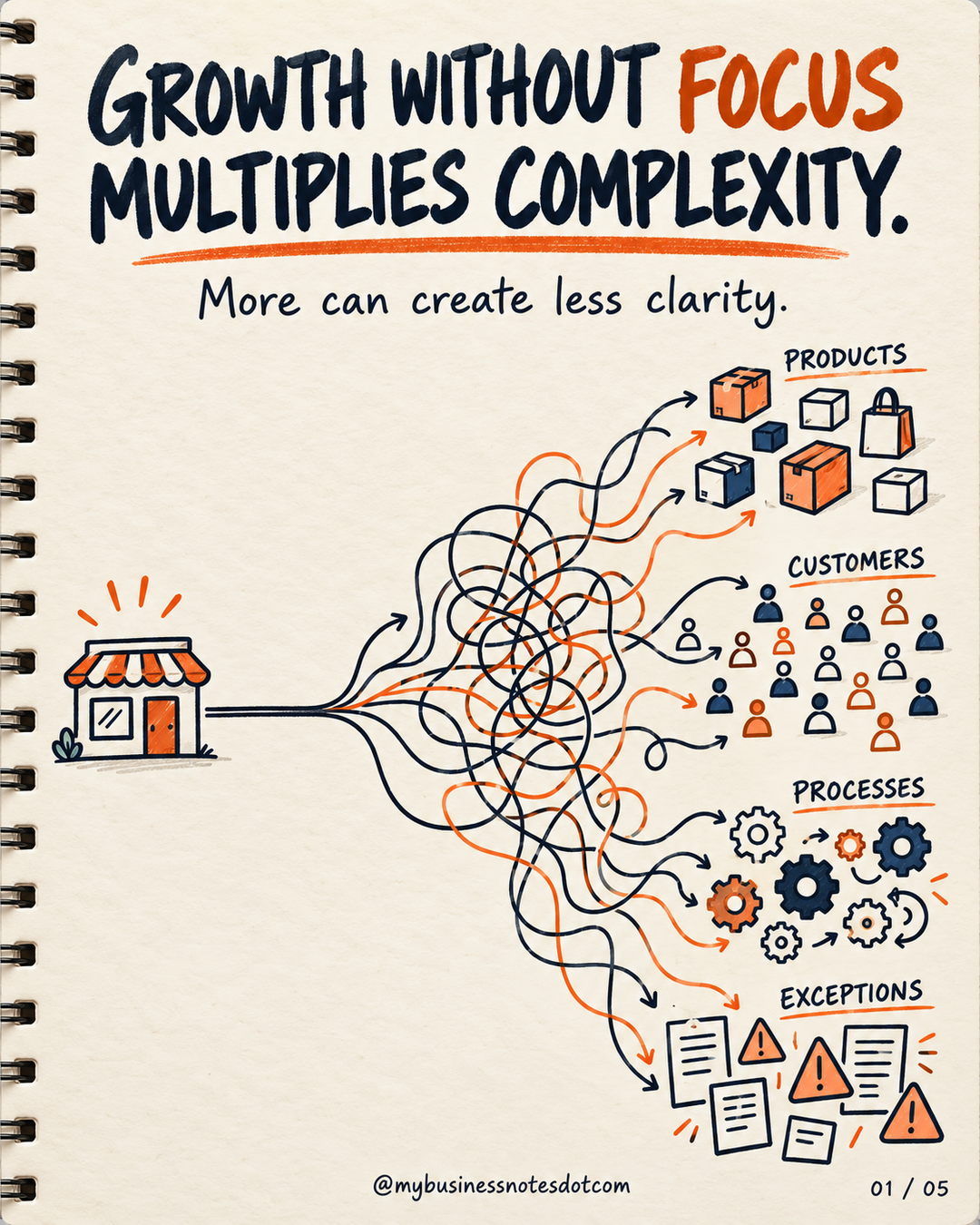
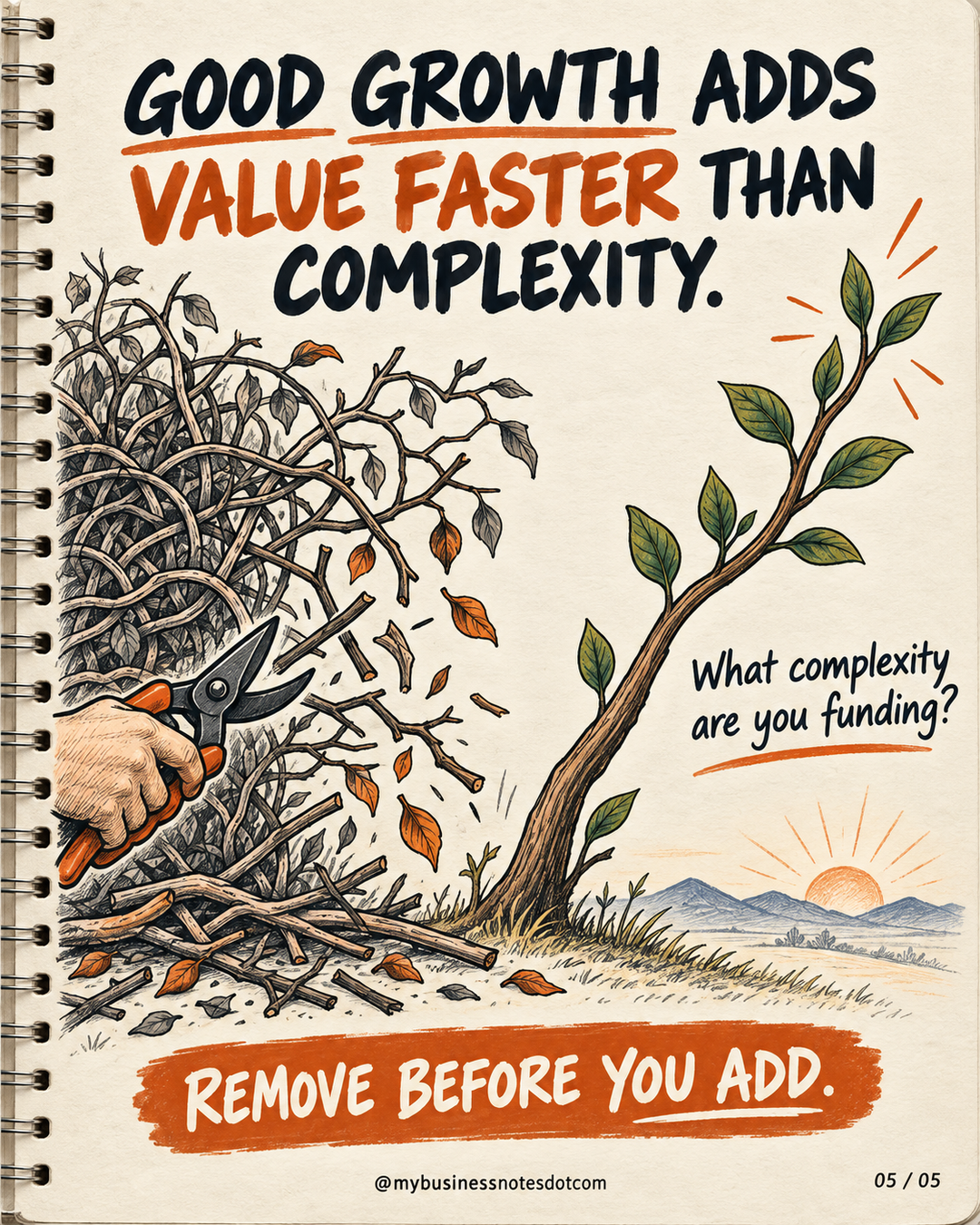
Business complexity becomes a growth problem when new offers, exceptions and handoffs consume more capacity than the value they create. The answer is not to simplify everything. It is to choose which complexity customers value and which complexity the business should stop carrying.
Slide 1 of 5
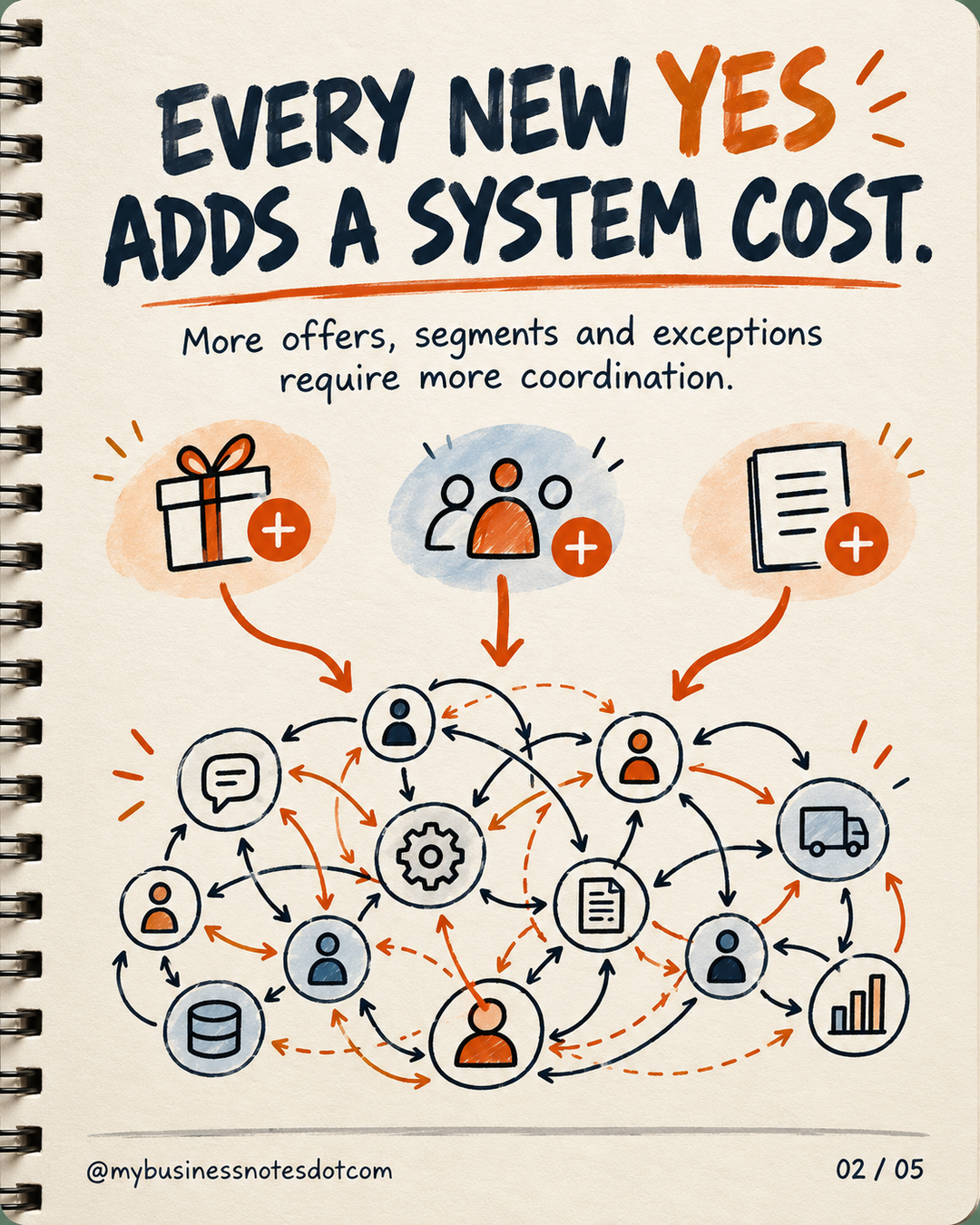
More revenue can hide a harder operating model
A new segment may require different terms, onboarding and support. A new channel may introduce another reporting process and another promise to customers. None of that is automatically bad. The danger is accepting each addition separately while never reviewing the combined delivery burden.
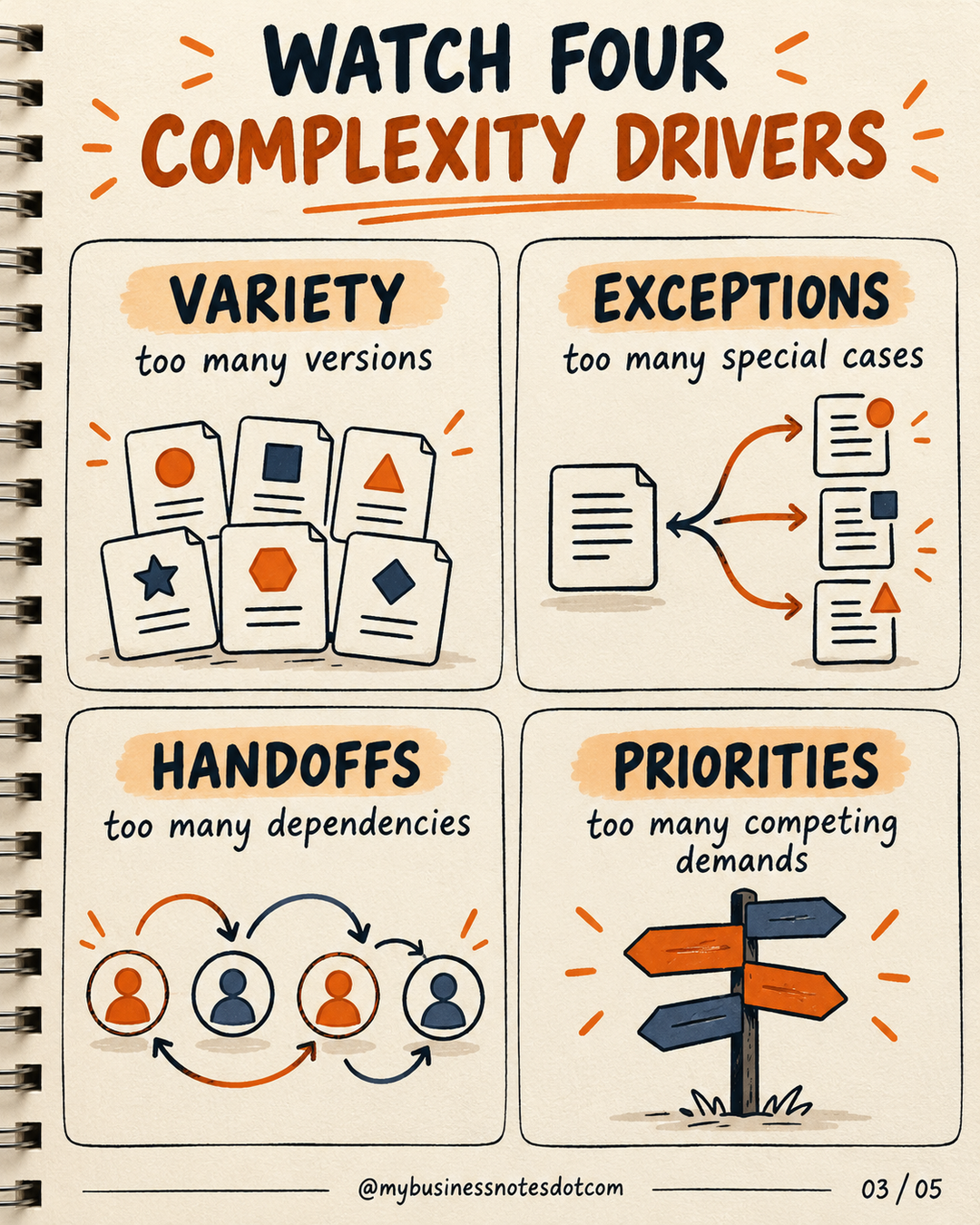
Use the four lenses in this MBN framework—variety, exceptions, handoffs and priorities—as prompts for inspection. They are not a numerical complexity score. Their value comes from connecting a commercial choice to the work it creates.
Inspect variety before removing it
List the versions of the offer that the team actually delivers, not just the names on the website. Include special payment terms, reporting formats and service levels. For each variation, ask who needs it, what benefit it creates and what extra work it requires.
Keep useful variety. A specialist service may justify a different process because it solves a valuable problem. Remove or redesign variation that survives only because nobody owns the decision. Lean standardized-work guidance offers a baseline for improvement; it does not mean every customer must receive an identical experience.
Make exceptions visible
An exception is a departure from the normal method. Record why it happened and whether it is recurring. A one-off accommodation for an important customer can be reasonable. A permanent stream of unpriced custom work deserves a commercial decision, not another reminder to work harder.
Review the promise and the process together. Could the exception become a clearly scoped paid option? Could a better default remove the need for it? PDCA provides a useful logic: try a change, inspect the result and stabilize it only when the evidence supports it.
Follow the work across handoffs
Trace one customer request from commitment to delivery. Mark where information is re-entered, ownership changes or someone waits for approval. Ask the people doing the work what is missing at each transition.
Atlassian’s roles-and-responsibilities guidance distinguishes job titles from the duties people actually hold. That distinction matters here: naming a department does not tell anyone who resolves an incomplete handoff. Give each transition an acceptance condition and a route for genuine exceptions.
Choose priorities that fit available capacity
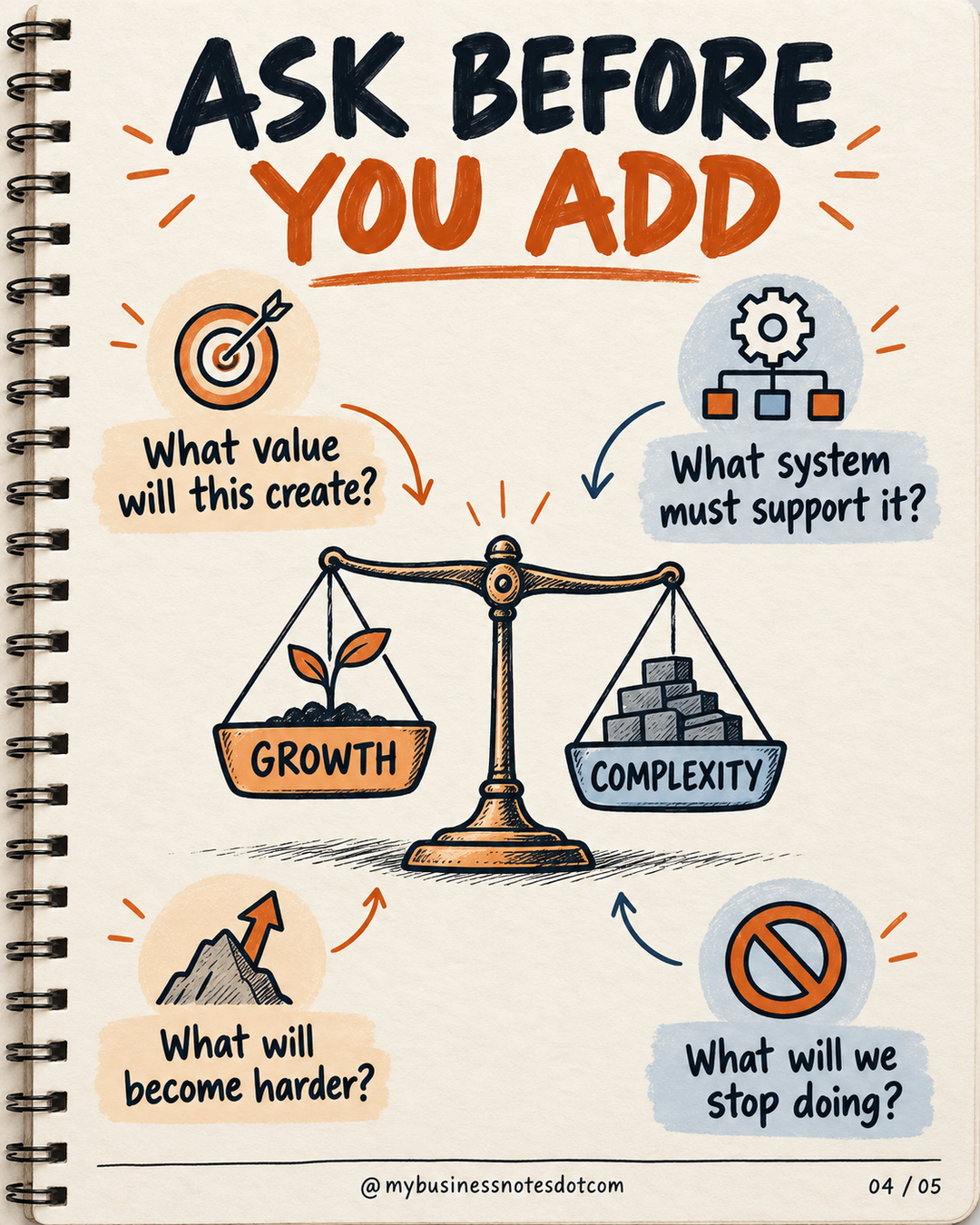
If every offer, channel and improvement remains active, focus exists only in a slide deck. Decide which customer outcome deserves protection and which work will wait. Atlassian’s prioritization play explicitly asks teams to examine dependencies and identify work that can be dropped.
Do not make these decisions with a revenue ranking alone. Include delivery effort, customer impact, quality risk and the opportunity cost of maintaining the variation. Trade-offs should be explicit enough that teams can handle routine choices without reopening the entire strategy.
A practical example and a first-week test
Imagine an agency offering the same service in four packages, each with informal reporting exceptions. The team maps the actual work and finds that two report formats serve the same client decision. It tests one common format with a small group before changing contracts or imposing it on everyone. This is an illustrative scenario, not a reported result.
For your own first week, inspect one offer and one delivery path. Count rework and waiting alongside the time saved, and ask customers whether the change preserves what matters. The goal is a more coherent operating model—not a clean internal chart purchased at the customer’s expense.
Frequently asked questions
Is all business complexity waste?
No. Some complexity creates differentiation or serves legitimate customer needs. Inspect its value and operating cost before removing it.
Should we stop launching new offers?
Not automatically. Make the delivery implications and capacity trade-offs visible before committing to the launch.
What should be measured first?
Start with a specific process and track waiting, rework, exceptions and customer outcomes using consistent definitions.
Download the complete carousel
Use the five-slide worksheet in your next working session.
International references
- Atlassian — Sprint Retrospectives
- Atlassian — DACI
- Atlassian — Project Trade-Off Analysis
- Atlassian — Roles and Responsibilities
- Atlassian — Prioritization
- Lean Enterprise Institute — Hansei
- Lean Enterprise Institute — PDCA
- Lean Enterprise Institute — Standardized Work
- Lean Enterprise Institute — Hoshin Kanri
- Lean Enterprise Institute — Kaizen