

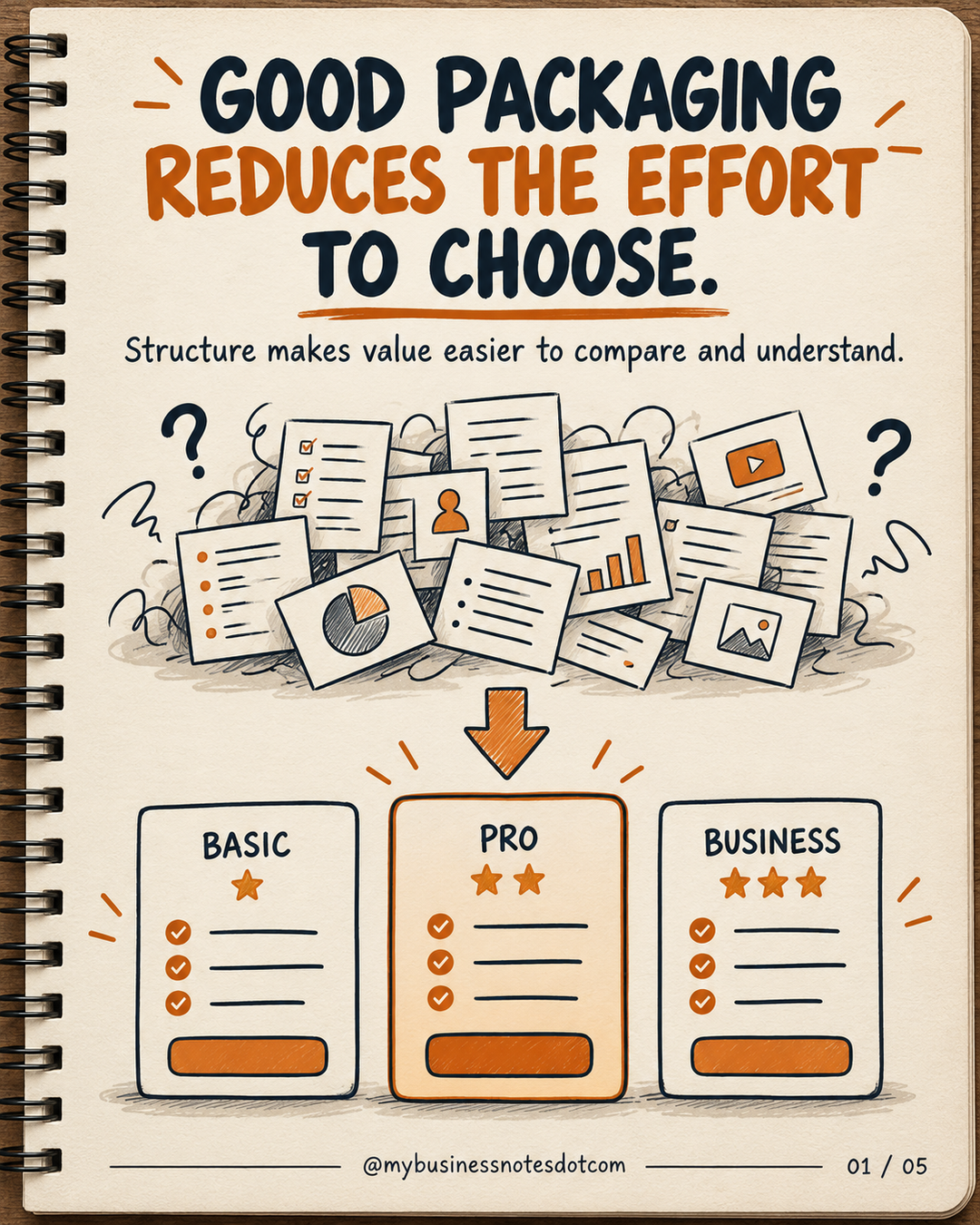
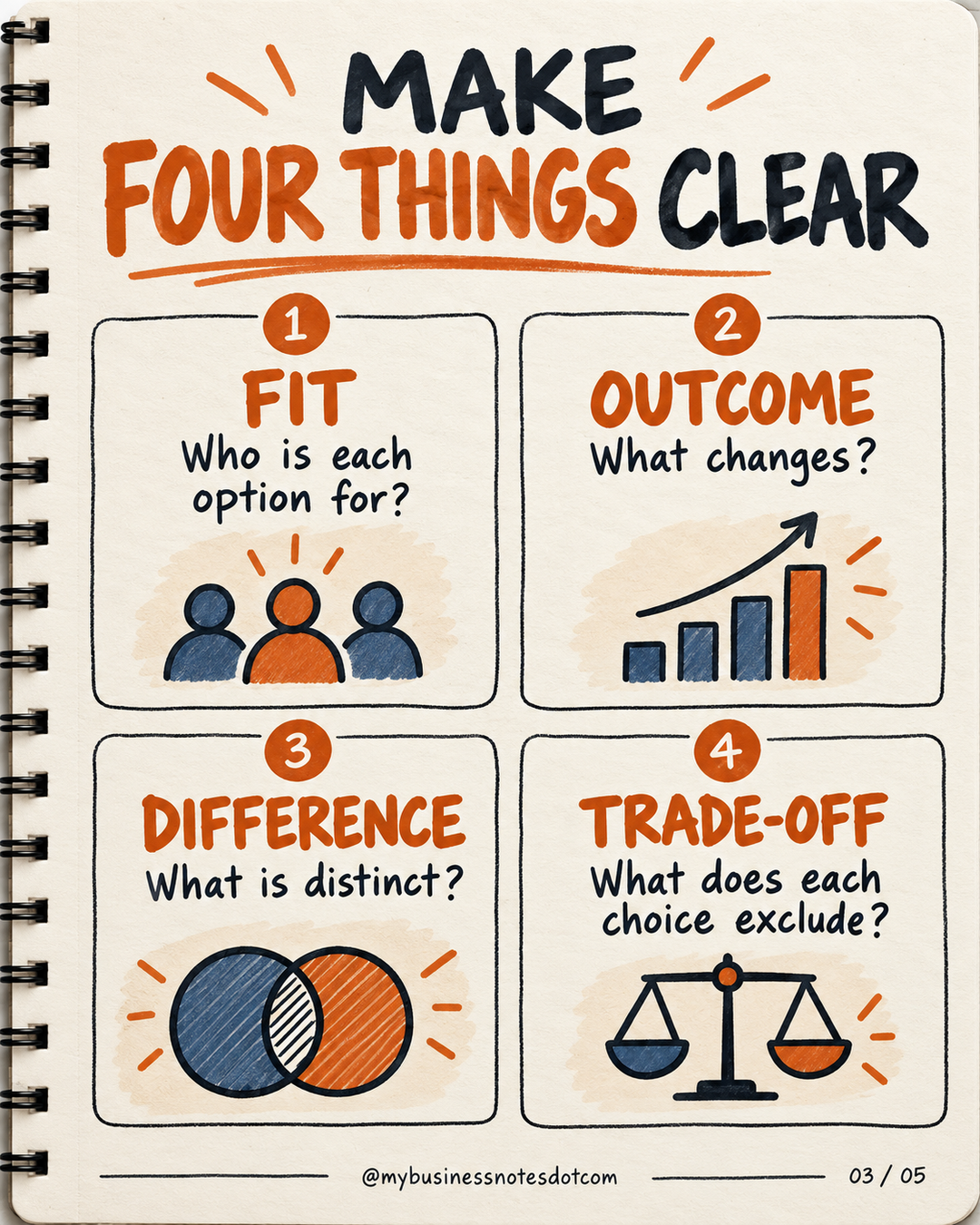
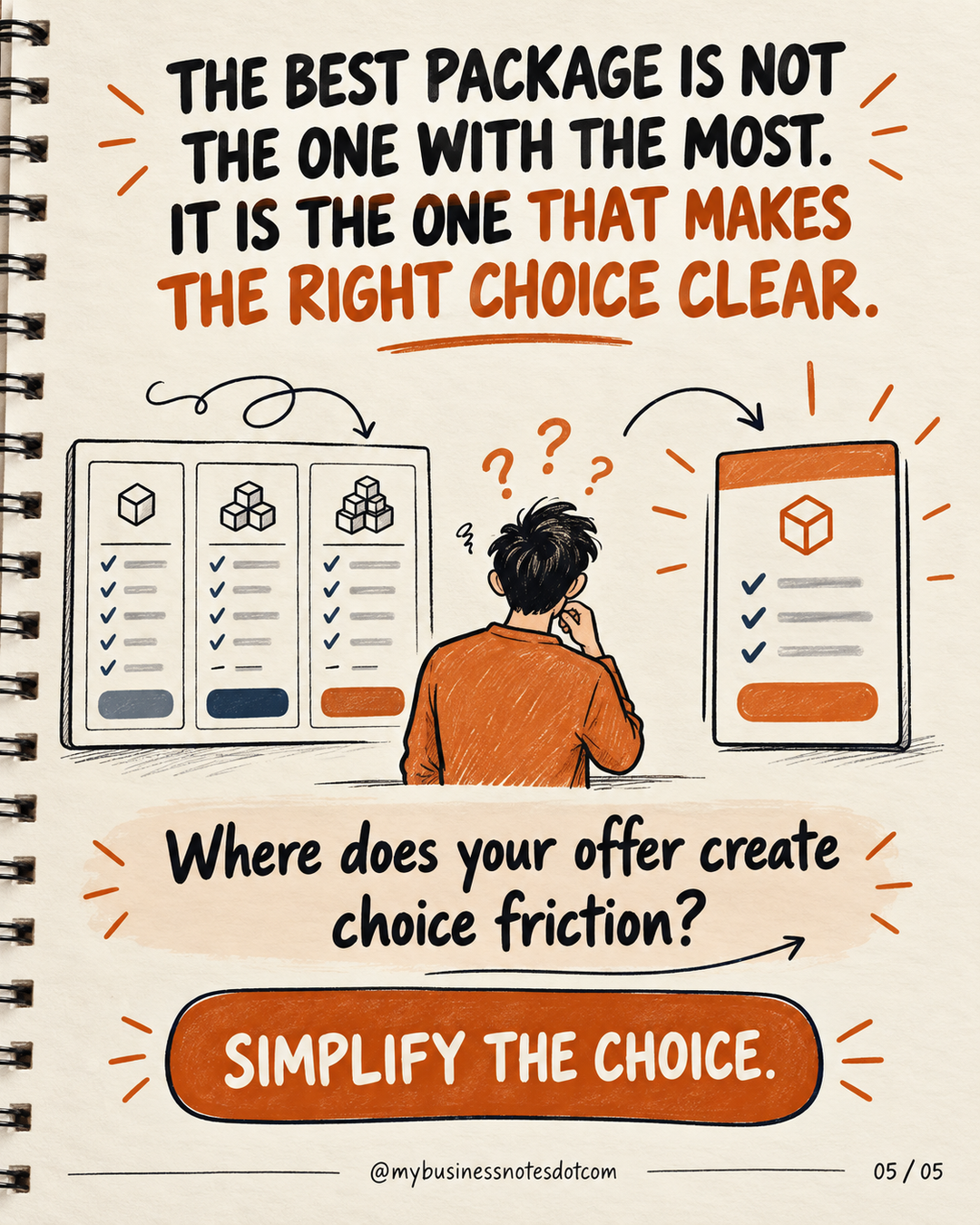
Good offer packaging explains who each option fits, what it helps achieve, how it differs and what it excludes. Its purpose is an informed choice, not simply steering every buyer toward the largest package.
Slide 1 of 5
Start with the decision, not the package names
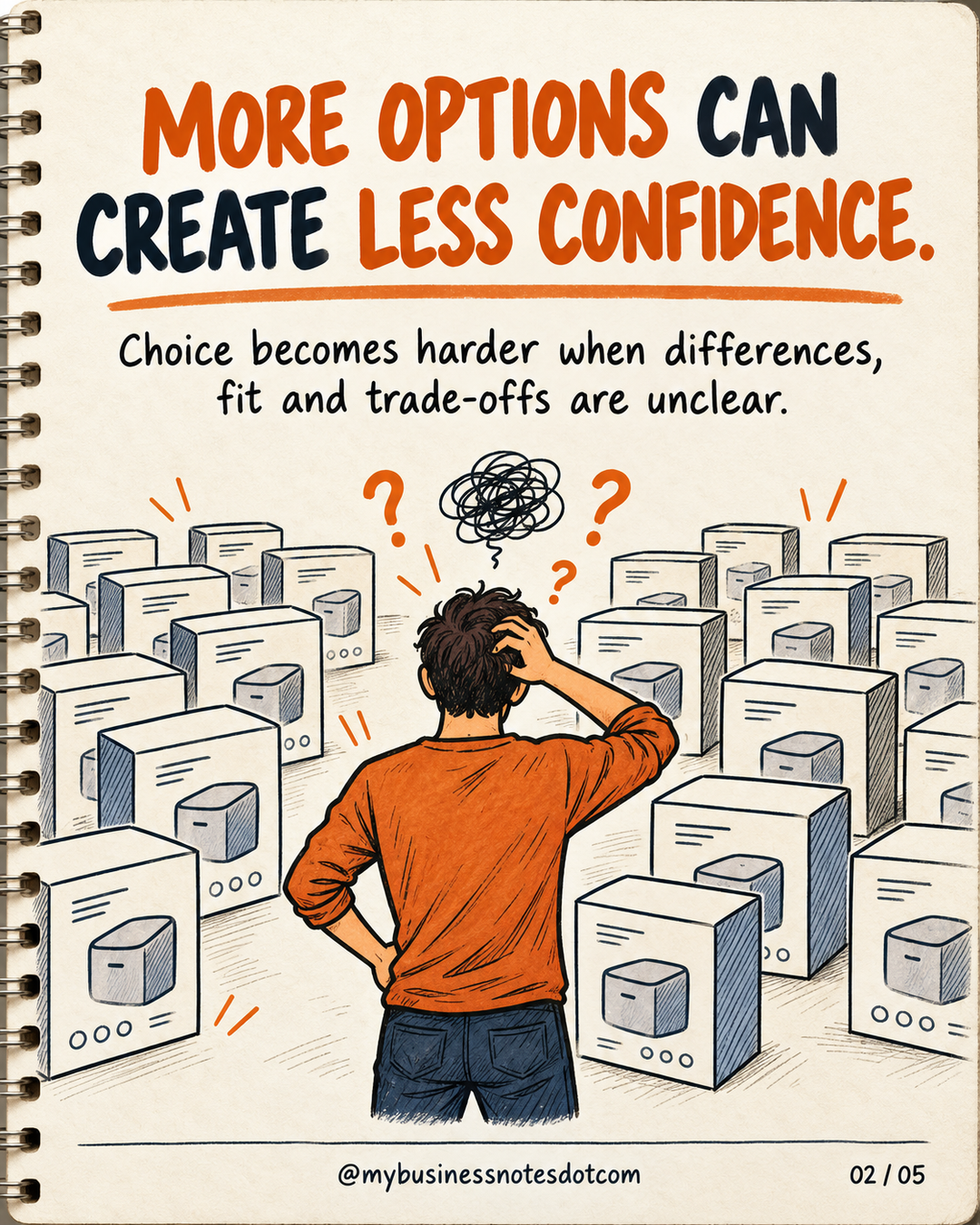
A buyer looking at three service tiers may still be unable to tell which one addresses their situation. Names such as Essential and Premium do little work unless the differences are concrete. Start by identifying the decision the page needs to support.
Nielsen Norman Group's comparison-table guidance recommends consistent attributes and a scannable layout for comparable offerings. That does not mean every offer needs a table, or that fewer options always sell better. The important question is whether the relevant differences are easy to evaluate.
Fit: identify the situation each option serves
Describe the task, starting conditions and customer responsibilities. The Value Proposition Canvas can organize jobs, pains and gains, but those connections need evidence. Avoid defining fit only by company size if the real distinction is readiness or complexity.
Ask relevant customers about recent decisions using neutral questions. GOV.UK's interview guidance and Nielsen Norman Group's advice on leading questions help avoid collecting agreement with your preferred package. Keep what the buyer said separate from what you infer.
Outcome: show what the package enables
Explain the intended change before listing every component. Separate a deliverable you control from a business result that depends on adoption and external conditions. A plan, implementation service and continuing review can have different jobs.
In a hypothetical consulting offer, one package produces a diagnosis, another supports implementation and a third adds ongoing review. Those are different engagements, not merely different quantities of documents. Make the boundaries clear enough for someone to decline an unsuitable option.
Difference: compare the same attributes
Use consistent terms for scope, timeline, support and customer effort. If support means email in one option and a weekly meeting in another, say so. Do not make the buyer decode different descriptions of the same feature.
The comparison guidance is especially useful when several attributes matter together. For unique services that cannot sensibly be compared, a short explanation of the decision path may be better. Test comprehension rather than copying a familiar pricing-table layout.
Trade-off: disclose what the choice leaves out
A smaller scope should have a meaningful boundary. Harvard Business School's strategy guidance emphasizes trade-offs, while Atlassian's project trade-off method makes constraints explicit. Apply those ideas to show what changes when someone chooses a different option.
Check delivery capacity as well as buyer appeal. Atlassian's capacity-planning method includes routine and unplanned work in the baseline. A package that repeatedly needs exceptions may be under-specified, mispriced or inappropriate for the audience.
Test the offer packaging before expanding it
Give a relevant person a realistic situation and ask them to choose, explain why and name what they expect. Do not ask only whether the page looks attractive. GOV.UK's analysis guidance helps distinguish observations, findings and actions.
Strategyzer's testing guidance separates verbal reactions from behavior. A favorable explanation does not establish willingness to buy. Where appropriate, observe a transparent offer in use and review qualified choices, delivery demands and misunderstandings.
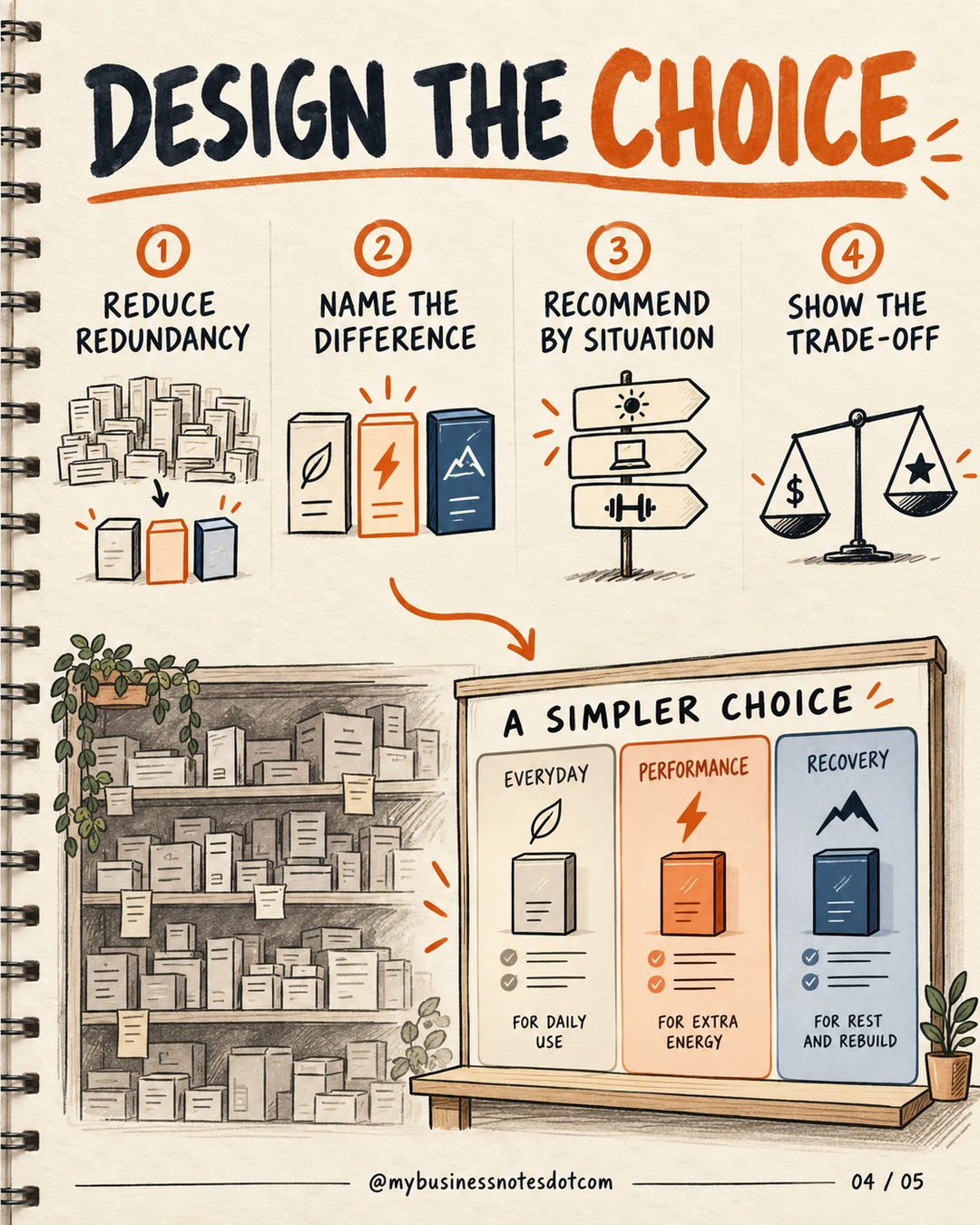
Use PDCA to test a focused change and review the result before standardizing it. Remove redundant options only after considering existing customers and dependencies. The goal is a clear choice that the business can fulfill, not a universal rule about the ideal number of packages.
Frequently asked questions
What is offer packaging?
It is the way an offer's scope, outcomes, conditions and options are organized for evaluation. Good packaging makes fit and trade-offs clear.
How many packages should a business offer?
There is no universal number. Offer distinct, useful choices that relevant buyers can compare and that the business can deliver sustainably.
Should the highest-priced package always be recommended?
No. Recommend according to the buyer's situation and disclose the basis. A smaller option or no purchase may be the appropriate choice.
Download the complete carousel
Use the five-slide worksheet in your next working session.
Related reading: Turn learning into the next decision.
International references
- Harvard Business School ISC — Creating a Successful Strategy
- Lean Enterprise Institute — PDCA
- Strategyzer — Value Proposition Canvas
- Nabila Amarsy / Strategyzer — Ways to test your value proposition
- GOV.UK User research community — Analyse a research session
- GOV.UK User research community — Using in-depth interviews
- Atlassian — Capacity planning
- Kate Moran and Taylor Dykes / Nielsen Norman Group — Comparison tables
- Atlassian — Project trade-offs
- Amy Schade / Nielsen Norman Group — Avoid leading questions