

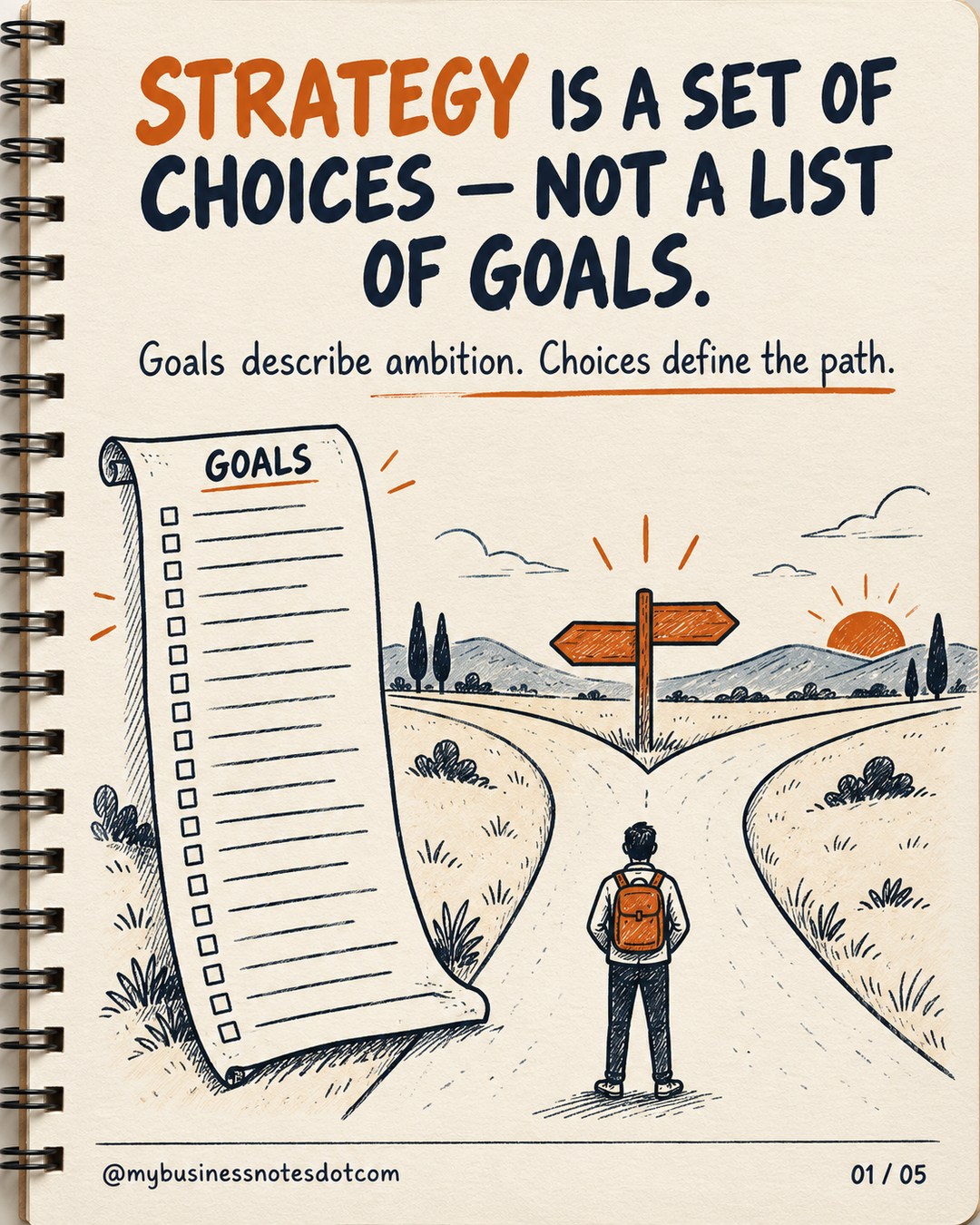
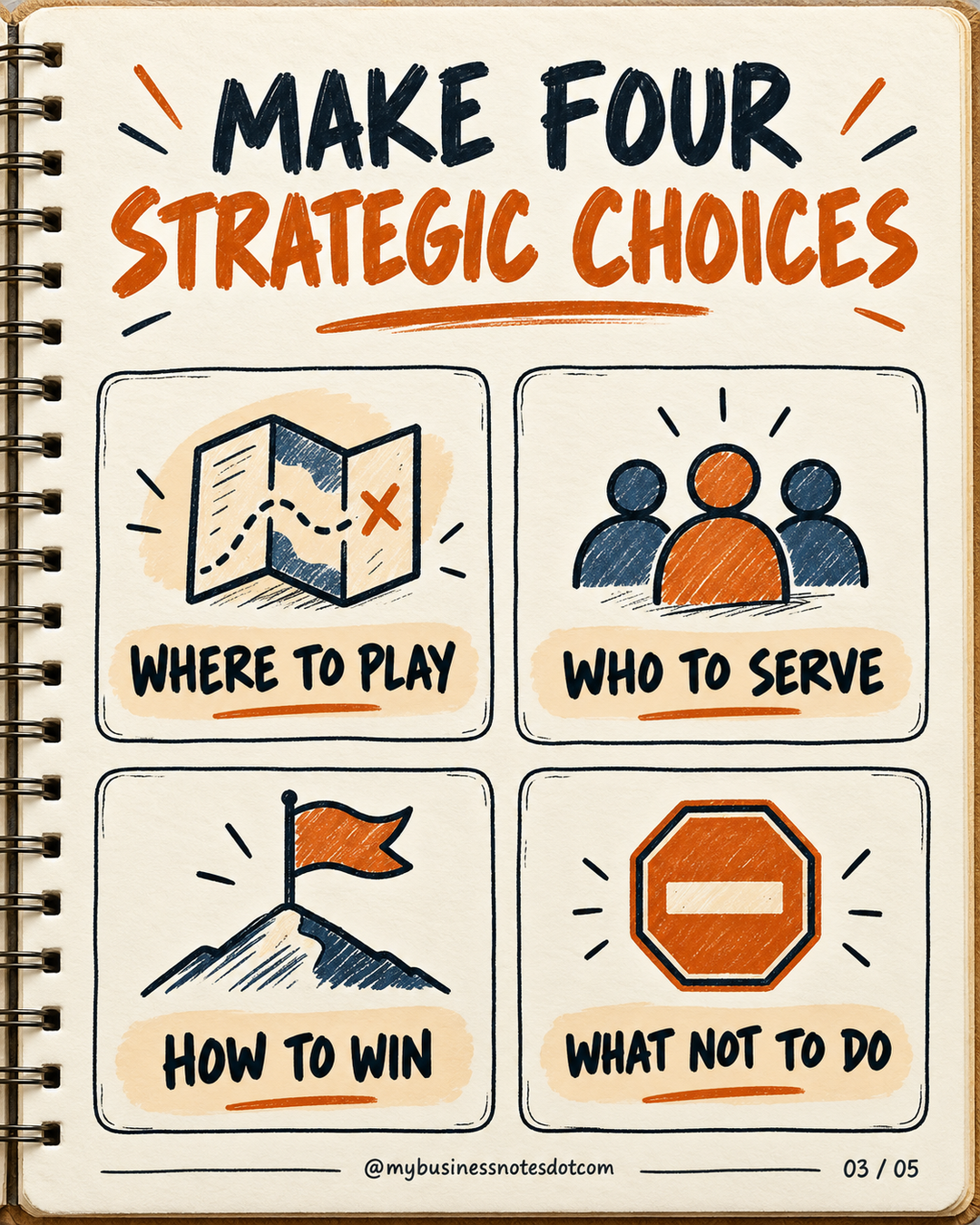
Strategic choices explain where a business will compete, whom it will serve, how it expects to create distinctive value and what it will not do. Goals describe desired outcomes. Strategy connects those outcomes to a coherent way of operating under real constraints.
Slide 1 of 5
Why a target is not a strategy
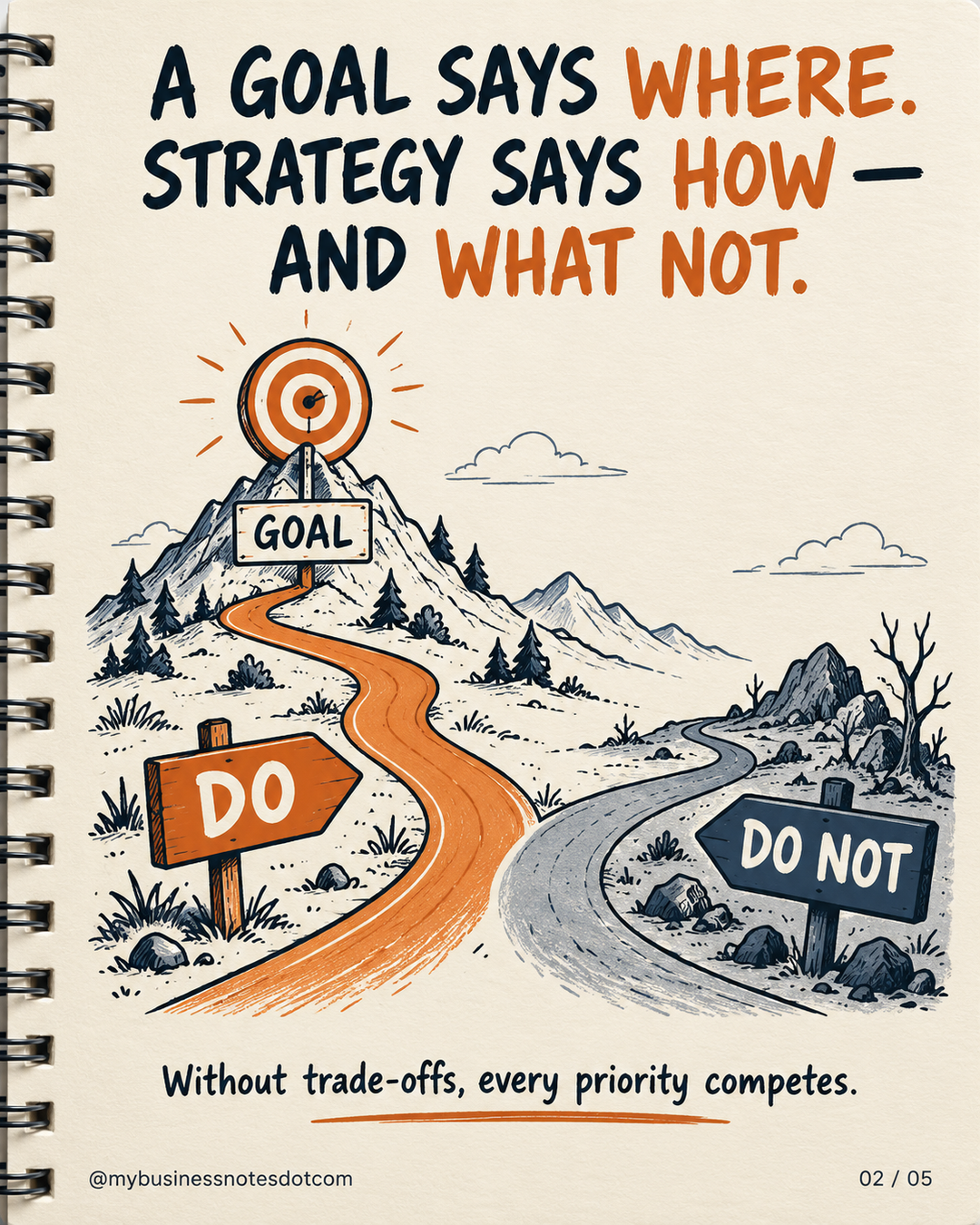
‘Grow revenue’ gives the team a destination without explaining the route. Several incompatible operating models can pursue that target. One might depend on highly customized service, another on a tightly standardized offer. Asking people to deliver both without resources or boundaries hides the actual decision.
Harvard Business School’s Institute for Strategy and Competitiveness emphasizes distinctive activities, trade-offs and fit. The point is not simply to want a different result. It is to make choices that support one another in delivering value.
Choose a place to compete
Define the customer situation, geography or channel where the business has a credible opportunity. Be specific enough to guide resource decisions. A broad market label does little if every request still receives the same priority.
Use customer evidence to test the opportunity. Strategyzer’s Value Proposition Canvas connects customer jobs, pains and gains with an offer, but filling out the canvas does not establish fit. Record what you know, what you infer and what must still be tested.
Define whom you serve and the value that matters
Two customers buying the same service may value different outcomes. Understand which characteristics make your distinctive approach useful. Avoid building the strategy around an attractive demographic description that tells you nothing about the purchasing situation.
Include real alternatives: an existing supplier, internal work or leaving the process unchanged. Your claim to win must make sense against the options customers actually consider, not just against the competitor most visible to your leadership team.
Make the operating choices consistent
If the promise is reliable delivery with low customer effort, check onboarding, staffing, pricing and escalation against that promise. An isolated marketing claim cannot repair an operating model that creates the opposite experience.
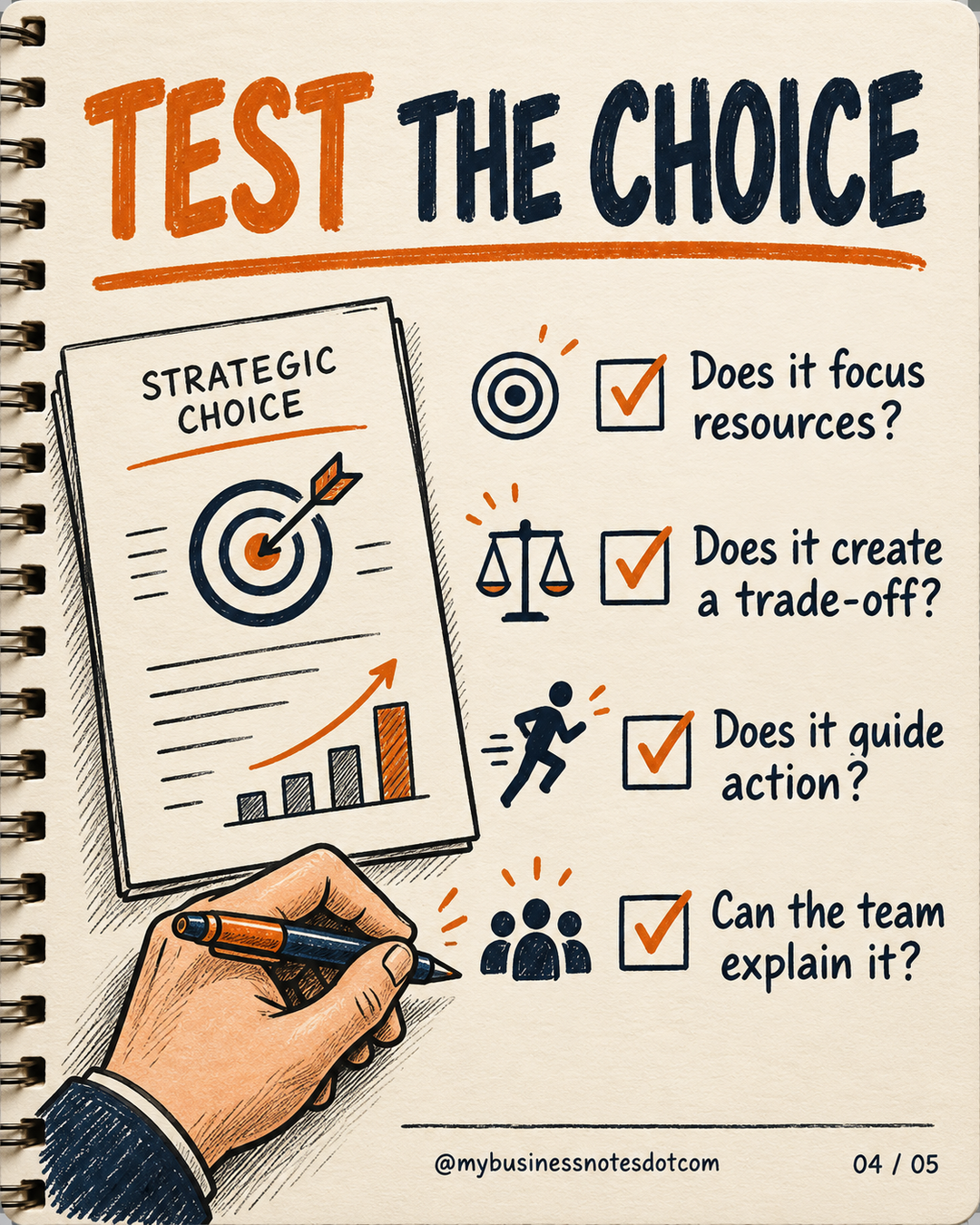
The HBS discussion of fit explains why activities should reinforce one another. Treat that as a design question: which activity supports the value proposition, and which activity undermines it? A strategy becomes more actionable when a team can explain those connections without reciting a slogan.
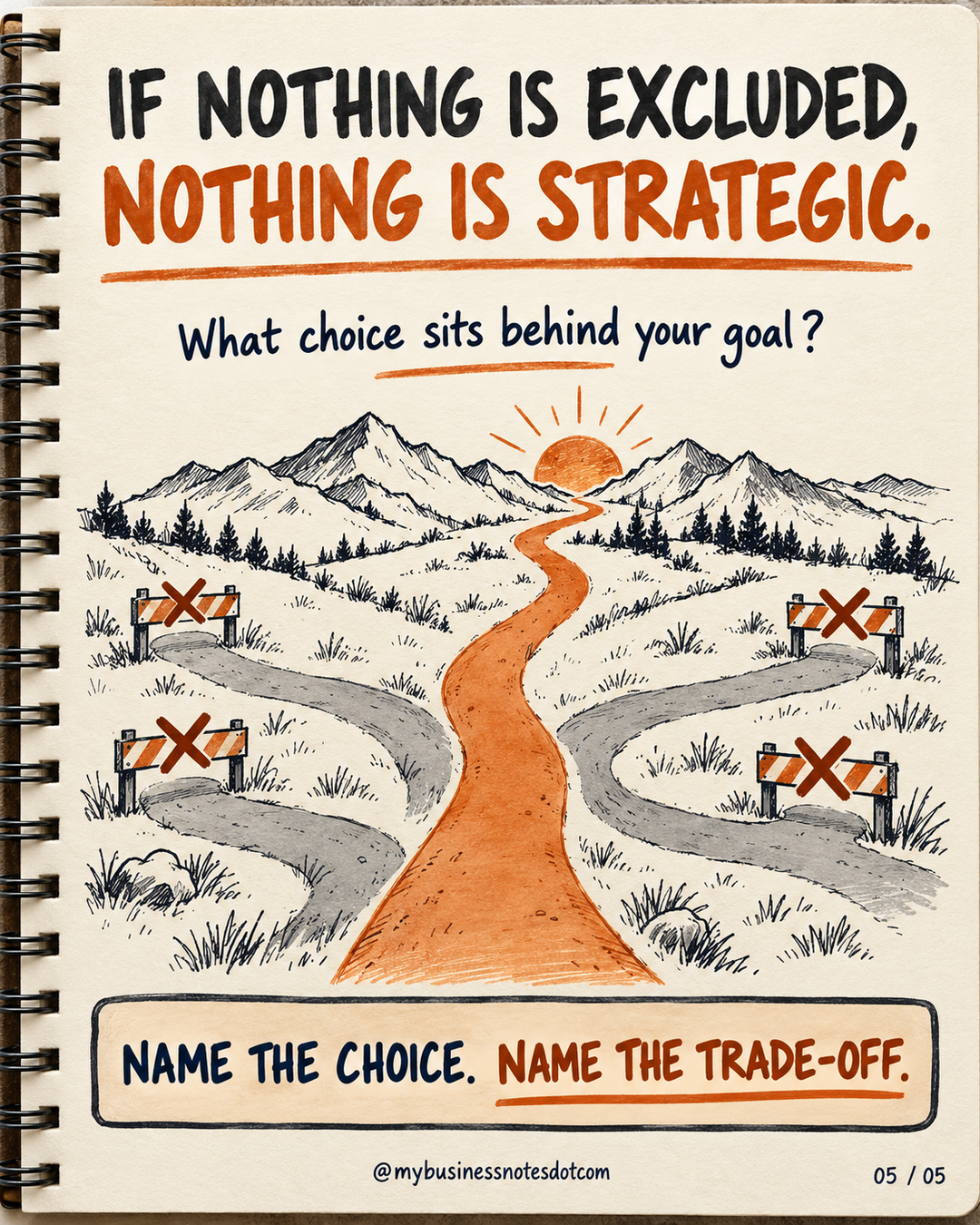
Say what will not receive capacity
Name the requests, features or market segments you will defer or decline. A refusal should protect a useful commitment, not signal indifference to customers. Explain the reason and define when an exception deserves review.
Atlassian’s trade-off guidance is practical here: constraints such as time, scope and cost cannot always be optimized together. Make the priority explicit before teams are forced to negotiate it under pressure. Then review assumptions when new evidence changes the situation.
Example: a consultancy chooses a delivery model
Imagine a consultancy deciding to serve small operations teams with a fixed-scope implementation service. It avoids open-ended bespoke projects, builds a repeatable onboarding process and prices the defined outcome. This hypothetical choice is not automatically superior to customization; it is simply coherent.
Test whether relevant customers value the model and whether delivery remains viable. Keep a regular review of assumptions and consequences. A clear choice can still be wrong; its advantage is that the team can test and revise a specific proposition rather than defend a vague ambition.
Frequently asked questions
Do goals still matter?
Yes. Goals define desired outcomes and allow progress to be reviewed. They do not replace the choices about how the business will compete.
Should strategy never change?
No. Preserve useful continuity while revising choices when evidence or material conditions change.
Is choosing a niche sufficient?
No. The offer, activities, capabilities and economics must support the chosen customer situation.
Download the complete carousel
Use the five-slide worksheet in your next working session.
Related reading: Turn learning into the next decision.
International references
- Strategyzer / Kurt Bostelaar — Customer interviews that produce insights
- Strategyzer / Nabila Amarsy — Ways to test your value proposition
- Strategyzer / Nabila Amarsy — Roadmap to test your value proposition
- Strategyzer / Alex Osterwalder — Start with critical hypotheses
- Christensen Institute — Jobs to Be Done
- Strategyzer — Value Proposition Canvas
- Harvard Business School ISC — Creating a Successful Strategy
- Harvard Business School ISC — Fit Across the Value Chain
- Atlassian — Project Trade-Off Analysis
- April Dunford — Market category as context
- April Dunford — Positioning in the Age of AI