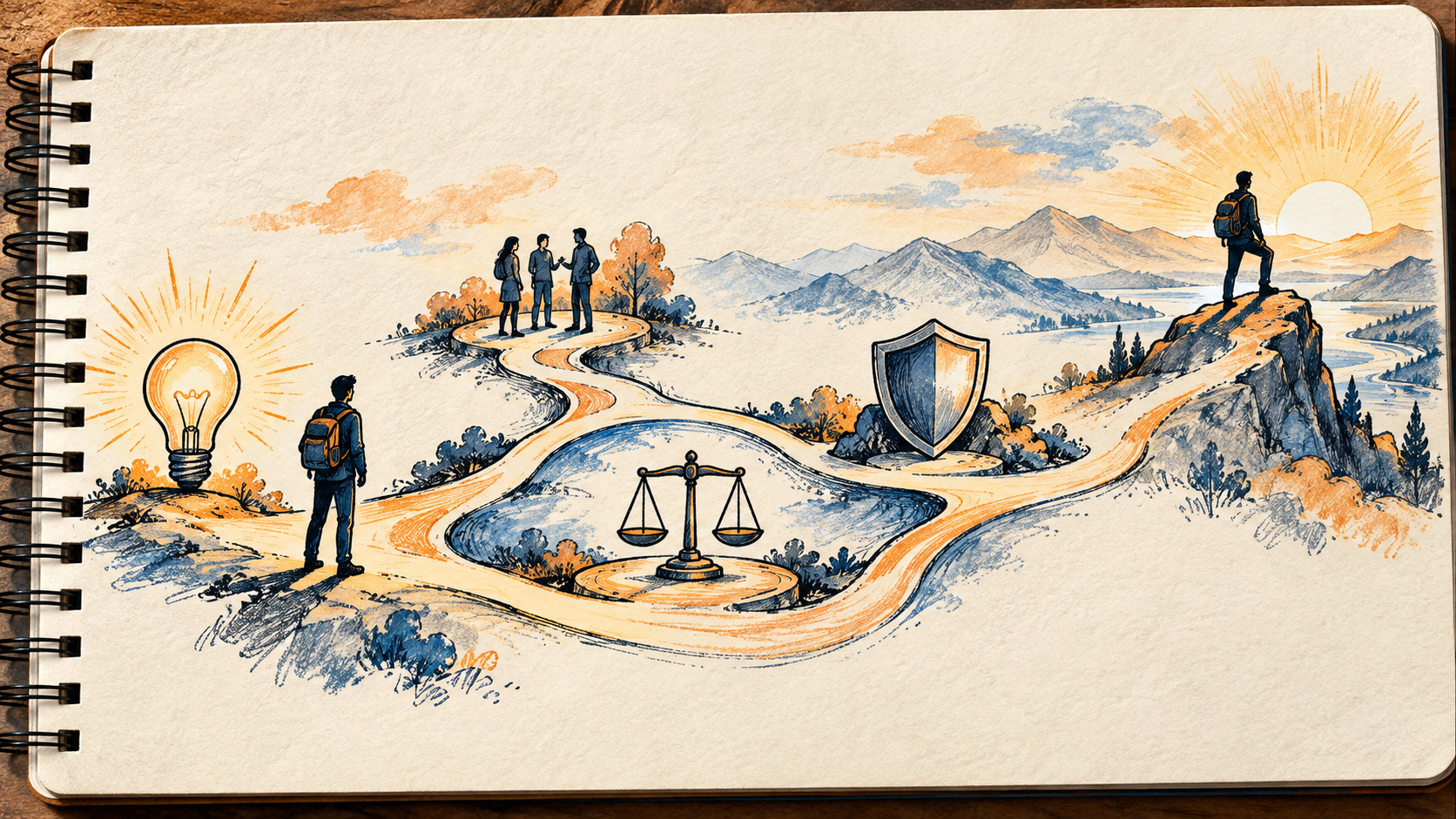
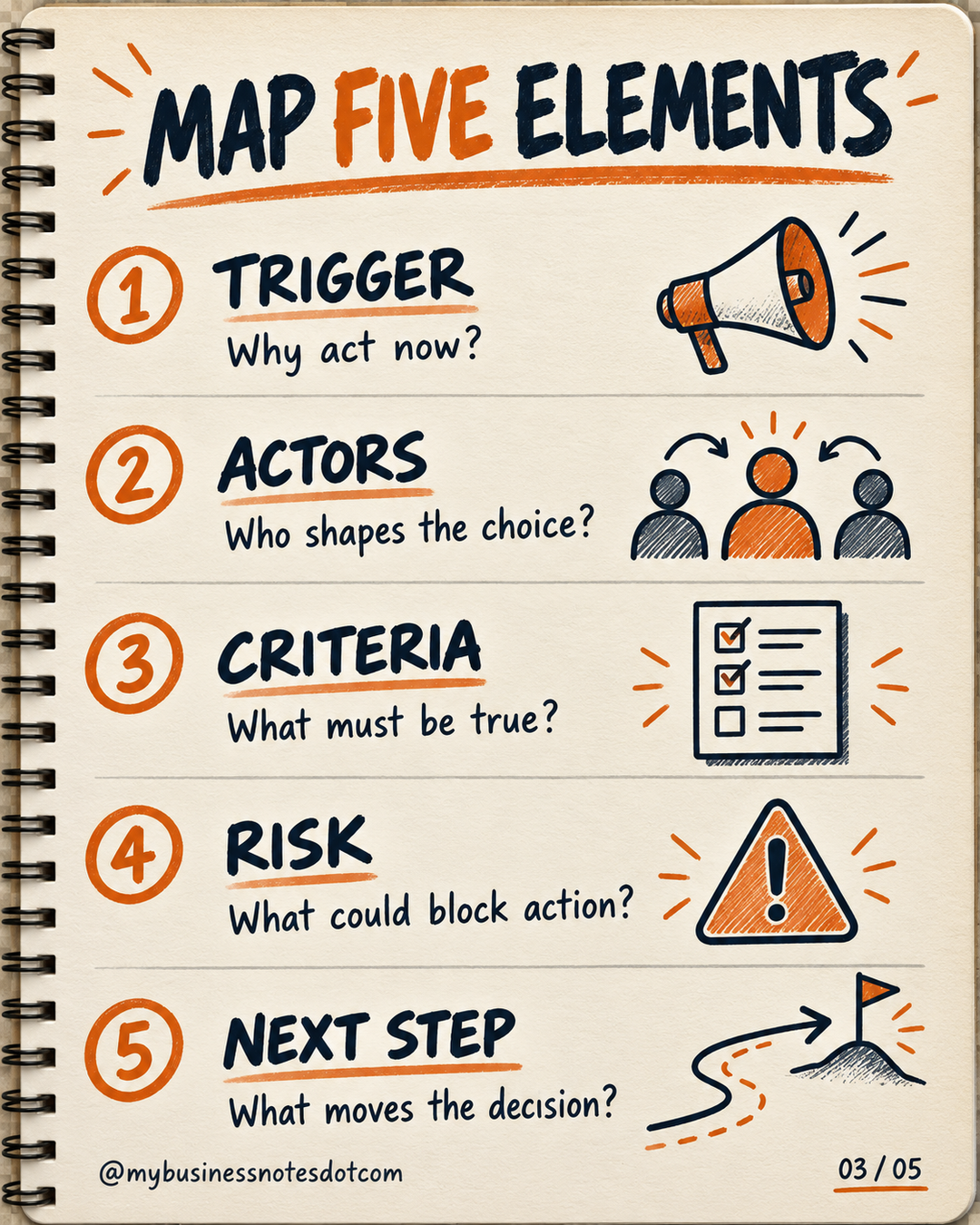
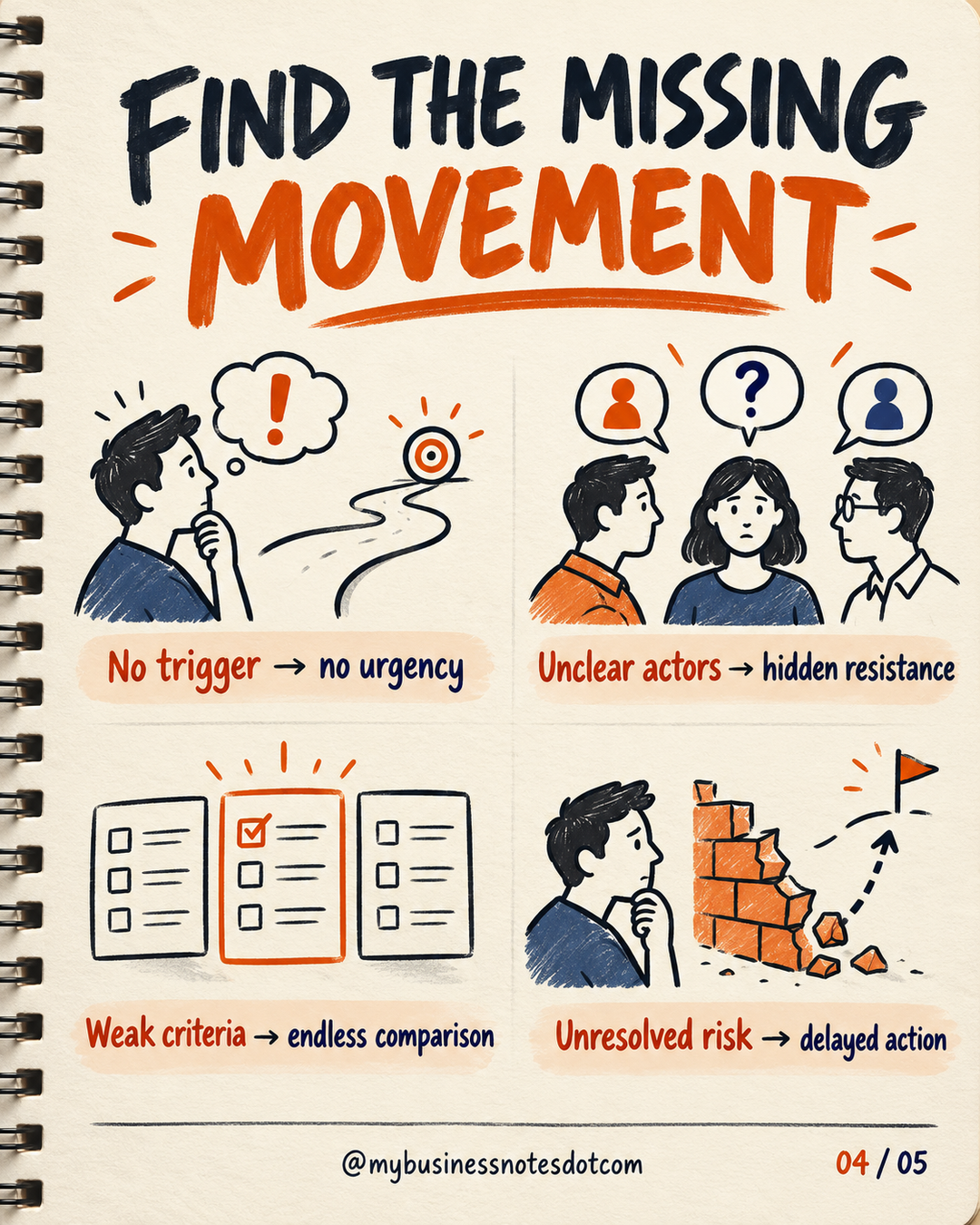
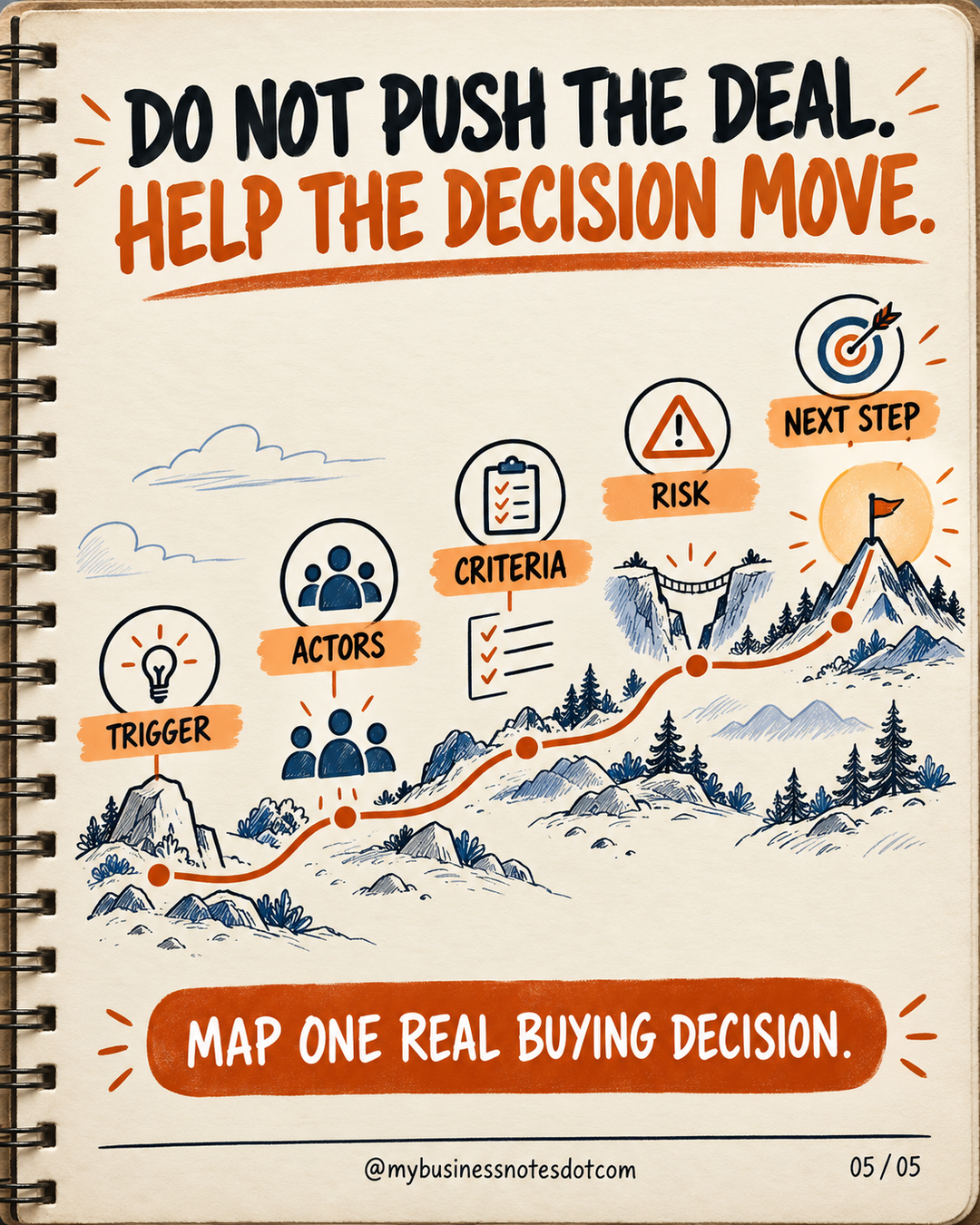
A buying decision map explains a specific purchase through five questions: what triggered the search, who shaped the choice, which criteria mattered, what risk held it back and what next step would resolve uncertainty. It describes the buyer’s decision, not just the seller’s pipeline stage.
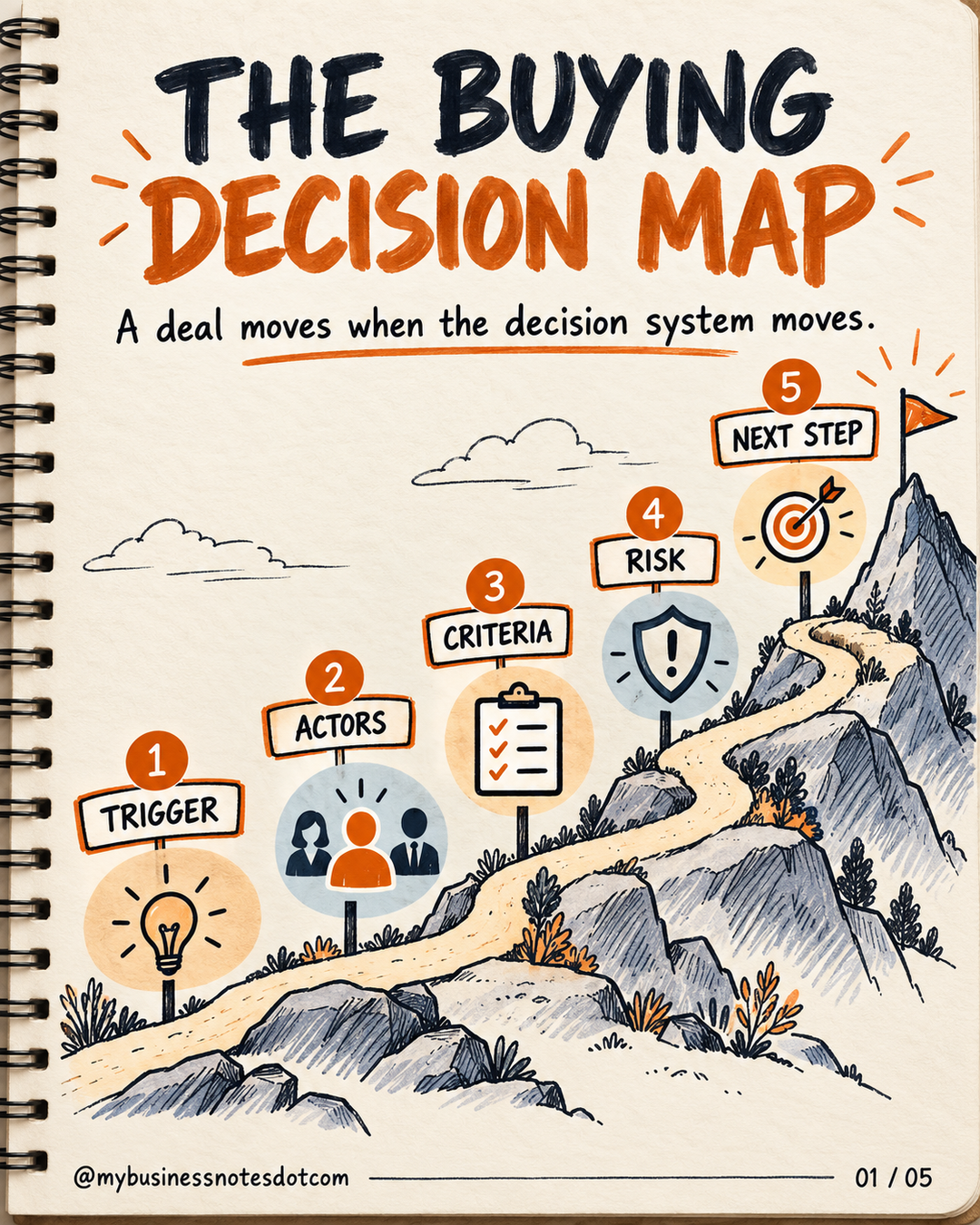
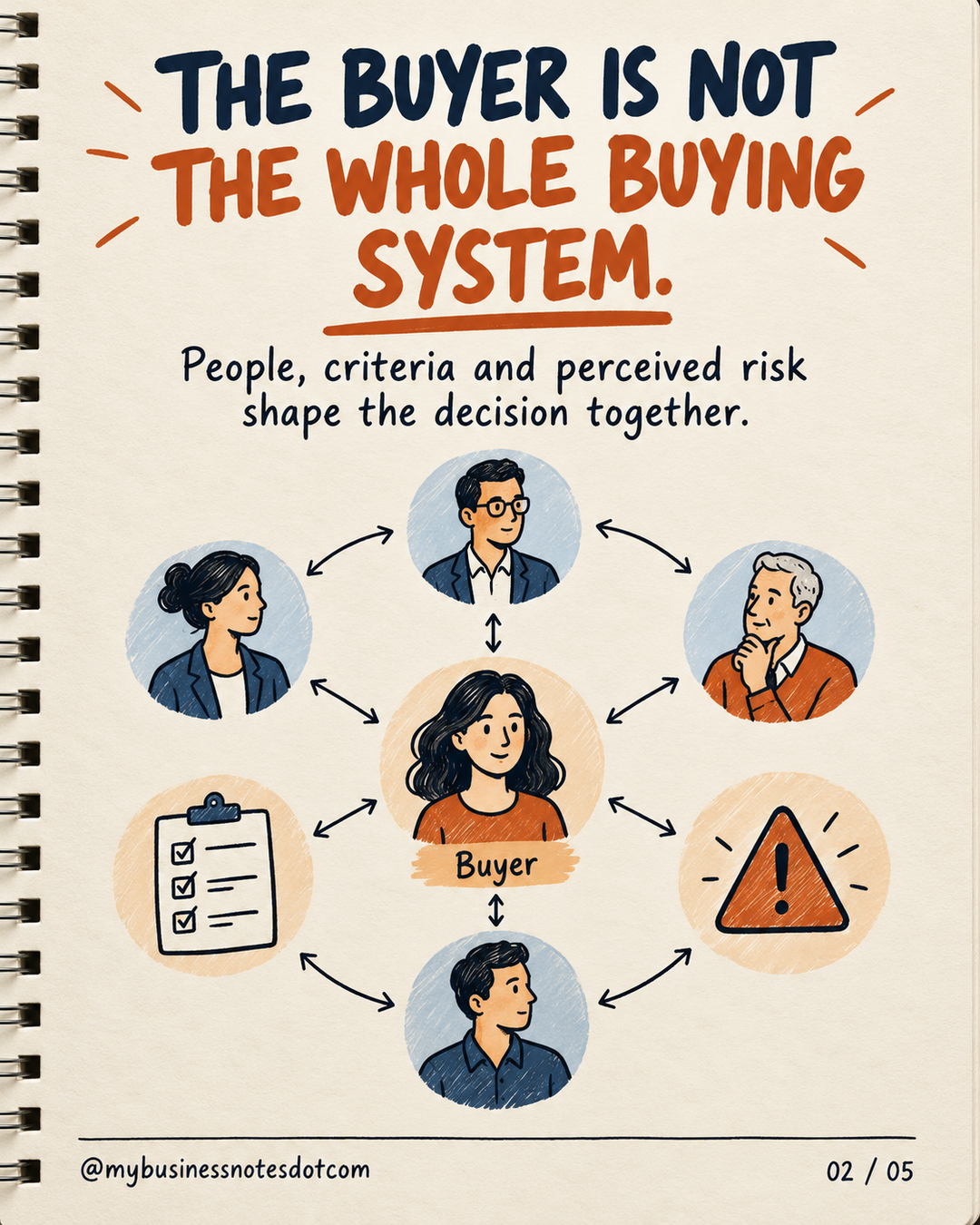
Slide 1 of 5
Start with a real purchase situation
‘Interested in our solution’ is too broad to guide action. Ask what changed before the buyer began looking. A new responsibility, a failed process or an approaching deadline can matter more than a general statement of need. Jobs to Be Done focuses on the circumstances behind a choice and the progress people seek.
Choose one segment and one situation. A map assembled from unrelated purchases can appear comprehensive while describing nobody. Keep the date, source and uncertainty beside each entry so a plausible story does not become an invented fact.
Identify actors by their contribution to the decision
The person attending a demonstration may not control the budget or bear the implementation risk. Ask who first raised the issue, who will use the offer, who must approve it and who could block the change. Avoid assuming those roles from job titles alone.
Atlassian’s DACI framework concerns internal team decisions, not sales qualification. Its useful lesson here is simply to distinguish input from final authority. Confirm the buyer’s actual process instead of forcing it into your preferred stakeholder template.
Find criteria through comparisons and trade-offs
Ask what the buyer compared and what made one option more suitable than another. Look for conflicts: a fast rollout may reduce customization; a low upfront cost may create more internal work. A criterion becomes useful when it explains a trade-off, not when it merely sounds positive.
Use a customer profile to connect the choice with jobs, pains and gains. Keep this distinct from your feature list. If the buyer needs a reliable handover, a lengthy catalogue of capabilities may leave the central criterion unanswered.
Treat perceived risk as information
A delay is not always an objection to be defeated. The buyer may be protecting service continuity, reputation, data or a team’s limited capacity. Ask what would have to be true for the change to feel workable and what evidence they would need.
Do not manufacture urgency or offer reassurance you cannot substantiate. A scoped pilot, clear implementation responsibilities or a reference with permission may answer a real concern. Sometimes the honest conclusion is that the offer is not suitable under the buyer’s current constraints.
Agree on a next step that produces evidence
A next step should have a purpose, an owner and a result both sides can recognize. ‘Follow up next week’ is an activity. ‘Review the handover plan with operations to confirm who owns migration’ resolves a decision gap.
Customer-journey mapping connects actions over time and exposes fragmented understanding. Use that perspective without treating the journey as a fixed sequence: buyers may revisit criteria, add an actor or stop the process. Update the map when their situation changes.
Example: a proposal waiting for an answer
Imagine a software provider whose proposal has stalled. Instead of offering a discount, the seller asks about the decision and learns that an operations lead must confirm migration capacity. This hypothetical example shows why a price concession may not address the actual uncertainty.
The next step becomes a short migration review, with an explicit option to pause if the capacity is unavailable. Afterward, record what the review changed. Interview accounts still need corroboration; combine them with observed actions, approved records or a relevant test rather than treating friendly interest as a commitment.
Frequently asked questions
Is a buying decision map the same as a sales funnel?
No. A funnel describes stages in a commercial process; this map investigates the circumstances and evidence behind a particular buyer’s choice.
Should every deal have a detailed map?
Use detail in proportion to stakes and complexity. A simple purchase may need only a short record of the five questions.
Can the map predict whether a deal will close?
No. It exposes gaps and supports more useful next steps, but it cannot guarantee a purchase.
Download the complete carousel
Use the five-slide worksheet in your next working session.
International references
- Strategyzer / Kurt Bostelaar — Customer interviews that produce insights
- Strategyzer / Alex Osterwalder — Don’t believe your customers
- Strategyzer / Nabila Amarsy — Ways to test your value proposition
- Strategyzer / Nabila Amarsy — Roadmap to test your value proposition
- Strategyzer / Alex Osterwalder — Start with critical hypotheses
- GOV.UK User research community — Using in-depth interviews
- Christensen Institute — Jobs to Be Done
- Nielsen Norman Group / Jakob Nielsen — Interviewing Users
- Nielsen Norman Group / Amy Schade — Avoid Leading Questions
- Strategyzer — Value Proposition Canvas
- April Dunford — The job of a market category
- Nielsen Norman Group / Megan Chan — Mental Models
- Nielsen Norman Group / Kate Kaplan — Customer Journey Maps
- GOV.UK User research community — Analyse a research session