

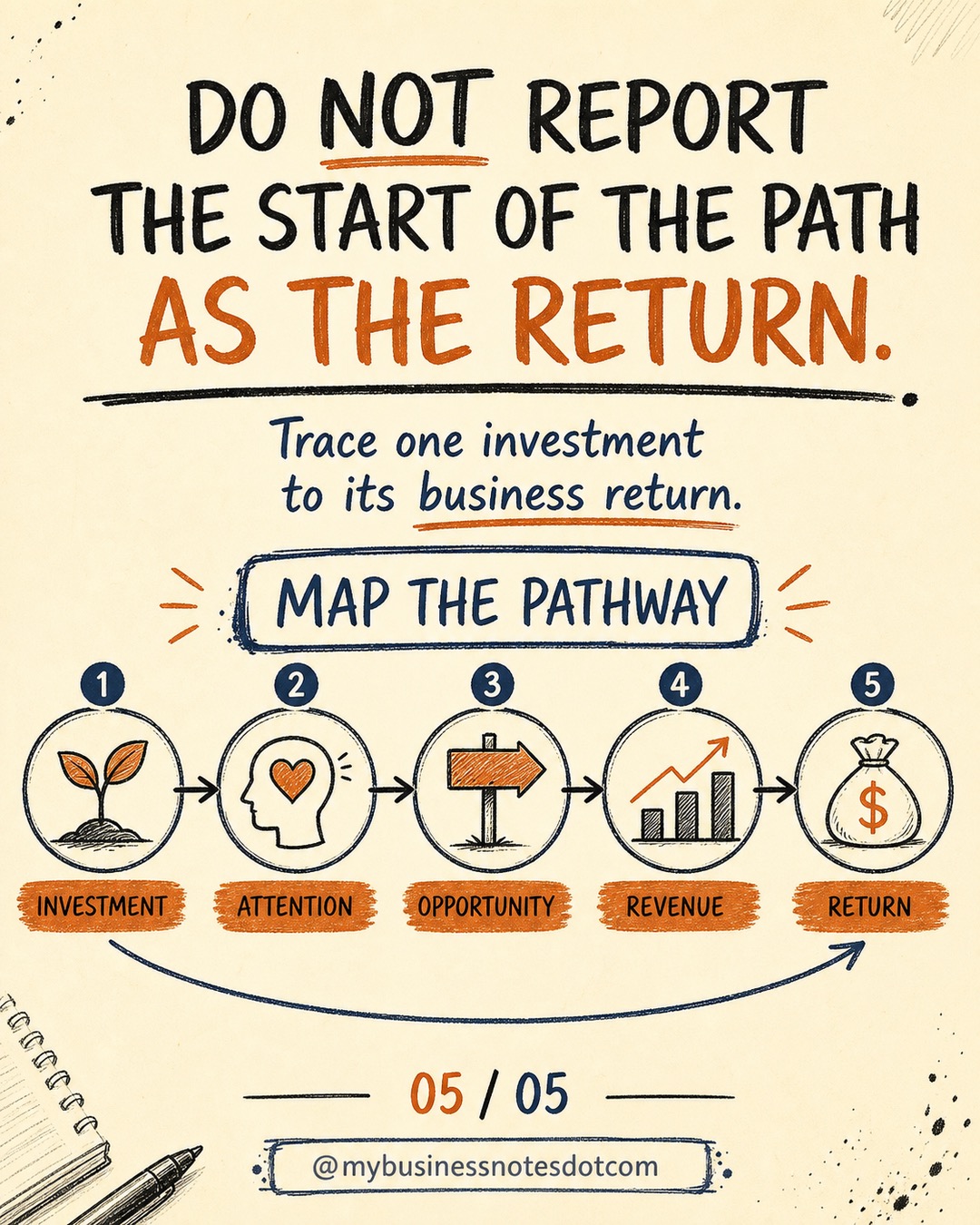
Marketing payback depends on a pathway from investment to attention, opportunity, revenue and return. Tracing each transition helps a team find where value is lost instead of judging only spend or the final sales number. This guide expands the five-slide business note into a practical review with evidence, safeguards and next steps.
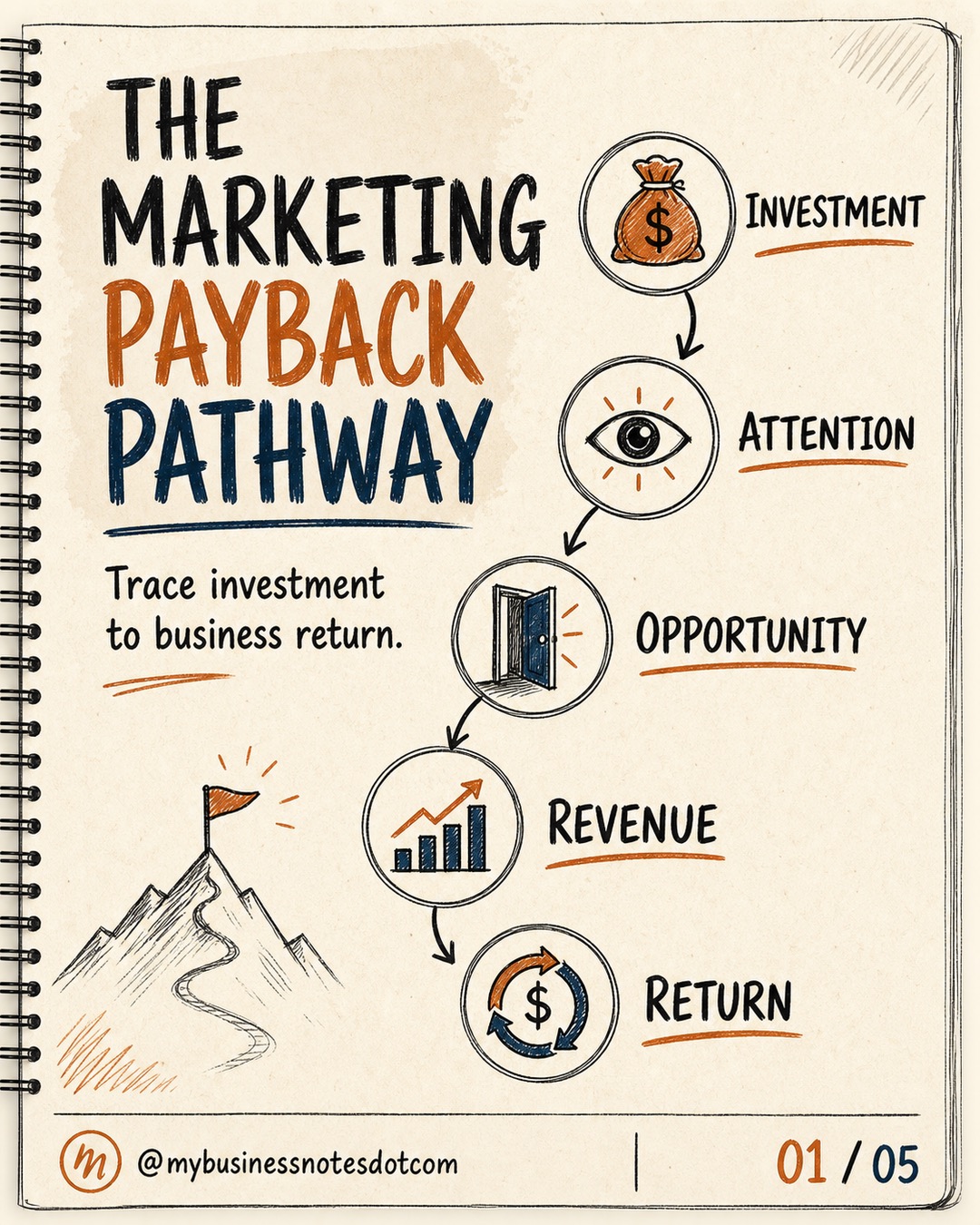
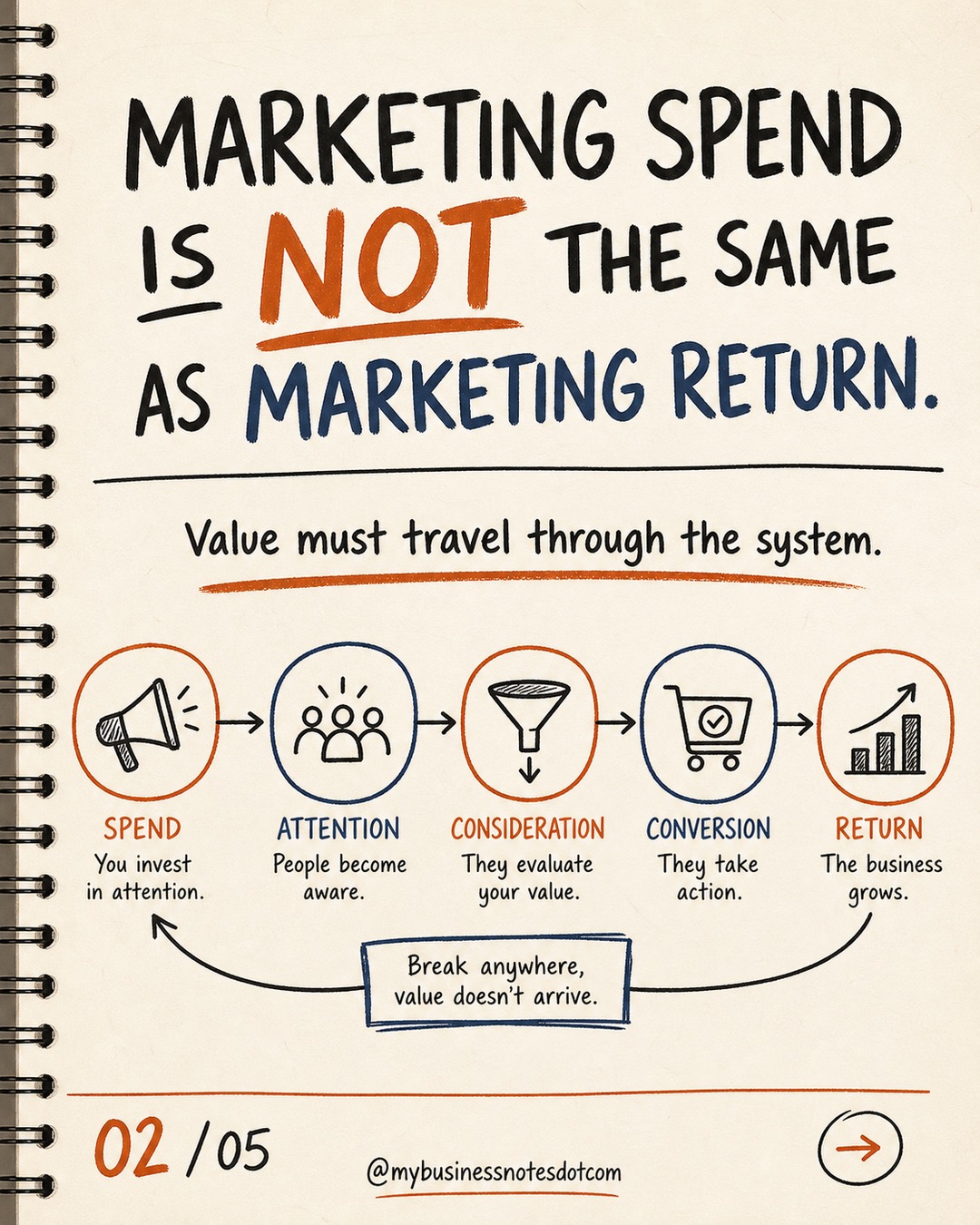
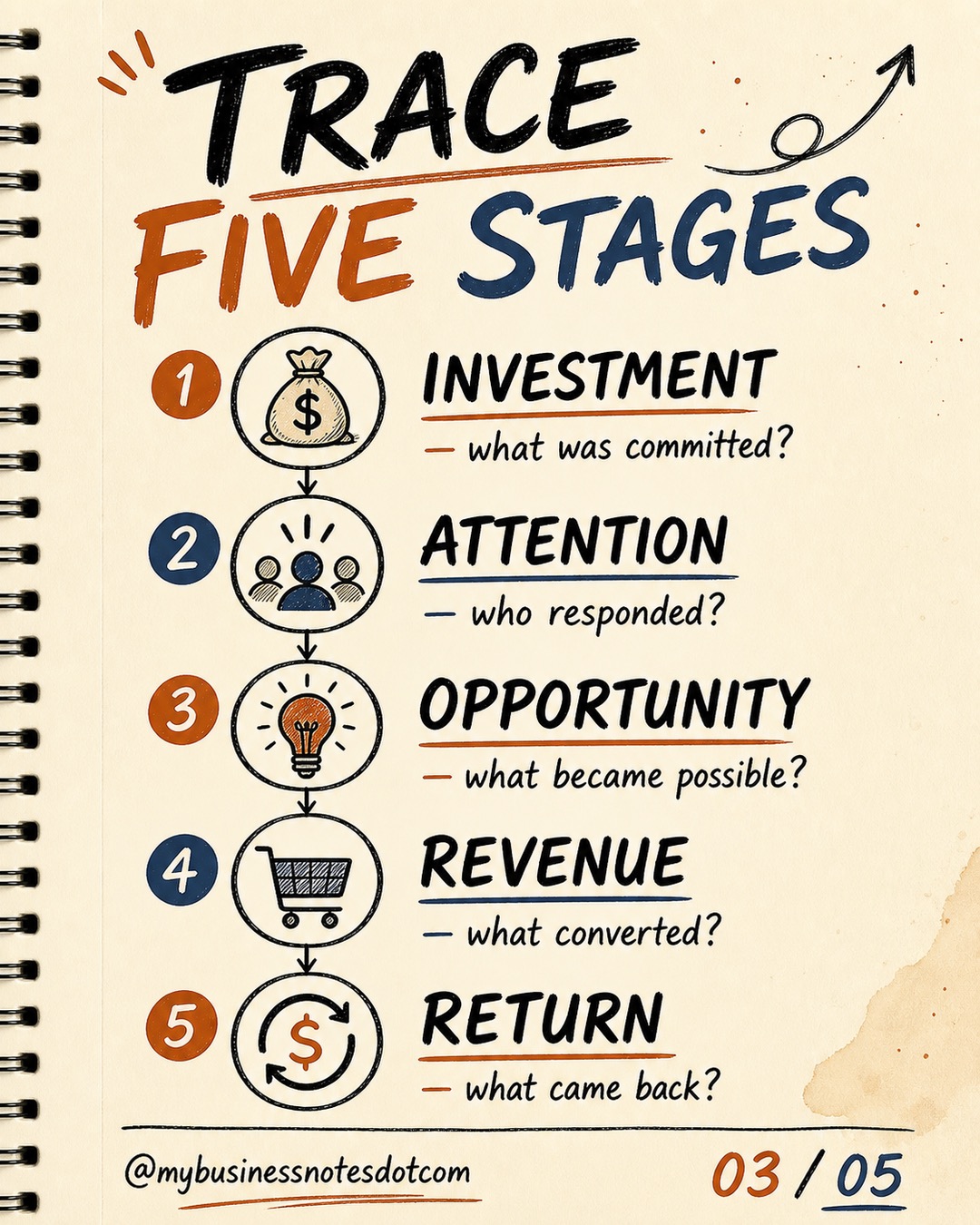
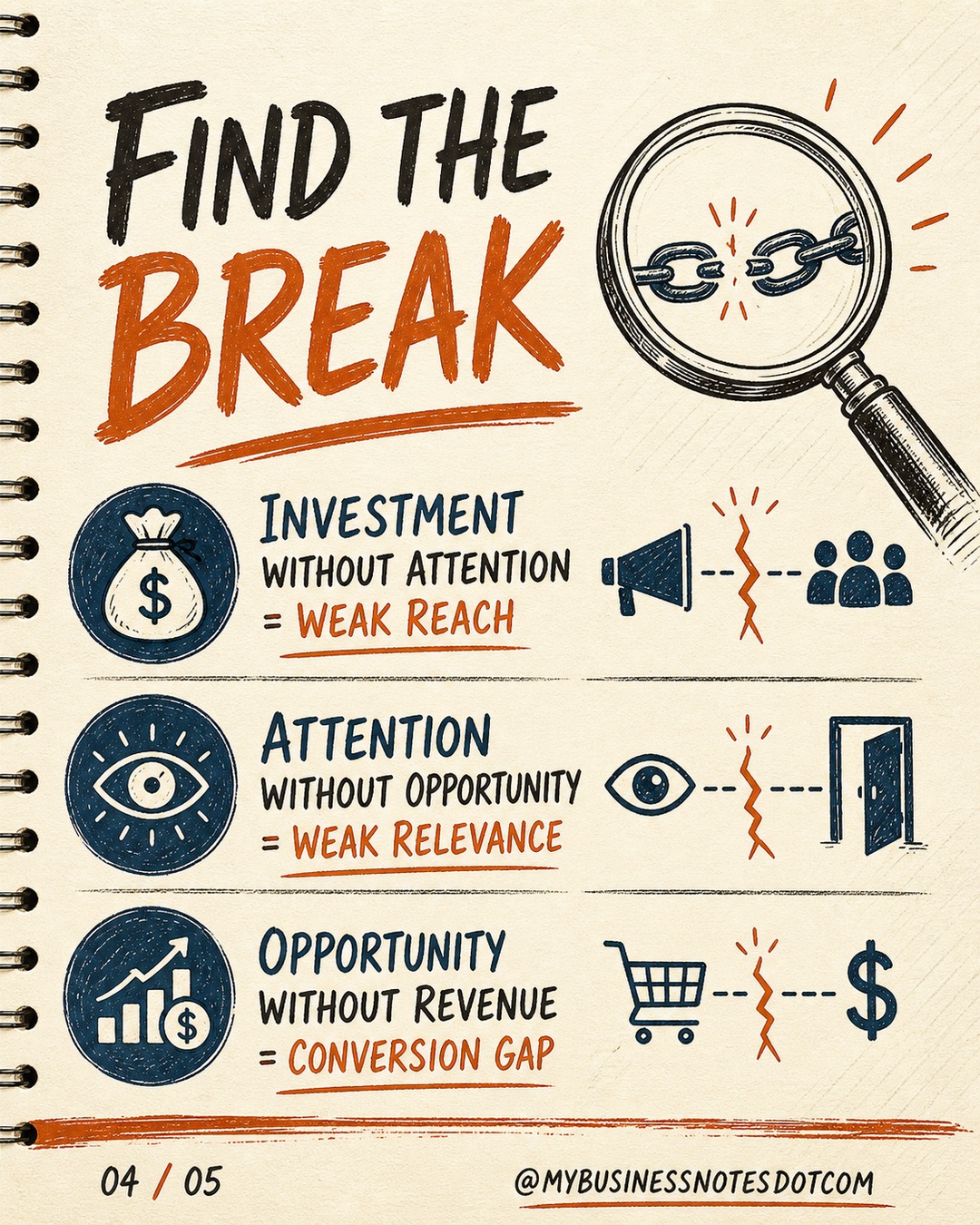
Slide 1 of 5
Define the investment and horizon
Include media, people, tools, creative, incentives and relevant delivery costs. State the time window in which a return could reasonably appear. Different investments need different horizons.
Follow qualified attention
Ask whether the right audience encountered and understood the message. Reach and clicks describe exposure or behaviour, not economic value. Connect them to a defined customer problem and next step.
Follow opportunity creation
Examine which interactions became qualified conversations or self-serve progress. Review fit, timing and handoffs. A break here may reflect the offer, message, targeting or sales process rather than the channel alone.
Follow revenue and contribution
Connect opportunities to realised revenue, gross margin and cash timing where feasible. Separate correlation from incrementality and acknowledge multi-touch uncertainty instead of forcing false precision.
Improve the weakest transition
Choose the break with the largest plausible effect, run a bounded test and define evidence in advance. Marketing return improves through disciplined learning across the pathway, not by optimising an isolated metric.
Frequently asked questions
What is marketing payback?
The time and economic pathway through which marketing investment produces recoverable contribution.
Are clicks part of return?
They are an intermediate behaviour, not financial return.
Can every sale be attributed exactly?
Usually not. Use appropriate models, experiments and qualitative evidence while stating uncertainty.
Where should optimisation begin?
At the weakest consequential transition supported by evidence, not automatically at the cheapest channel.
Put it into practice
Apply the framework to one current decision. Record the evidence, owner, next action and review date.
Download the complete carousel
Keep the five-slide framework as a PDF for your next working session.
International references
- McKinsey & Company â Boosting returns on marketing investment
- McKinsey & Company â How are companies valued?
- McKinsey & Company â Focus on the metrics that matter
- McKinsey & Company â The net revenue retention advantage
- Harvard Business Review â A better approach to after-action reviews
- Harvard Business Review â Design a better decision-making process
- Harvard Business Review â A process for human-algorithm decision making
- Atlassian â Decision-making retro
- Atlassian â Rolling four quarterly planning
- Atlassian â Roles and responsibilities
- Google re:Work â Understand team effectiveness
- Harvard Business Review â The discipline of business experimentation