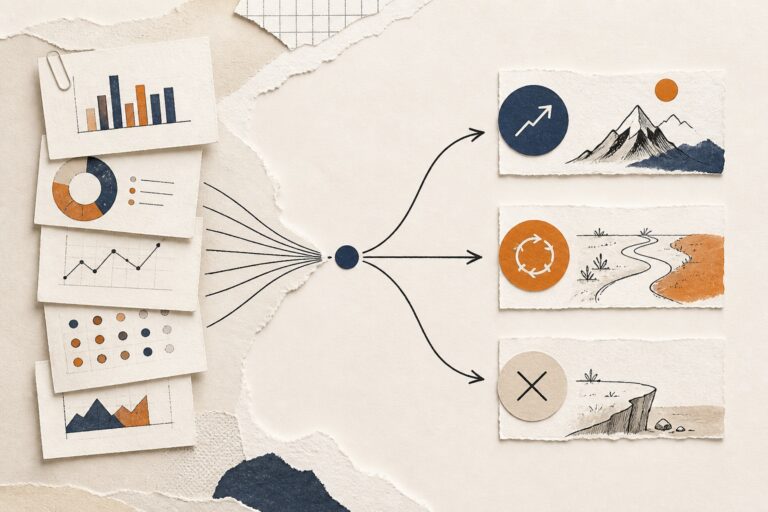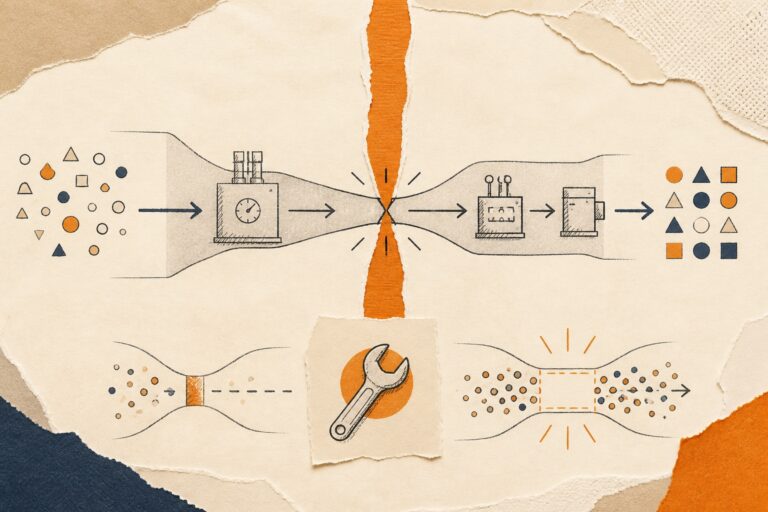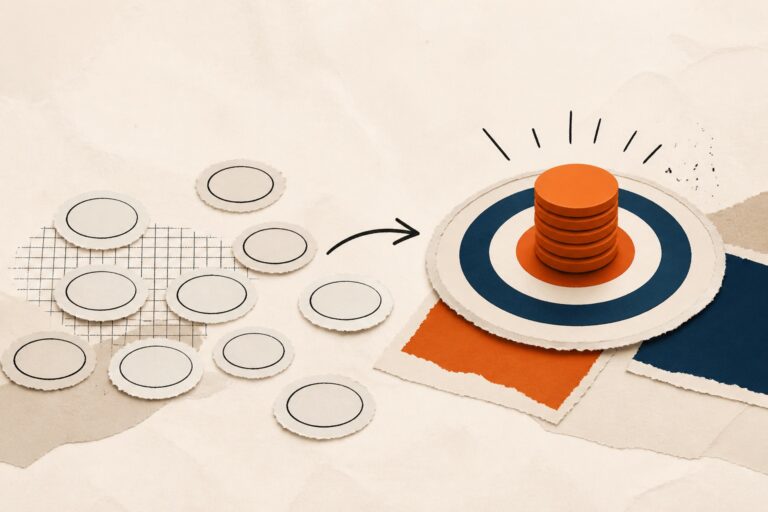

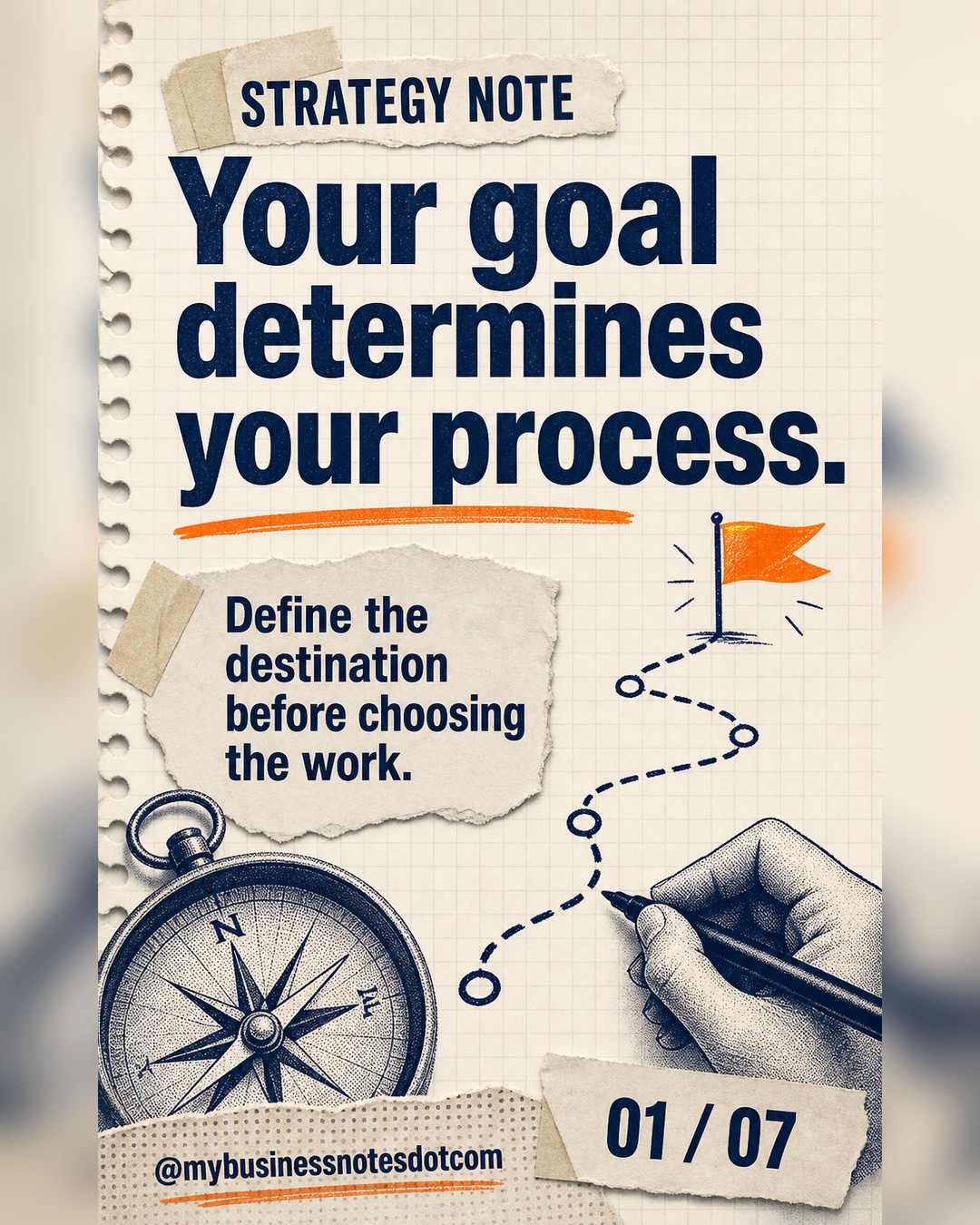
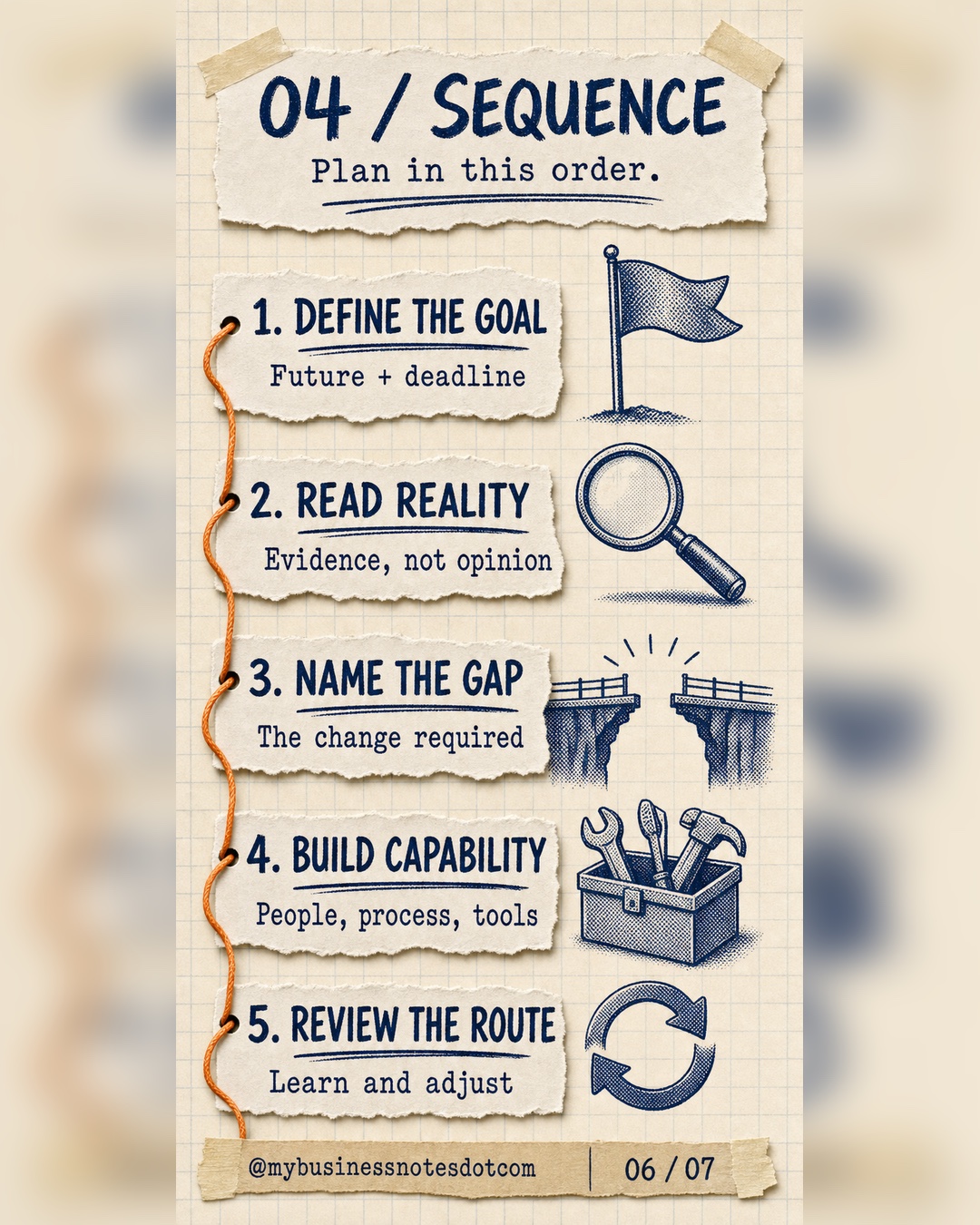
A goal determines your process because the intended result changes what you need to diagnose, build, execute and measure. When teams begin with a list of activities, they can become busy without creating meaningful progress. Goal-driven planning reverses the sequence: define the destination, examine the relevant gap, identify the capabilities required, choose coherent initiatives and review evidence of progress.
This is not an argument for managing a business through one isolated number. A goal is useful when it becomes a decision criterion: it helps a team decide what deserves attention, which work belongs in the plan and which measures can reveal whether the plan is working.
What is goal-driven planning?
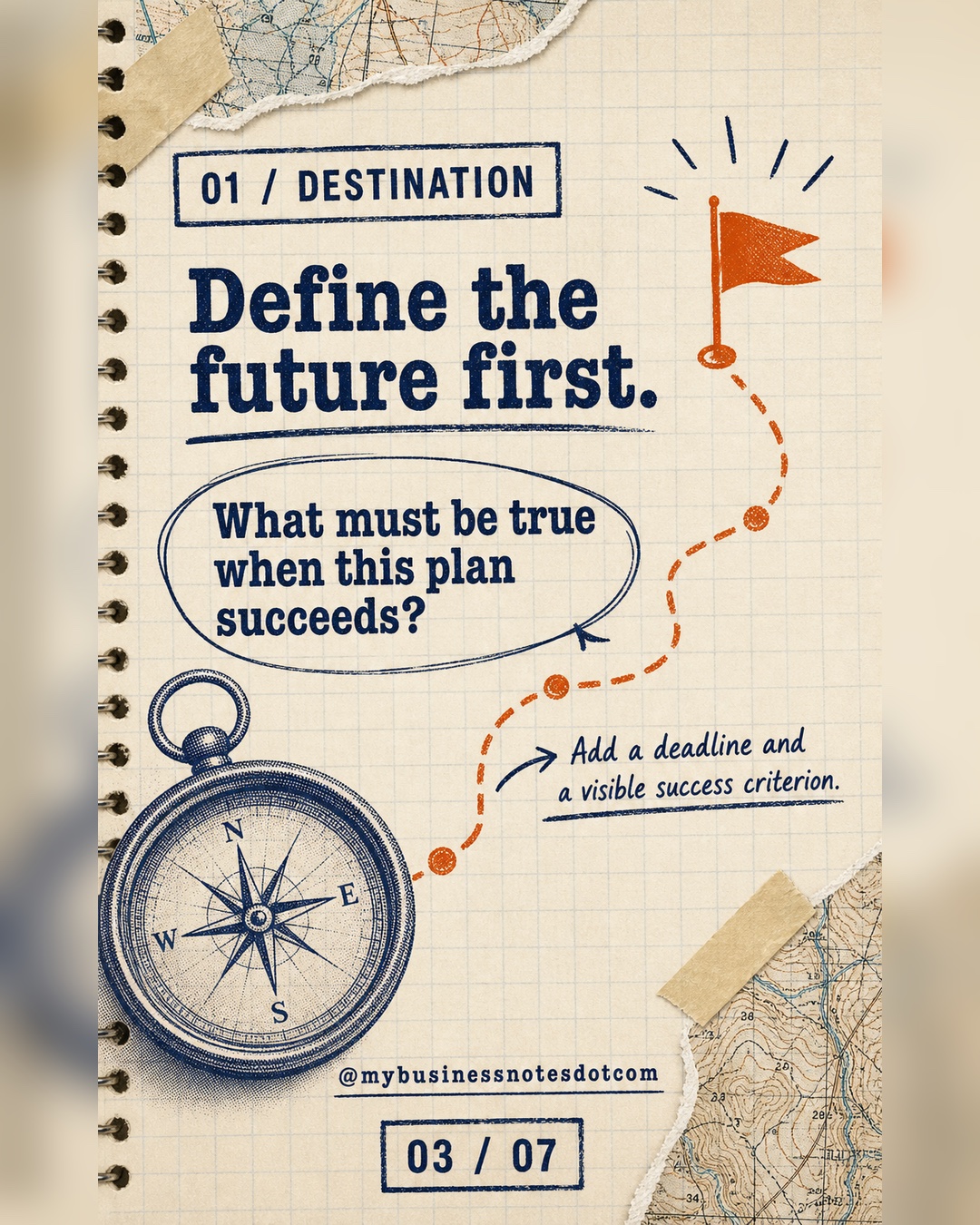
Goal-driven planning is an approach in which the desired outcome guides the design of the work. The team does not start by asking, “What activities should we add?” It starts by asking, “What result are we trying to create, by when, and what would count as success?”
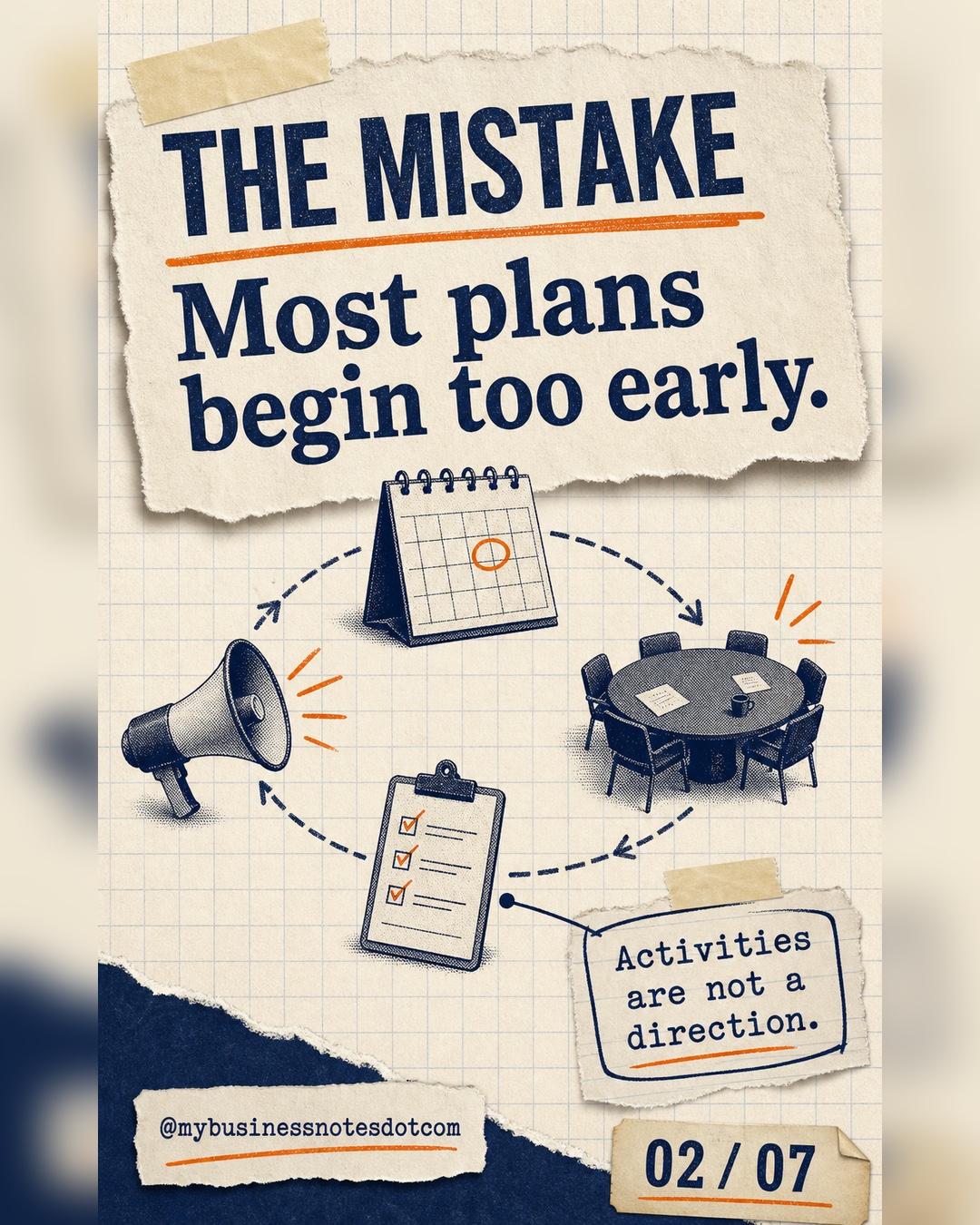
That distinction matters. A campaign, meeting, dashboard or new tool is an activity. It becomes strategically relevant only when its role in producing a desired result is clear. The process approach described by ISO makes a similar distinction: methods and technologies are not the goal; processes are the means used to achieve intended objectives and results. In practical terms, the output should shape the process—not the other way around.
Why activity-first planning fails
Activity-first planning feels productive at the beginning. A team can quickly fill a calendar with campaigns, content, meetings, channel experiments and implementation tasks. The difficulty appears later, when priorities compete and no shared criterion exists for deciding what should continue.
Every idea can appear important
Without a defined destination, the team cannot distinguish necessary work from merely interesting work. Prioritisation becomes a negotiation based on urgency, preference or visibility.
The diagnosis becomes too broad
A business can examine hundreds of facts about customers, operations, competitors and performance. A goal tells the team which facts are relevant. If the aim is to improve customer retention, for example, acquisition reach may be useful context—but onboarding, adoption, service quality and renewal behaviour deserve closer attention.
Measures become disconnected from decisions
Dashboards often accumulate metrics because data is available, not because a decision depends on it. Goal-driven planning selects measures after the intended result and operating mechanism are understood. Kaplan and Norton make a related point in their work on the Balanced Scorecard: measures should be derived from strategy and connected through cause-and-effect relationships, rather than assembled as an ad hoc collection.
The five-step goal-driven planning process
1. Define the desired result
Describe the future condition the business wants to create. Include a time horizon and a clear success criterion. Replace “Improve marketing” with a direction such as: “Increase qualified sales conversations generated by our priority segment during the next quarter, while maintaining the current cost per opportunity.”
- What will be different if we succeed?
- For whom will it be different?
- By when should the change be visible?
- What evidence would make the result credible?
- What must not be sacrificed to reach it?
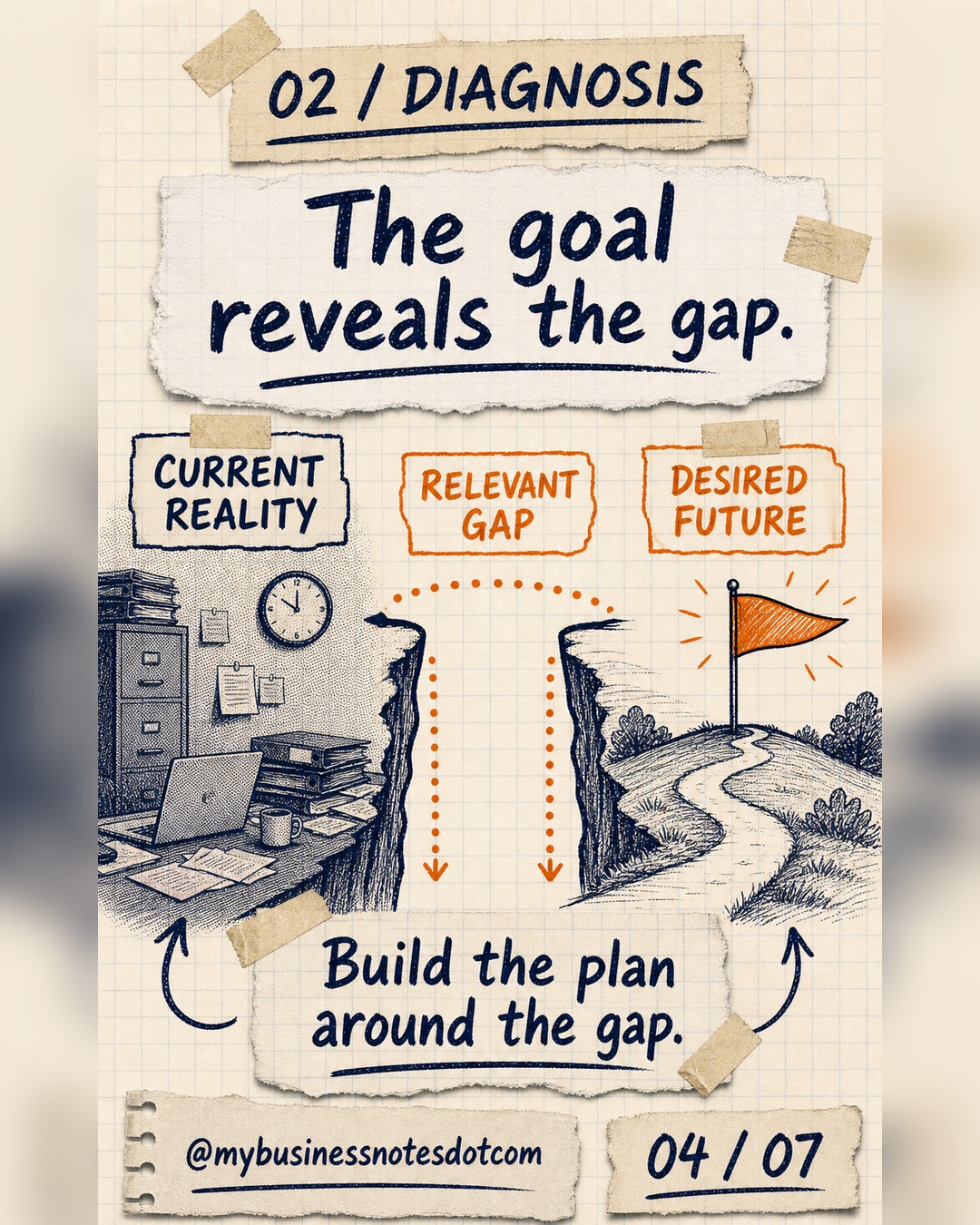
2. Diagnose the relevant gap
Compare the desired result with the current reality. The gap between them defines the planning problem. This prevents a general diagnosis that produces an inventory of facts but no focus. A useful diagnosis is relational: it explains what currently prevents the desired outcome.
If the goal is to increase qualified sales conversations, the relevant gap might involve low awareness in the priority segment, weak problem recognition, poor qualification, a confusing offer or slow follow-up. Each explanation points towards a different process.
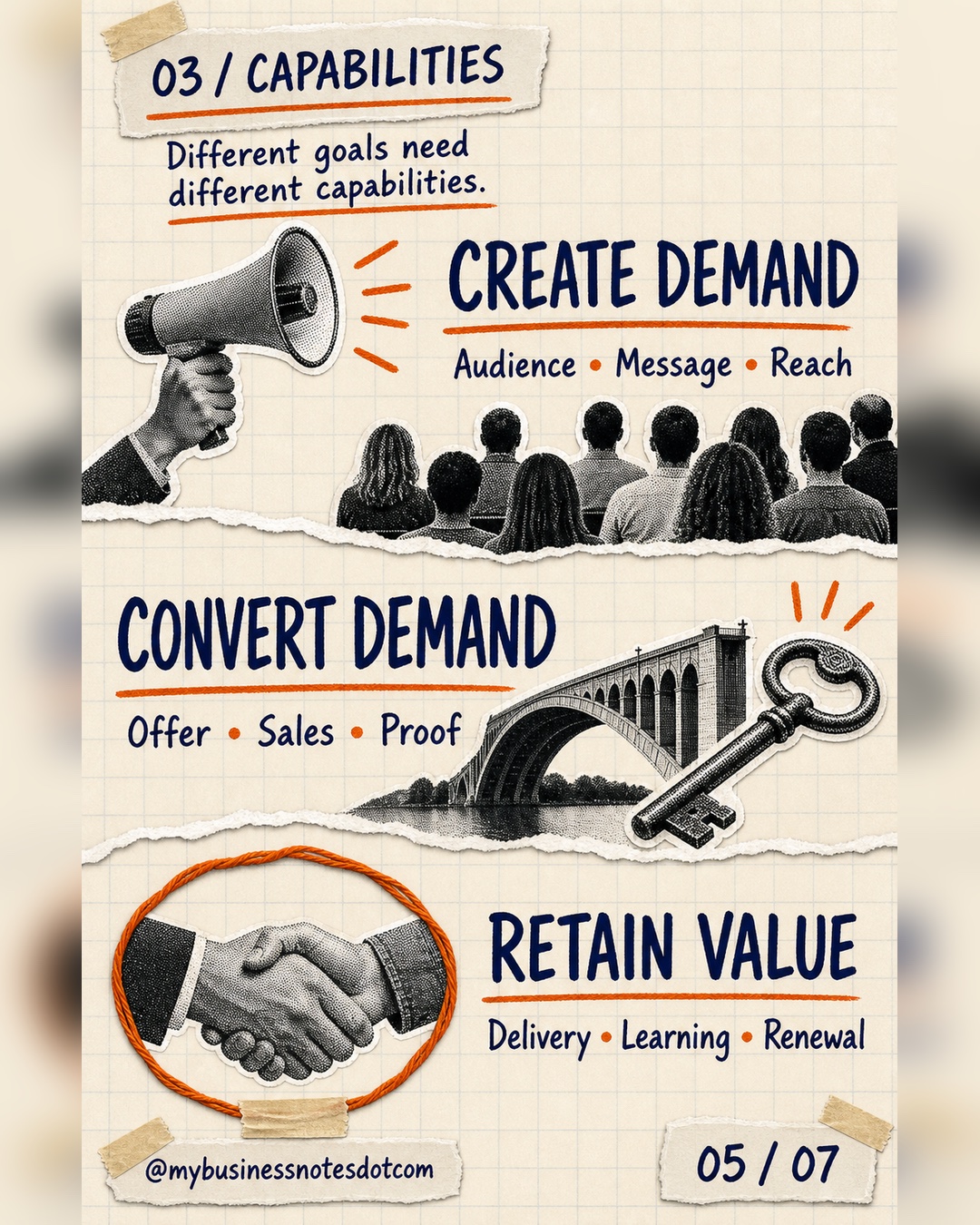
3. Identify the required capabilities
A capability is the organisation’s ability to produce a result consistently. It can combine people, skills, processes, information, technology, governance and management rhythm. Generating demand may require customer insight, message development and distribution. Improving conversion may require qualification, sales enablement and offer clarity. Increasing retention may require onboarding, value realisation and account development.
4. Choose coherent initiatives
Initiatives are temporary efforts designed to build capabilities and change performance. Test each one with this sentence: “We will do [initiative] to strengthen [capability], because it should influence [mechanism] and help produce [desired result].” If the causal link is unclear, the initiative may not belong in the plan.
5. Measure progress and learn
Use outcome measures to show whether the desired result occurred and leading evidence to explain whether the process is developing as expected. For a qualified-conversation goal, the outcome may be the number and quality of opportunities. Leading evidence might include reach in the priority segment, response rate, qualification rate and follow-up time.
A worked example: three goals, three processes
Imagine a software company that wants to grow revenue. The operating model changes according to the specific growth goal.
- Generate qualified demand: customer research, segmentation, message design, distribution, capture and qualification.
- Improve conversion: discovery, qualification, proposal quality, proof, objection handling and follow-up.
- Increase retention: onboarding, adoption, success milestones, service response, renewal risk and account reviews.
The company is pursuing growth in all three cases. But the goal determines which gap matters, which capabilities are required and which process deserves investment.
A practical one-page planning template
- Desired result: What future condition are we trying to create?
- Current reality: What does the evidence show today?
- Relevant gap: What prevents the desired result?
- Required capability: What must the organisation be able to do better?
- Coherent initiatives: Which actions can build that capability?
- Review evidence: What will help us continue, adapt or stop?
What this principle does not mean
A goal is not a prediction. Treat the plan as a hypothesis about how a result can be produced. Evidence may require the team to revise the diagnosis, capability priorities or initiatives.
One metric should not define the whole system. Goals can create harmful trade-offs when quality, risk, customer impact or long-term capability are ignored, so use explicit guardrails. Not every valuable activity produces an immediate measurable outcome either. Research, learning and capability building may create delayed value, but their role in the system should still be clear.
Frequently asked questions
Should planning begin with a goal or a diagnosis?
Begin by defining a preliminary desired outcome, then diagnose the current reality in relation to it. The goal may be refined as evidence improves. The essential point is that diagnosis needs a destination to determine which facts and gaps are relevant.
What is the difference between a goal and an initiative?
A goal describes a desired result. An initiative is a temporary effort selected to help create that result. “Improve qualified pipeline” is a goal direction; “redesign the qualification process” is an initiative.
Can a team use this process with OKRs?
Yes. The desired result can inform an objective and its key results. The gap and capability analysis then helps the team choose initiatives instead of treating key results as a task list.
What should be measured first?
Measure the intended outcome and the few process signals that can explain progress. Avoid adding a metric unless the team knows which decision it may change.
Conclusion
A useful plan is more than a collection of actions. It is a coherent explanation of how today’s reality can move towards a desired future. Start with the result. Diagnose the gap that matters. Identify the capability needed to close it. Choose initiatives with a credible role. Measure progress and update the plan as you learn.
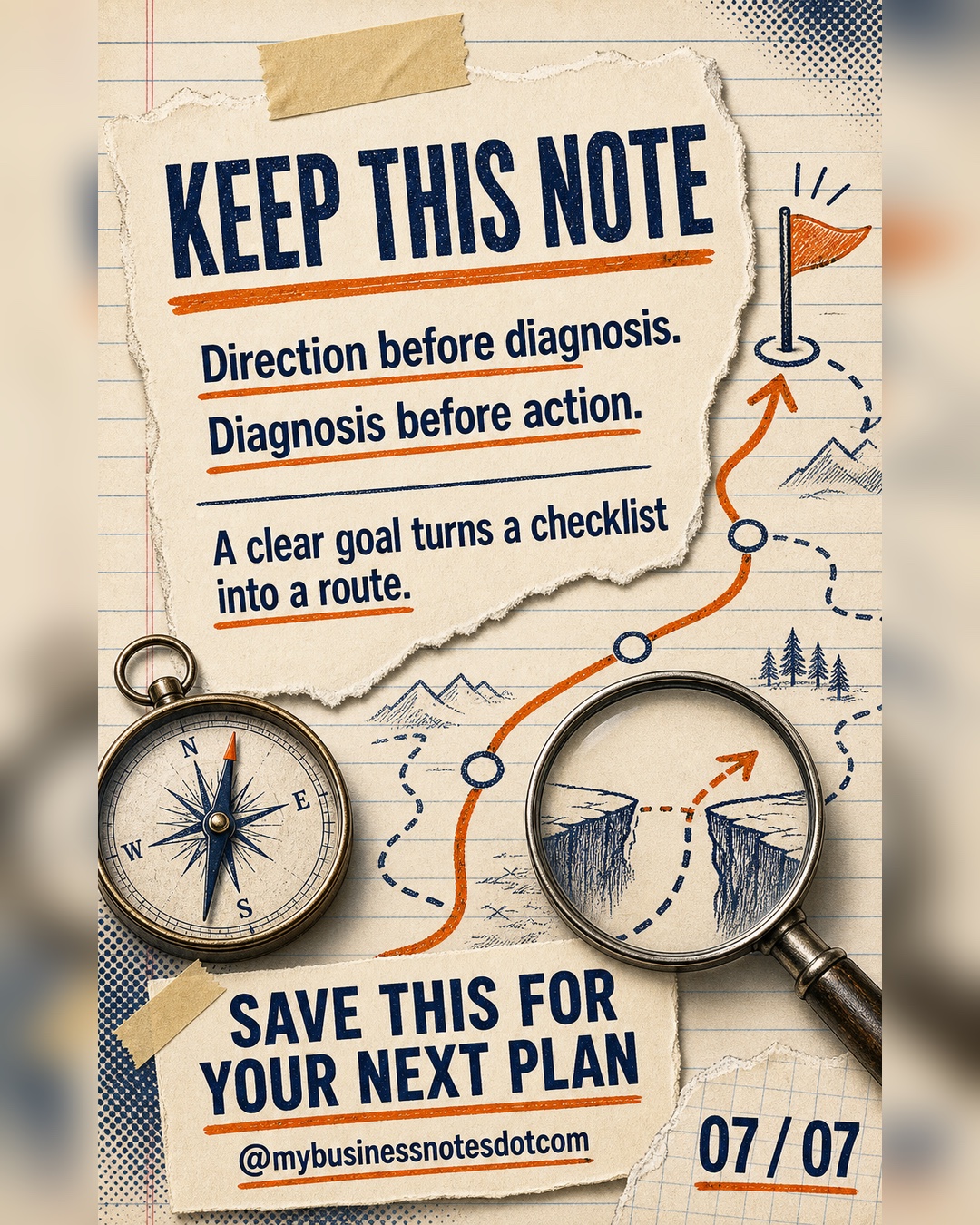
Direction before diagnosis. Diagnosis before action.
Take the framework to your next planning session
Download the complete seven-slide PDF and use it to connect goals, gaps, capabilities, initiatives and measures with your team.
International references