

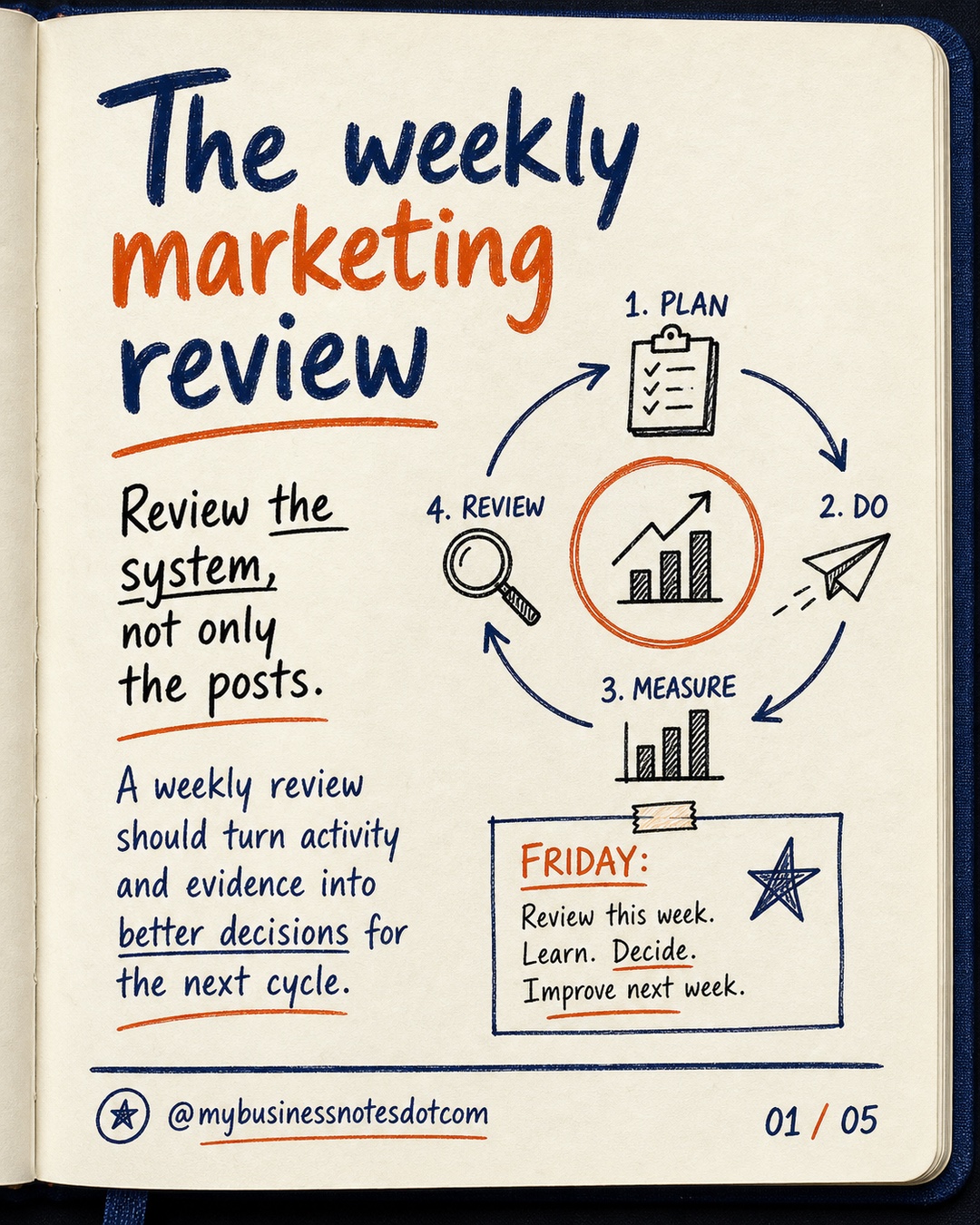
Weekly marketing review turns the central principle into an explicit decision: A weekly review should turn activity and evidence into better decisions for the next cycle. This article develops that decision into a practical management framework, helping teams move from activity to coordinated action and useful evidence.
Slide 1 of 5
What this framework helps you decide
A weekly review should turn activity and evidence into better decisions for the next cycle.
The value of a framework is not the appearance of certainty. It is the quality of the conversation it creates. Use the following sections to expose assumptions, focus attention, and convert an abstract intention into a decision that can be reviewed.
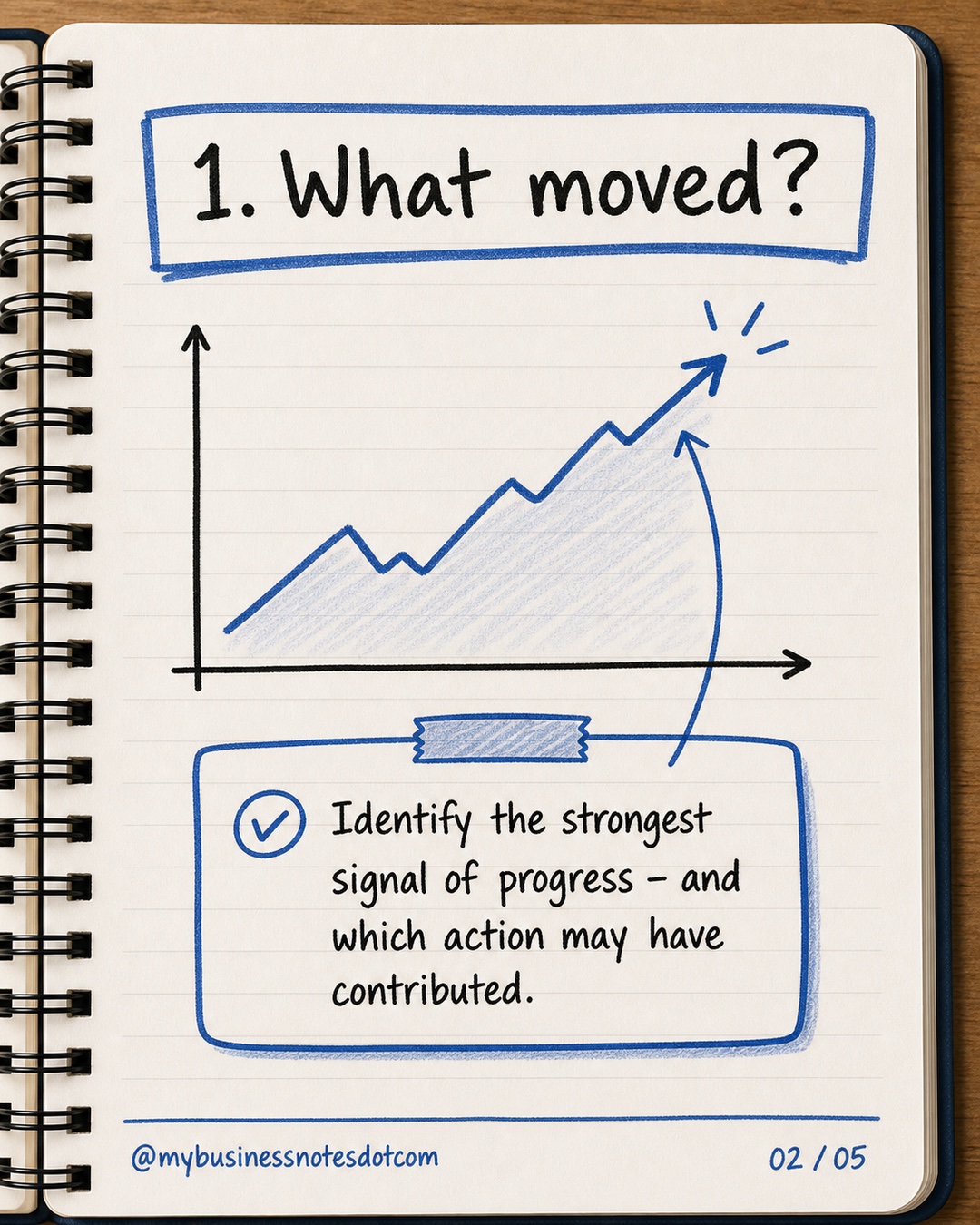
1. What moved?
Identify the strongest signal of progress – and which action may have contributed.
Start with changes in customer behaviour, commercial outcomes, or operational performance, then compare them with the expected direction. Separate meaningful movement from the completion of activities so the review does not reward output that failed to create evidence.
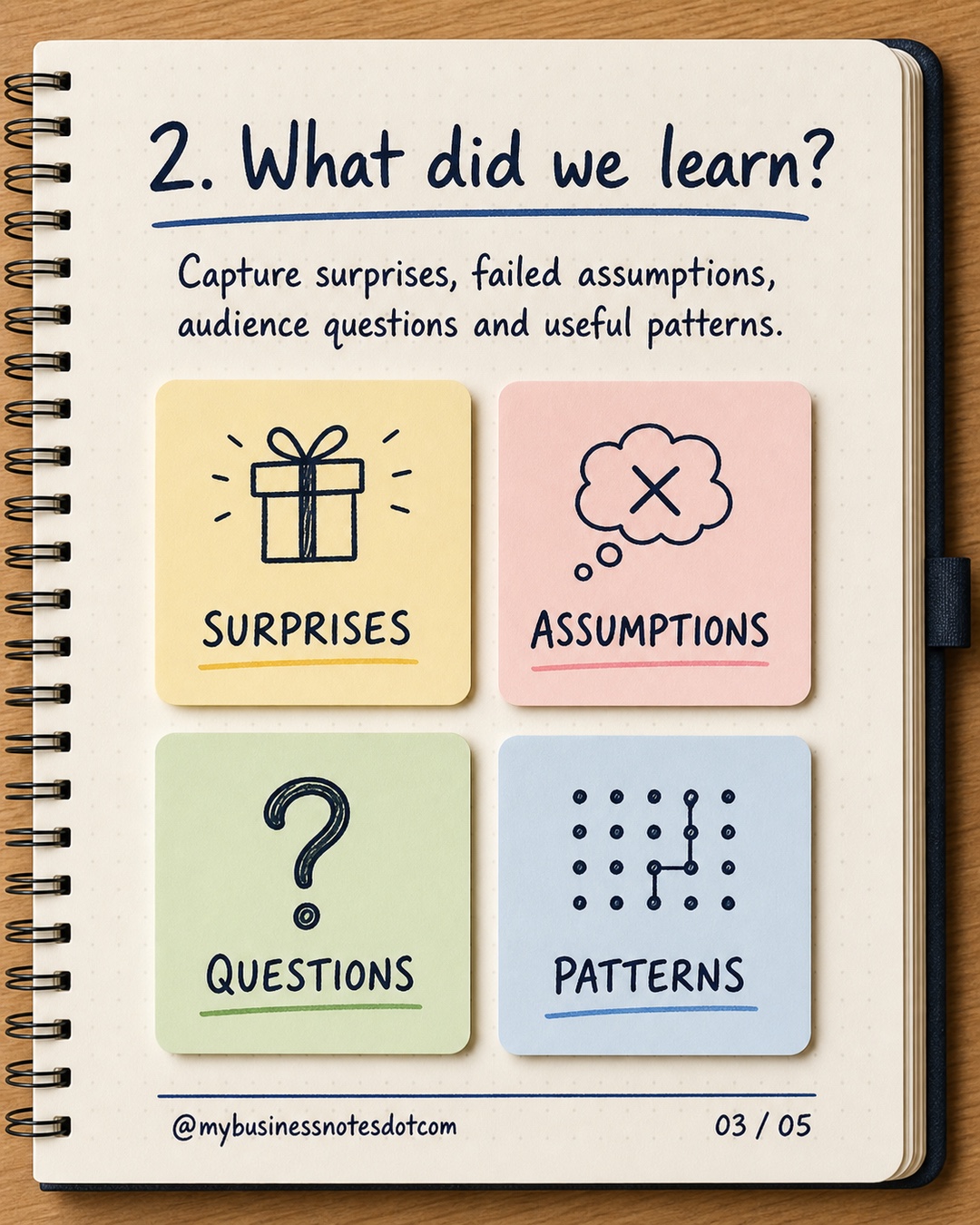
2. What did we learn?
Capture surprises, failed assumptions, audience questions and useful patterns.
Identify what the week revealed about the team’s assumptions. Use quantitative signals alongside customer conversations, sales feedback, and delivery observations. A useful learning statement explains what was expected, what happened, and how confidence in the current approach changed.
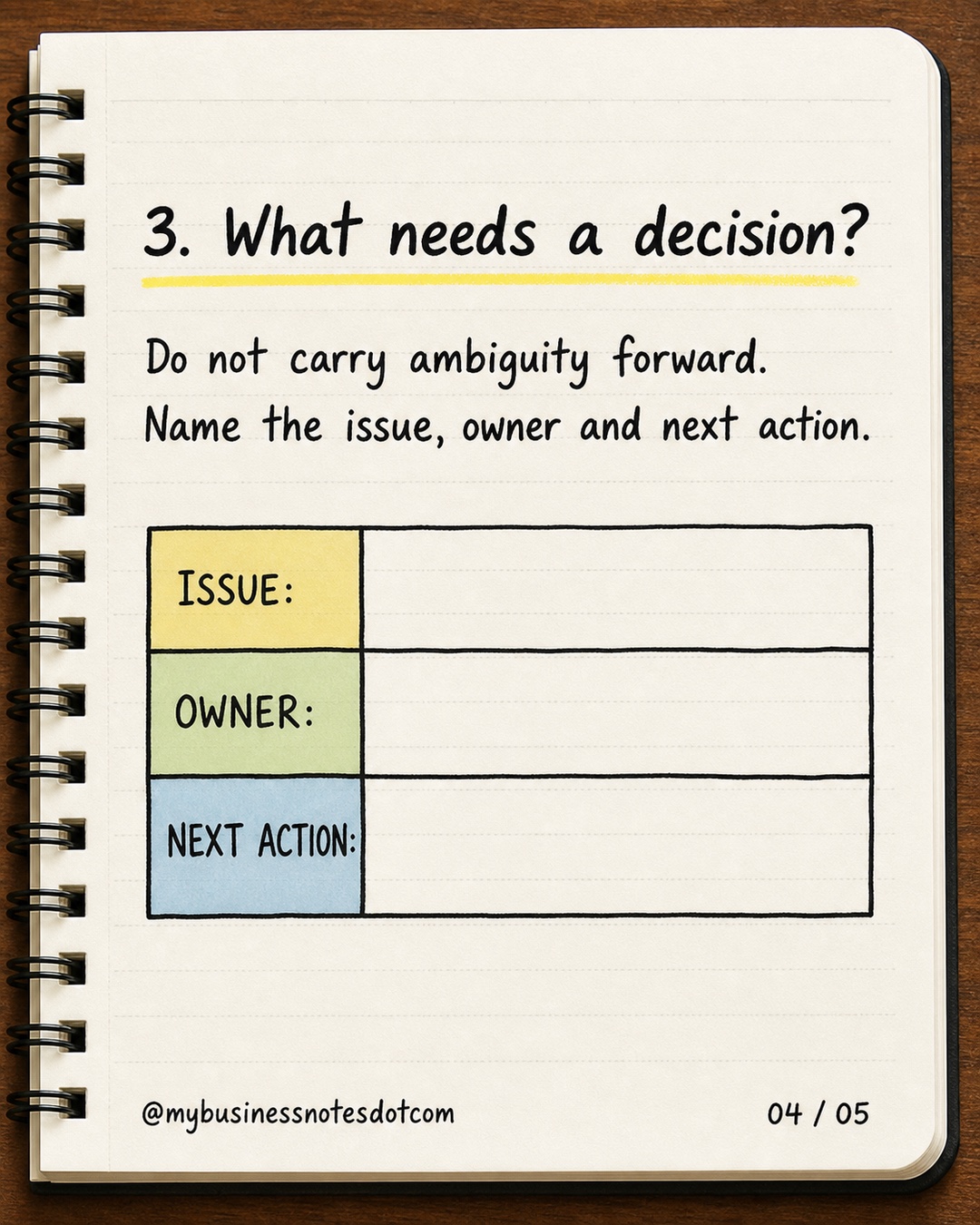
3. What needs a decision?
Do not carry ambiguity forward. Name the issue, owner and next action.
Surface choices that require authority or trade-offs instead of letting them remain hidden as discussion points. Frame each decision with the available evidence, options, owner, and deadline. The weekly review should accelerate decisions, not merely circulate updates.
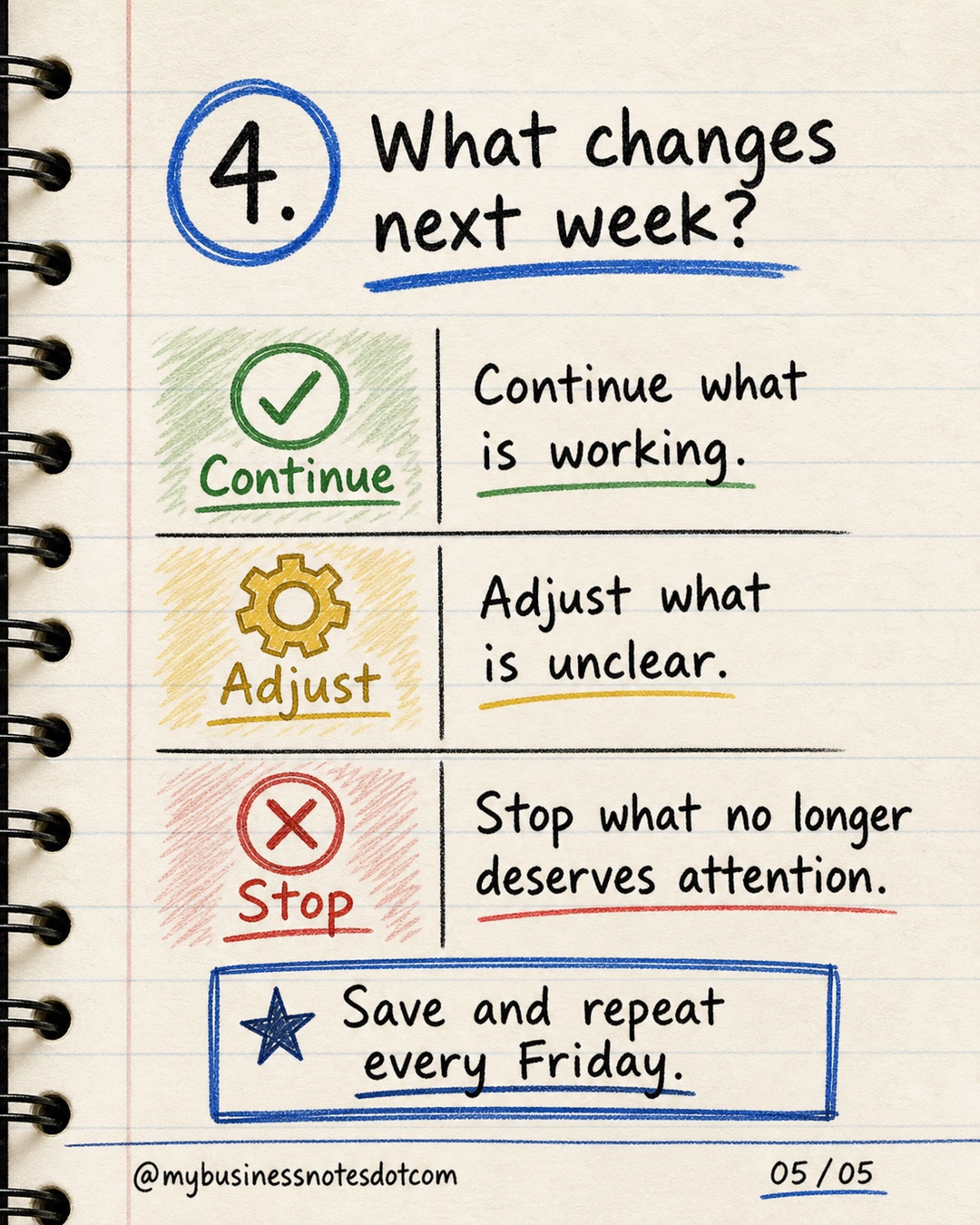
4. What changes next week?
Continue what is working. Adjust what is unclear. Stop what no longer deserves attention.
Translate the review into a small set of changes for the next cycle. Record what will continue, stop, or be tested; protect time for the priority; and assign ownership. This creates a visible link between evidence and the way the team works next week.
A practical example
A useful Friday review may find that one comparison article generated fewer visits but more qualified conversations. The decision is not simply to produce more content; it may be to strengthen that decision-stage theme, improve distribution and test whether the pattern repeats.
The mistake to avoid
Reporting every metric without naming what changes next week turns review into documentation rather than management.
How to apply the framework
Begin with the business result and the customer or operational context. Work through the framework in sequence, but spend more time where uncertainty is highest. Record the decision, the reasoning behind it, and the signal that would cause the team to reconsider.
A useful review ends with subtraction as well as addition. Identify what will stop, what will receive protected attention, and who is accountable for the next visible step. Without those trade-offs, even a clear discussion can dissolve into more activity.
For related guidance, see How to prioritize ideas with an evaluation matrix and Strategy execution with the 4 Cs and 1 R.
Frequently asked questions
What is weekly marketing review?
Weekly marketing review is a practical way to organize decisions around the result, audience, actions and evidence described in this article.
Why does weekly marketing review matter?
It matters because it connects activity to an explicit decision and makes progress easier to evaluate, explain and improve.
What is the most common mistake with weekly marketing review?
Reporting every metric without naming what changes next week turns review into documentation rather than management.
How do you start using weekly marketing review?
Write the current decision in one sentence, apply the framework to the highest uncertainty, assign one owner and define the next observable evidence.
Put the framework into practice
Save and repeat every Friday. Use the carousel as a shared review tool, then capture the resulting priority, owner, next action, and evidence in the team’s working system.
Download the complete carousel
Keep the framework as a PDF for your next review.
International references
- Harvard Business Review — How to Focus on What’s Important, Not Just What’s Urgent
- Atlassian — Weekly Planning