

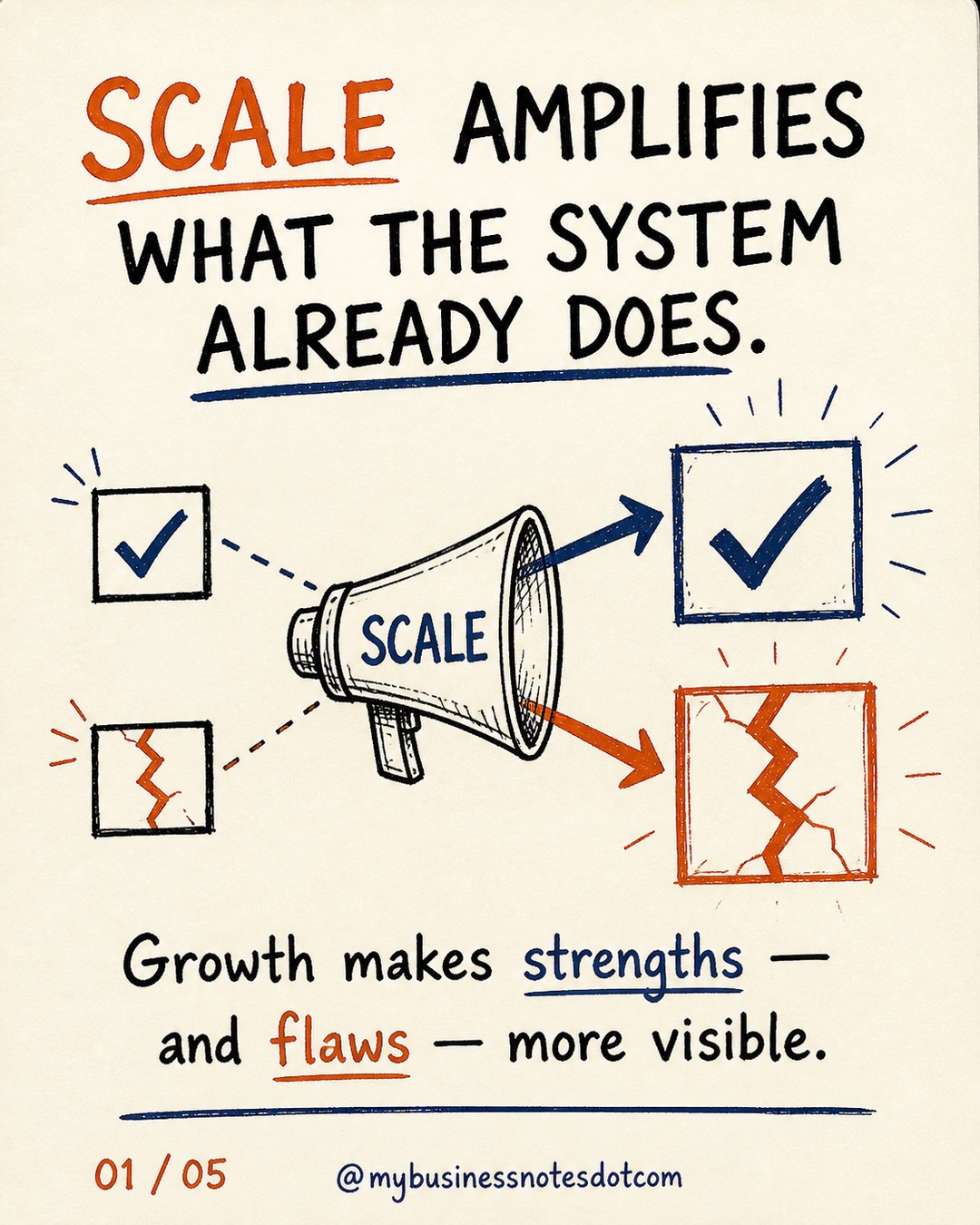
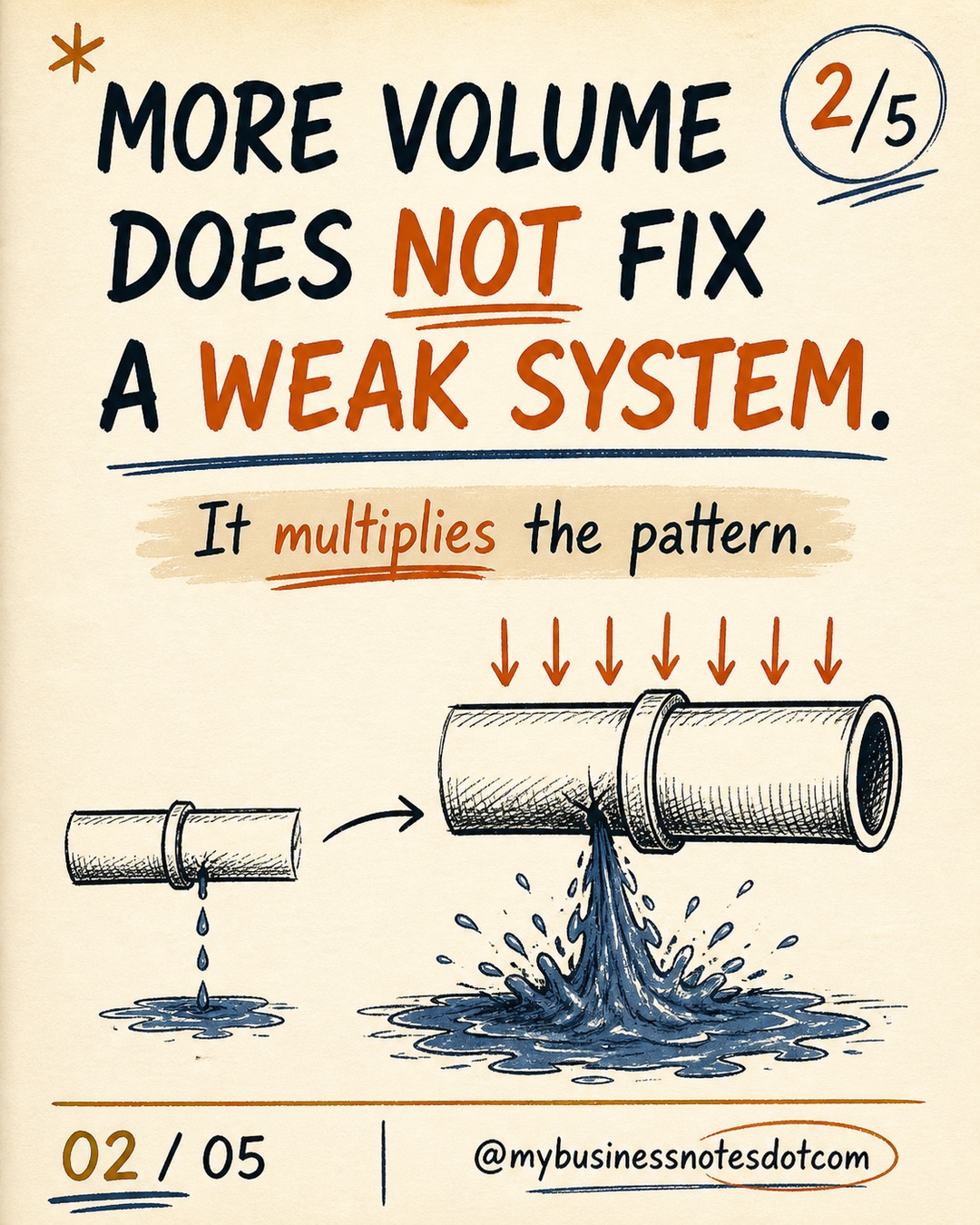
Scaling business systems increases the volume moving through existing patterns. It can multiply a strong value engine, but it can also amplify rework, weak qualification, inconsistent delivery and hidden dependence on a few people. This guide expands the five-slide business note into a practical review with criteria, safeguards and next steps.
Slide 1 of 5
Growth is a multiplier
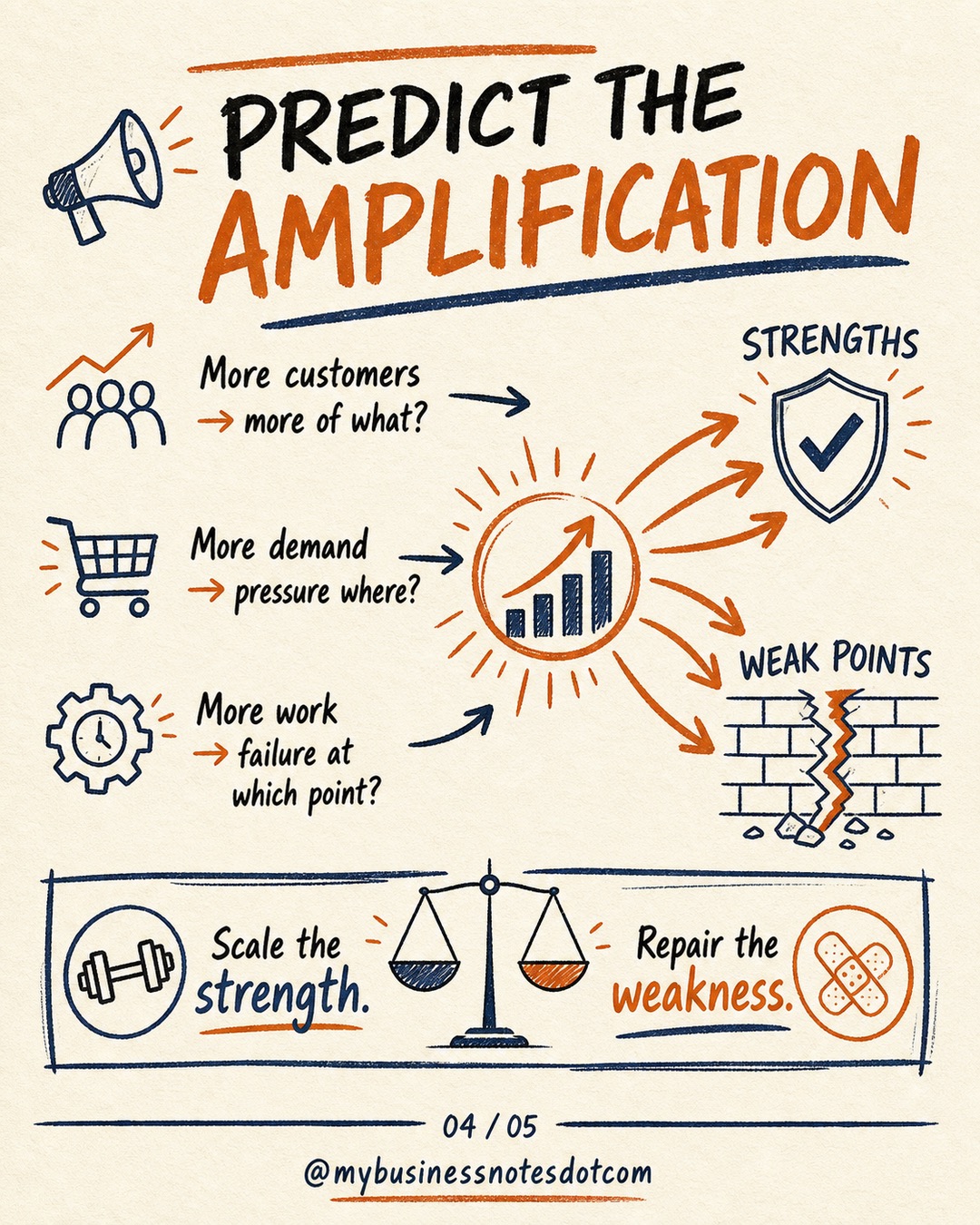
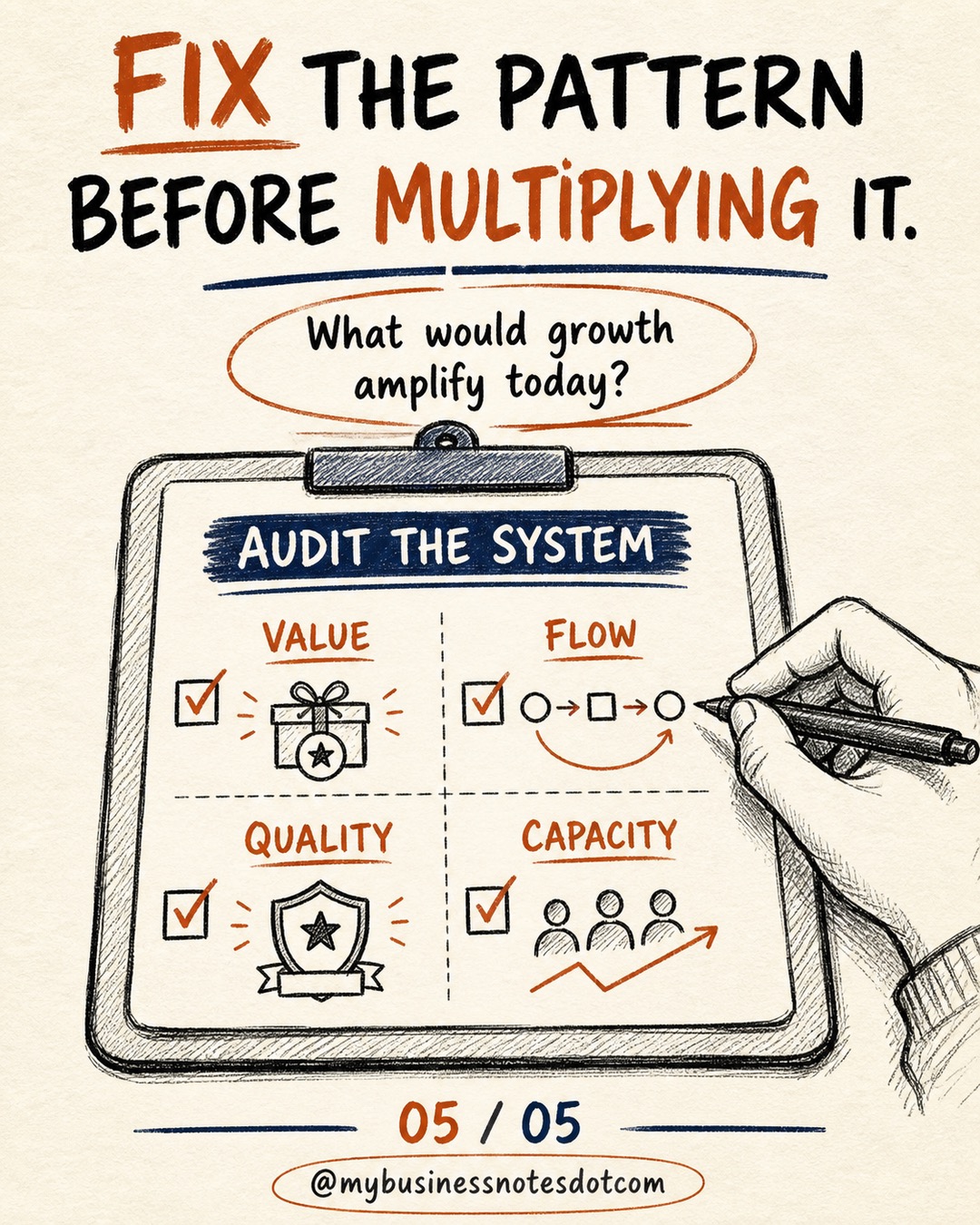
More demand, customers or employees do not automatically create a better business. They place more pressure on the same decisions, handoffs and constraints. Before adding volume, identify what the current system repeatedly produces.
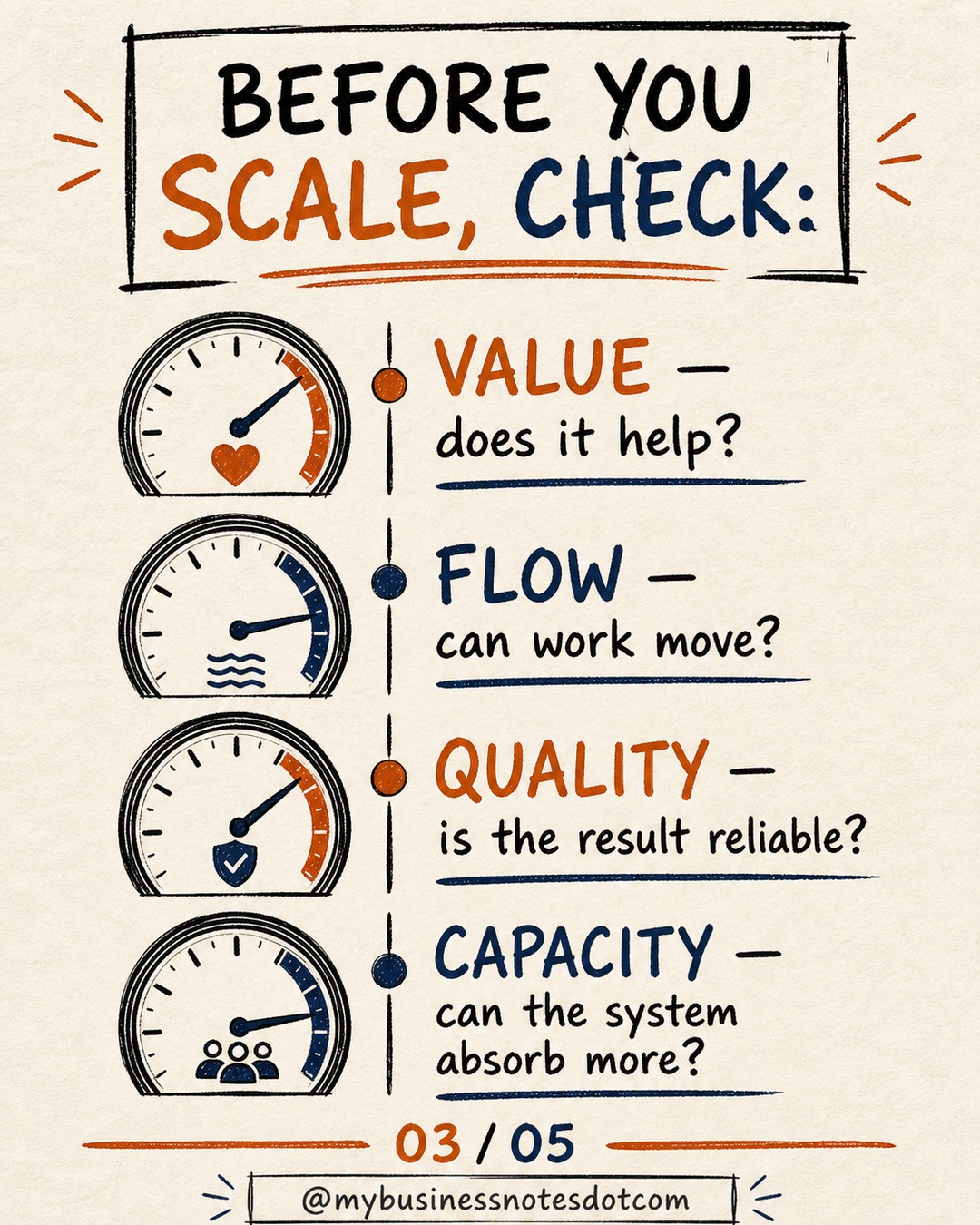
Audit value
Confirm which customers and use cases receive meaningful value, why they choose the offer and what conditions support success. Scaling an unclear promise increases acquisition cost, exceptions and disappointment.
Audit flow and quality
Trace work from demand to delivery and retention. Measure waiting, rework, defects, escalation and variation. A process that succeeds only through experienced people repairing problems is not yet a stable platform for scale.
Audit capacity and concentration
Identify bottlenecks, single points of failure and decisions held by one leader. Distinguish productive constraints from preventable dependence. Capacity includes attention, skills, systems and cash, not only headcount.
Scale through staged evidence
Choose a bounded increase in volume, protect quality indicators and define stopping conditions. Learn what breaks before committing to a larger expansion. Growth becomes more resilient when the organisation can see and correct the pattern it is amplifying.
Frequently asked questions
What does scaling a business mean?
Increasing output or reach without a proportional loss of quality, control or economics.
Should processes be perfect before growth?
No, but critical assumptions, constraints and quality risks should be visible and testable.
What usually breaks first?
The weakest high-volume handoff, decision bottleneck or capacity constraint often appears first.
How can scale be tested safely?
Use staged increases, leading indicators and explicit thresholds for adjustment or pause.
Put it into practice
Use the framework on one current decision. Record the evidence, owner, next action and review date before expanding the scope.
Download the complete carousel
Keep the five-slide framework as a PDF for your next working session.
International references
- McKinsey & Company â The B2B omnichannel opportunity
- Think with Google â The messy middle of the purchase journey
- Nielsen Norman Group â Recognition rather than recall
- Google re:Work â Understand team effectiveness
- Atlassian â Roles and responsibilities
- Harvard Business Review â The discipline of business experimentation
- Christensen Institute â Jobs to Be Done Theory
- Strategyzer â The Value Proposition Canvas
- GOV.UK Service Manual â Understand users and their needs
- Salesforce â Customer success
- Lean Enterprise Institute â What is lean thinking?
- MIT Sloan Management Review â Why companies fail at digital transformation