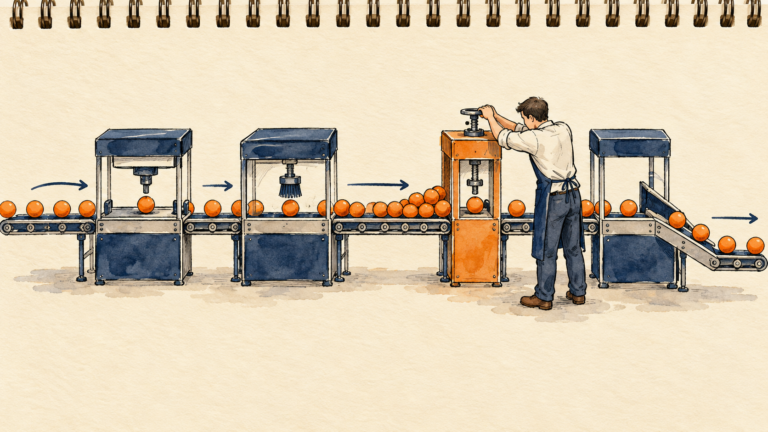

A pre-mortem before scaling asks a team to imagine that an initiative has already failed, then work backward to plausible causes. Use it to expose assumptions, define warning signals and assign preventive actions while important choices are still reversible.
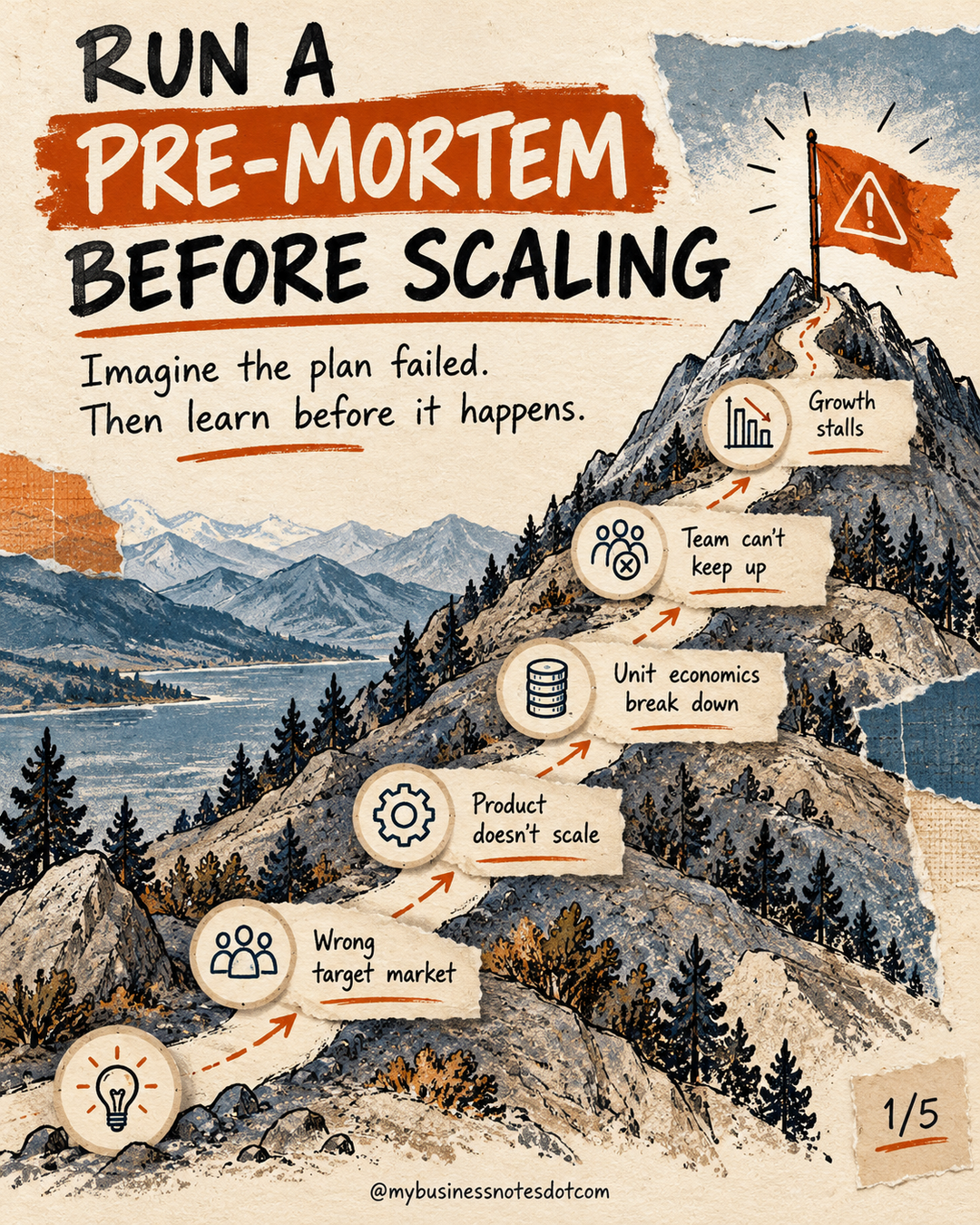
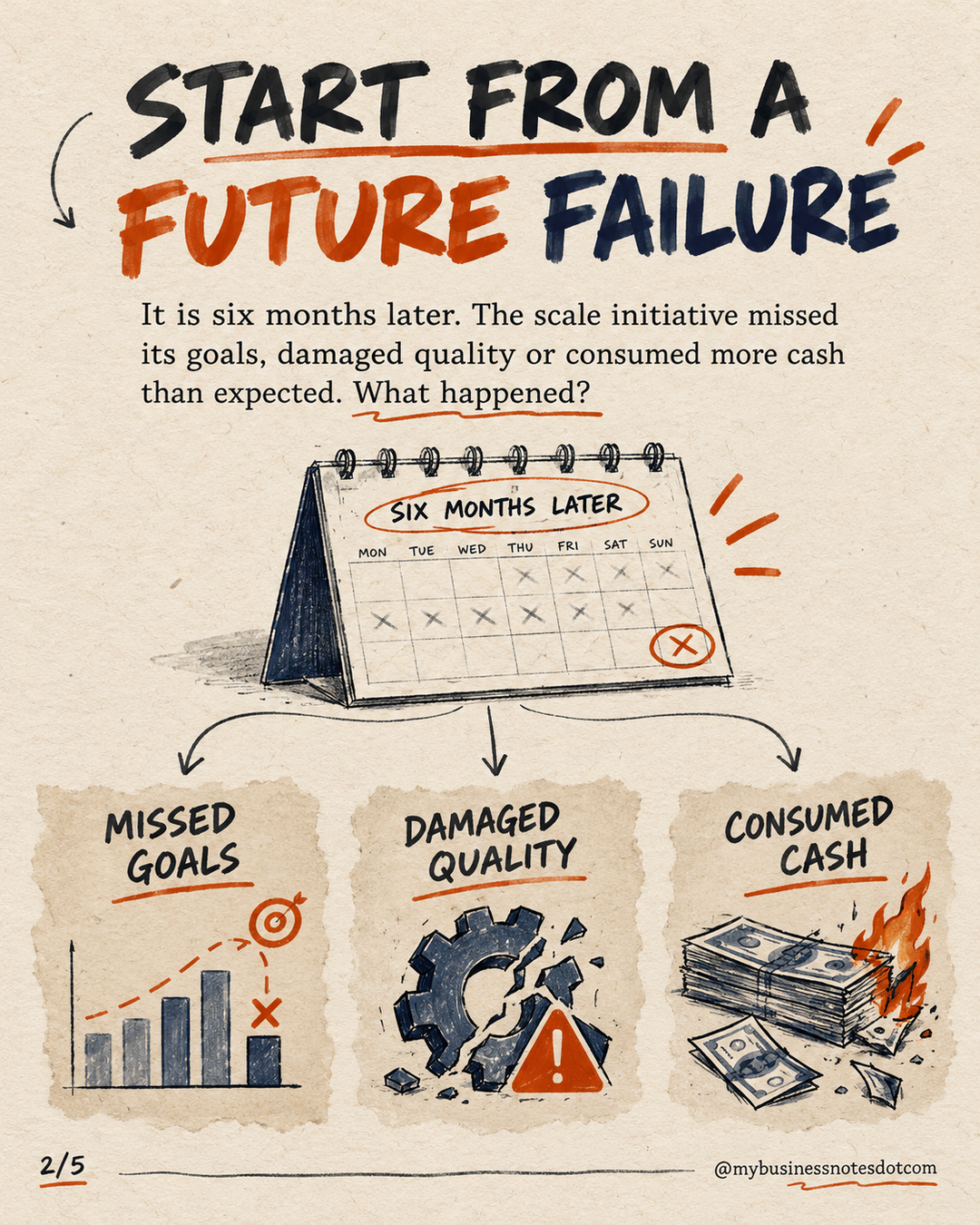
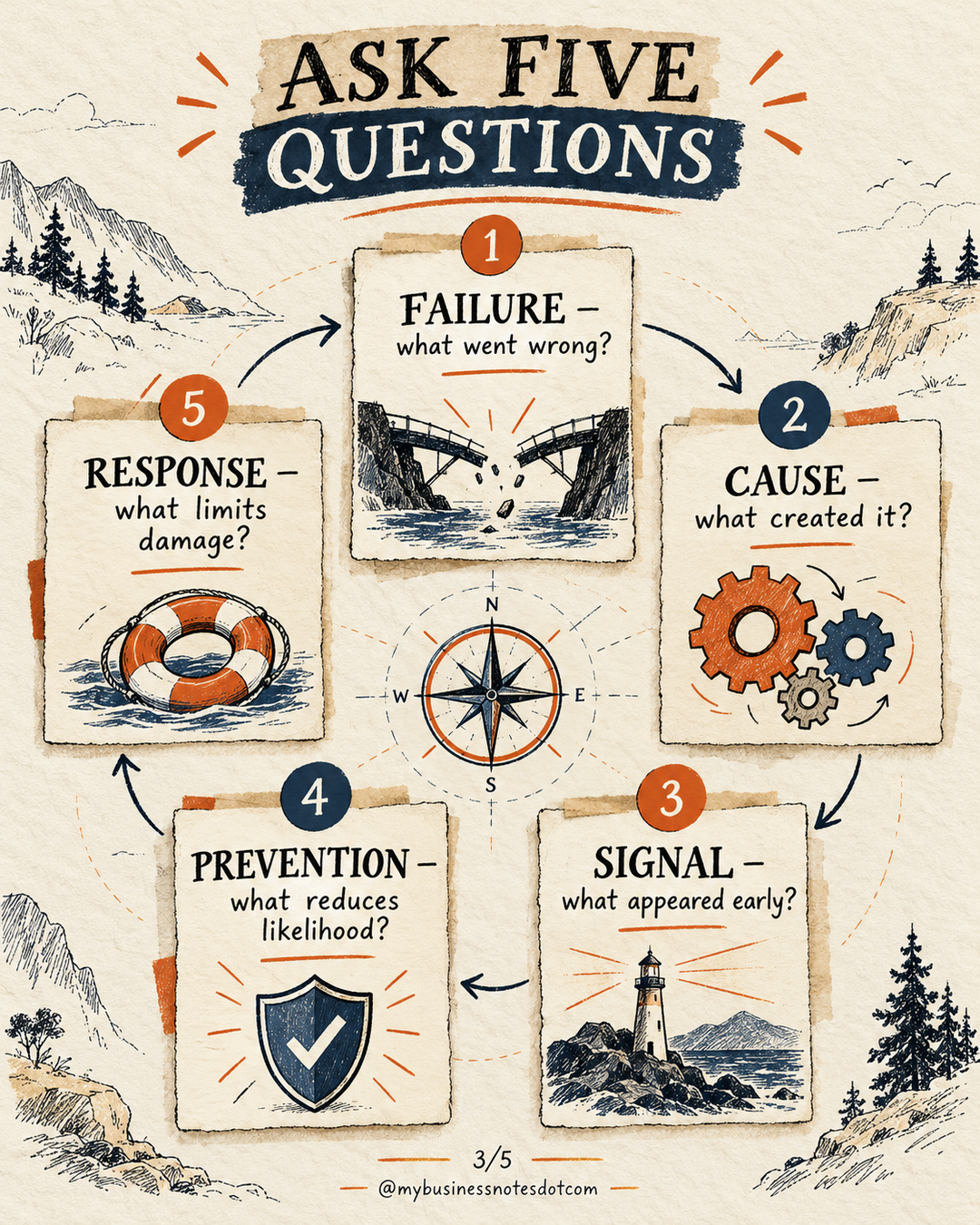
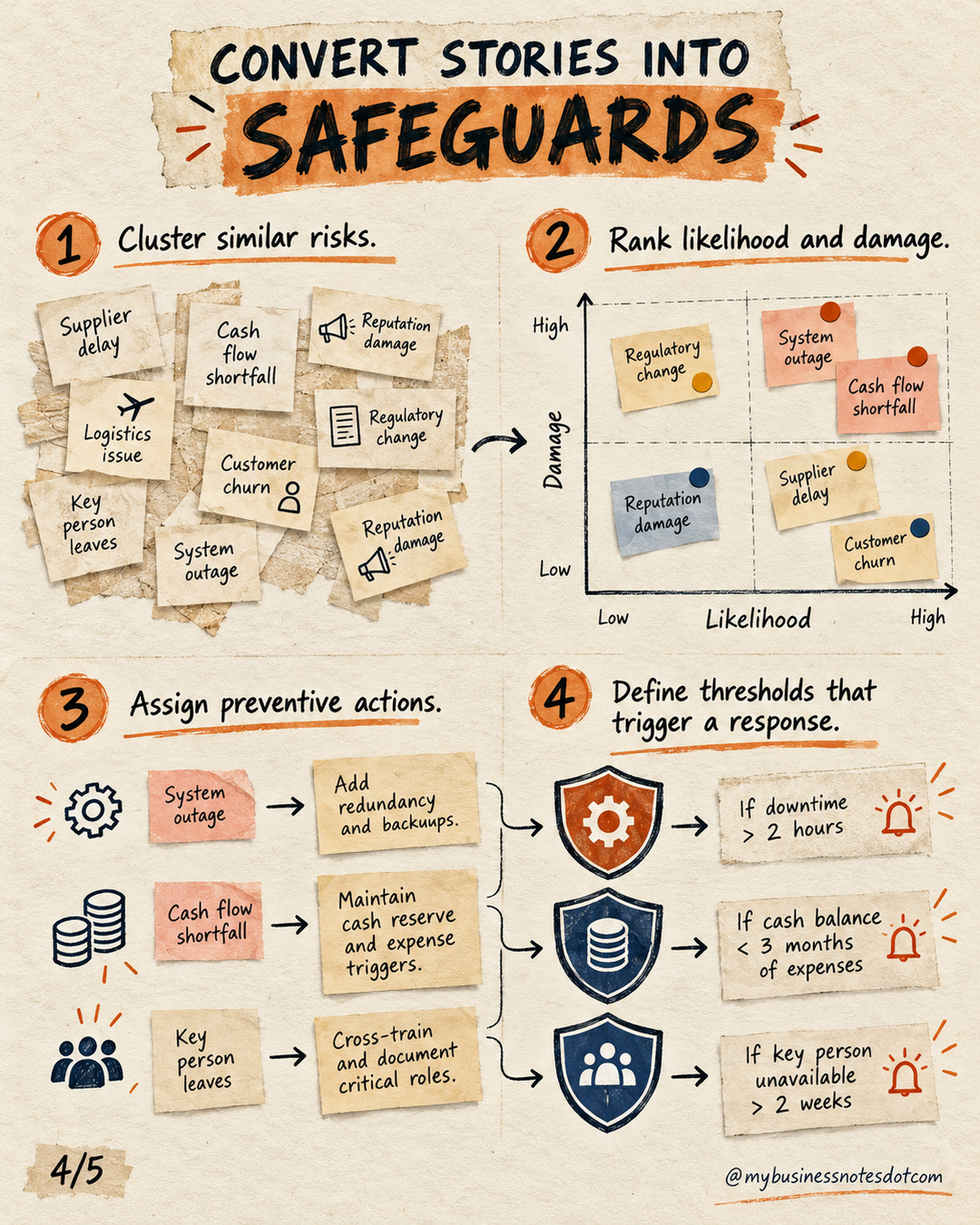
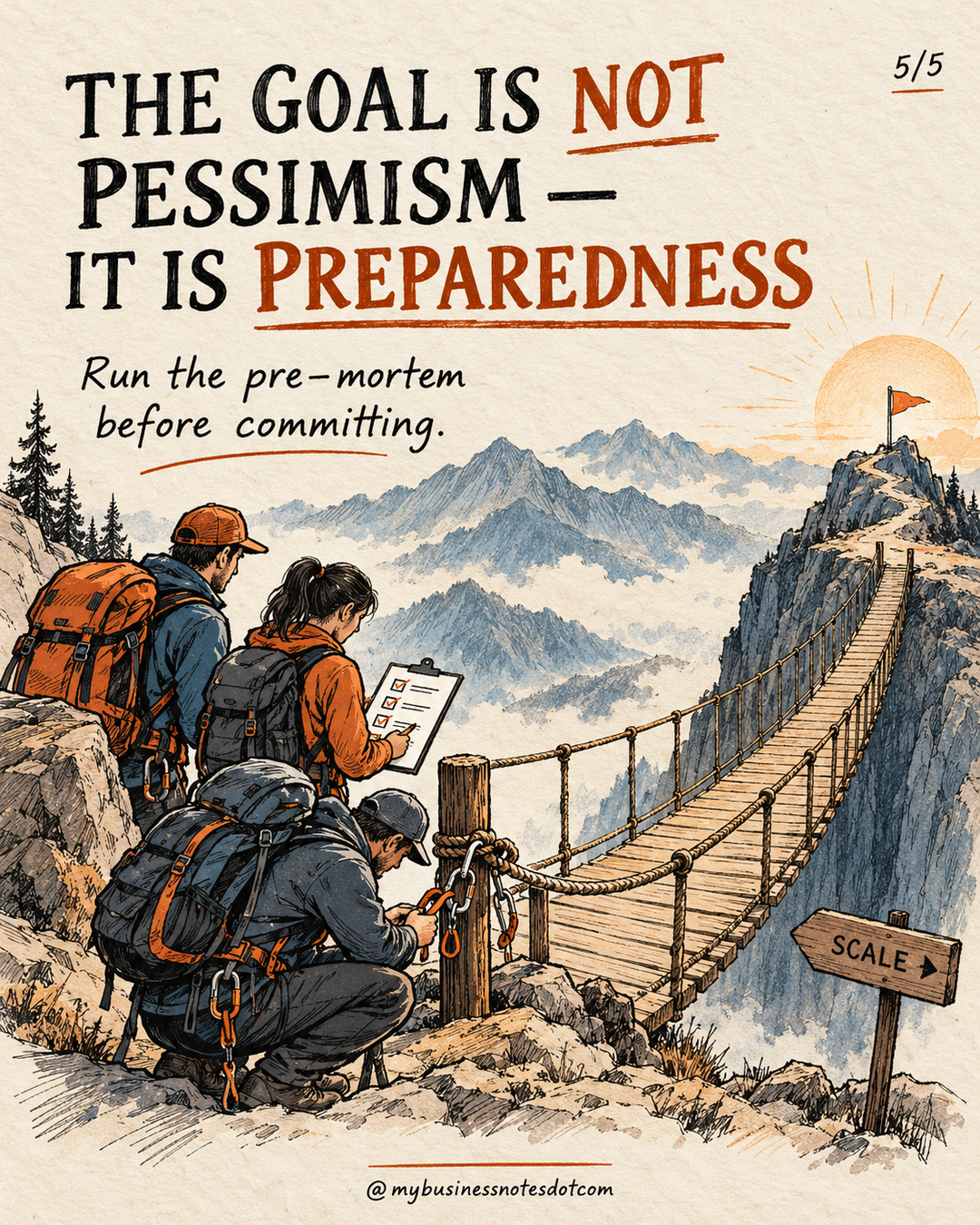
Slide 1 of 5
What is a pre-mortem before scaling?
A pre-mortem is a structured discussion about possible future failure, not a forecast that failure will occur. The useful output is a changed decision: a smaller rollout, a stronger control, a test of an assumption or a prepared response.
Atlassian’s pre-mortem method starts with independent reflection before group discussion. That sequence gives concerns a chance to surface before a senior voice defines the room. Invite people who deliver the work as well as people who approve it. Explain how their input will be used.
1. Define the failure in observable terms
Choose one initiative and a realistic review horizon. Ask what an unacceptable outcome would look like to customers, delivery teams and the business. A vague statement such as ‘the launch disappointed us’ cannot guide prevention.
For an illustrative service rollout, failure might mean customers cannot complete onboarding without repeated manual help. This is a hypothetical example, not an MBN client result. Keep different failure outcomes separate so their causes do not become an undifferentiated list.
2. Trace causes and dependencies
Ask participants to write plausible explanations silently, then group related concerns. Distinguish the event from its causes and consequences: an overloaded support queue may follow unclear instructions, missing permissions or a larger customer mix than the pilot covered.
Strategyzer recommends testing critical hypotheses before less consequential assumptions. Apply that logic here: which uncertain dependency could make the rollout unworkable? Use analysis guidance to separate observations from interpretations, and record the evidence still missing.
3. Choose signals before selecting remedies
A useful warning arrives early enough to change something. Pick a signal connected to the suspected cause, identify its data source and decide who reviews it. Avoid treating a convenient metric as proof of readiness.
The Orange Book links risk treatment to responsibilities, resources and early-warning indicators. Adapt those principles proportionately; this is not UK public-sector compliance advice. Define a threshold that prompts investigation or a pause, rather than assuming a number diagnoses the cause by itself.
4. Assign prevention and a prepared response
Prevention changes the likelihood or consequence of a problem. A response states what happens if the signal appears despite that prevention. Name an owner, due date and decision authority for each material action.
Check the capacity-planning implications: an owner without available time is not a complete control. Make the trade-off explicit if preparation delays launch. Amazon’s discussion of reversible decisions is helpful context, but a harmful customer impact is not automatically reversible because software can be rolled back.
5. Revisit the pre-mortem at the scaling gate
Bring the register to the next commitment decision. Review completed actions, new evidence and remaining exposure. Use Harvard Business School’s emphasis on coherent activities to check that the proposed scale fits the operating model, not just demand expectations.
After the rollout, use a retrospective to compare concerns with events and improve the next review. PDCA provides a simple learning cycle. Do not score the meeting by the number of risks collected: judge whether the team changed a consequential action and knows when to reconsider it.
Frequently asked questions
When should a team run a pre-mortem?
Run it before a meaningful commitment such as a broader launch, hiring wave or major rollout, while the team can still change scope, controls or sequence.
Does a pre-mortem replace risk assessment?
No. It can surface risks and assumptions, but material decisions may also require specialist assessment, operational evidence and formal approvals.
What should the meeting produce?
Produce a short register of material failure scenarios, causes, warning signals, actions, owners and review dates. Close the loop at the next decision gate.
Download the complete carousel
Use the five-slide worksheet in your next working session.
Related reading: Turn learning into the next decision.
International references
- Atlassian — Pre-mortem
- Jeff Bezos / Amazon — 2016 Letter to Shareholders
- Alexander Osterwalder / Strategyzer — Test the most critical hypotheses first
- Harvard Business School ISC — Creating a Successful Strategy
- Lean Enterprise Institute — PDCA
- GOV.UK User research community — Analyse a research session
- Atlassian — Capacity planning
- Atlassian — Project trade-offs
- HM Treasury / Government Finance Function — The Orange Book
- Atlassian — Sprint retrospective