

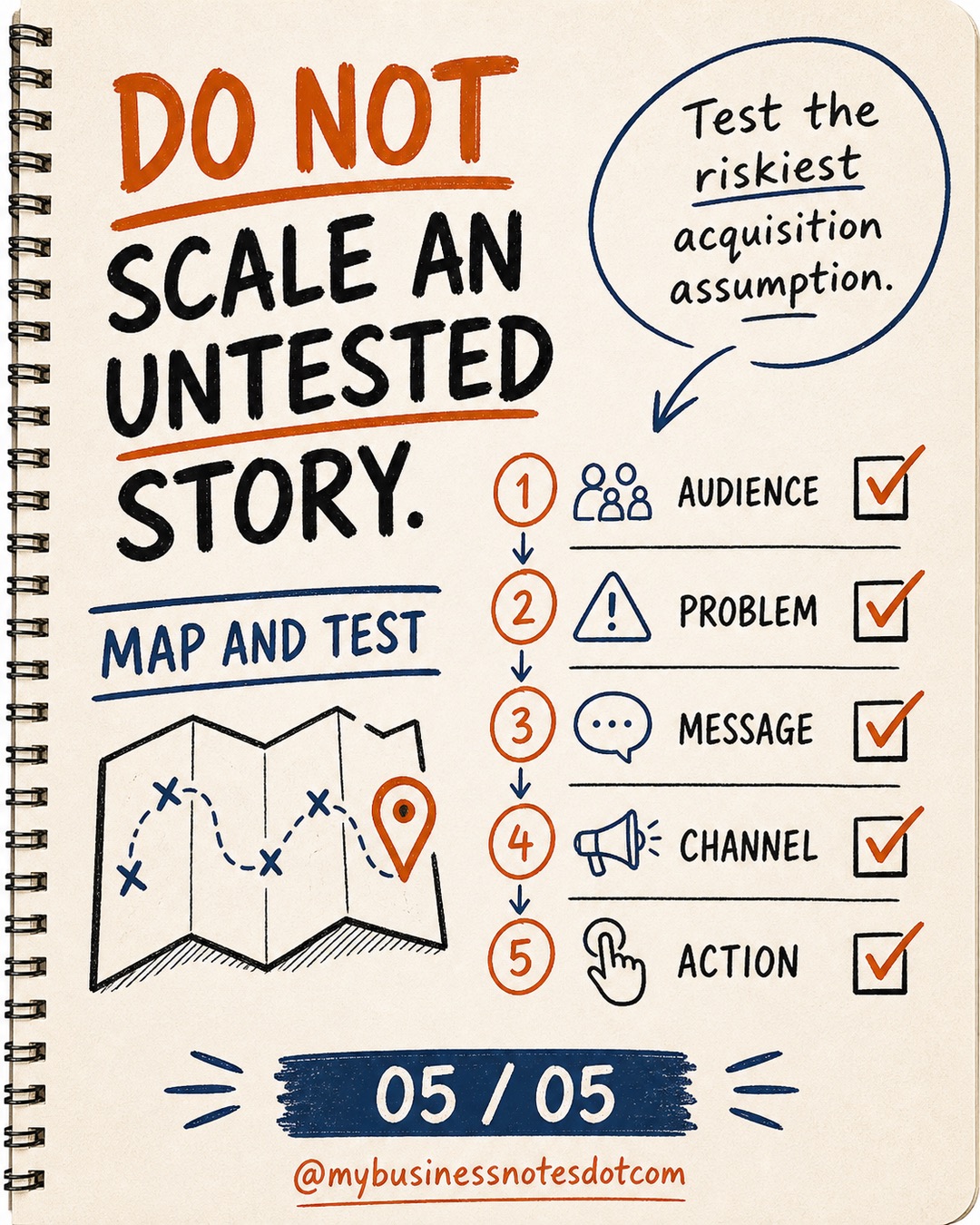
An acquisition assumption map makes the logic behind growth visible. It connects beliefs about audience, problem, message, channel and action, then helps a team test what is important, weakly supported and expensive if wrong. This guide expands the five-slide business note into a practical review with criteria, safeguards and next steps.
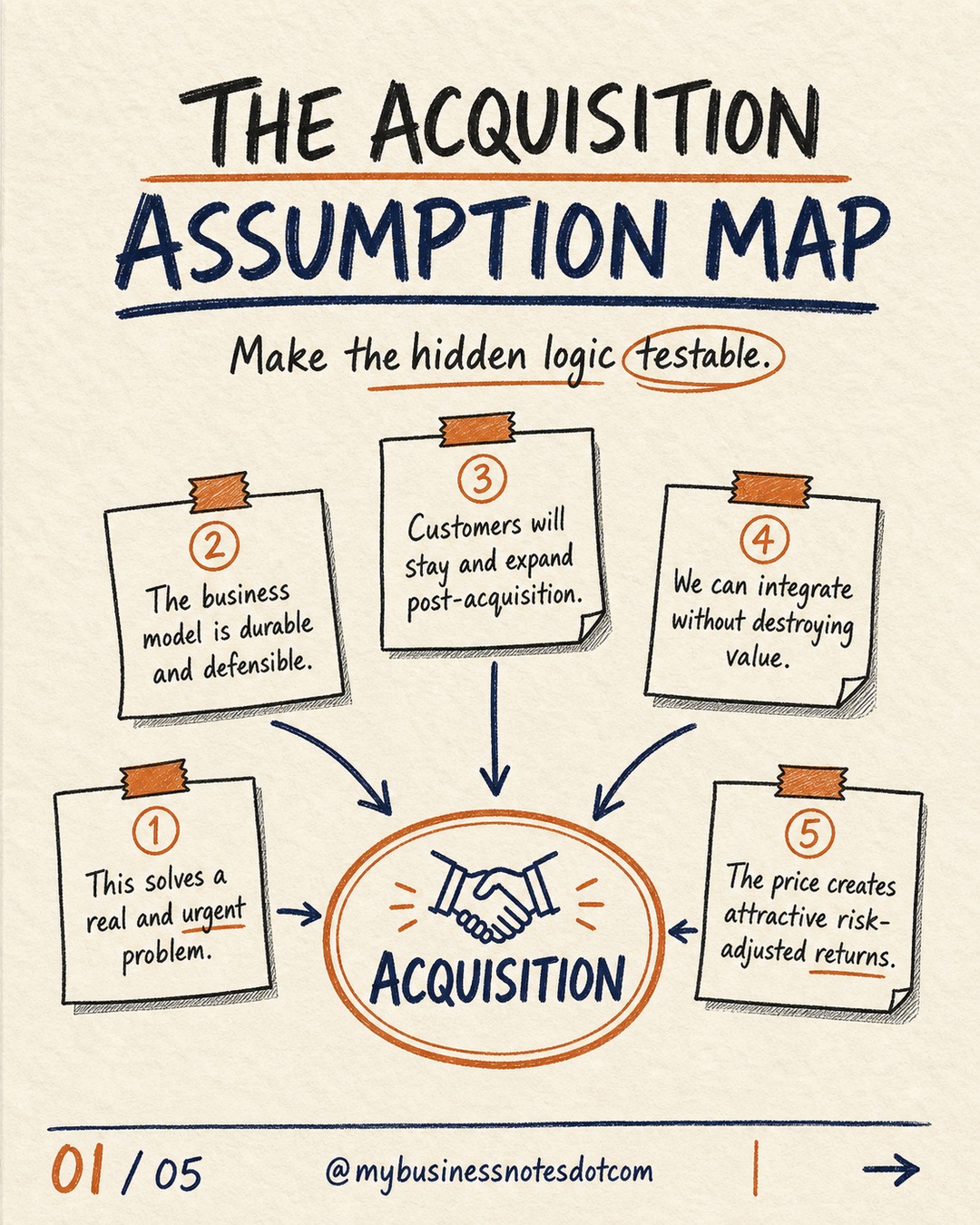
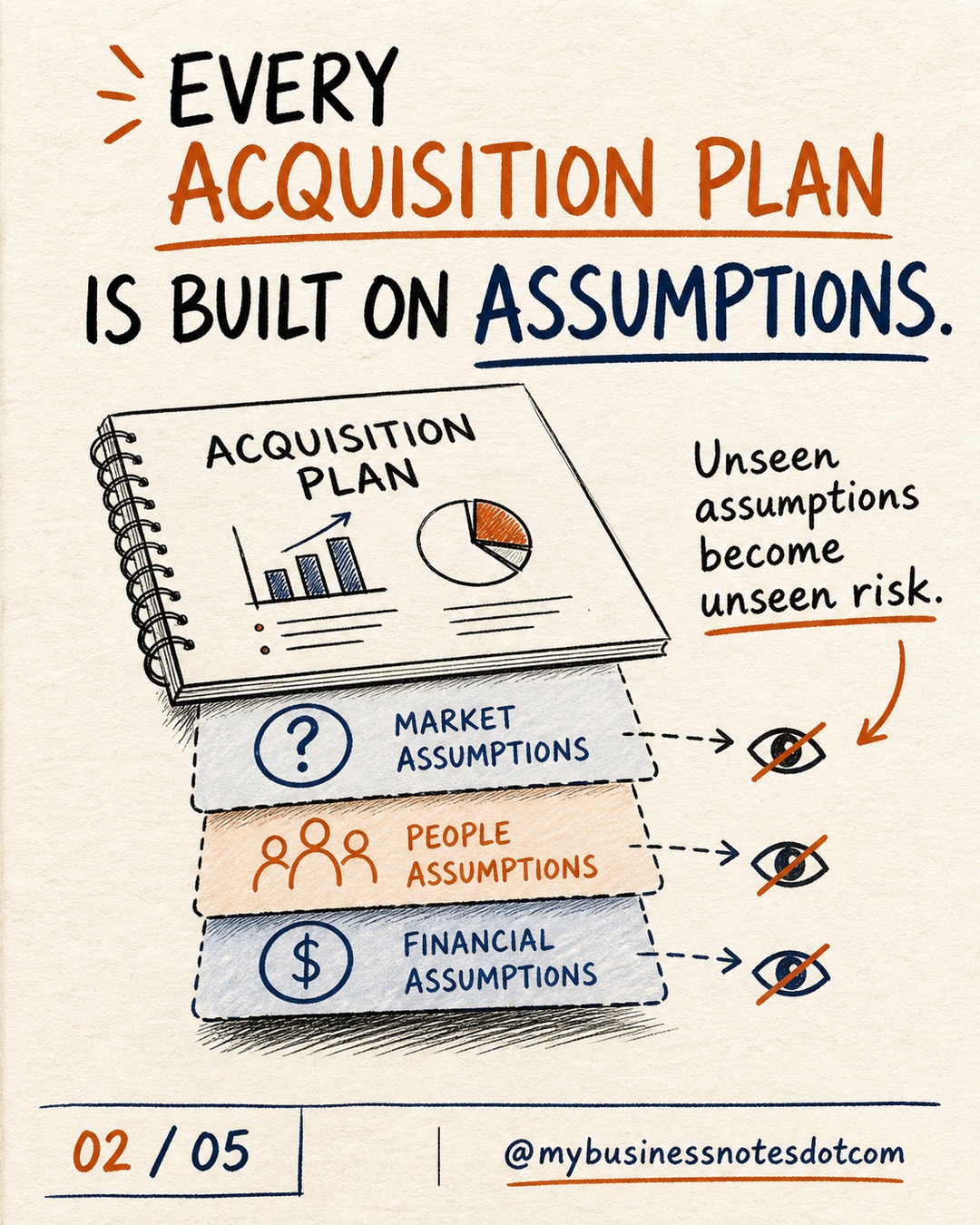
Slide 1 of 5
Write the acquisition chain
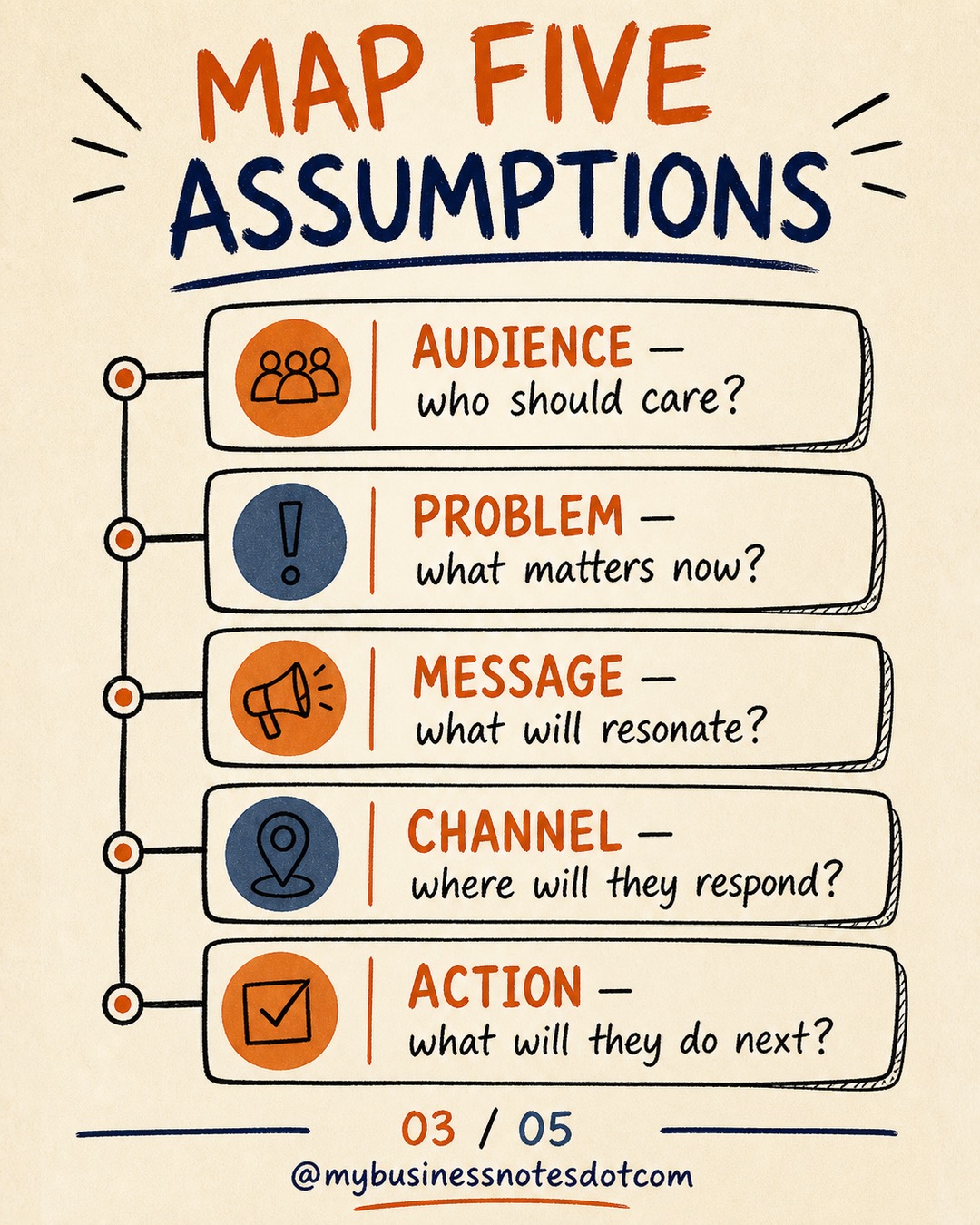
State who the audience is, which problem deserves attention, what message will resonate, where it will be encountered and which next action makes sense. Phrase each link as an assumption rather than a fact.
Attach evidence
For every assumption, record supporting customer conversations, behavioural data, prior experiments or market evidence. Note recency and relevance. A metric may show what happened without explaining why, while an interview may reveal a mechanism without proving prevalence.
Score risk, not confidence theater
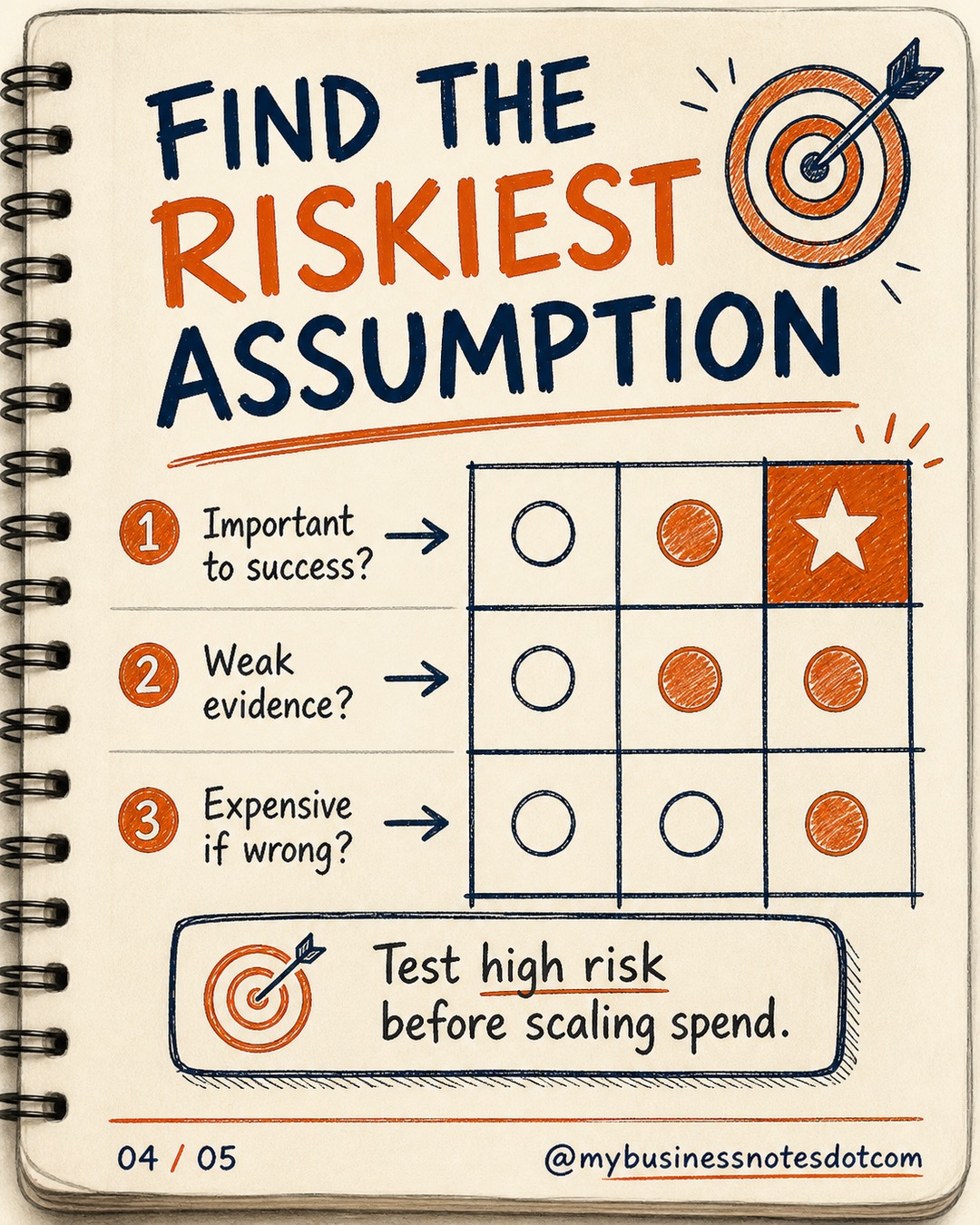
Assess importance to success, strength of evidence and cost if wrong. The priority is usually an assumption that is essential, uncertain and consequentialânot the easiest item to test.
Design a discriminating test
Choose the smallest ethical test that can change a decision. Define the audience, offer or stimulus, expected signal and threshold in advance. A test should distinguish between plausible explanations instead of collecting encouraging activity.
Update the map after learning
Record what the evidence supports, contradicts or leaves unresolved. Change the acquisition plan when warranted and preserve unsuccessful tests. The map becomes useful when it prevents the team from repeatedly treating the same belief as new.
Frequently asked questions
What is an acquisition assumption map?
A visible chain of the beliefs connecting audience, problem, message, channel and action.
Which assumption should be tested first?
Prioritise one that is critical, weakly supported and costly if wrong.
Is a high click-through rate proof?
No. It supports a behavioural observation but may not validate customer value or commercial viability.
How often should the map change?
Update it whenever credible evidence changes a belief or exposes a new dependency.
Put it into practice
Use the framework on one current decision. Record the evidence, owner, next action and review date before expanding the scope.
Download the complete carousel
Keep the five-slide framework as a PDF for your next working session.
International references
- McKinsey & Company â The B2B omnichannel opportunity
- Think with Google â The messy middle of the purchase journey
- Nielsen Norman Group â Recognition rather than recall
- Google re:Work â Understand team effectiveness
- Atlassian â Roles and responsibilities
- Harvard Business Review â The discipline of business experimentation
- Christensen Institute â Jobs to Be Done Theory
- Strategyzer â The Value Proposition Canvas
- GOV.UK Service Manual â Understand users and their needs
- Salesforce â Customer success
- Lean Enterprise Institute â What is lean thinking?
- MIT Sloan Management Review â Why companies fail at digital transformation