

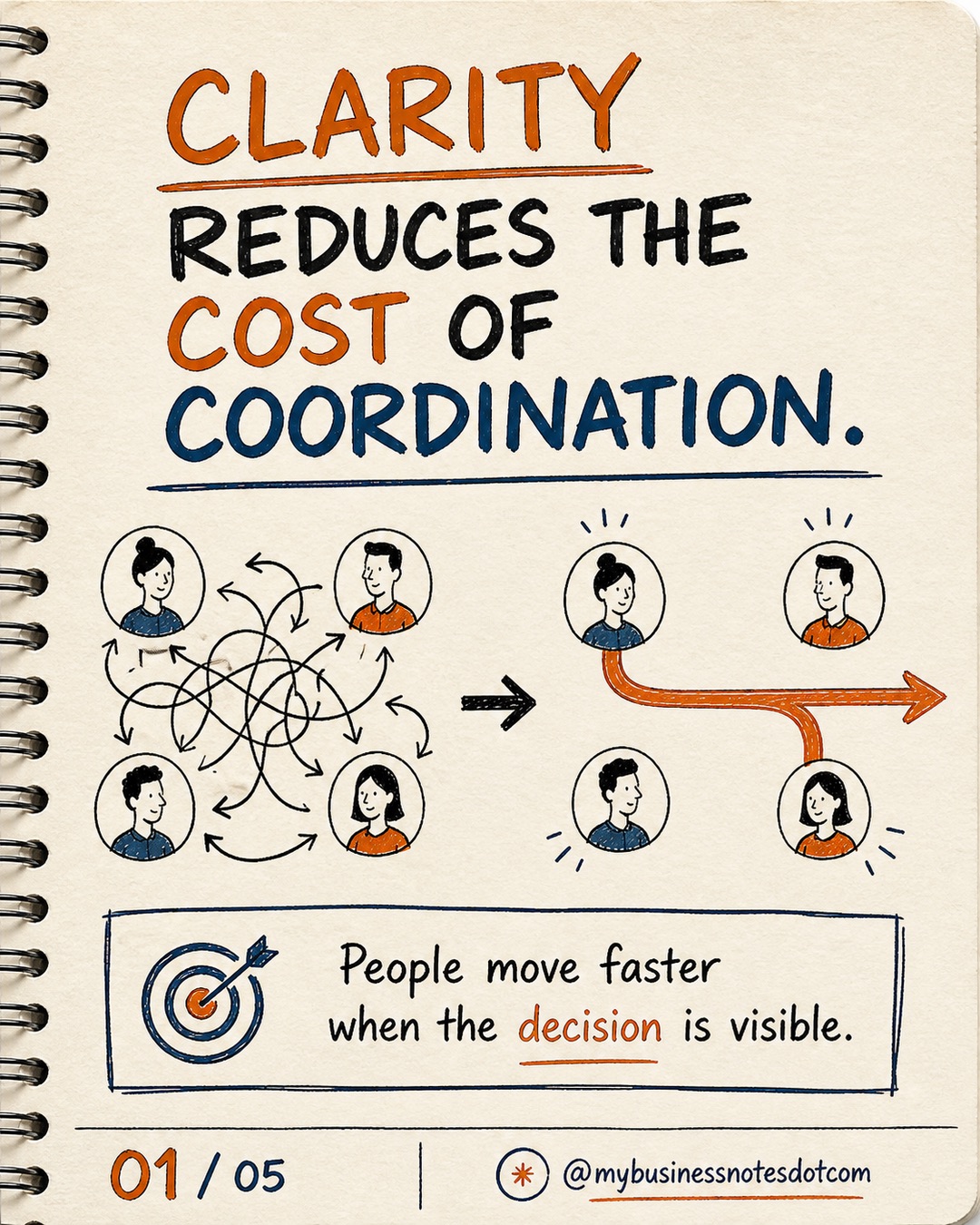
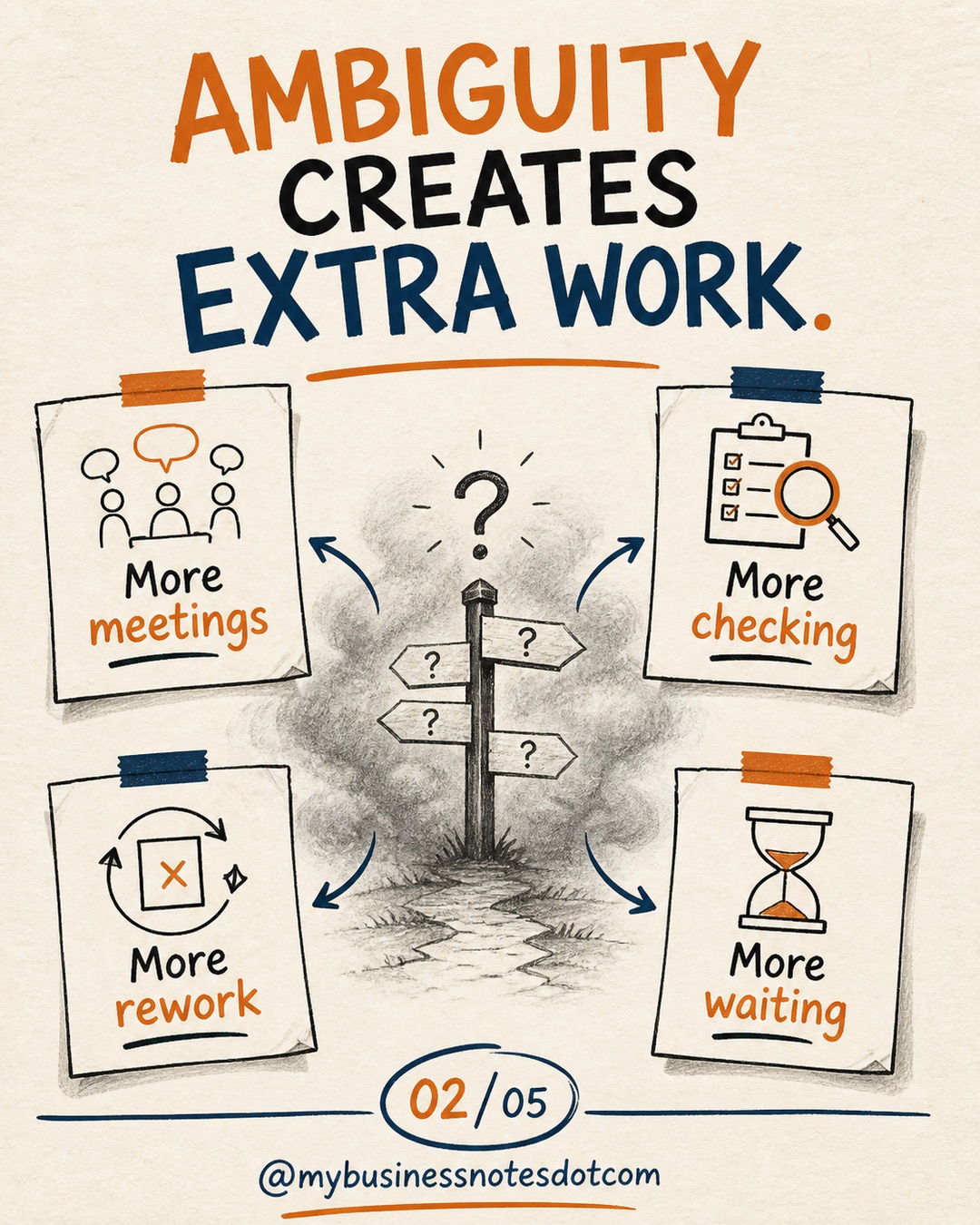
Coordination cost is the time and effort required for people to align work, resolve dependencies and make decisions. Clear outcomes, ownership and interfaces reduce avoidable meetings, rework and waiting. This guide turns the five-slide business note into a practical review with criteria, examples and safeguards.
Slide 1 of 5
See the hidden work around the work
Coordination becomes expensive when people repeatedly ask who owns a decision, which version is current or what âdoneâ means. The cost appears as delay, duplicated effort, handoff failures and management attention consumed by clarification.
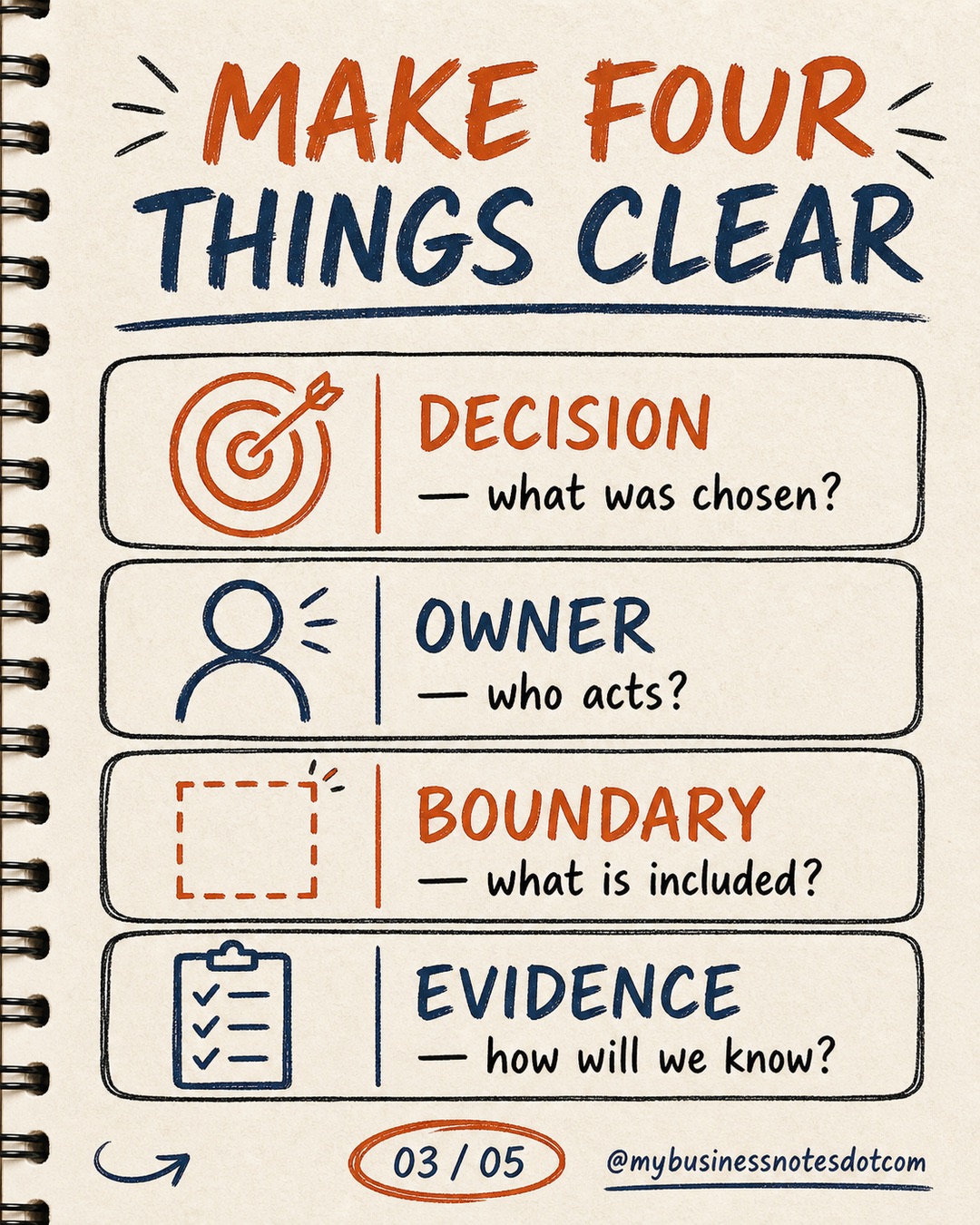
Clarify five elements
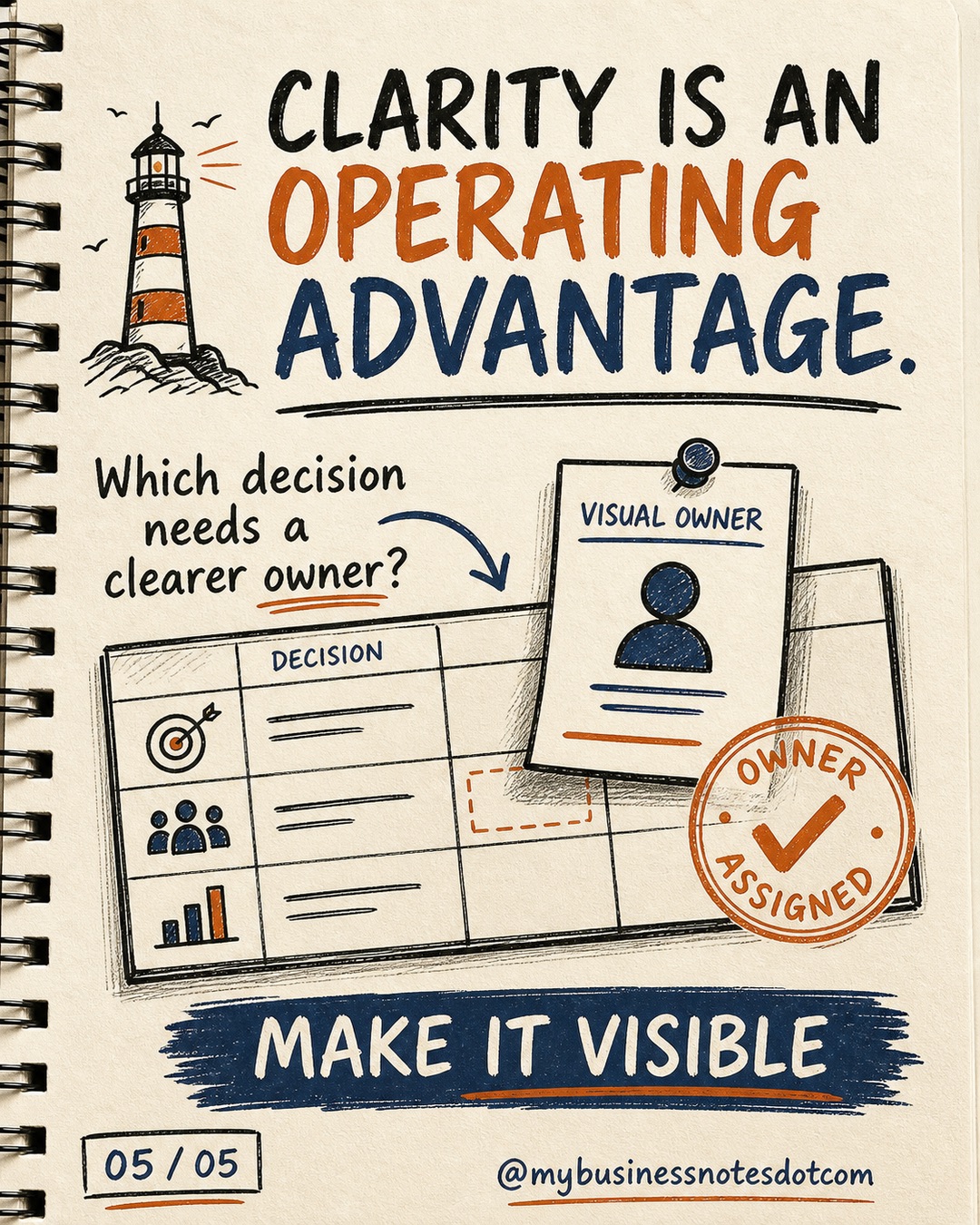
Define the desired outcome, accountable owner, contributors, decision rights and evidence of completion. These elements should be visible where the work happens, not buried in a presentation that the team rarely opens.
Design interfaces between teams
Most ambiguity appears at boundaries. Specify what one team provides, what the next team needs, when the handoff occurs and how exceptions are handled. A clear interface preserves autonomy while reducing negotiation for routine work.
Use fewer meetings with better inputs
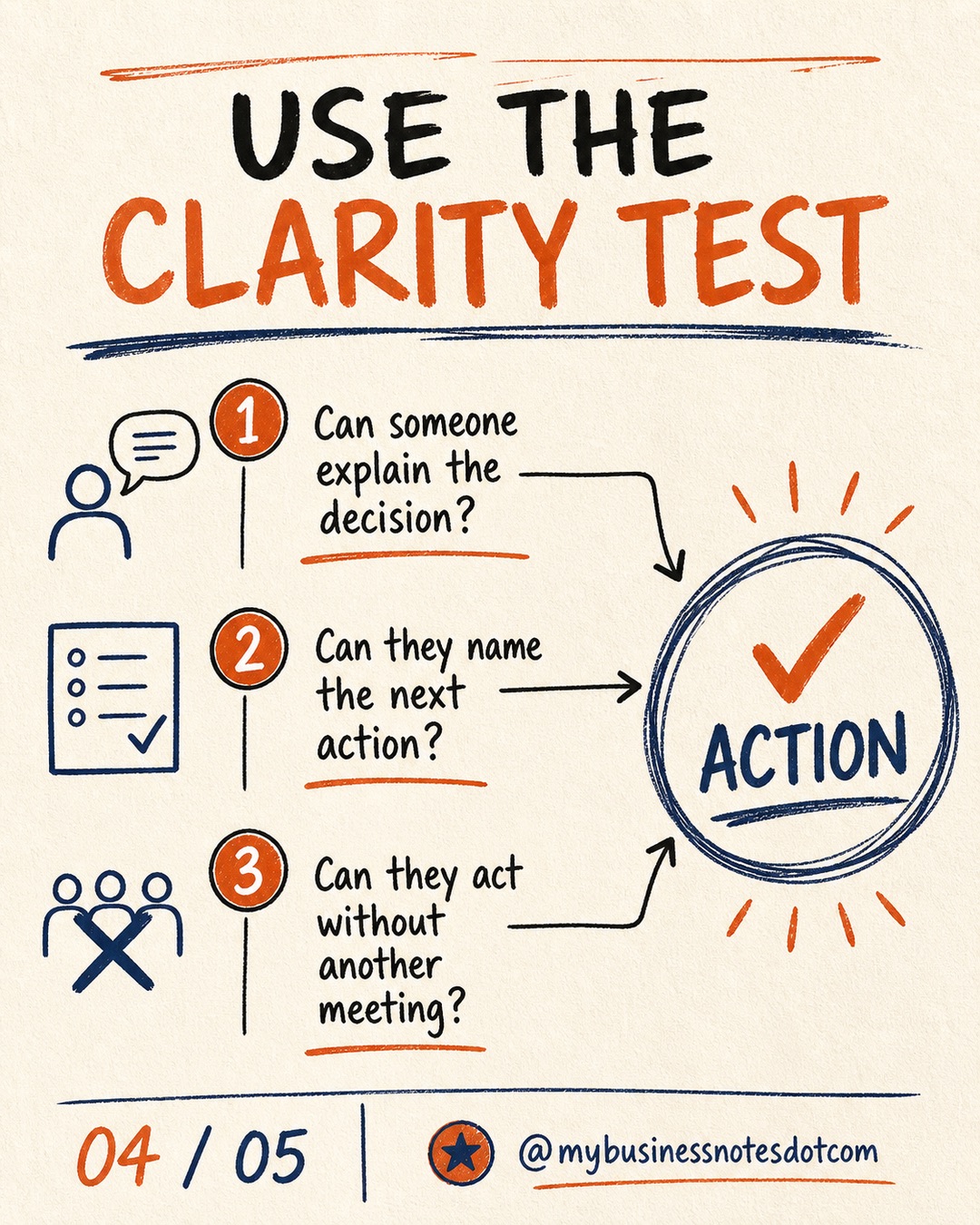
A meeting should resolve a decision, coordinate a dependency or learn from evidence. Share context before the meeting, name the decision and record the owner and next review date. Status that needs no discussion can be asynchronous.
Keep clarity current
Roles and priorities change. Review the operating agreement when the work, risk or participants change. Clarity is not excessive documentation; it is enough shared understanding for people to act without repeatedly rebuilding context.
Frequently asked questions
What is coordination cost?
The effort required to align people, information, dependencies and decisions so work can progress.
Does clarity require more documentation?
Not necessarily. A concise visible agreement can replace repeated explanations and meetings.
Who should own cross-team work?
One accountable owner should coordinate the outcome while contributors retain ownership of their parts.
How can coordination cost be measured?
Use indicators such as waiting time, rework, handoff defects and repeated clarification.
Put it into practice
Apply the framework to one current decision. Record the evidence, owner, next action and review date.
Download the complete carousel
Keep the five-slide framework as a PDF for your next working session.
International references
- Salesforce â Sales pipeline management
- Salesforce Trailhead â Opportunity management
- McKinsey & Company â The B2B customer decision journey
- McKinsey & Company â B2B omnichannel opportunity
- Christensen Institute â Jobs to Be Done Theory
- Strategyzer â Value Proposition Canvas
- Harvard Business Review â The discipline of business experimentation
- Harvard Business Review â Why organizations do not learn
- Google re:Work â Guide: Understand team effectiveness
- Atlassian â Roles and responsibilities
- Content Marketing Institute â Case study content
- Nielsen Norman Group â Recognition rather than recall