
A lost deal review is a structured examination of why a customer chose another path. Its purpose is not to assign blame or invent a single cause, but to improve the next qualification, conversation and decision. This guide turns the five-slide business note into a practical review with criteria, examples and safeguards.
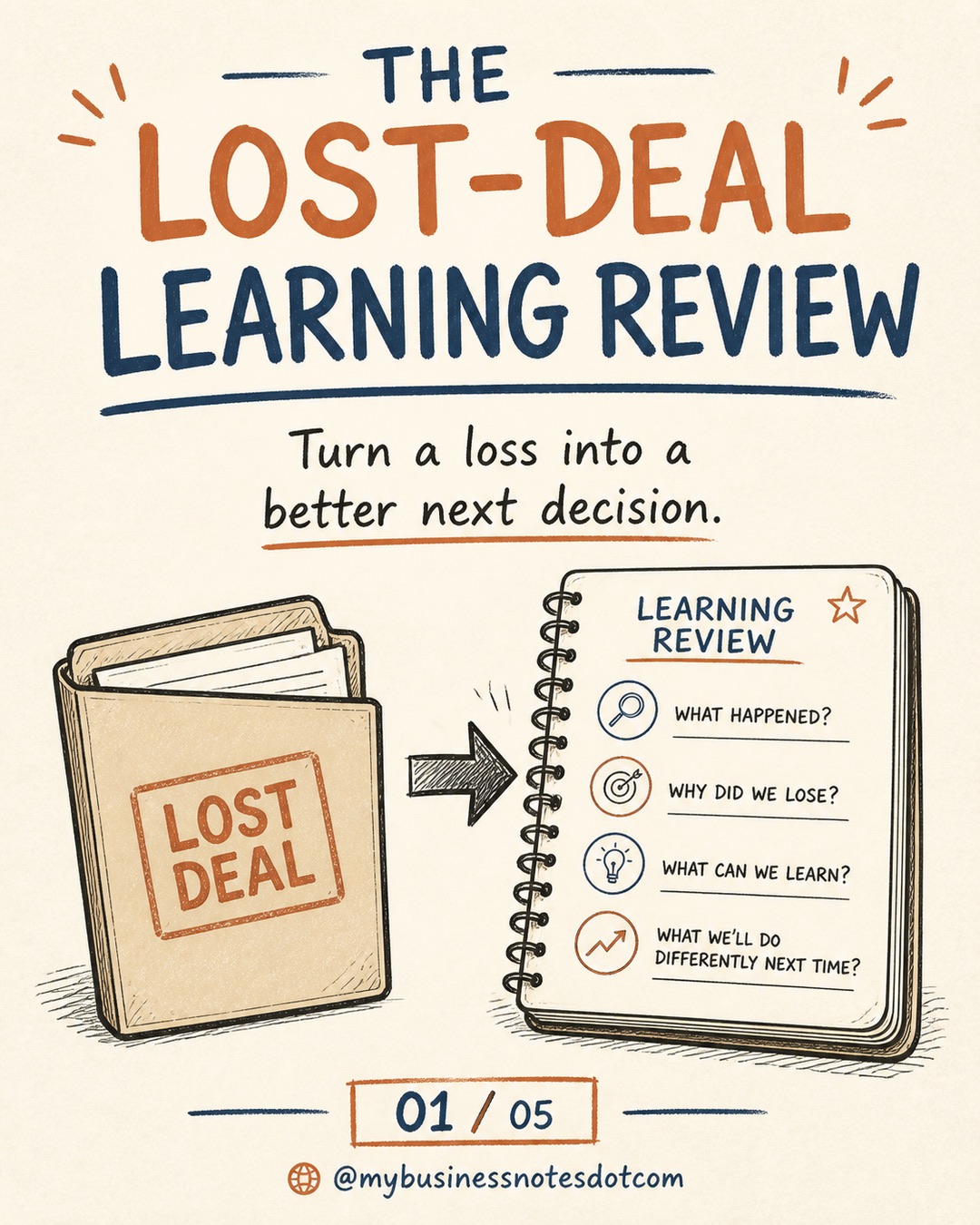
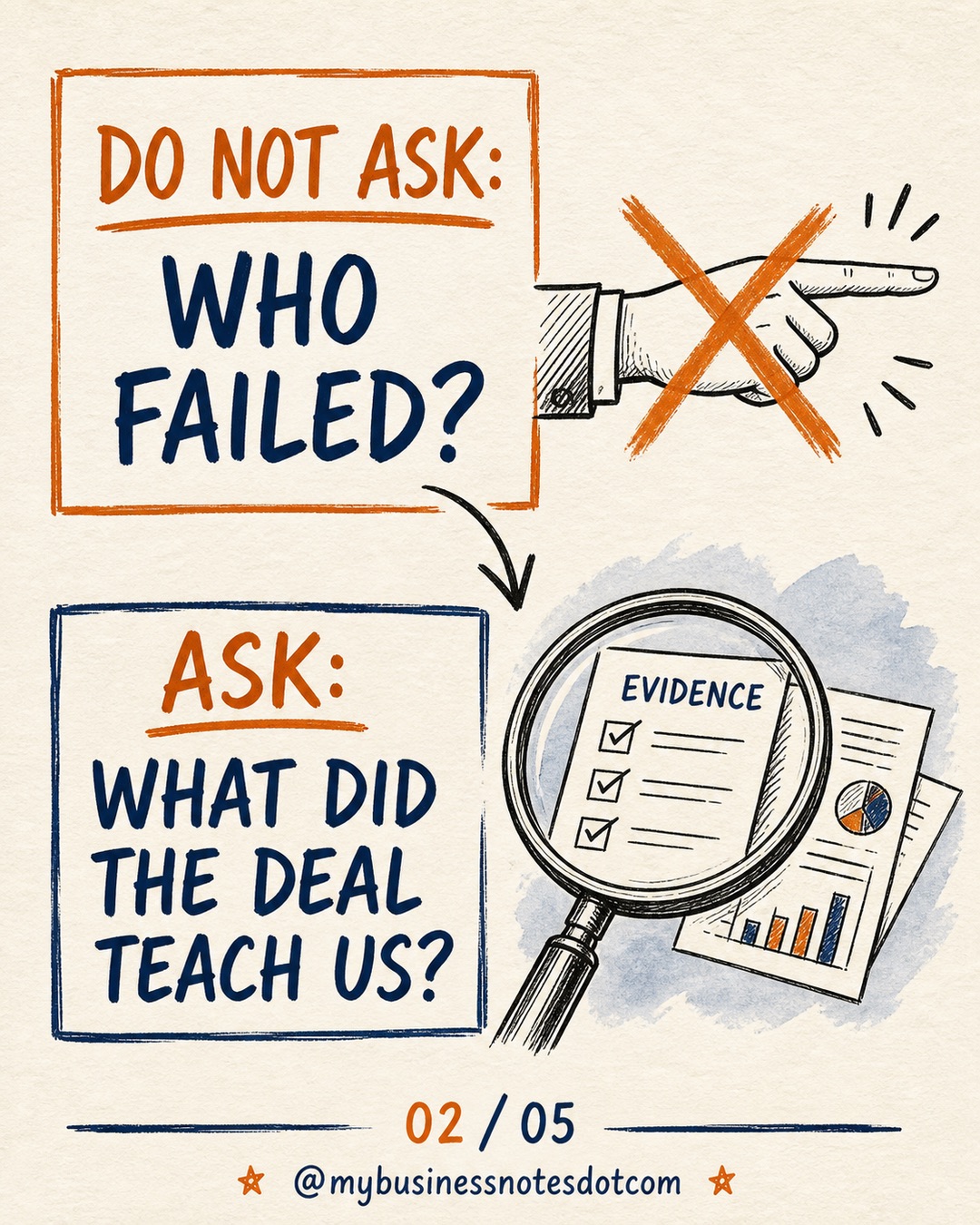
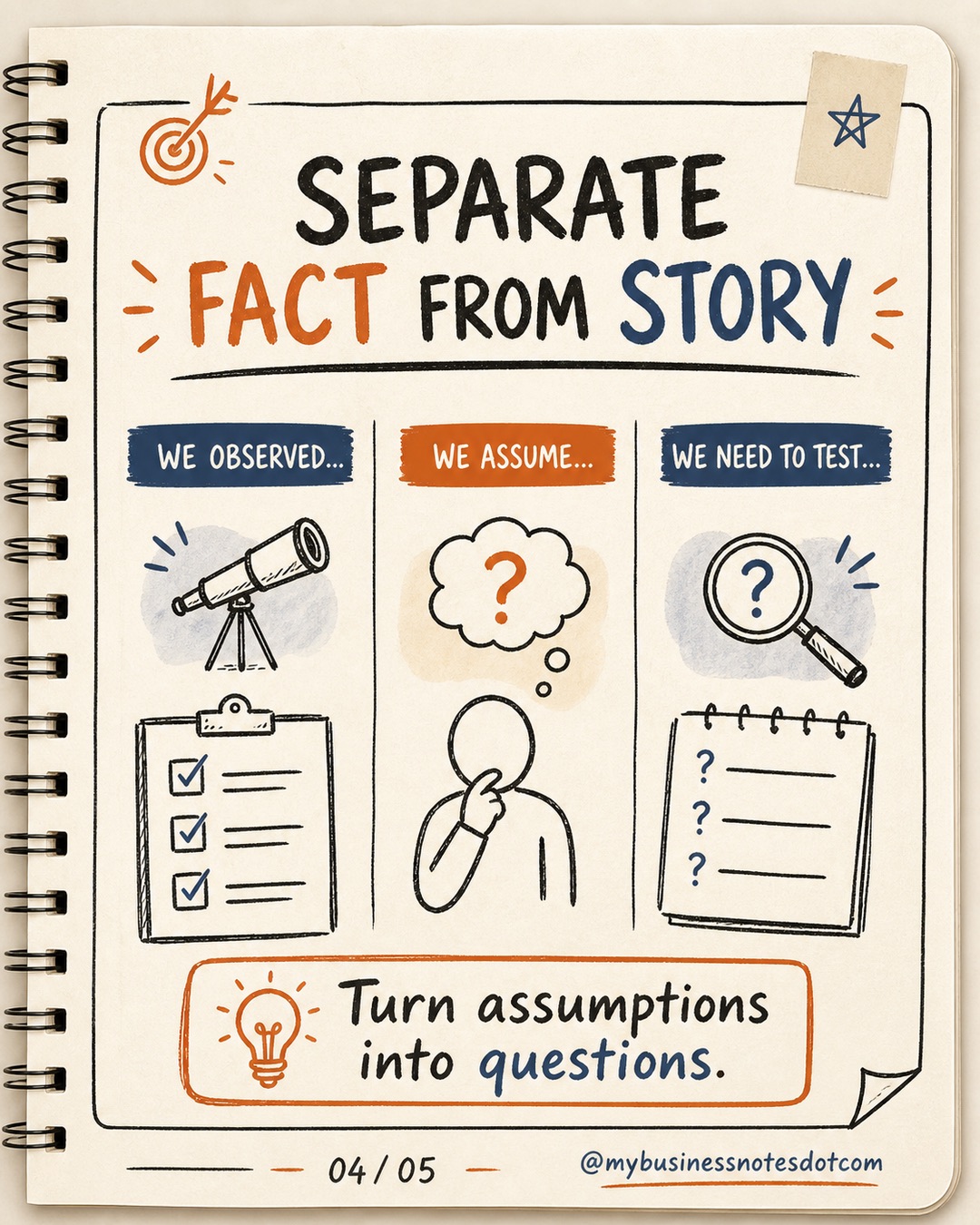
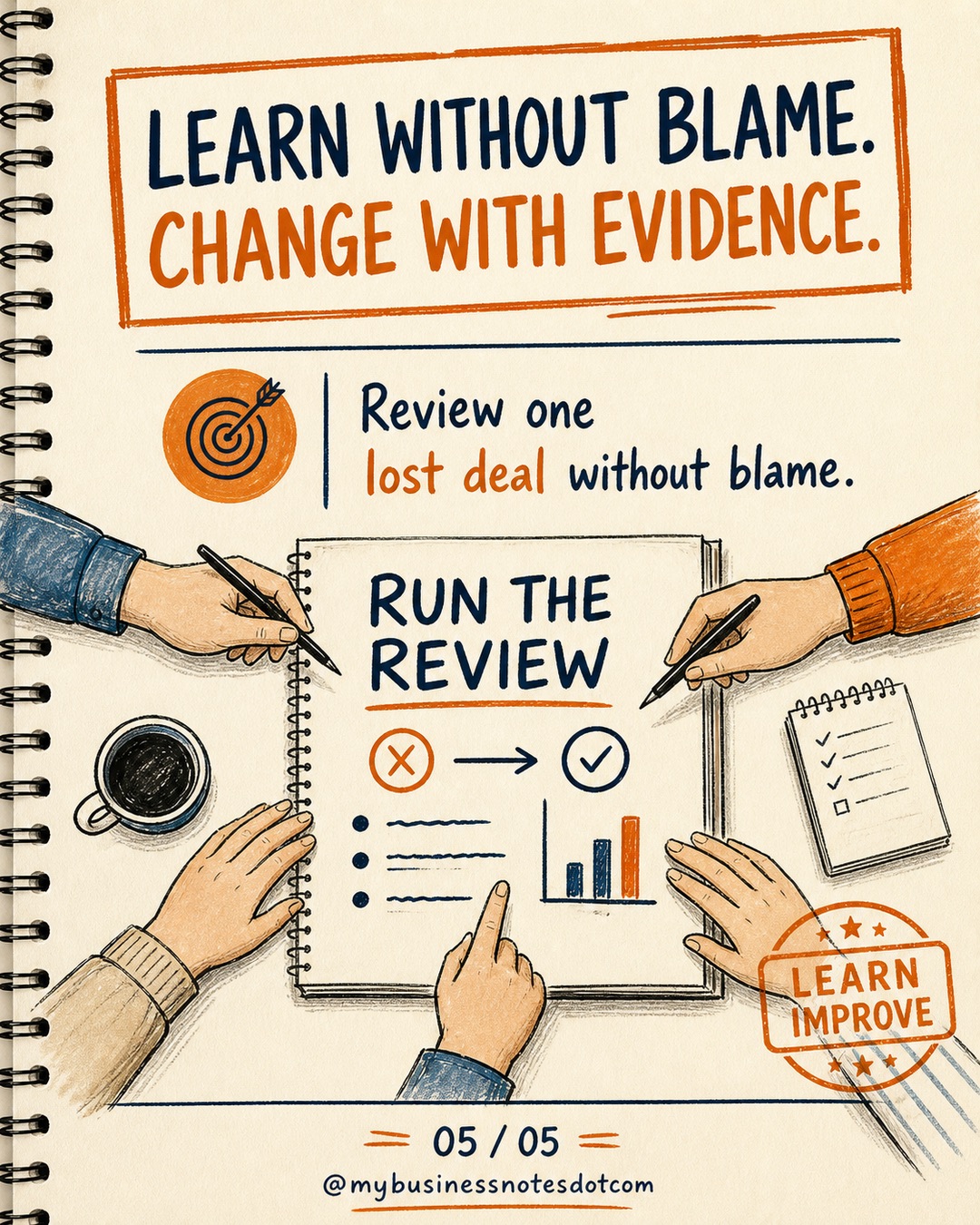
Slide 1 of 5
Start with evidence, not a verdict
Collect CRM notes, messages, proposal versions, meeting records and the customerâs stated decision. Separate direct observations from interpretations. A buyerâs final explanation may be useful, but it can still simplify a decision shaped by several stakeholders and alternatives.
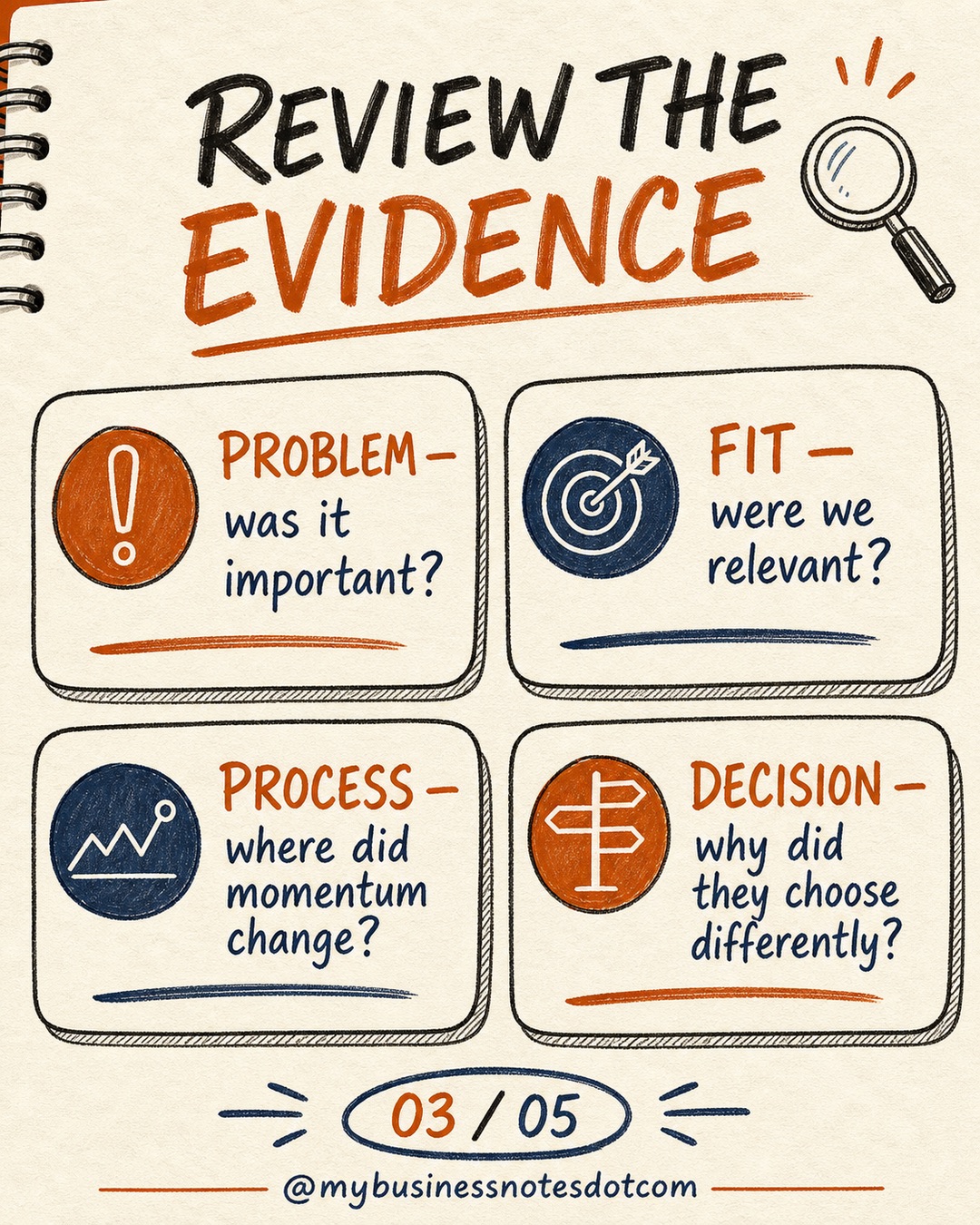
Review four dimensions
Examine the customer problem, the fit between the offer and desired progress, the buying process and the final decision. Ask what changed, which criteria mattered, who influenced the choice and what the team learned too late.
Invite the customer without pressure
When appropriate, request a brief learning conversation. Explain that the decision will be respected and that the goal is to improve. Use neutral questions about criteria, confidence, risks and alternatives; do not reopen the sale disguised as research.
Turn conclusions into testable changes
Translate each credible finding into a bounded change: a better discovery question, earlier stakeholder mapping, clearer proof or a revised qualification rule. One lost deal is a signal, not proof that the whole market changed.
Create a recurring learning loop
Review patterns across several losses by segment, offer and stage. Preserve contradictory evidence. Assign an owner and a review date to each experiment so the retrospective changes practice rather than becoming a report archive.
Frequently asked questions
What is a lost deal review?
A structured review of evidence about why an opportunity did not progress or was awarded elsewhere.
Should sales contact every lost prospect?
No. Contact should be appropriate to the relationship and framed as learning, without pressure.
Is price usually the real reason?
Sometimes, but price can also summarise concerns about value, risk, fit or confidence.
How many losses reveal a pattern?
There is no universal number; look for repeated evidence within comparable deals.
Put it into practice
Apply the framework to one current decision. Record the evidence, owner, next action and review date.
Download the complete carousel
Keep the five-slide framework as a PDF for your next working session.
International references
- Salesforce â Sales pipeline management
- Salesforce Trailhead â Opportunity management
- McKinsey & Company â The B2B customer decision journey
- McKinsey & Company â B2B omnichannel opportunity
- Christensen Institute â Jobs to Be Done Theory
- Strategyzer â Value Proposition Canvas
- Harvard Business Review â The discipline of business experimentation
- Harvard Business Review â Why organizations do not learn
- Google re:Work â Guide: Understand team effectiveness
- Atlassian â Roles and responsibilities
- Content Marketing Institute â Case study content
- Nielsen Norman Group â Recognition rather than recall