

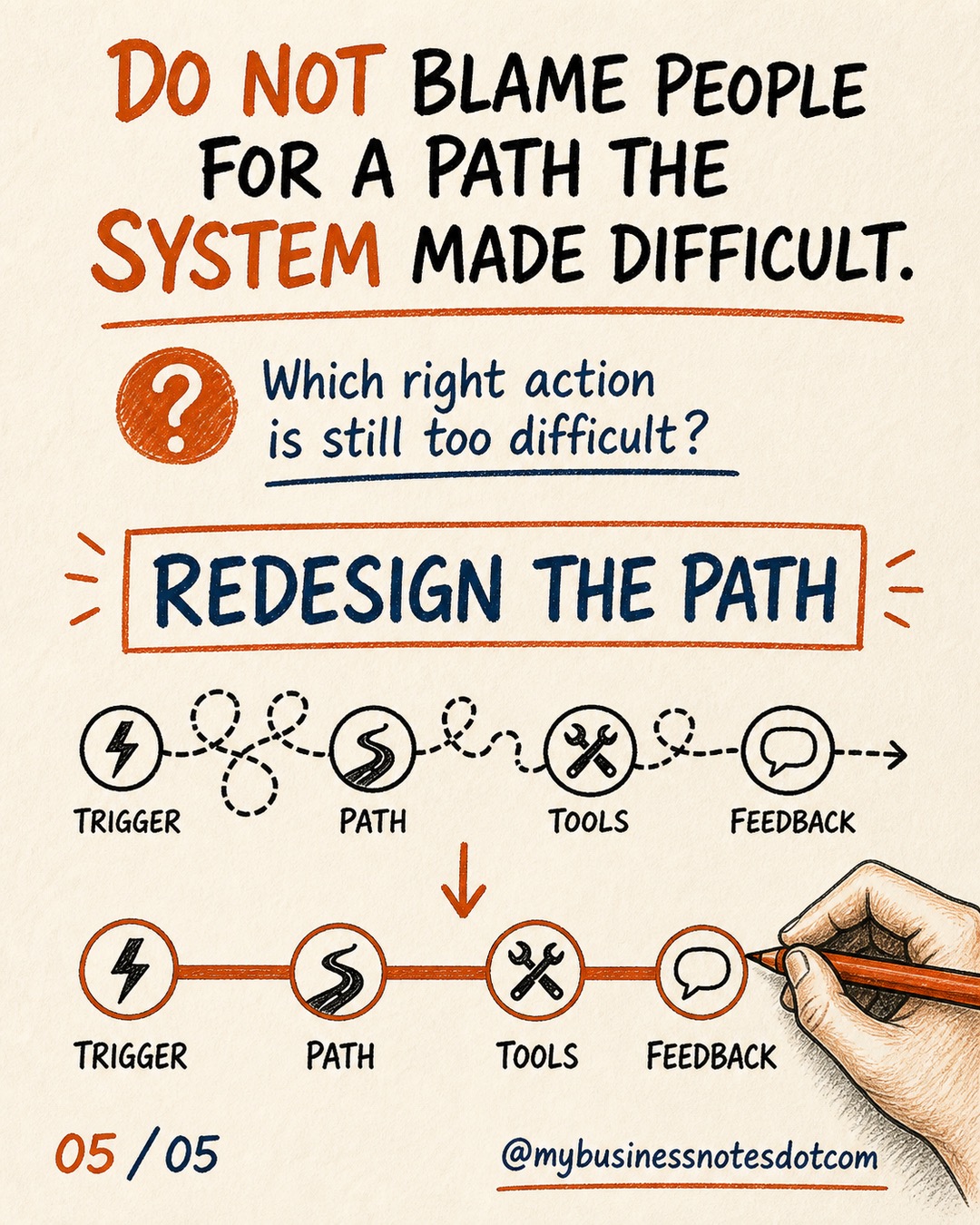
Good process design makes the desired action easier, clearer and more reliable. It does not rely on reminders or heroic effort; it shapes the trigger, path, tools, ownership and feedback around the work. This guide expands the five-slide business note into a practical review with criteria, safeguards and next steps.
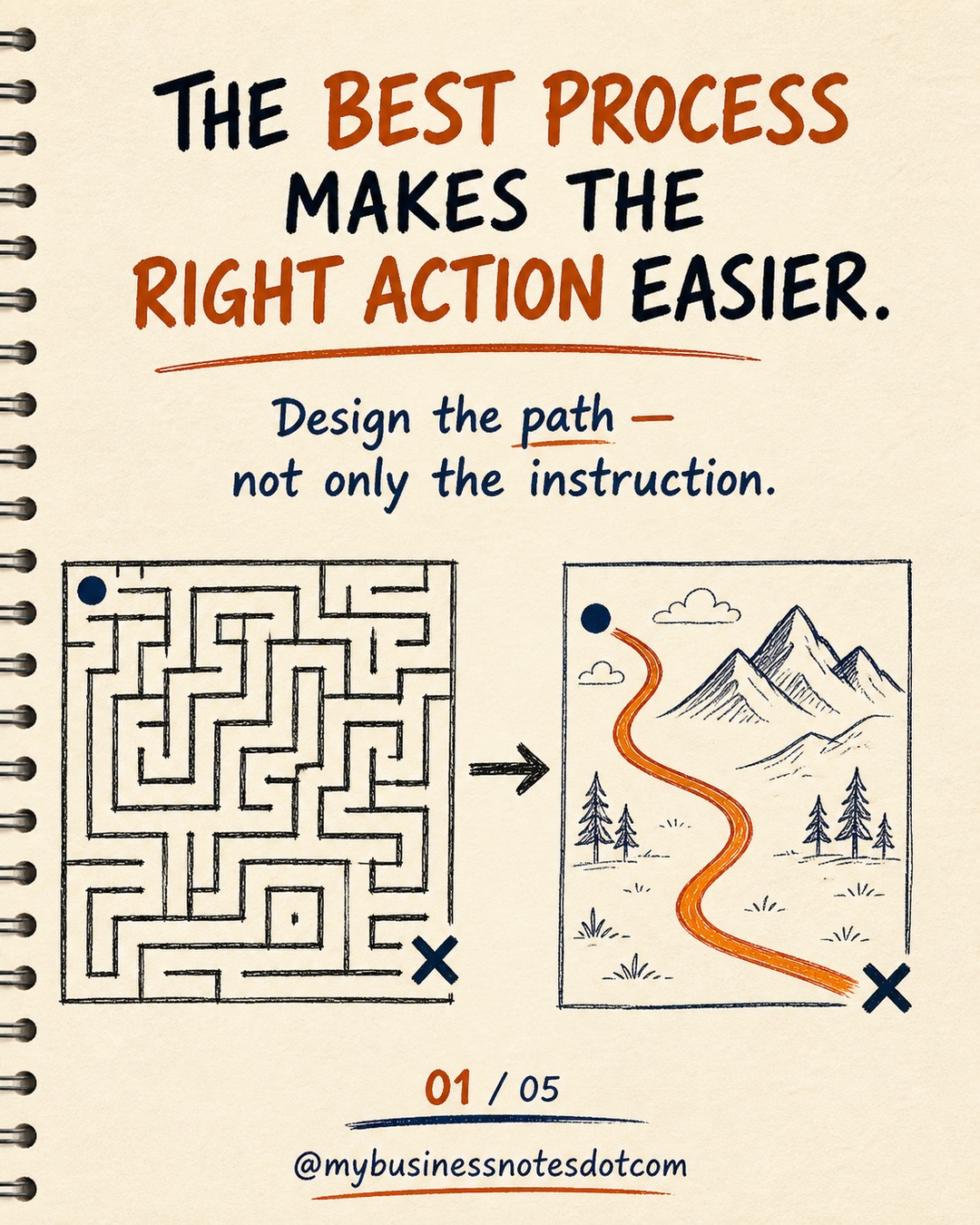
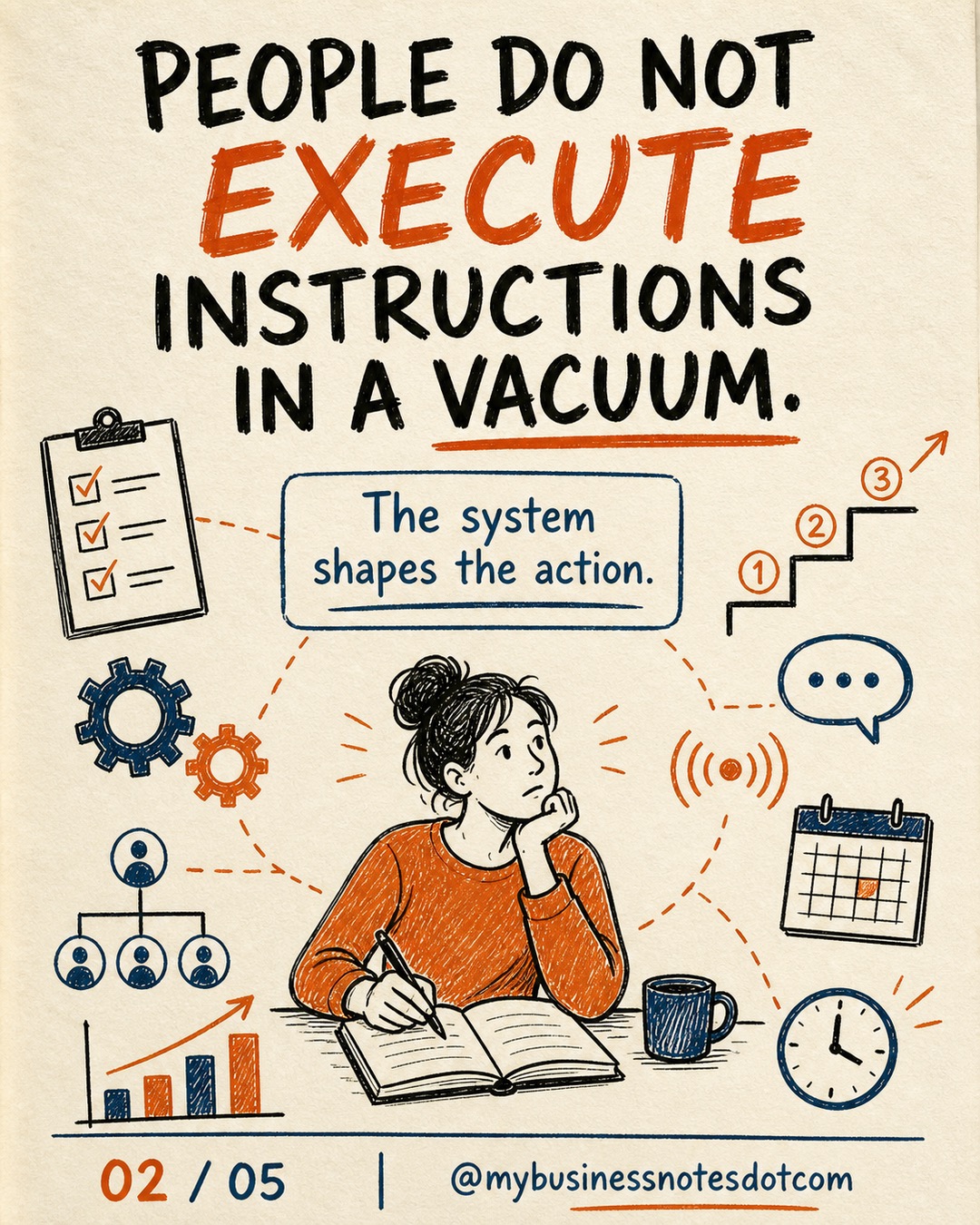
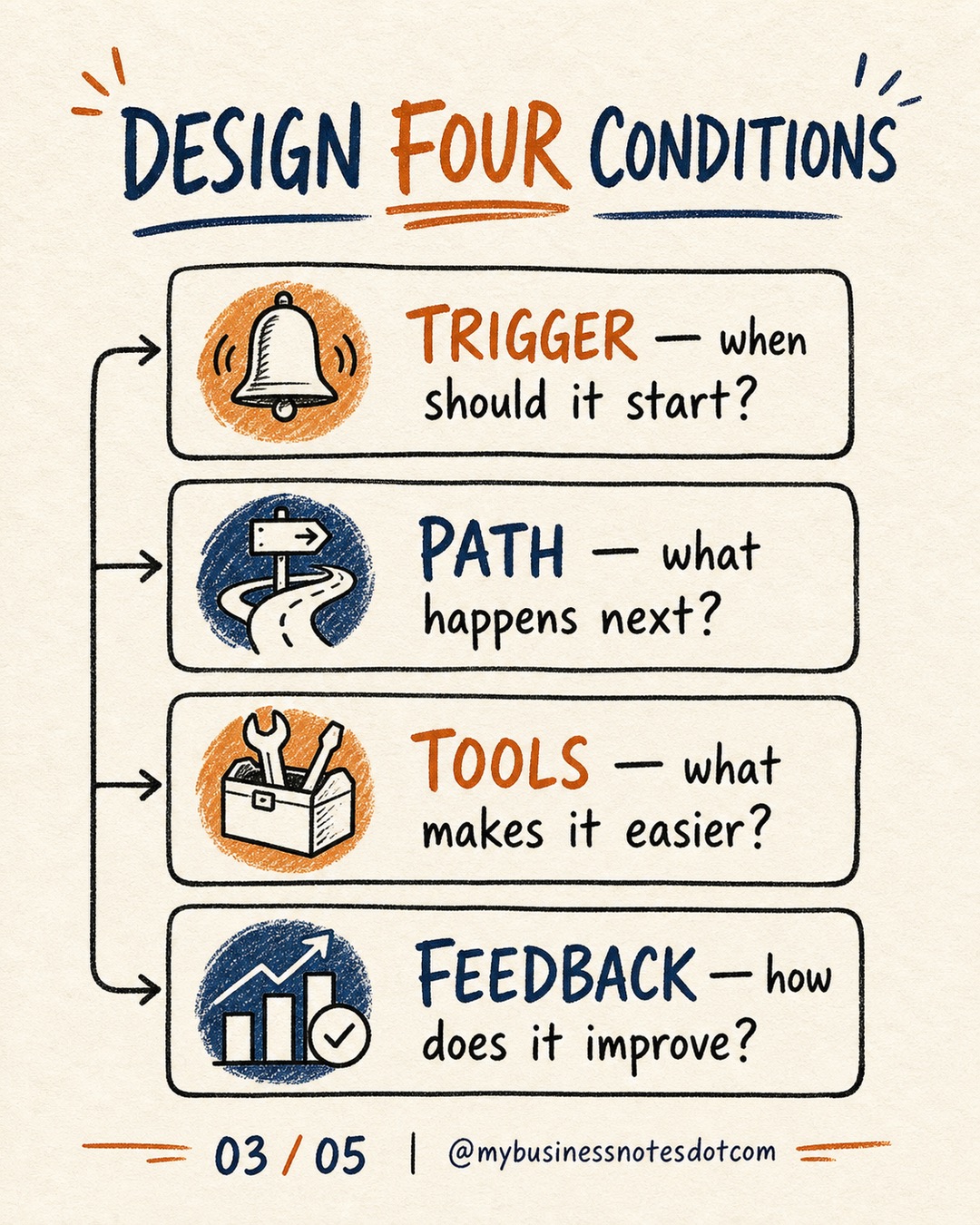
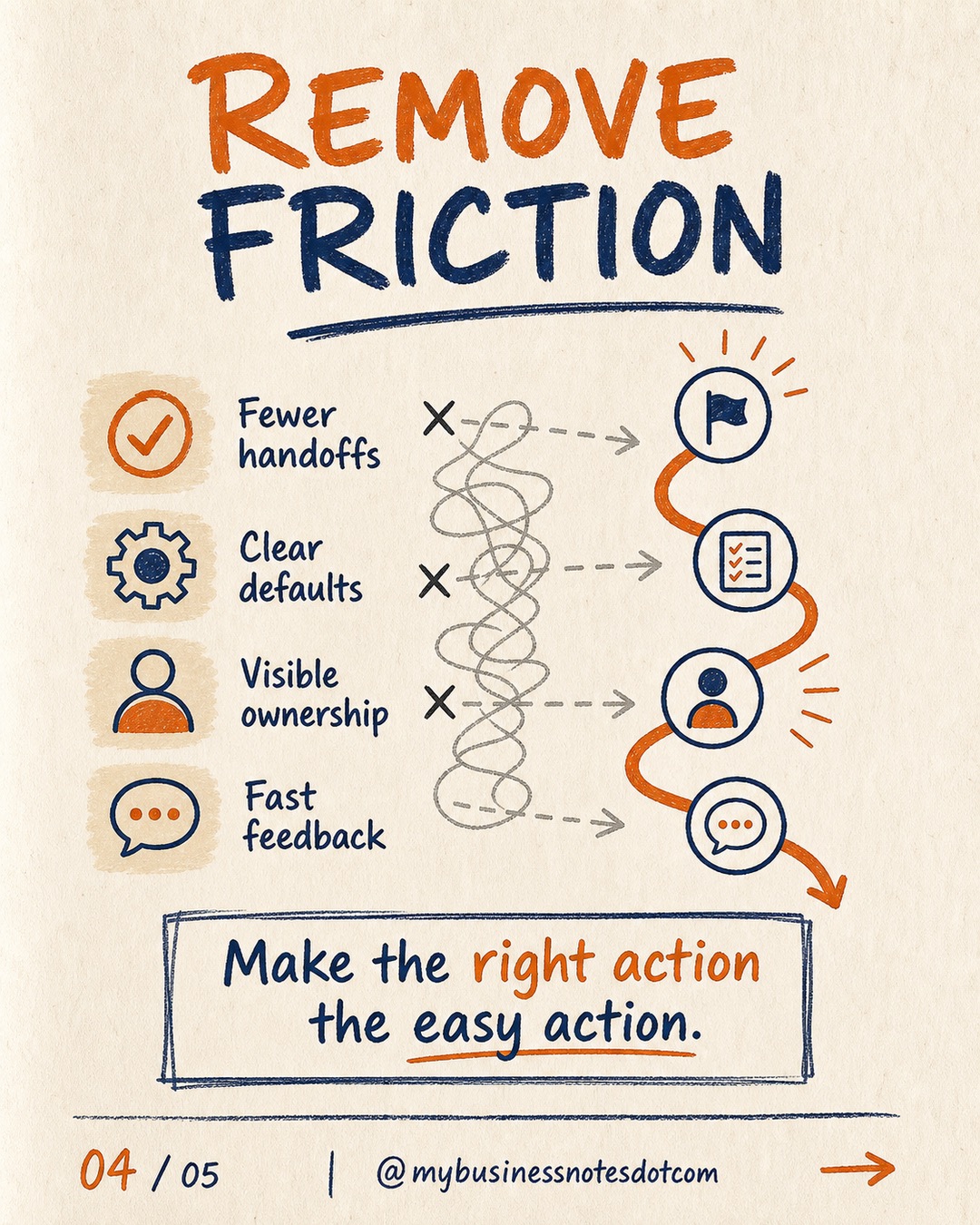
Slide 1 of 5
Start with the observable action
Replace vague ambitions such as âimprove qualityâ with a behaviour that can be seen: confirm requirements before a proposal, record a decision after a meeting, or review evidence before approving a launch.
Follow the work as it happens
Observe the current path from trigger to completion. Note waiting, searching, duplicate entry, unclear approvals and exceptions. People often create informal workarounds because the official process does not fit the situation.
Remove friction before adding control
Put information where the decision occurs, reduce unnecessary handoffs and set sensible defaults. A checklist can help a complex task, but it cannot repair missing authority, unavailable data or a tool that works against the sequence.
Clarify ownership and feedback
Name who acts, who decides and who helps when the normal path fails. Give people timely feedback about whether the action produced the intended result. Without feedback, compliance can continue while outcomes deteriorate.
Test the smallest useful redesign
Change one high-friction element, define a leading indicator and compare results. Include the people doing the work in the review. Standardise what proves useful, while preserving a documented route for legitimate exceptions.
Frequently asked questions
What is process design?
The deliberate shaping of activities, decisions, roles and information needed to produce an outcome.
Should every process be standardised?
No. Standardise repeatable elements and preserve judgement where variation is essential.
Why do people bypass processes?
Common causes include excessive friction, unclear value, missing information and unrealistic sequencing.
How do you know a redesign worked?
Look for better outcomes plus less waiting, rework, error and unnecessary effort.
Put it into practice
Use the framework on one current decision. Record the evidence, owner, next action and review date before expanding the scope.
Download the complete carousel
Keep the five-slide framework as a PDF for your next working session.
International references
- McKinsey & Company â The B2B omnichannel opportunity
- Think with Google â The messy middle of the purchase journey
- Nielsen Norman Group â Recognition rather than recall
- Google re:Work â Understand team effectiveness
- Atlassian â Roles and responsibilities
- Harvard Business Review â The discipline of business experimentation
- Christensen Institute â Jobs to Be Done Theory
- Strategyzer â The Value Proposition Canvas
- GOV.UK Service Manual â Understand users and their needs
- Salesforce â Customer success
- Lean Enterprise Institute â What is lean thinking?
- MIT Sloan Management Review â Why companies fail at digital transformation