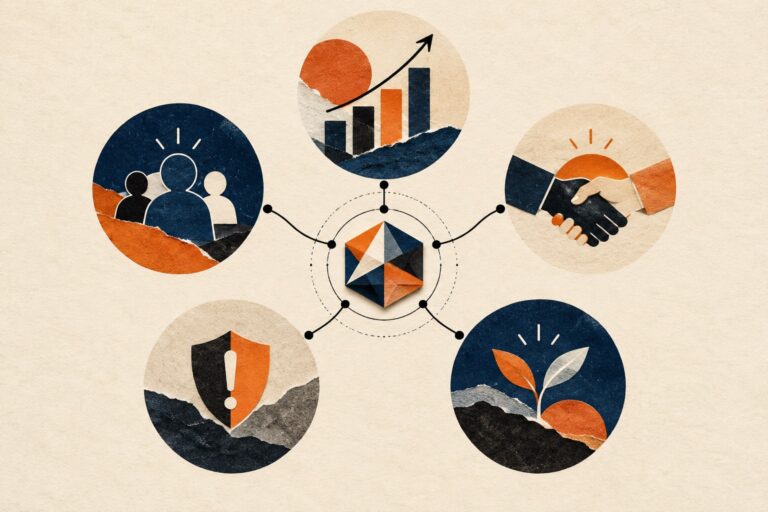

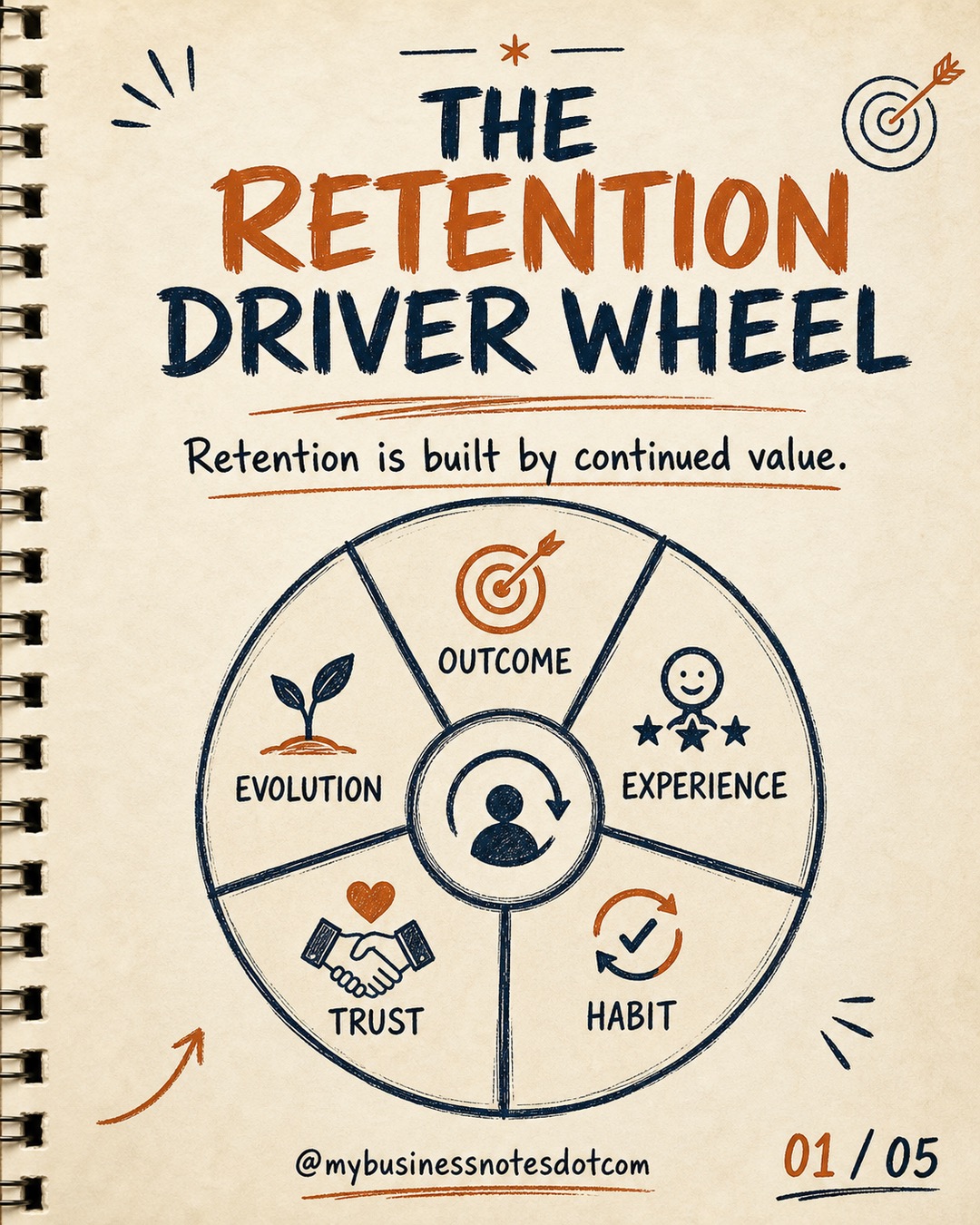
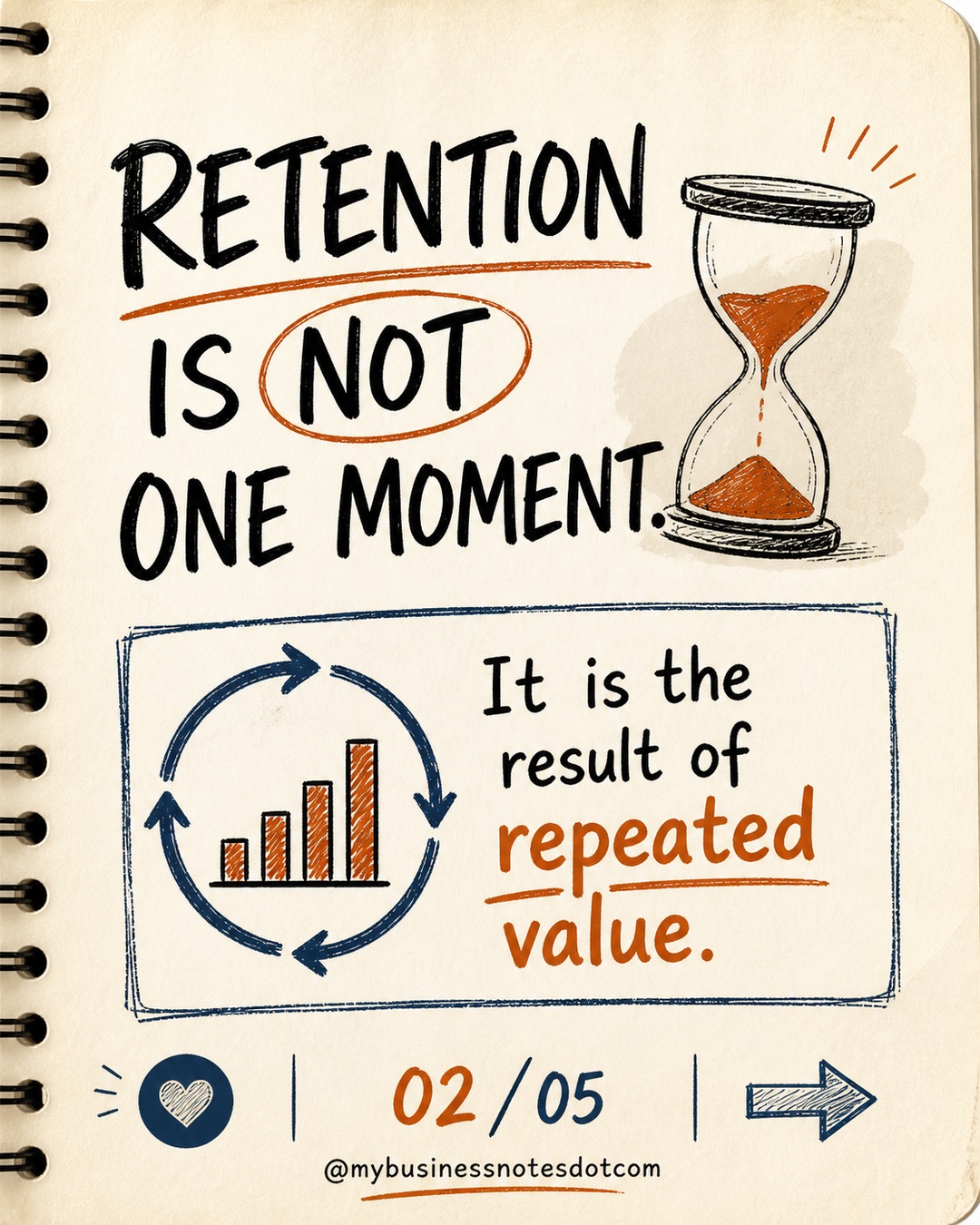
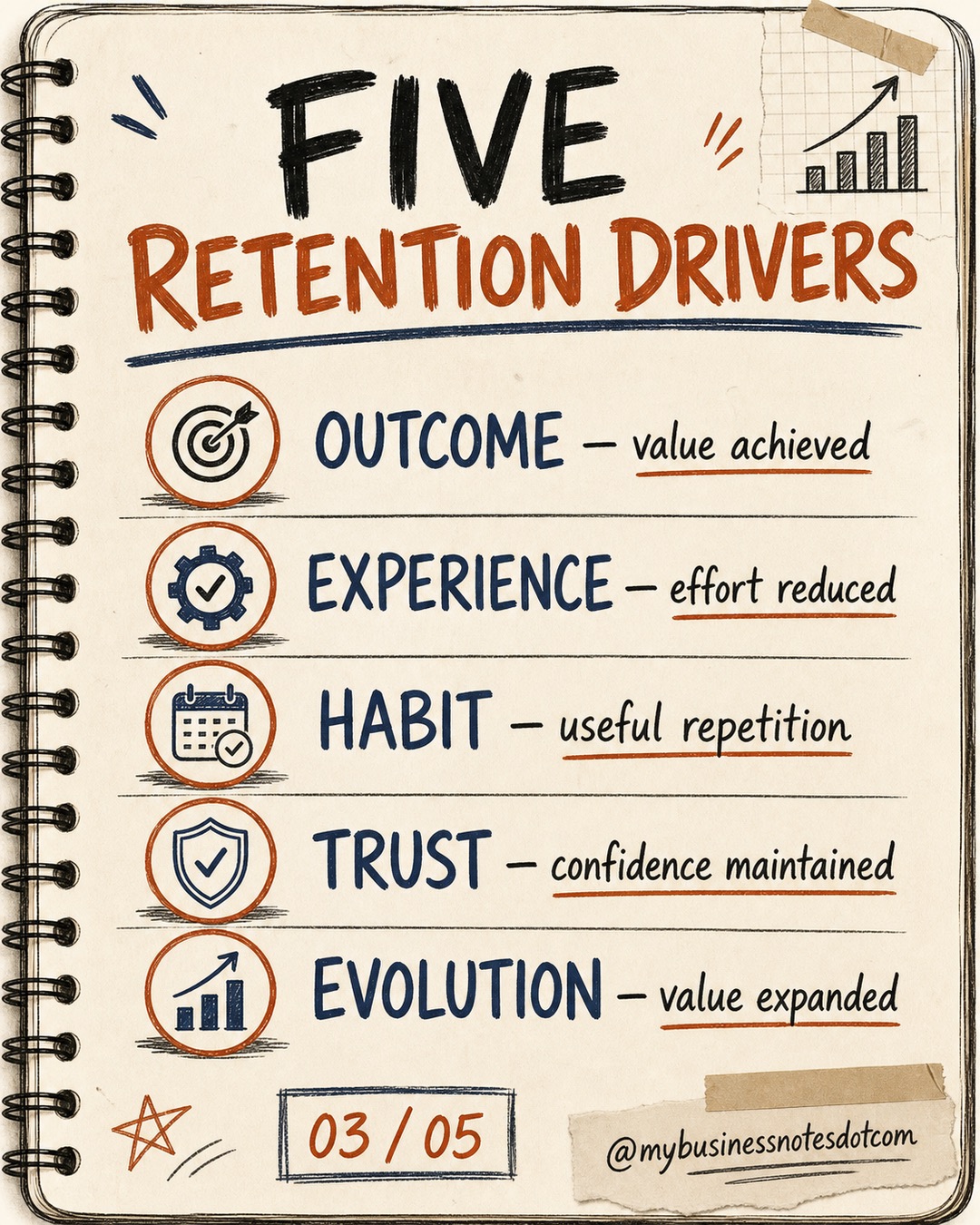
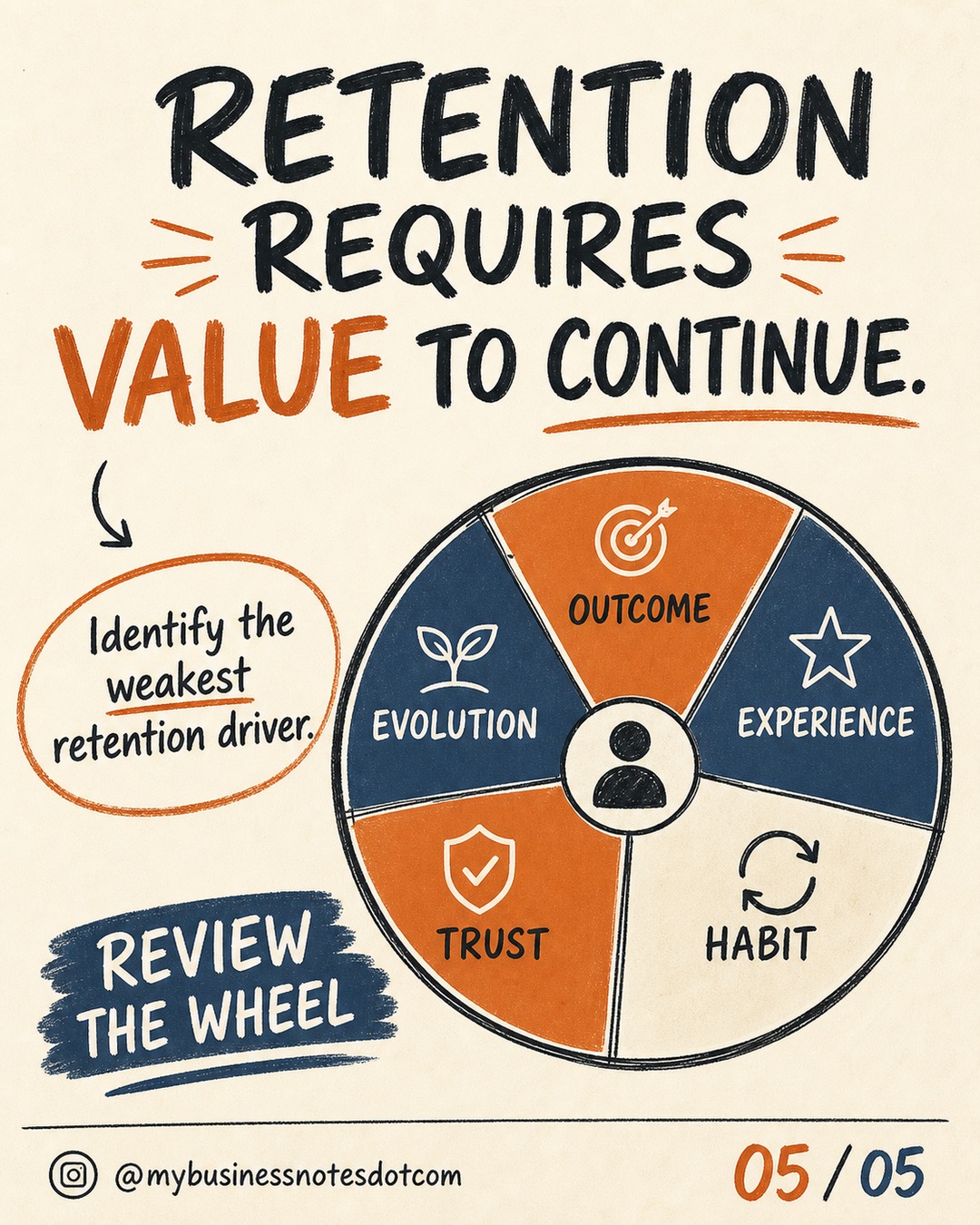
Retention is built by a system, not one heroic action. A retention driver wheel examines outcomes, friction, habits, trust and evolution to show where the customer journey is strong and where loyalty is becoming fragile. This guide expands the five-slide business note into a practical review with evidence, safeguards and next steps.
Slide 1 of 5
Start with customer outcomes
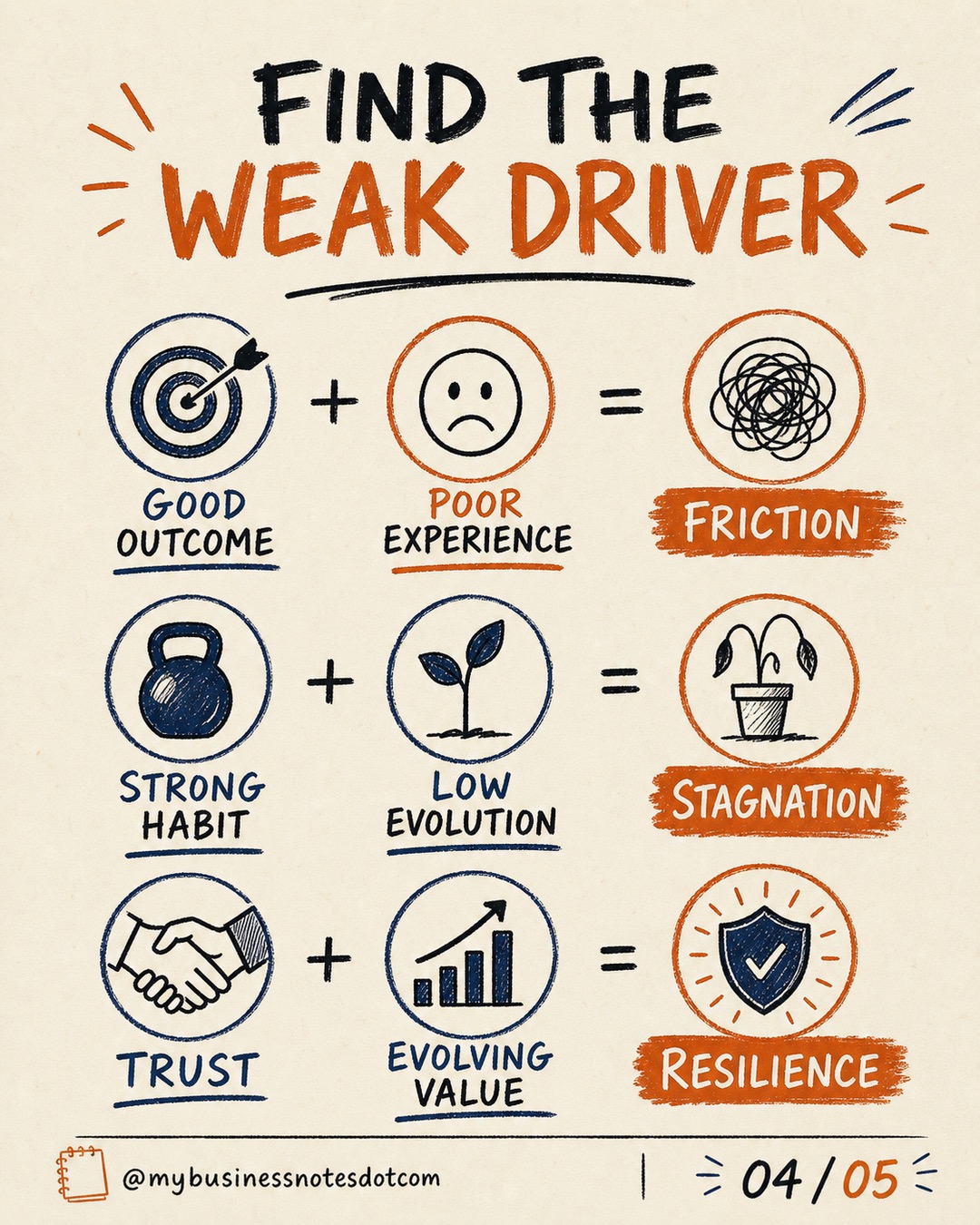
Customers need to make progress that matters to them. Define the outcome, baseline and evidence together. Usage can support value, but repeated activity without progress should not be labelled success.
Reduce avoidable friction
Review customer effort across onboarding, everyday use, support, billing and renewal. Remove repeated explanations, unclear ownership and preventable waiting. Some productive effort may remain when it builds capability or enables a better decision.
Build useful habits
Retention strengthens when the offer becomes part of a valuable routine. Design triggers, guidance and feedback around the customerâs work without creating artificial dependence or dark patterns.
Earn trust through consistency
Keep promises, communicate limits and correct failures visibly. Relationship warmth cannot compensate for unreliable delivery, and efficient delivery cannot fully compensate for surprises that damage confidence.
Keep value evolving
Customer priorities and alternatives change. Use evidence to improve outcomes, deepen adoption, reduce effort or provide better guidance. Evolution should respond to real needs, not add complexity for the appearance of innovation.
Frequently asked questions
What are retention drivers?
Conditions that make continued customer progress and a renewed relationship more likely.
Is satisfaction the same as retention?
No. Satisfaction is one signal; switching costs, alternatives, outcomes and future value also matter.
Which driver should be fixed first?
Prioritise the weakest driver that materially threatens customer progress or trust.
How should retention be measured?
Combine customer and cohort outcomes with adoption, friction, relationship and commercial evidence.
Put it into practice
Apply the framework to one current customer or decision. Record the evidence, owner, next action and review date.
Download the complete carousel
Keep the five-slide framework as a PDF for your next working session.
International references
- McKinsey & Company â The net revenue retention advantage
- McKinsey & Company â The new B2B growth equation
- McKinsey & Company â Insights to impact
- Salesforce Help â Customer Success Score overview
- Salesforce Help â Customer Health Score
- Salesforce Trailhead â Customer success strategies
- Gartner â Metrics to prove customer success value
- Bain & Company â The powerful economics of customer loyalty
- Bain & Company â Converting loyalty into economic advantage
- Christensen Institute â Jobs to Be Done Theory
- Strategyzer â The Value Proposition Canvas
- Harvard Business Review â The discipline of business experimentation