

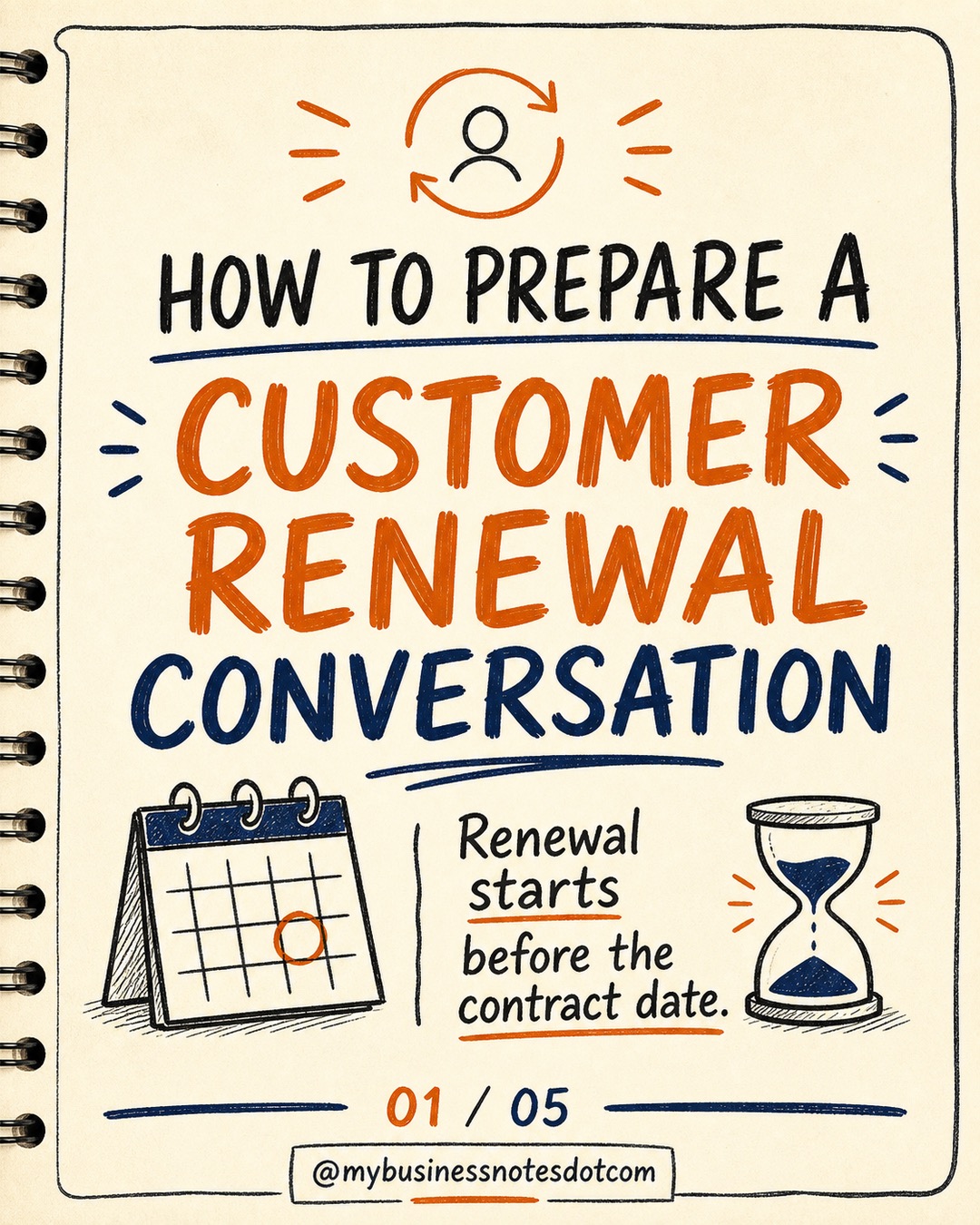
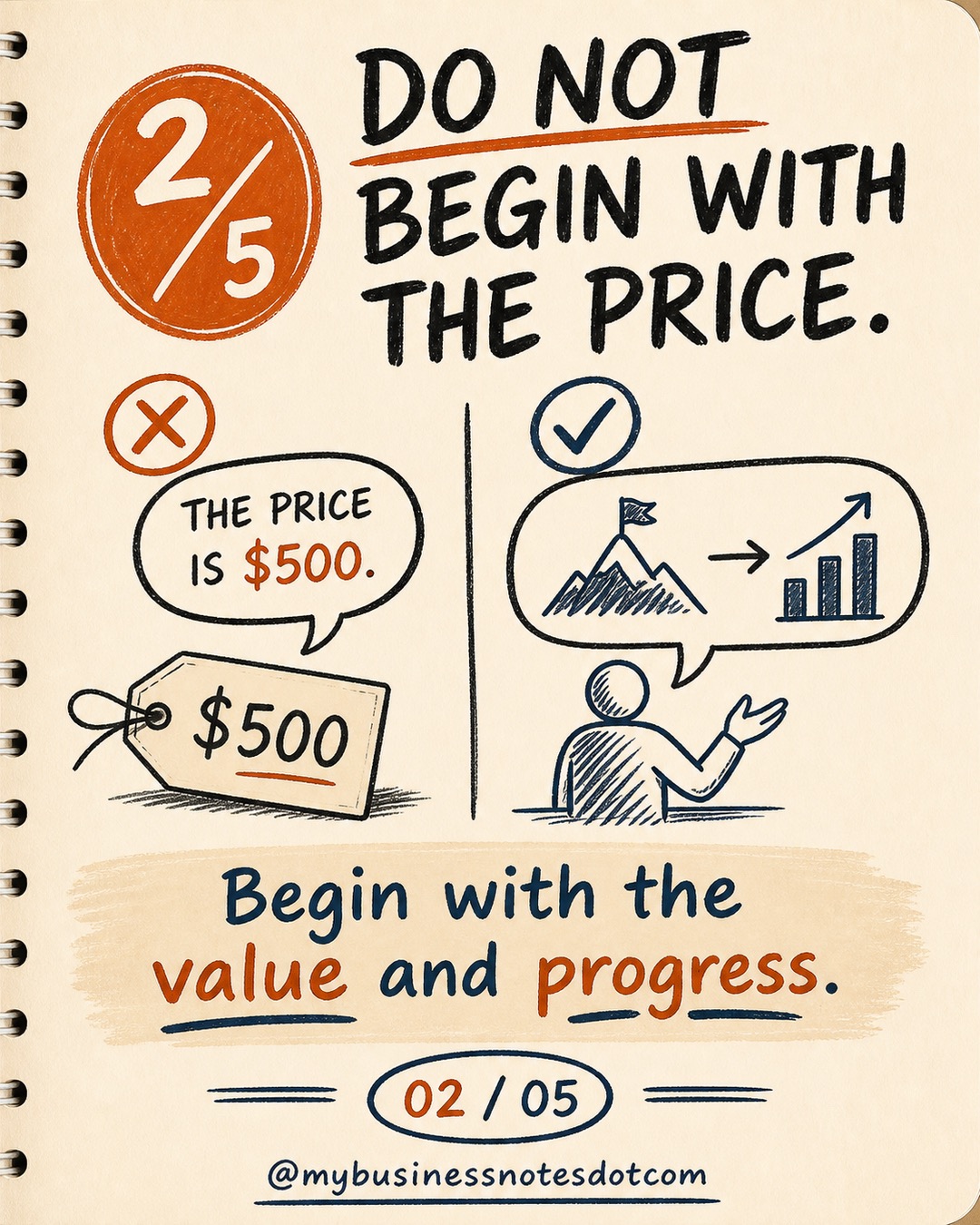
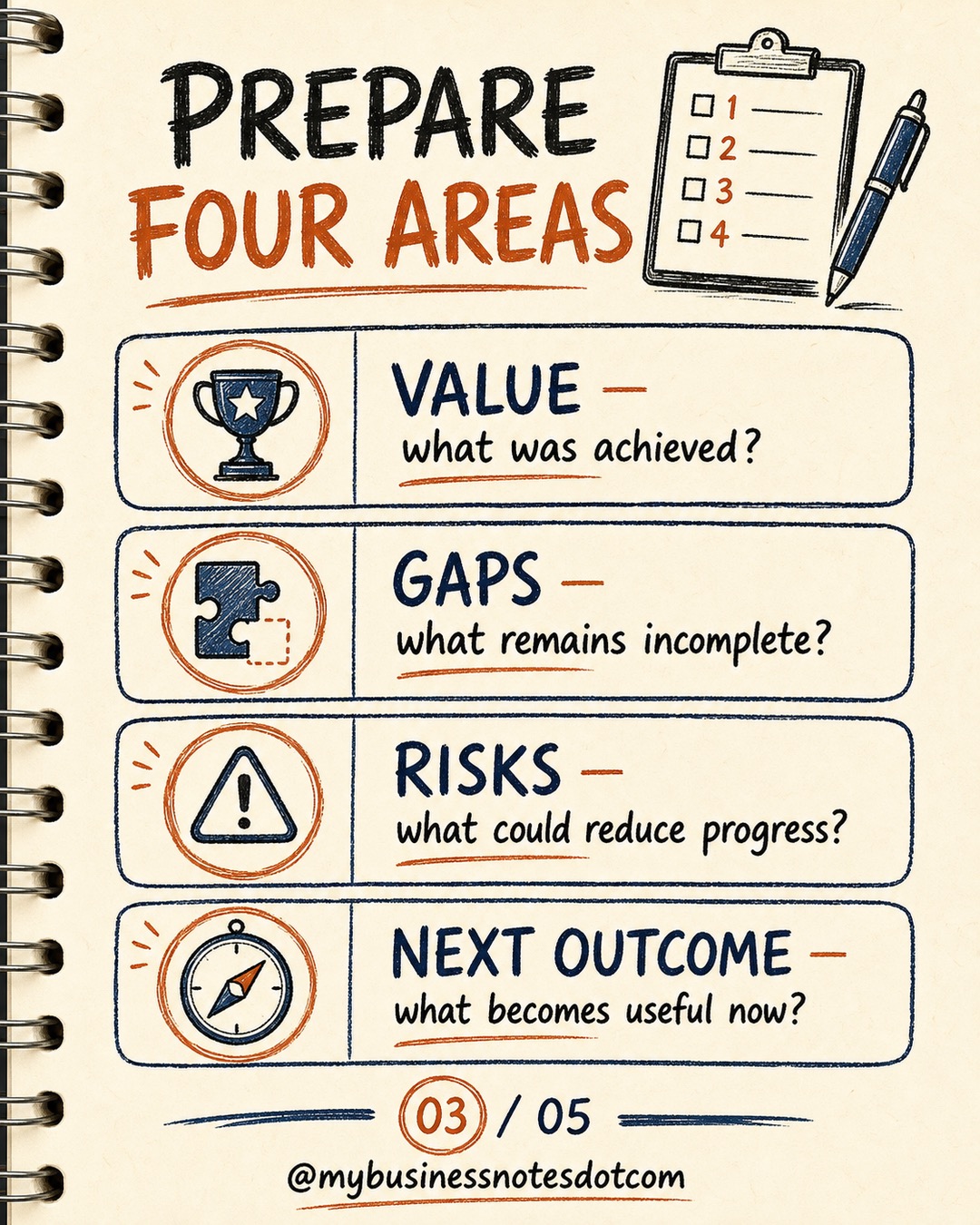
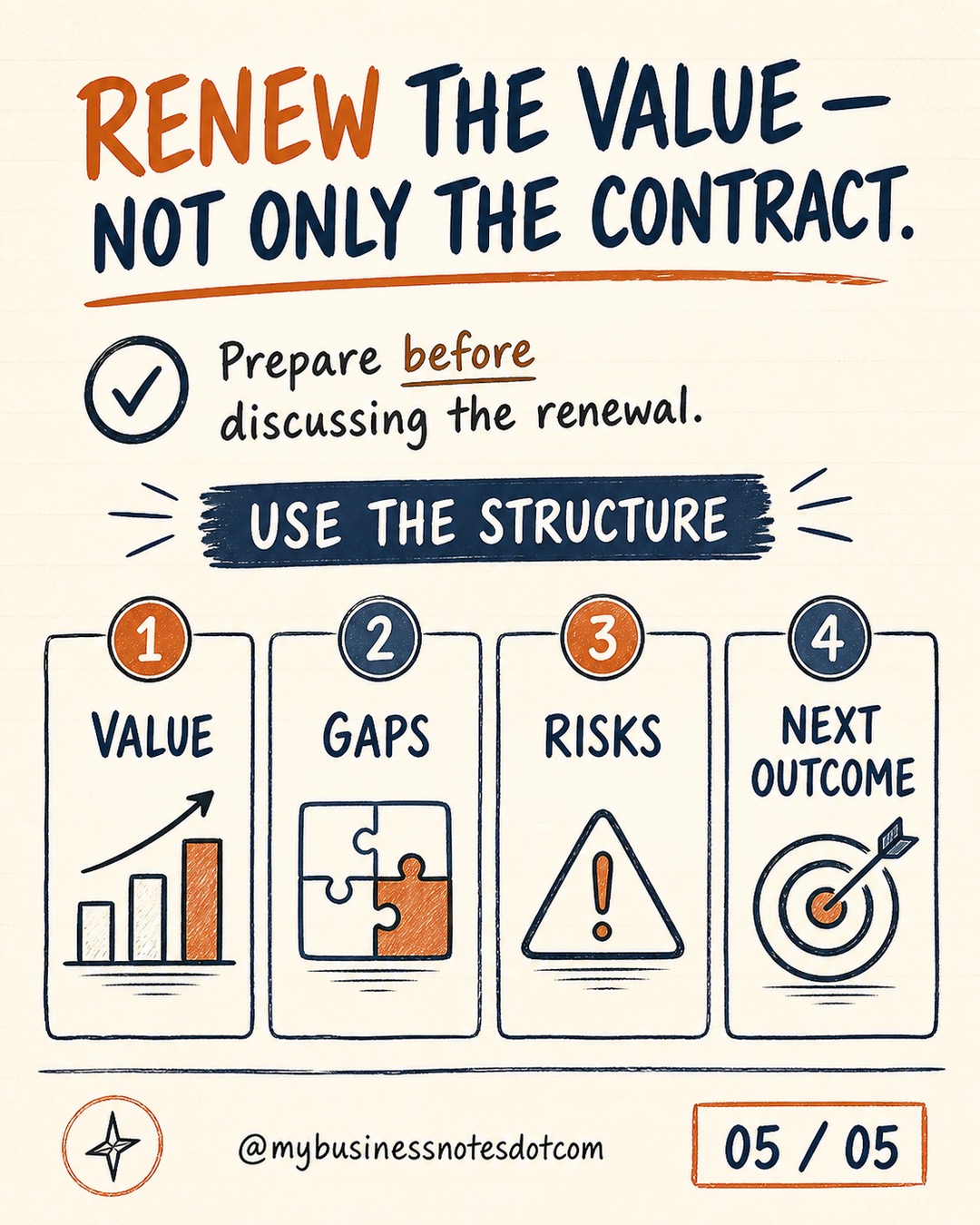
A renewal conversation should begin with evidence of progress, not price. Reviewing value created, remaining gaps, future risks and the next outcome turns a contract event into a clearer business decision. This guide expands the five-slide business note into a practical review with evidence, safeguards and next steps.
Slide 1 of 5
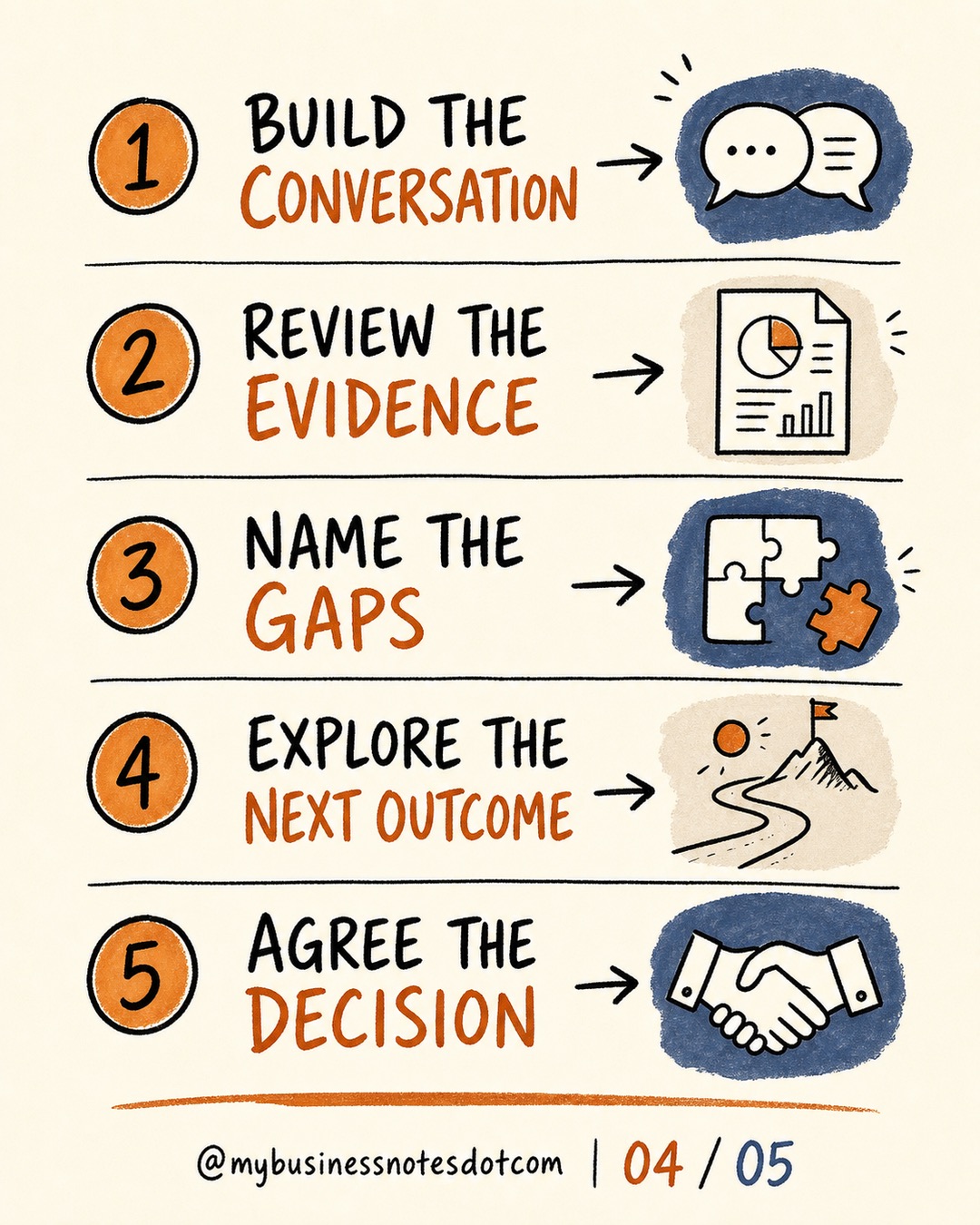
Prepare the value record
Bring agreed goals, baseline conditions, adoption evidence, outcomes and important customer feedback. Distinguish measured results from estimates and customer statements. If value is unclear, acknowledge the gap rather than manufacturing certainty.
Ask what remains incomplete
Renewal is not only a retrospective. Identify outcomes that have not materialised, friction that limits adoption and changes in the customerâs priorities. This reveals whether the current solution still fits the job the customer needs done.
Discuss risk before terms
Surface operational, commercial, relationship and implementation risks. Explain what each party can control and what support is required. A transparent risk discussion builds a stronger basis for scope and price than defensive negotiation.
Define the next outcome
Agree on the progress worth pursuing in the next period, the evidence that will show it and the responsibilities on both sides. Connect any expansion to a real customer need rather than treating it as a quota event.
Document the decision
Record commitments, owners, milestones and open uncertainties. Confirm the customerâs understanding. The renewal document should reflect the conversation, not introduce a different promise after verbal alignment.
Frequently asked questions
When should a renewal conversation start?
Early enough to review value, resolve material gaps and make a considered decision before the contract deadline.
Should price be discussed first?
Usually no. Establish value, fit, risk and future outcomes before negotiating terms.
What if value cannot be proven?
State what is known, identify the evidence gap and agree on a credible plan rather than overstating impact.
Who should join the conversation?
Include stakeholders who understand achieved value, future priorities, commercial authority and delivery commitments.
Put it into practice
Apply the framework to one current customer or decision. Record the evidence, owner, next action and review date.
Download the complete carousel
Keep the five-slide framework as a PDF for your next working session.
International references
- McKinsey & Company â The net revenue retention advantage
- McKinsey & Company â The new B2B growth equation
- McKinsey & Company â Insights to impact
- Salesforce Help â Customer Success Score overview
- Salesforce Help â Customer Health Score
- Salesforce Trailhead â Customer success strategies
- Gartner â Metrics to prove customer success value
- Bain & Company â The powerful economics of customer loyalty
- Bain & Company â Converting loyalty into economic advantage
- Christensen Institute â Jobs to Be Done Theory
- Strategyzer â The Value Proposition Canvas
- Harvard Business Review â The discipline of business experimentation