

A useful case study helps a reader understand how progress happened. It explains the customer context, tension, decision, implementation and evidence instead of presenting an unsupported success claim. This guide turns the five-slide business note into a practical review with criteria, examples and safeguards.
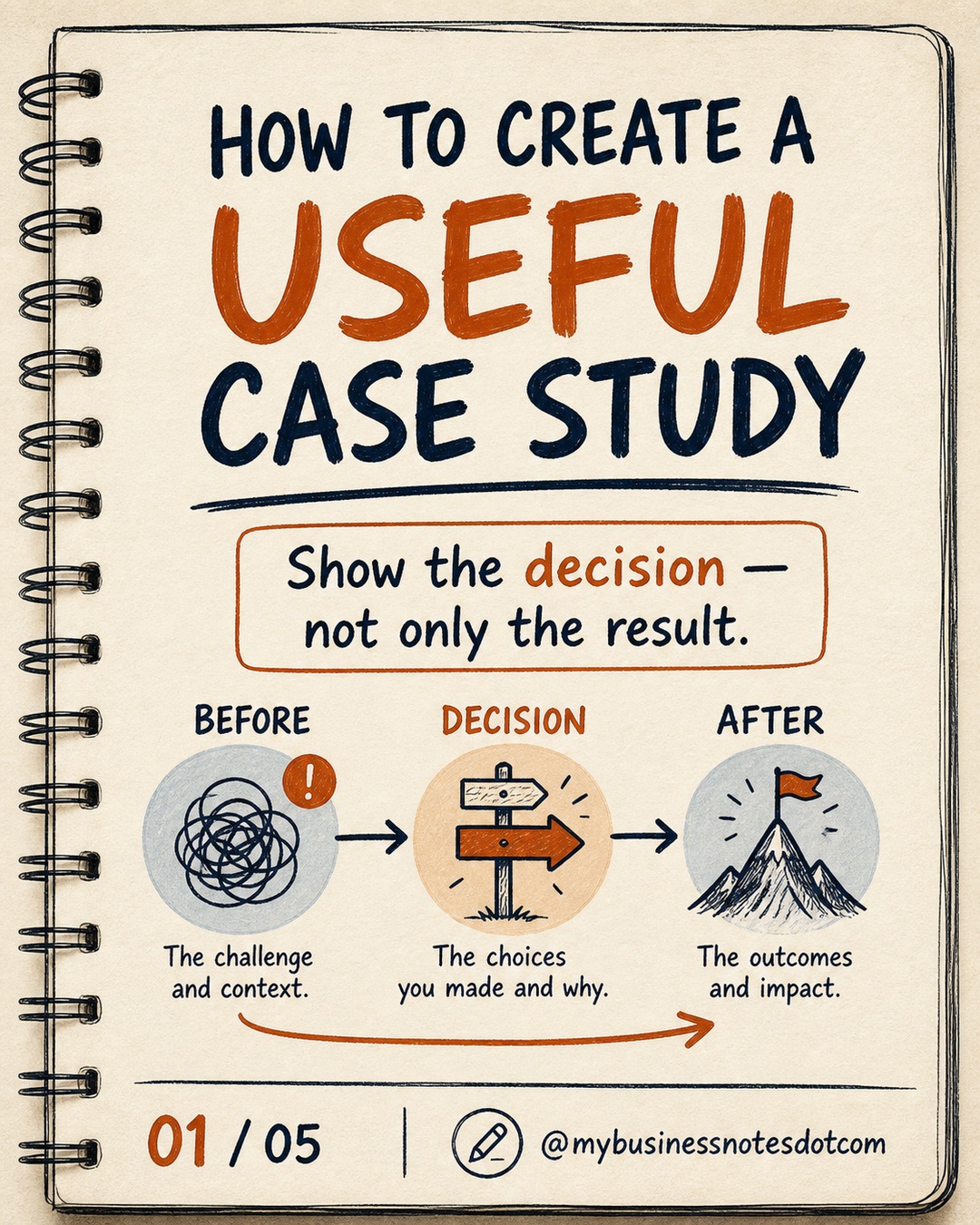
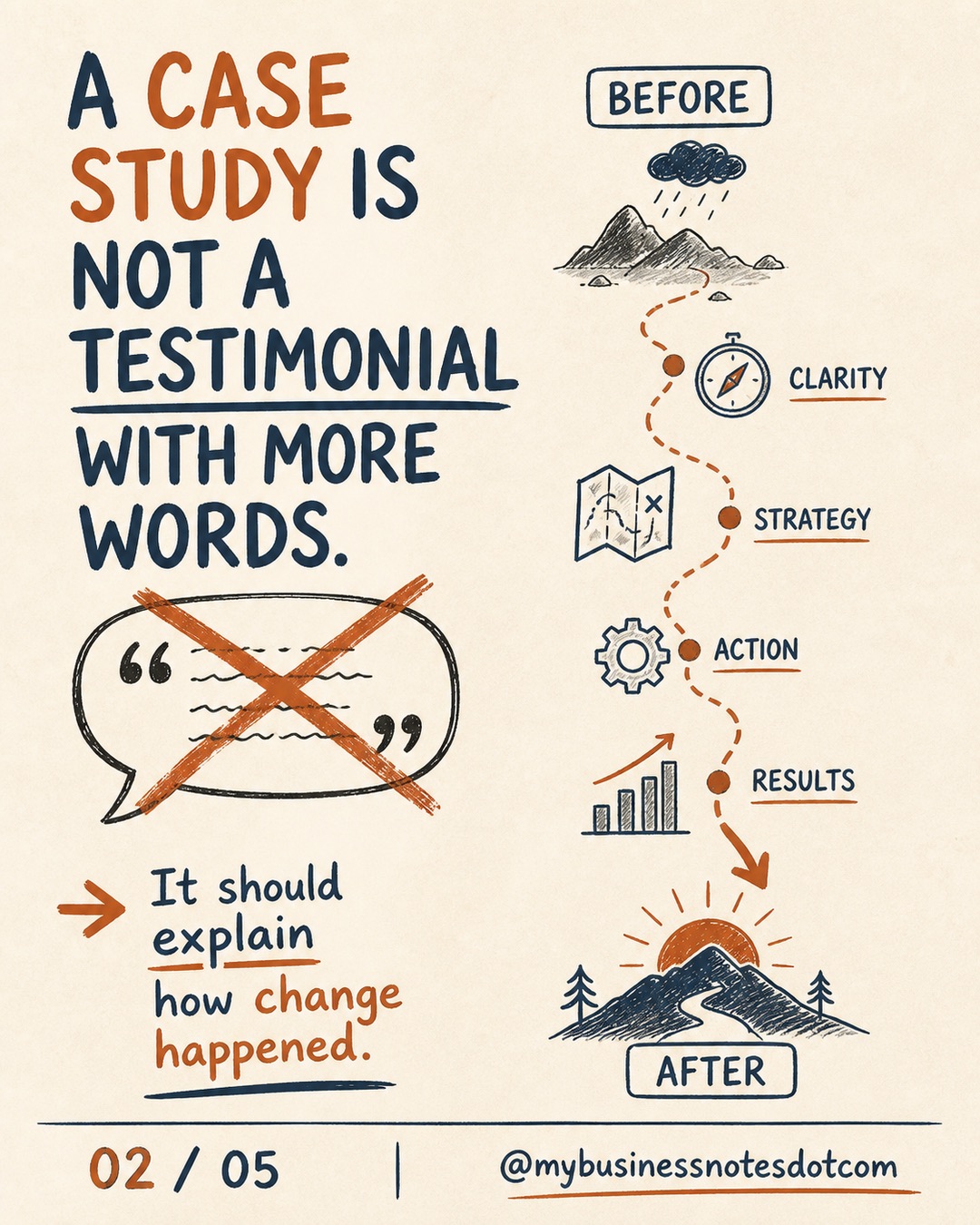
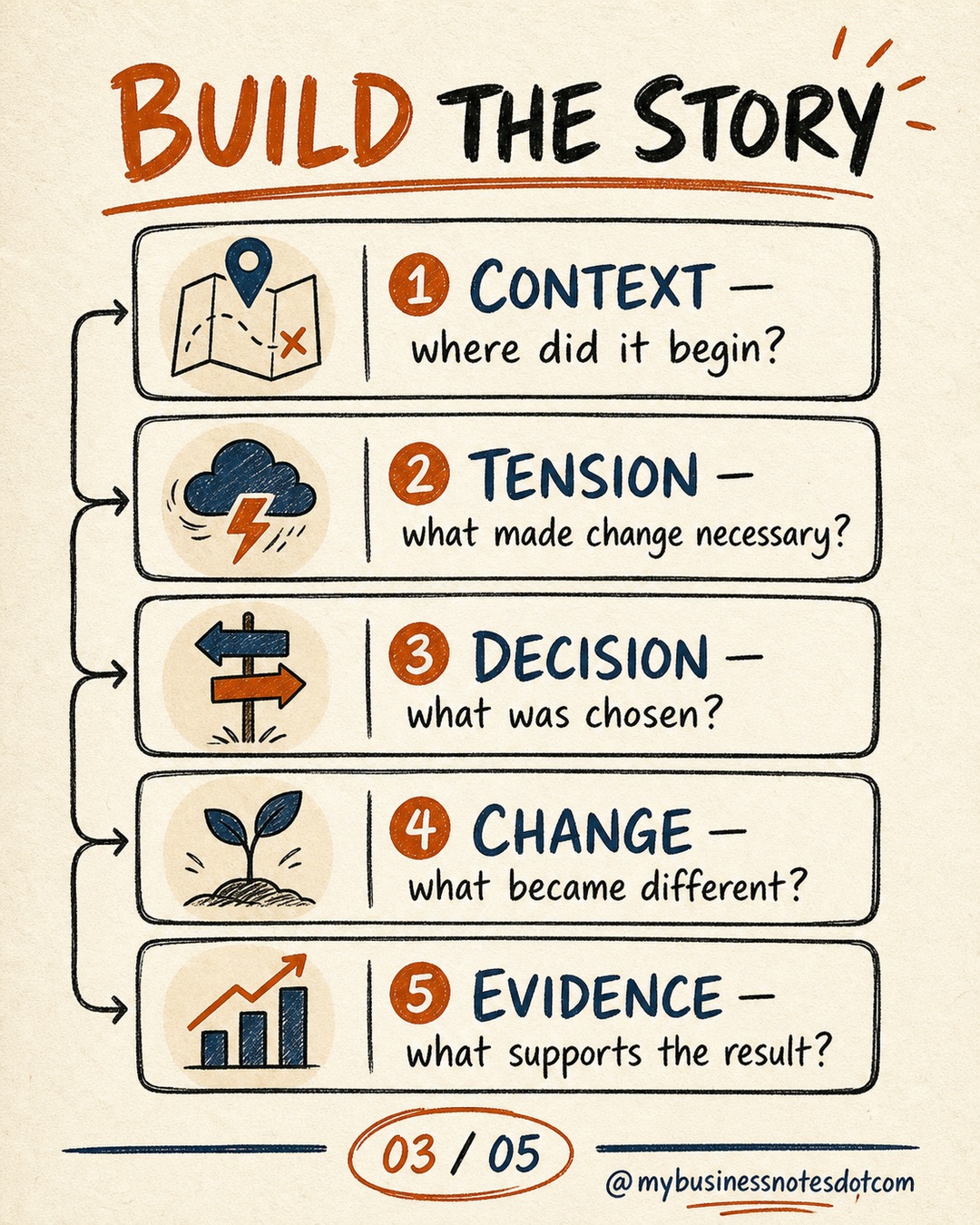
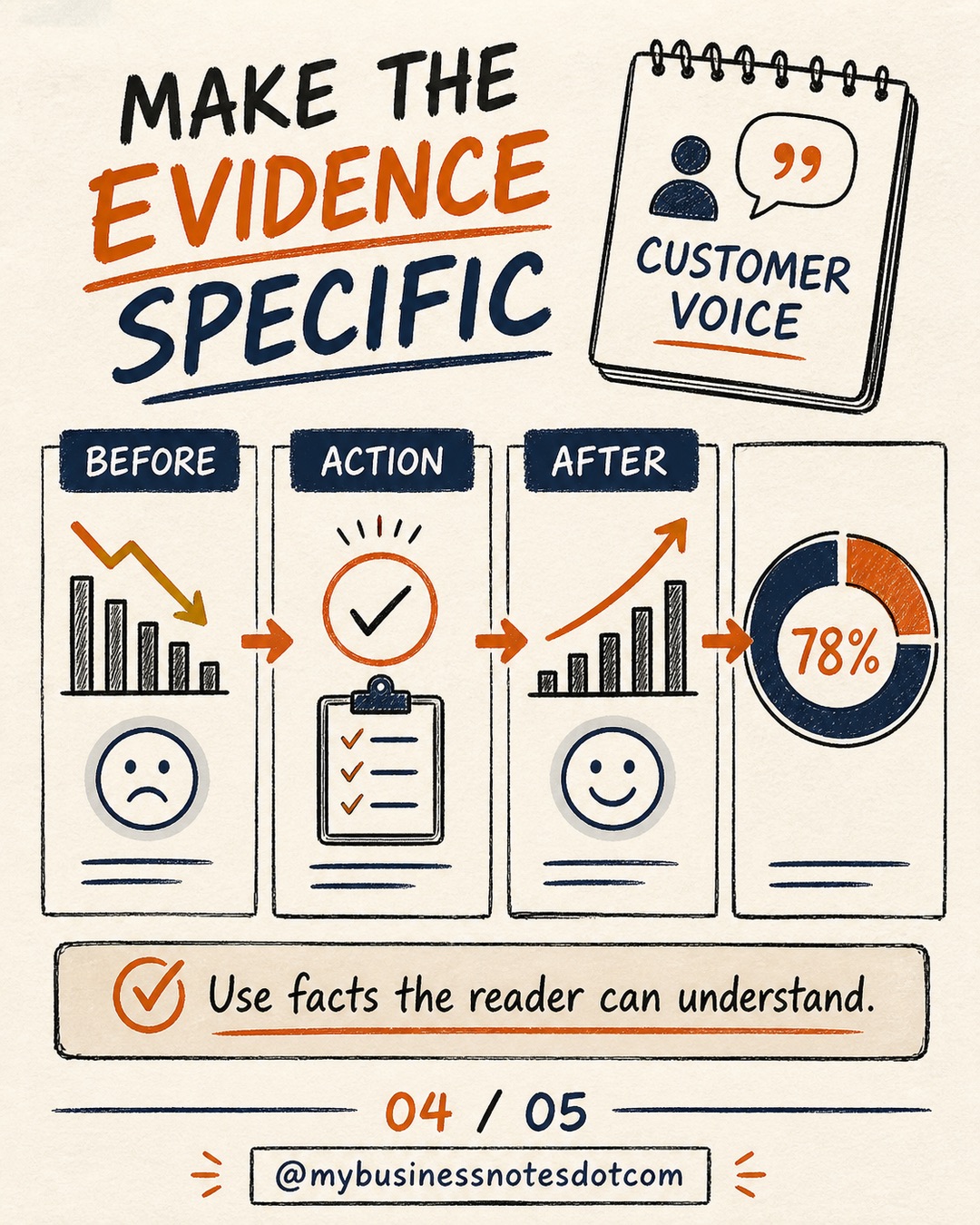
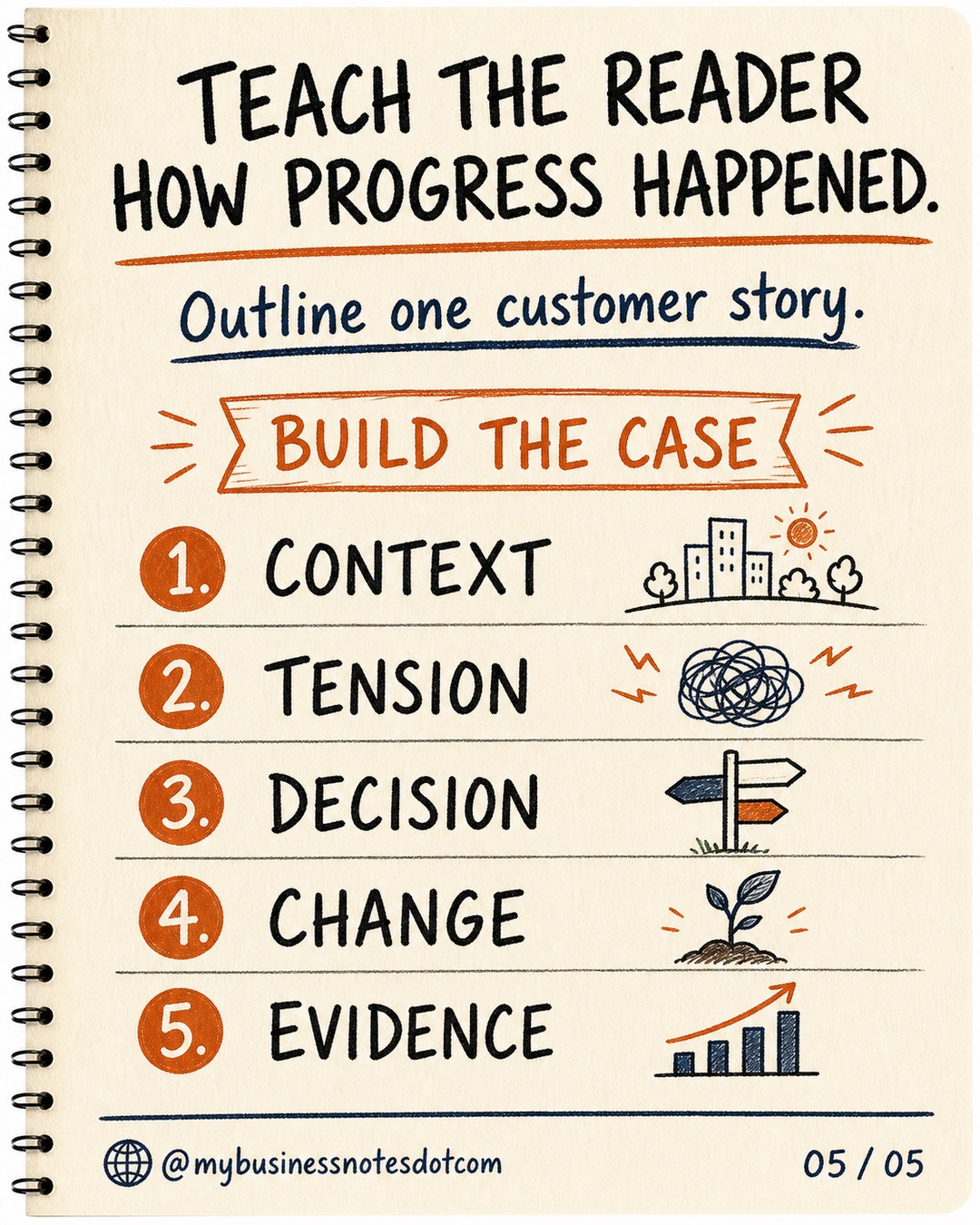
Slide 1 of 5
Begin with a specific customer situation
Describe the relevant segment, starting conditions, constraints and desired progress. Remove identifying details when permission is limited, but do not make the context so generic that the reader cannot judge relevance.
Show the decision and trade-offs
Explain why the customer chose this approach, what alternatives existed and which criteria shaped the decision. Credibility improves when the story includes uncertainty and prerequisites instead of implying that the solution was obvious.
Describe what changed in practice
Identify the important actions, sequence, responsibilities and adjustments. Readers need the mechanism between the offer and the outcome. A result without implementation context teaches very little.
Use evidence with boundaries
Use verified before-and-after indicators, dates and definitions. Distinguish customer statements from measured results. State limitations and avoid converting one customerâs result into a universal promise.
Make the story usable
Use a clear structure: context, tension, decision, action, evidence and learning. Add customer voice only with permission and accurate attribution. End with questions that help the reader evaluate whether the conditions apply to them.
Frequently asked questions
What makes a case study credible?
Specific context, a clear mechanism, verified evidence, customer permission and honest limitations.
Does a case study need numerical results?
Not always, but any claim should have an appropriate and verifiable form of evidence.
Can a customer remain anonymous?
Yes, when the context remains useful and confidentiality is respected.
How long should a case study be?
Long enough to explain the decision and evidence without irrelevant company history.
Put it into practice
Apply the framework to one current decision. Record the evidence, owner, next action and review date.
Download the complete carousel
Keep the five-slide framework as a PDF for your next working session.
International references
- Salesforce â Sales pipeline management
- Salesforce Trailhead â Opportunity management
- McKinsey & Company â The B2B customer decision journey
- McKinsey & Company â B2B omnichannel opportunity
- Christensen Institute â Jobs to Be Done Theory
- Strategyzer â Value Proposition Canvas
- Harvard Business Review â The discipline of business experimentation
- Harvard Business Review â Why organizations do not learn
- Google re:Work â Guide: Understand team effectiveness
- Atlassian â Roles and responsibilities
- Content Marketing Institute â Case study content
- Nielsen Norman Group â Recognition rather than recall