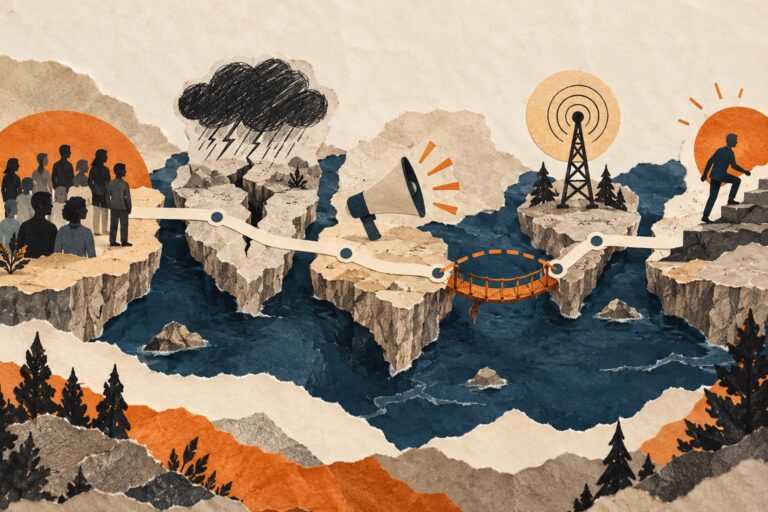
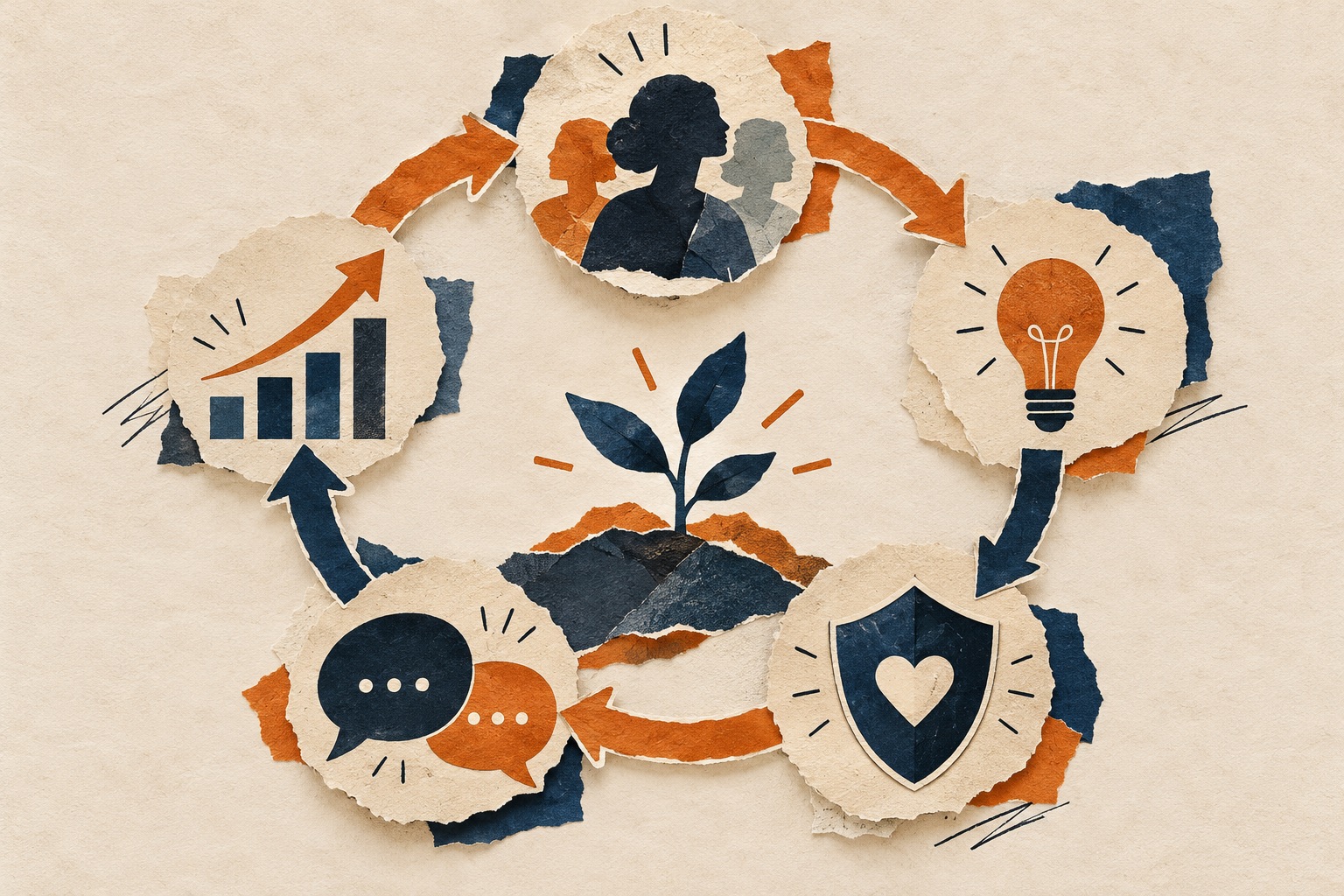
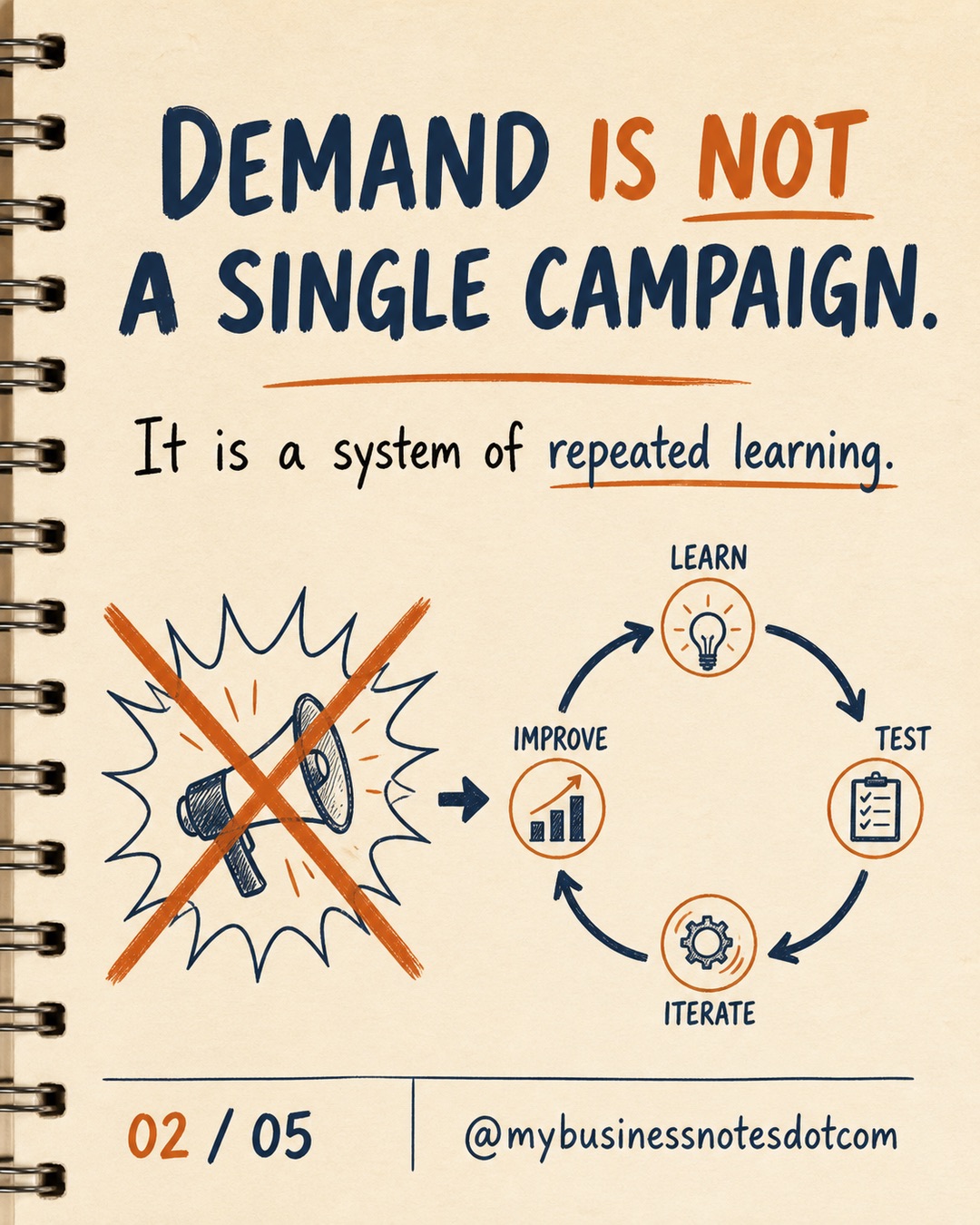
A demand creation loop repeatedly connects customer insight, useful ideas, distribution, engagement and evidence. Unlike an isolated campaign, the loop learns which problems and perspectives earn attention and trust over time. This guide turns the five-slide business note into a practical review with criteria, examples and safeguards.
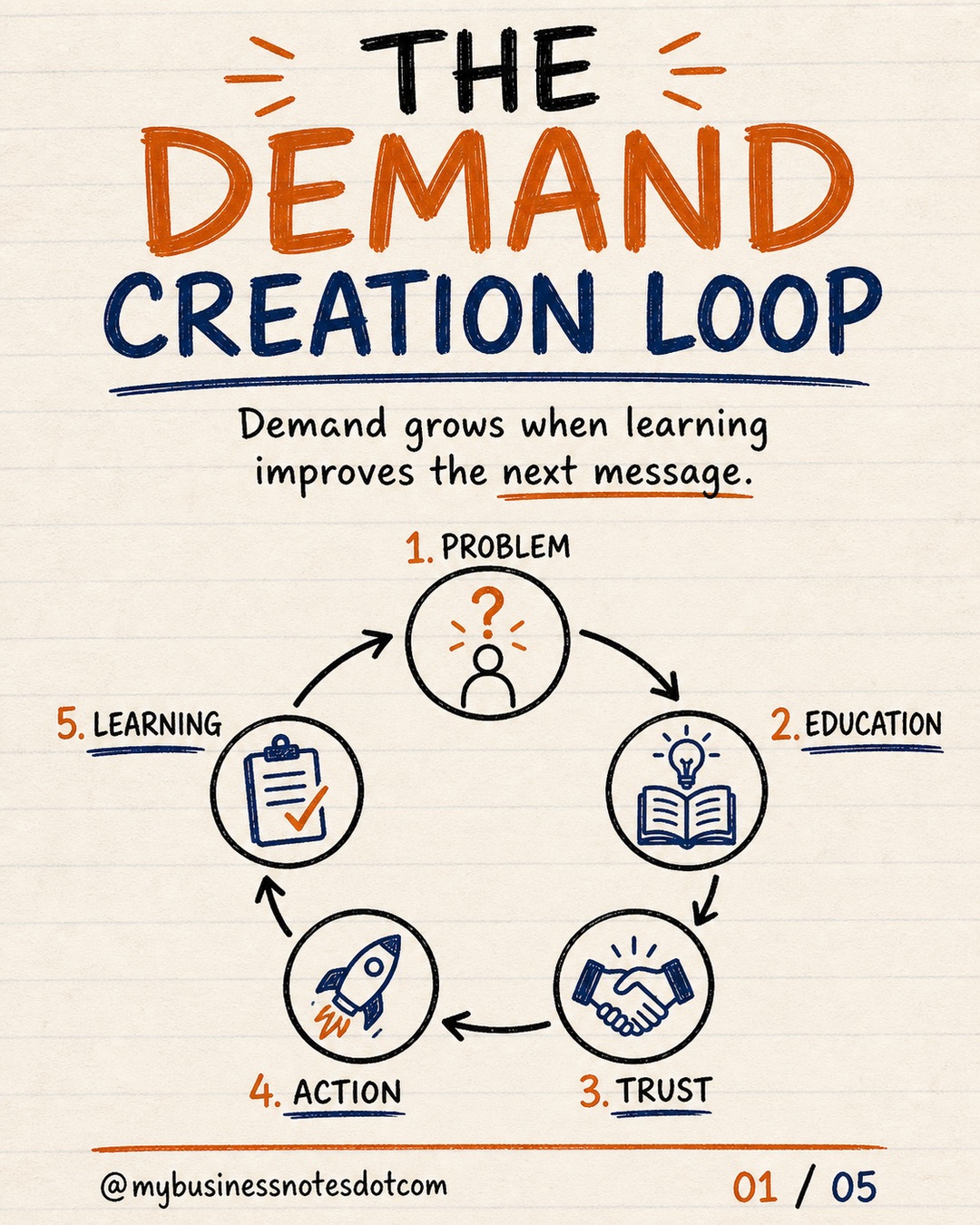
Slide 1 of 5
Demand begins before a buying search
Many potential customers recognise friction without naming a category or solution. Useful content can help them frame the problem, understand the cost of the current state and consider a better approach without manufacturing urgency.
Use five connected stages
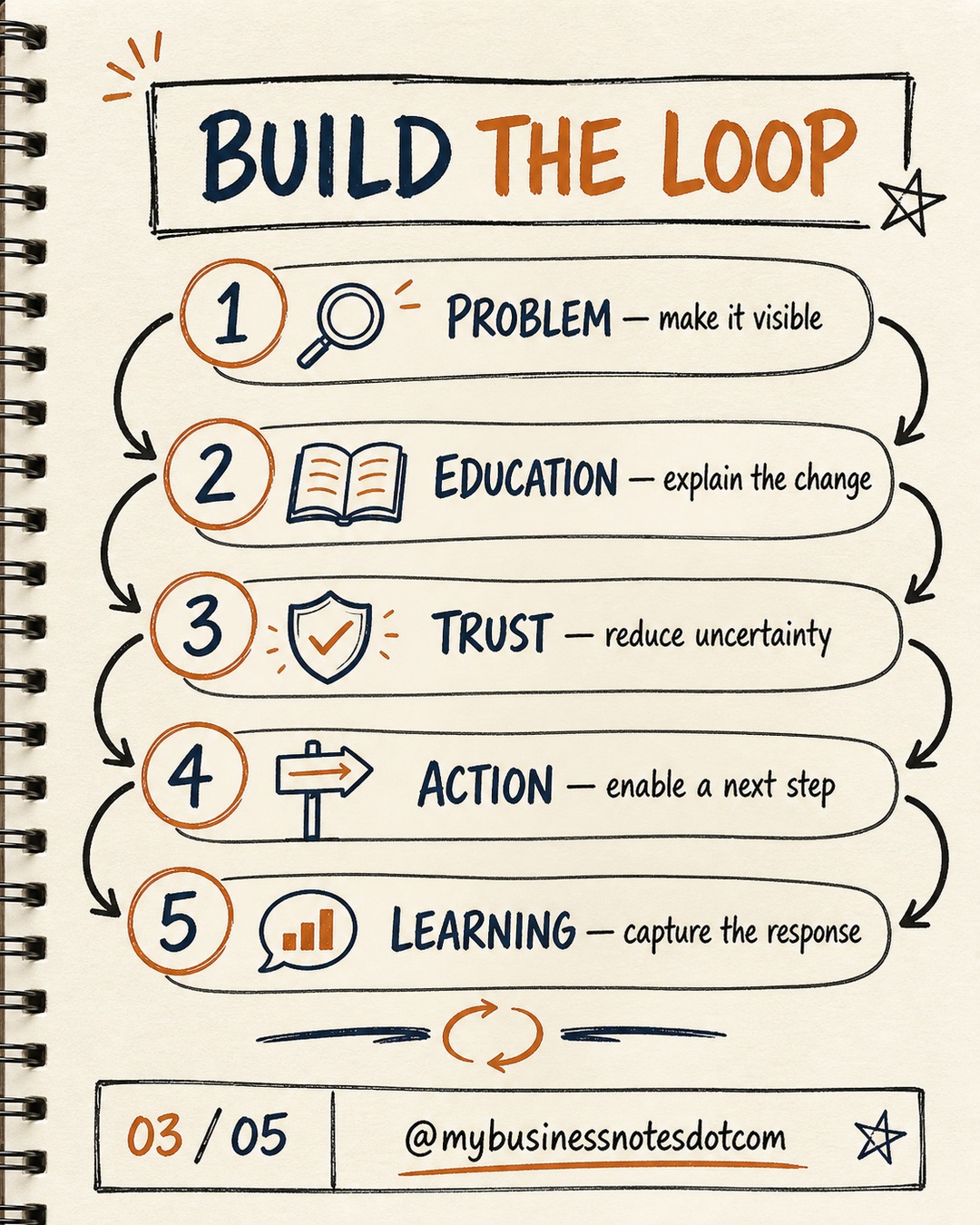
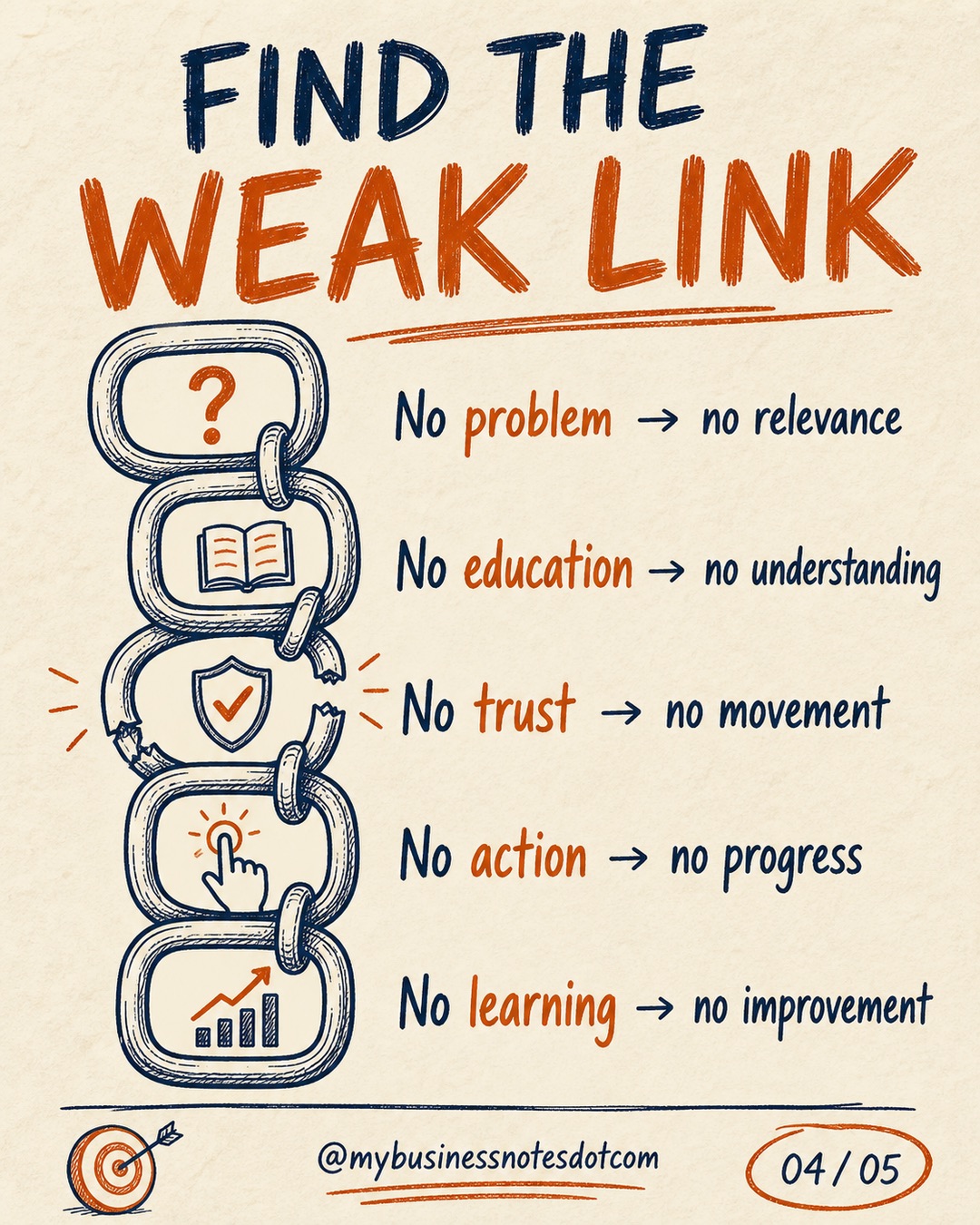
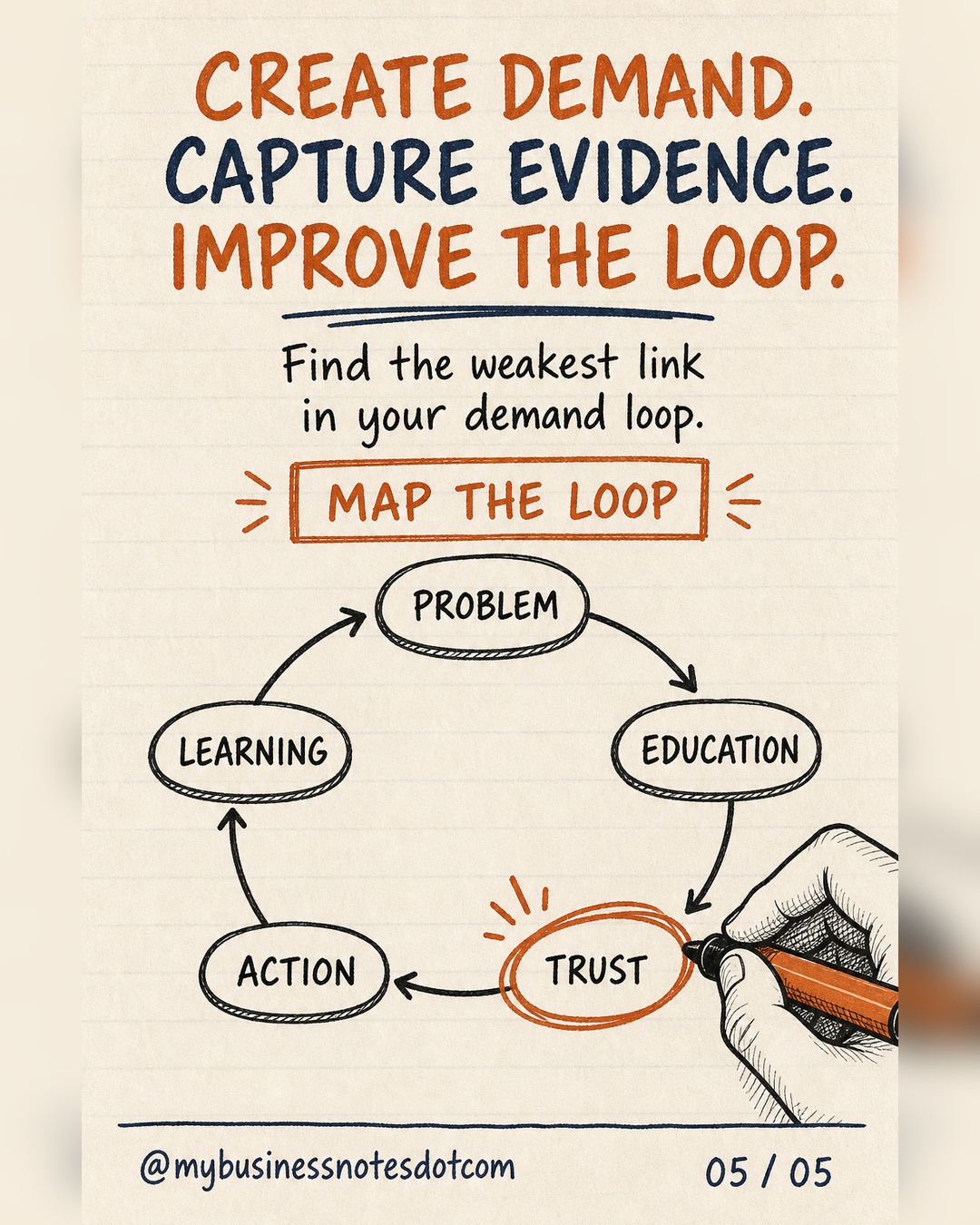
Start with customer evidence, develop a useful point of view, distribute it through relevant channels, invite a meaningful next action and capture the response. Each stage produces information for the next cycle.
Create for a specific problem
Broad reach is not the same as useful demand. Define the audience, circumstance and decision your idea supports. Connect education to the progress the customer values rather than publishing generic category commentary.
Distribute with a role for each channel
Use channels according to how customers discover, understand, trust and act. Adapt the format without changing the central claim. A social post may introduce the idea while the article provides depth and an email supports continued learning.
Measure learning and commercial movement
Track qualified engagement, return visits, conversations, subscriber growth and opportunities influenced. Do not treat one attribution model as complete truth. Combine behavioural data with customer conversations and sales evidence.
Frequently asked questions
What is demand creation?
It helps a relevant audience recognise and understand a problem or opportunity before an active buying process.
How is it different from lead generation?
Lead generation captures identifiable interest; demand creation develops understanding and preference that may precede capture.
Does every piece need a sales CTA?
No. The next action should match the audienceâs stage and the value of the content.
How long does a demand loop take?
The cycle depends on market, buying process and distribution; evaluate repeated evidence rather than one campaign.
Put it into practice
Apply the framework to one current decision. Record the evidence, owner, next action and review date.
Download the complete carousel
Keep the five-slide framework as a PDF for your next working session.
International references
- Salesforce â Sales pipeline management
- Salesforce Trailhead â Opportunity management
- McKinsey & Company â The B2B customer decision journey
- McKinsey & Company â B2B omnichannel opportunity
- Christensen Institute â Jobs to Be Done Theory
- Strategyzer â Value Proposition Canvas
- Harvard Business Review â The discipline of business experimentation
- Harvard Business Review â Why organizations do not learn
- Google re:Work â Guide: Understand team effectiveness
- Atlassian â Roles and responsibilities
- Content Marketing Institute â Case study content
- Nielsen Norman Group â Recognition rather than recall