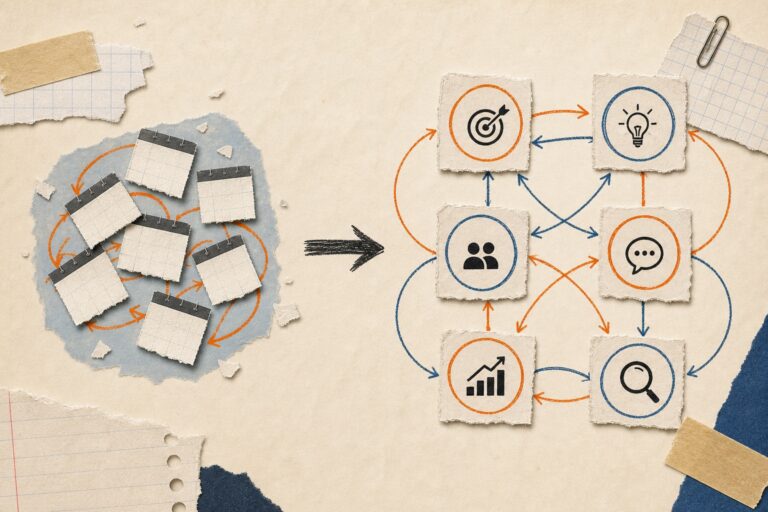
Content system: why a calendar is not a strategy
A practical framework for assigning every post a strategic job across attraction, education, connection, conversion, sales, and retention.


Marketing is the discipline of understanding markets, choosing where to compete, creating value, and communicating that value consistently. This collection brings together practical guides for leaders and professionals who want to connect strategy with execution—not merely promote products.
Start with Marketing Redefined for a broad view of value creation. Then explore upstream and downstream marketing to understand how research, positioning, communication, and sales execution fit together. The articles on the consumer awareness pyramid and the customer journey help translate that strategy into messages and experiences for different stages of demand.
You will also find guidance on building a balanced content strategy. Each article emphasizes customer needs, evidence, business context, and sustainable value rather than isolated tactics. Use this hub to move from foundational concepts to planning, execution, measurement, and long-term customer relationships.
A practical framework for assigning every post a strategic job across attraction, education, connection, conversion, sales, and retention.

In brief A balanced content strategy combines four roles: Knowledge, Connection, Authority and Product. Together they help audiences learn, identify with the brand, trust its expertise and understand relevant offers. Knowledge content explains and solves meaningful problems. Connection and Authority…

In brief A customer journey maps changing needs, questions and interactions from awareness through purchase, use, loyalty and advocacy. Its value comes from revealing friction and coordinating the experience across channels and teams. Map customer goals and emotions, not only…

In brief The consumer awareness pyramid adapts messaging to what people currently understand: from unaware, to problem-aware, solution-aware, product-aware and customer. Each stage needs a different information goal and call to action. Start with the audience’s current knowledge, not the…

In brief Upstream marketing decides where and how a business will create value; downstream marketing turns that strategy into campaigns, channels, sales support and customer experiences. Strong marketing connects both through a continuous feedback loop. Upstream work covers markets, needs,…

In brief Marketing is the coordinated process of understanding audiences, designing offerings, communicating value and sustaining mutually beneficial exchanges. Sales is one outcome; marketing also guides product choices, positioning, relationships and long-term organizational value. It starts with evidence about customer…