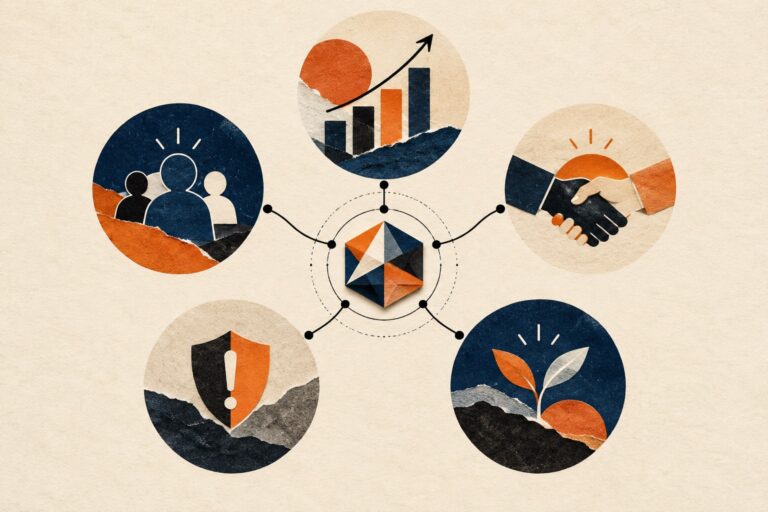

Customer loyalty is not a reward for value delivered once. It becomes more durable when value keeps evolving through new outcomes, deeper adoption, less effort or better guidance as the customerâs context changes. This guide expands the five-slide business note into a practical review with evidence, safeguards and next steps.
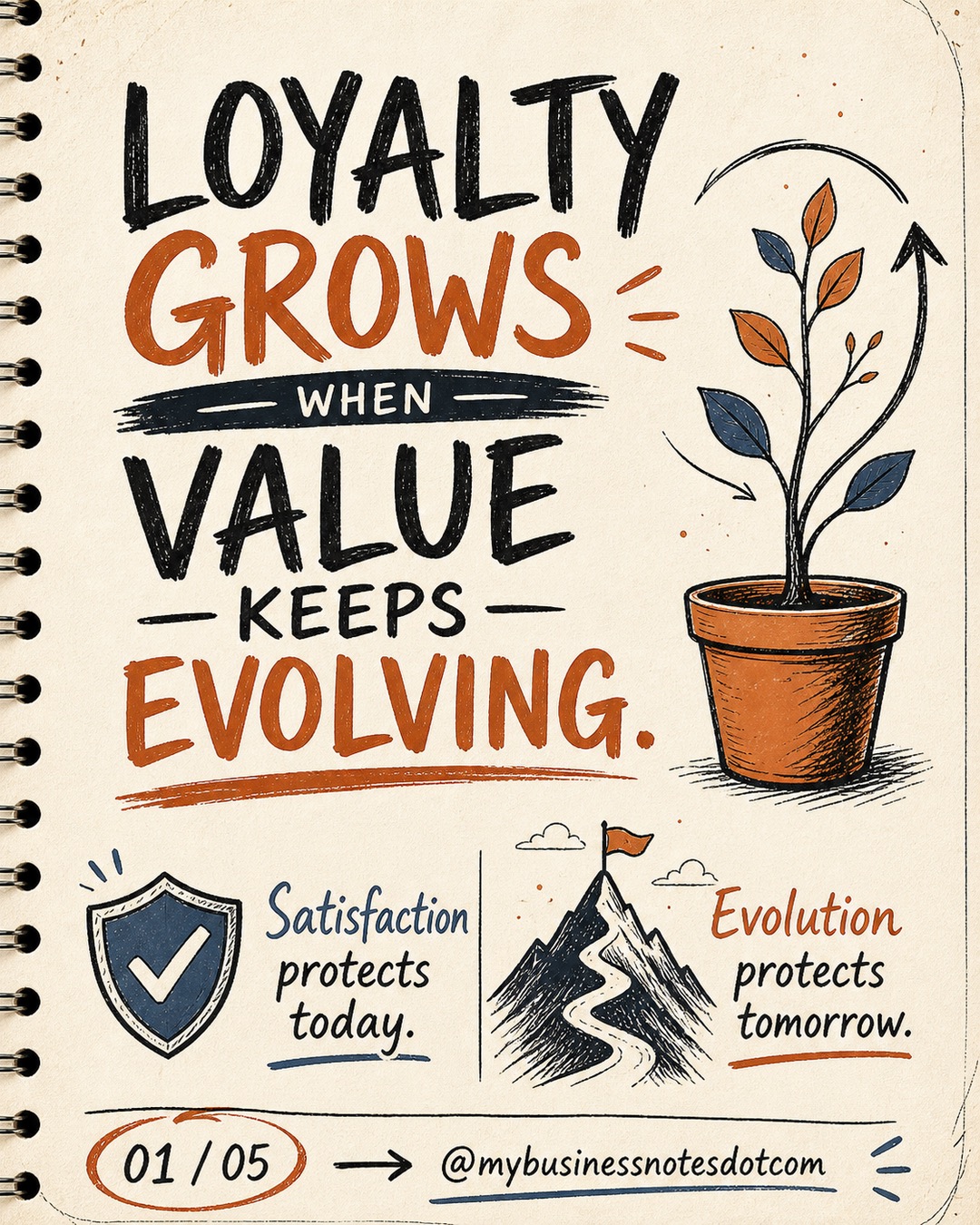
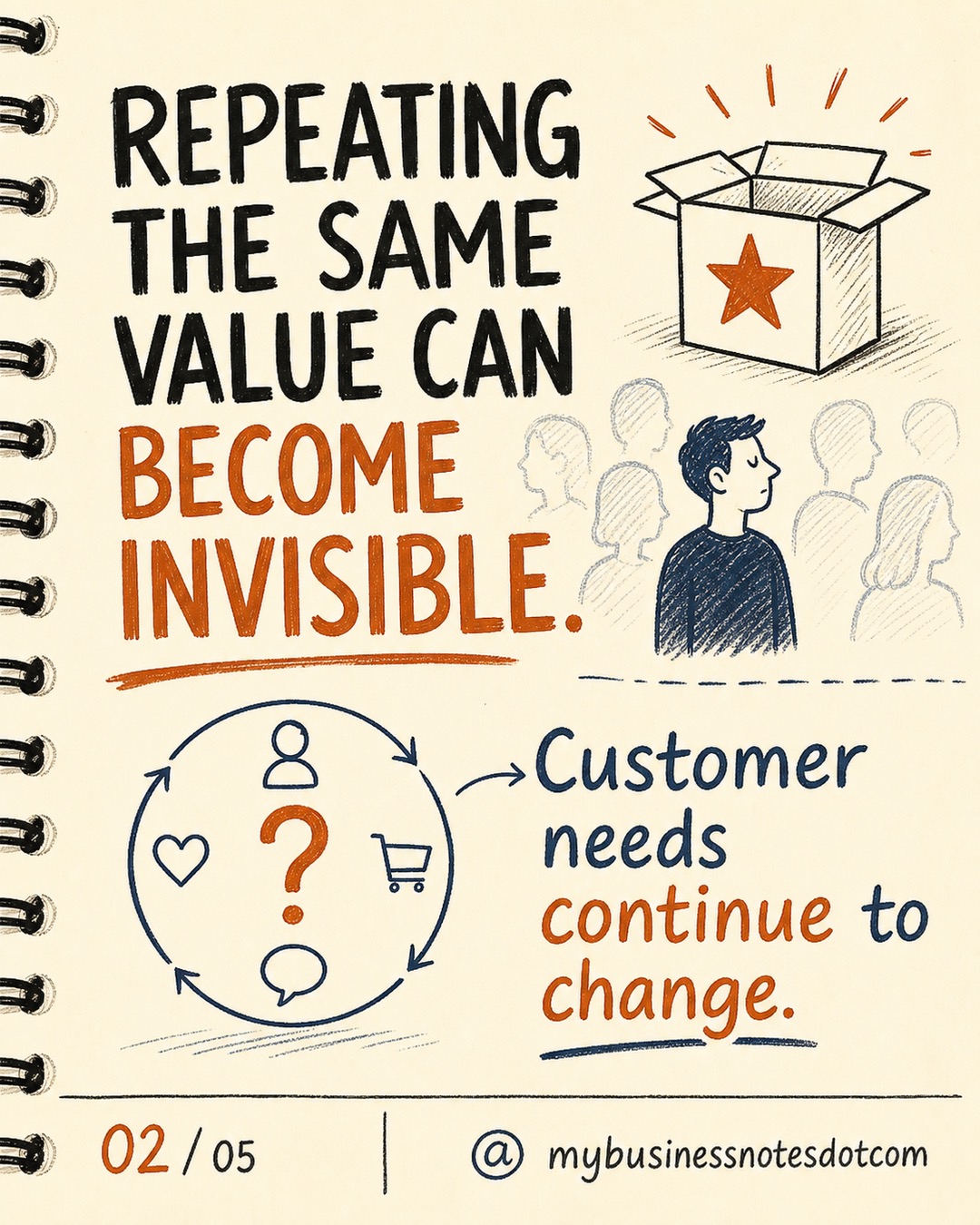
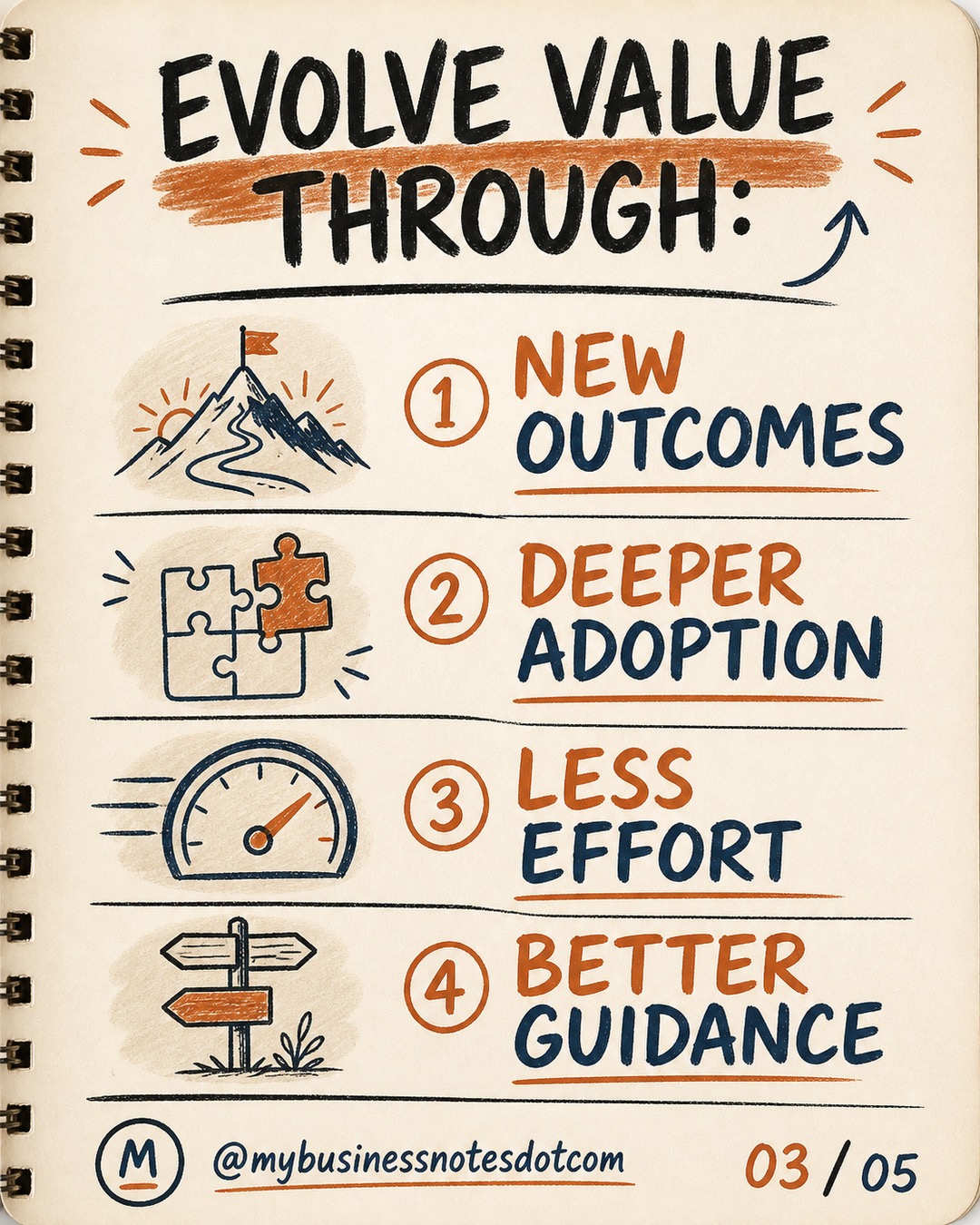
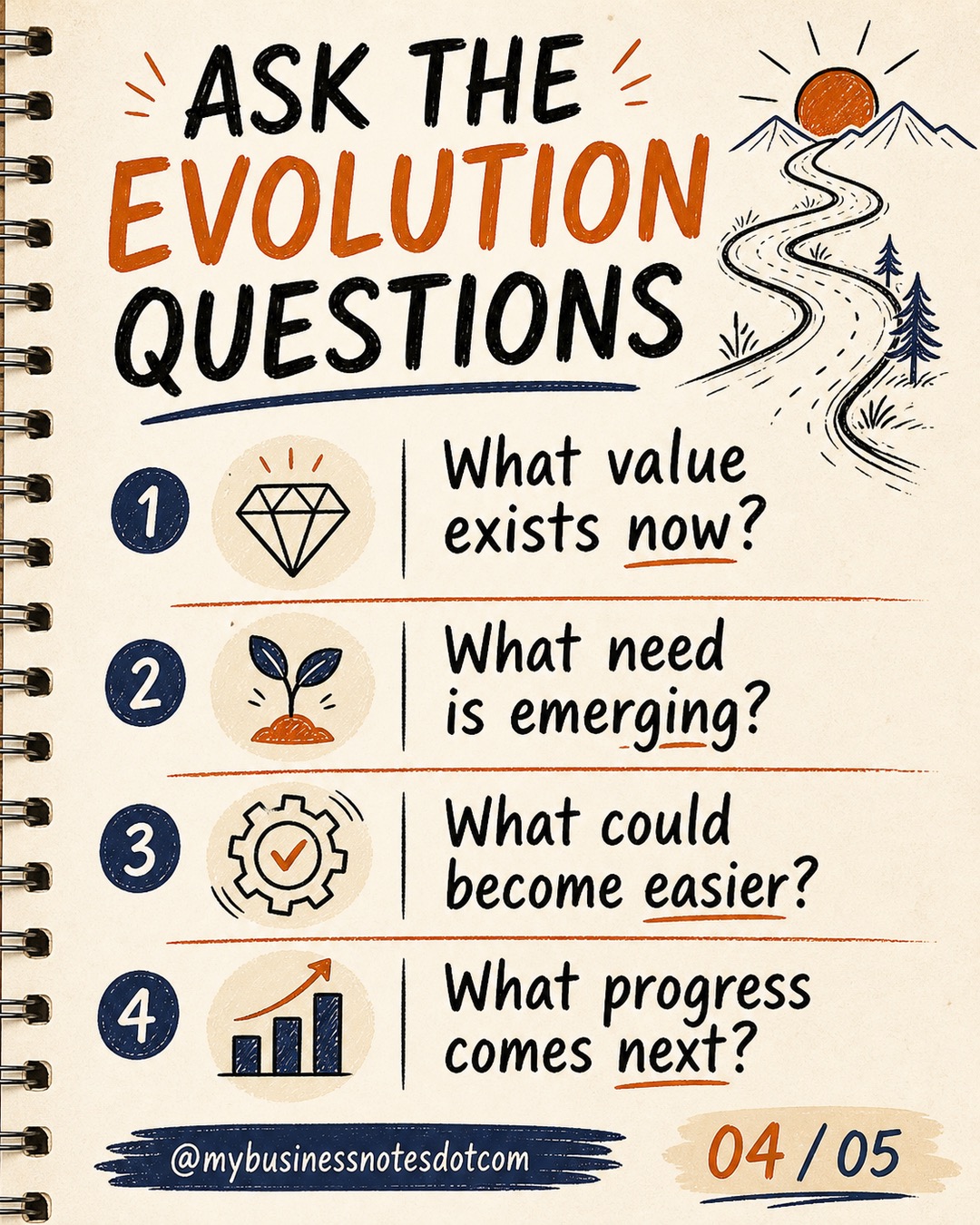
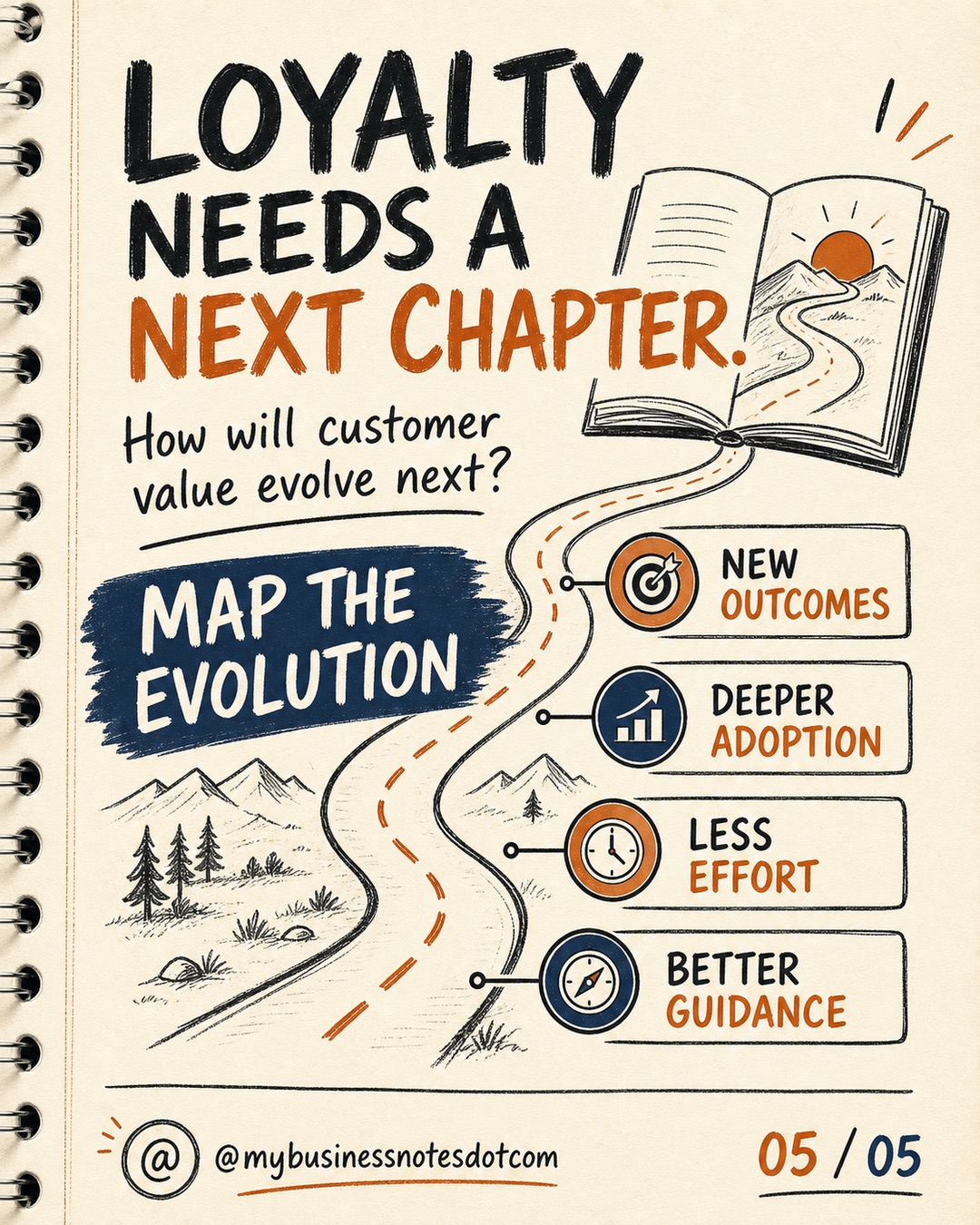
Slide 1 of 5
Treat loyalty as conditional
A long relationship does not guarantee future relevance. Customers compare current progress, future confidence and available alternatives. Review what still earns the relationship instead of assuming history will protect it.
Expand the definition of value
Value can evolve through stronger outcomes, faster time to value, wider adoption, lower risk, less customer effort or improved capability. Select the form that matters in the customerâs current situation.
Look for changing customer jobs
Priorities, constraints and stakeholders move over time. Use account reviews, behavioural evidence and direct conversations to understand what progress now means. Do not convert every new need into an immediate upsell.
Design a visible value roadmap
Agree on the next outcome, required actions and evidence. Show how product, service and customer responsibilities connect. A roadmap should remain revisable as evidence changes.
Protect trust while evolving
Be clear about experiments, trade-offs and limits. Preserve what already works while testing improvements. Loyalty grows when change makes the relationship more useful, not merely more complex or expensive.
Frequently asked questions
What creates customer loyalty?
Repeated relevant value, trustworthy delivery and confidence that the relationship will remain useful.
Is a loyalty program enough?
No. Rewards may influence behaviour, but they do not replace outcomes, trust or relevance.
How can value evolve?
Through better outcomes, deeper adoption, reduced effort, lower risk or stronger guidance.
How often should value be reviewed?
At meaningful customer milestones and whenever priorities, usage or risk materially change.
Put it into practice
Apply the framework to one current customer or decision. Record the evidence, owner, next action and review date.
Download the complete carousel
Keep the five-slide framework as a PDF for your next working session.
International references
- McKinsey & Company â The net revenue retention advantage
- McKinsey & Company â The new B2B growth equation
- McKinsey & Company â Insights to impact
- Salesforce Help â Customer Success Score overview
- Salesforce Help â Customer Health Score
- Salesforce Trailhead â Customer success strategies
- Gartner â Metrics to prove customer success value
- Bain & Company â The powerful economics of customer loyalty
- Bain & Company â Converting loyalty into economic advantage
- Christensen Institute â Jobs to Be Done Theory
- Strategyzer â The Value Proposition Canvas
- Harvard Business Review â The discipline of business experimentation