
Latest Business Insights
Explore practical, evidence-informed articles on marketing, management, strategy, sales, and customer value. Use the topic hubs in the main navigation to follow a specific learning path, or browse the latest publications below.
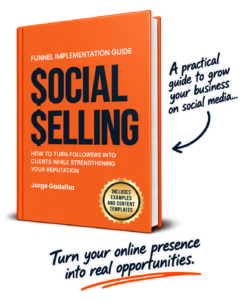
Practical PDF e-book
Put these ideas into practice.
Explore a practical guide to connecting content, relationships and follow-up.
Explore the Social Selling Guide
Build a proof portfolio buyers can actually inspect
A proof portfolio is a selected set of demonstrations, process records, results and independent validation tied to specific claims. Build it around the buyer's questions, not around the number of logos or testimonials you can collect.Practical PDF e-bookPut these ideas…

Sales objections: turn concerns into better evidence
Sales objections are clues about unresolved relevance, clarity, proof or safety. Before preparing a rebuttal, establish what the buyer means and which evidence could help them make a responsible decision.Practical PDF e-bookPut these ideas into practice.Explore a practical guide to…

The commercial friction map: 4 barriers to buying
A commercial friction map identifies where a buyer struggles to understand, trust, adopt or decide on an offer. Start with evidence of a specific stalled step, then test the smallest change that could remove that obstacle.Practical PDF e-bookPut these ideas…

Message-Market Fit Canvas: Connect Value with Proof
Message-market fit means that a message makes a relevant offer understandable and meaningful to a specific audience in a specific situation. Use six connected prompts—audience, situation, problem, alternative, value and proof—to form a testable message, not a claim that the…

Positioning: Decide What You Will Not Compete On
Positioning choices define the customers and situations in which your offer is a strong fit, the alternatives it should be compared with and the value that makes it different. They also reveal where you should not compete. A clear boundary…